[pageLogInLogOut]

#Spinning

The doyen of silk testing
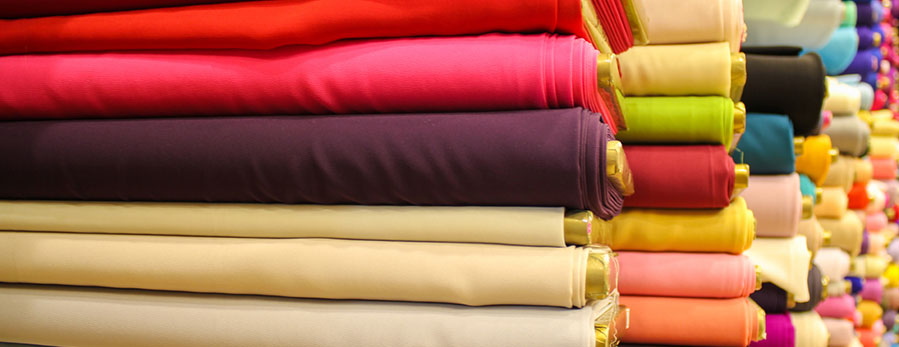
Silk fabric rolls © 2021 Uster
Silk would not normally spring to mind in relation to a company known worldwide for quality management in traditional yarn spinning – but there is a chapter on silk in the Uster story which certainly deserves to be highlighted. It’s about a man who was dedicated to silk and its use as a delicate fiber for the finest yarns and amazing fabrics. This look into an interesting history is presented to honor the life and work of a true silk expert.

Pioneer of a little-known aspect of Uster Technologies

The year 1948 was a major milestone for Uster Technologies, as the first yarn evenness tester was introduced to the market. Peter Haettenschwiler was an assistant involved in the development of the tester and then in showing the diagrams and test results to spinners. Actually, he brought quality management to the mills, where the diagrams were seen as aids to accurate pricing, improved quality and forecasting how the yarns would suit processing stages. In this role, he became Uster’s first textile technologist.

Haettenschwiler also had a very special hobby. He collected bagworm moths and butterflies. His knowledge and dedication allowed him to assemble the world’s largest collection of moths of the family known as bagworm moths, today housed in the Entomological Collection of ETH Zurich, Switzerland. He became a recognized expert on this species, and first identified and named over 30 new varieties not previously recorded. He also edited numerous specialist literature, enhancing his name and reputation among international experts in the field of Lepidoptera.

Silk testing progress

Silk is often praised as ‘the queen of all textile fibers’ and a natural wonder. It’s no surprise therefore, that the quality parameters of spun silk fibers were of interest. Haettenschwiler tested silk spun yarn, but it must be said that it was some years along in the manufacturing of raw and spun silk until the first trials were made with commercially available testing systems. In the course of this work, cooperation with experts from silk institutes in Switzerland, Italy and later China were started.

The European silk trade was first to hear about the new test technologies. Early studies quickly showed that even very fine silk could be tested after certain adaptations of the devices. The test results were more neutral, more meaningful and more precise than the data obtained with traditional testing methods.

Based on the test results, certificates were issued, and these were used to set the commercial values of the products. It was especially important for both trade and the subsequent treatment processes that the test results were accurate, so attention was closely focused on optimizing the testing methods.


The height of the silk business

At the beginning of the 18th century, the ‘silk courts’ in Zurich were world famous and by 1900 the silk industry was one of the most important industries in Switzerland. Silk processing reached its peak at the beginning of the 20th century. What remains today are a handful of silk producers focusing on niche markets, as well as Testex, founded as `Zuerich Seidentrocknungsanstalt´ (institution for silk drying) 175 years ago and the financial institutes which arose to provide capital to support the industry’s profits.
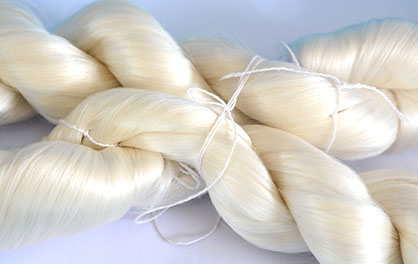
© 2021 Uster
© 2021 Uster


Silk has never been a big business for Uster – only a niche for which Haettenschwiler showed his passion. There were Uster Statistics editions for both spun silk and raw silk, however, not surprisingly, as Haettenschwiler also played an outstanding role in developing Uster Statistics in its early years and through the decades. This story opens another page of Uster history.

Haettenschwiler died this year on August 17. “He was a formative personality for the company and a highly engaged colleague who dedicated his working life to the textile industry with respect to an advanced quality management in staple and filament spinning. Silk was one of his great passions and the development of possible objective quality testing possibilities with Uster products was always his intention and he was always pushing for investigations and publications,” says Wolfram Soell, Senior Textile Technologist at Uster Technologies AG. “We would like to honor his working life and we should inspire future generations of textile professionals with his story.”

More News from Uster Technologies AG

#Spinning

Measure and control the fiber – optimize yarn quality

Producing consistent yarn quality is an everyday challenge – and a very difficult one. Detailed knowledge and understanding of the fiber raw material is absolutely critical to achieving the best possible quality in the yarn. To help spinners, Uster experts have put together guidelines for avoiding yarn irregularity claims, in a special edition of the Uster News Bulletin.

#ITMA Asia + CITME Singapore 2025

Uster presents novelties at ITMA Asia + CITME 2025

There’s news from Uster Technologies to be announced for the industry’s upcoming event in Singapore. The Uster 360Q universe is growing with new products, solutions and services. Innovation developments can also be recorded in the fields of man-made fiber testing and fabric inspection. Uster innovations address the industry’s trending topics as mill management and process control, optimization of delivered fabric quality and yield.

#Spinning

Uster Technologies marks 150 years of empowering quality excellence

Uster Technologies marks 150 years of excellence – a milestone that reflects continuous adaptation to customer needs and industry change. Over the decades, Uster has evolved from manufacturing quality testing instruments into a trusted partner shaping the future of textile production.

#Recycling / Circular Economy

Challenges of making yarn from recycled fibers

What does it take to spin quality yarn from recycled fibers? Uster Technologies brought textile industry leaders together to discuss the role of technology, data and automation – as well as the current challenges in using recycled raw material. Experts from Rieter, Säntis Textiles, Otto Yarns, and TVU commented on the current situation and looked into the future of spinning in a panel discussion organized at Uster headquarters.

More News on Spinning

#Spinning

Graf at EXINTEX – Strengthening presence in Latin America

Graf successfully participated in EXINTEX, one of the leading textile exhibitions in Latin America, together with its local agent Eurotecnica. The exhibition provided an excellent platform to engage with customers, partners and industry experts across the region.

#Spinning

Temco launches a new DTY all-in-one solution

Temco introduces the DTY All-in-One Solution – a fully harmonized set of components engineered to give customers a highly stable, low maintenance and reproducible process environment. The solution reduces interruptions, extends component lifetimes and supports consistent yarn quality across all machine positions. All-in-One Solution – a fully harmonized set of components engineered to provide maintenance and reproducible process environment.

#Techtextil 2026

DIENES at Techtextil 2026: Flexible pilot lines for bio-based fiber development

The growing relevance of bio-based materials in technical textiles is accompanied by increasing demands for reproducibility, high-quality data, and scalable process routes. Especially when working with cellulose and its derivatives, chitosan, lignin-based approaches, or bio-based PAN as a carbon-fiber precursor, R&D teams face variable feedstock quality, tighter process windows, and the need for reliable comparability across trials. This calls for flexible, data-driven experimental setups that can be reconfigured efficiently when recipes, solvents, and raw-material batches change.

#Techtextil 2026

RETECH showcases high-precision godets for high-performance fiber processing at Techtextil 2026

RETECH designs and manufactures godets and draw frames for heated, ambient and cooled processes, enabling precise heat treatment and consistently high yarn quality for a wide range of polymers and applications, with process temperatures of up to 400 °C for high-performance fibers. The company’s key competence lies in exact and stable temperature and speed control, individually adapted to the specific material and process requirements.

Latest News

#Techtextil 2026

LineONE – Smart performance, smart investment at Techtextil 2026

At Techtextil 2026 in Frankfurt (April 21–24, Hall 12, Booth C79), AUTEFA Solutions will present its LineONE concepts for cost-efficient nonwoven production. As a full-line supplier for nonwoven production lines, AUTEFA Solutions covers the entire process chain – from fibre opening through to web bonding. With its LineONE line concepts, the company combines proven technologies into well-balanced, cost-efficient turnkey solutions. These concepts are designed for capacity expansions, modernisation projects and new production lines, offering robust design and high flexibility for applications such as filtration, geotextiles and automotive.

#Europe

EU and Australia strengthen relations with Security and Defence Partnership and Trade Agreement

The EU and Australia have today announced the adoption of a groundbreaking Security and Defence Partnership. They have also concluded negotiations for an ambitious and balanced free trade agreement (FTA) and agreed to launch formal negotiations for the association of Australia to Horizon Europe, the world's largest funding programme for research and innovation. With these steps, the EU and Australia are delivering mutually beneficial outcomes and further reinforcing their already close relations in a time of geopolitical uncertainty.

#Technical Textiles

DuPont introduces Tyvek® APX™ 400 protective coverall, setting a new benchmark for extreme breathability

DuPont (NYSE:DD) announced the launch of the Tyvek® APX™ 400 protective coverall, the first in a new generation of extremely breathable disposable chemical protection garments. Manufactured using DuPont™ Tyvek® APX™ groundbreaking fabric, the new garment combines 360° protection and durability with extreme breathability, taking worker comfort and safety to a whole new level.

#Techtextil 2026

Freudenberg Performance Materials presents Mehlerheytex and Filc at Techtextil 2026

Freudenberg Performance Materials will showcase textile innovations that increase efficiency, performance and sustainability in industry and mobility at Techtextil 2026. For the first time since the merger of Mehler Texnologies and Heytex, the MehlerHeytex brand will make its debut as a leading expert in coated technical textiles. Moreover, Freudenberg Performance Materials Filc (Filc), specialist for advanced needlepunch nonwovens and laminated materials, will present its groundbreaking solutions for automotive applications. Filc customers can benefit from the perfect combination of functionality, comfort and sustainability. The Freudenberg Performance Materials experts are looking forward to welcoming visitors to the trade fair at Stand A11 in Hall 11.0 from April 21 – 24, 2026.

TOP