[pageLogInLogOut]

#Research & Development

GenuTrace client advisory: Is your cotton supply chain UFLPA ready?

U.S. Customs and Border Protection has released updated operational guidance (CBP Publication No. 5560-0526) expanding its forced labor enforcement framework. The guidance supersedes the original 2022 UFLPA Operational Guidance and now covers all forced labor enforcement authorities — UFLPA, CAATSA, and WROs/Findings — in a single unified document. For cotton importers, the enforcement posture has not softened. It has become more structured, more documented, and more demanding. Learn more about UFLPA.

Cotton is a named high-priority sector

Cotton and cotton products are explicitly identified as a high-priority sector for UFLPA enforcement. CBP expects documentation tracing every stage of the supply chain — from bale-level fiber origin through ginning, spinning, fabric production, dyeing and finishing, garment assembly, and export. A single undocumented supplier tier is sufficient grounds to deny entry. Can you prove the origin of your cotton?

Isotopic testing: Now an expected tool

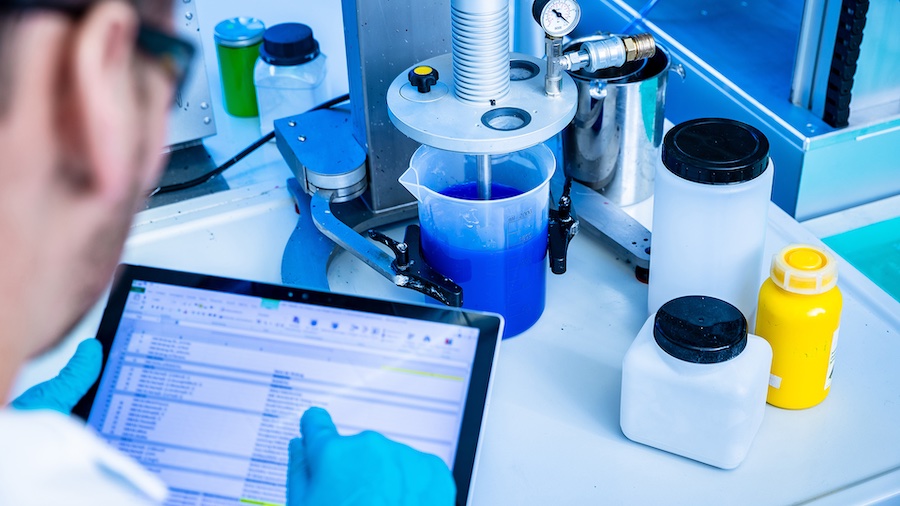
The updated guidance dedicates an entire appendix to isotopic testing and references it explicitly as a tool CBP supports for origin determination and due diligence.

For cotton, isotopic testing identifies the geographic fingerprint of the fiber based on growing environment, providing an independent, science-based verification layer that document trails alone cannot replicate. Isotope testing vs DNA tagging: what brands should know.

CBP does not endorse any specific testing provider. Importers are free to select the lab that best meets their needs. However, CBP is explicit: testing should be integrated early in a compliance program, not deployed reactively after a detention notice arrives.

What Importers Must Have Ready

  • Bale-level cotton origin documentation
  • Full supply chain map from fiber to finished product
  • Transaction records at every tier: purchase orders, invoices, proof of payment, bills of lading
  • Identification of every entity involved, including sub-suppliers
  • Isotopic testing results where applicable
  • A documented due diligence system with supplier code of conduct, audits, and remediation protocols


For a deeper look at how physical and digital verification work together in a defensible compliance package, see Genuine Cotton Traceability: Proving Cotton Origin with Physical & Digital Verification.

The 30-day clock is unforgiving

When a shipment is detained under UFLPA, importers have 30 days to respond with a maximum of two extensions not to exceed 90 days total. The response must include comprehensive supply chain tracing documentation. Affidavits alone are not accepted. All foreign-language documents must be translated. The burden of proof is clear and convincing evidence.

The risk of inaction

Goods detained under UFLPA cannot enter U.S. commerce until the importer demonstrates admissibility. Goods excluded must be exported or destroyed within 180 days. Storage costs throughout the review period are the importer's responsibility. A shipment that clears today on the same supply chain documentation may not clear tomorrow.


More News from Cotton Council International

#Natural Fibers

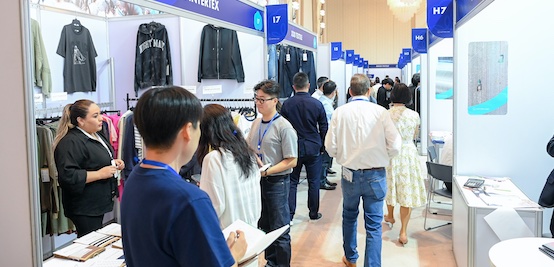
COTTON USA™ leads global shift toward sustainable sourcing at Bangkok Sourcing Fair

COTTON USA™ strengthened its position as a global connector in sustainable U.S. cotton textile sourcing at its recent Sourcing Fair in Bangkok, Thailand, drawing over 300 top brand, retailer, manufacturer, and mill representatives from 13 countries.

#Natural Fibers

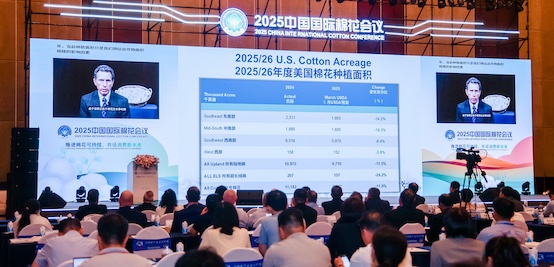
Global cotton industry converges in Guangzhou as Cotton Council International (Cci) champions U.S. Cotton’s sustainability

Cotton Council International (CCI) joined nearly 400 industry leaders at the 2025 China International Cotton Conference in Guangzhou to engage in critical discussions on the future of cotton.

#Natural Fibers

Indian textile leaders explore U.S. cotton’s advantages at Cotton Usa™ seminars

Cotton Council International (CCI) hosted its inaugural COTTON USA™ seminars in Ahmedabad and Hyderabad, highlighting the competitive advantages of U.S. cotton to nearly 100 representatives from Indian textile mills. The events are part of the growing collaboration between the U.S. cotton industry and India’s textile sector.

#Natural Fibers

Innovative sustainable fashion leader Liz Hershfield named Cotton Council International (CCI) Executive Director

Fashion industry veteran and sustainability expert Liz Hershfield will lead Cotton Council International (CCI), the export promotion arm of the National Cotton Council of America (NCC), as its new Executive Director. Hershfield succeeds Bruce Atherley, who retired at the end of March.

More News on Research & Development

#Research & Development

Networking Day 2026: Industry stakeholders unite around textile recycling

In 2026, the Industry Research Group (IRG) Polymer Recycling once again brought together some of the key stakeholders in textile recycling for its annual Networking Day. This year, the event took place at EREMA’s premises in Ansfelden, Austria. It brought together key players from across the textile recycling value chain for a day of structured exchange and in-depth discussions.

#Research & Development

Smart textiles reversibly change shape in an energy-efficient manner in response to ambient temperature

Self-actuating textile structures are used in a wide range of applications, such as medical technology, automation, architecture, agriculture, and the apparel industry. An example is the use of shading nets in greenhouses, which can be deployed and retracted depending on the sunlight intensity. The German Institutes of Textile and Fiber Research Denkendorf (DITF) are developing textiles based on shape-memory polymers with reversibly controllable geometry.

#Associations

Meadow Grove Research joins ITMF as Corporate Member

Meadow Grove Research is a commodity research firm specializing in supply, demand, and trade analysis in cotton and other soft commodities. Providing clarity to the complex nature of the global fiber supply chain is one of its most formidable services. The firm thrives on customer engagement and providing the best framework for critical decisions.

#Research & Development

ALADIN paves the way for circular and demand-driven textile production in Europe

Textile production can be organized sustainably by utilizing short supply chains and preventing overproduction. This can already be achieved today by intelligently connecting and efficiently utilizing existing infrastructure. At the same time, production becomes circular when innovative technologies and materials are used that enable high-quality recycling. The ALADIN research project, launched in May 2026 and co-funded with five million euros under the EU Horizon Europe program, is creating the conditions for this.

Latest News

#Man-Made Fibers

Ministry of Industry Delegation visits NatureWorks’ second global manufacturing site at Nakhon Sawan Biocomplex

NatureWorks Asia Pacific Limited welcomed a high-level delegation led by Mr. Varawut Silpa-archa, Minister of Industry, to its manufacturing site at the Nakhon Sawan Biocomplex (NBC). The visit follows the successful inauguration of the site on April 29, 2026, and highlights the role of public-private collaboration in advancing Thailand’s sustainable industrial development and bioeconomy ambitions.

#Recycling / Circular Economy

Indorama Ventures advances circularity tthrough PETValue Philippines' “Zero Waste to Landfill Partnership” with Republic Cement

Indorama Ventures Public Company Limited, a global sustainable chemical company, is advancing the circular economy through a new Zero Waste to Landfill initiative at its recycling site PETValue Philippines, further demonstrating how collaboration across industries can maximize resource efficiency and reduce waste.

#Associations

IVGT membership: expertise that pays off

For energy-intensive textile companies, government compensation mechanisms are an important economic factor. The IVGT successfully supports its member companies in applying for state aid and thereby regularly contributes to significant financial relief.

#Knitting & Hosiery

The new RDJ 7/3 defines the design footprint of modern athletic shoes

Stylish, functional, and efficient to produce – spacer fabrics are the all-arounders among textile materials. These versatile fabrics are particularly in demand in the sports and casual footwear sector, as they combine comfort, breathability, and design freedom. At the same time, this industry is trend-driven, dynamic, and price-sensitive like few others. Innovations are therefore a decisive factor for success. With the RDJ 7/3, KARL MAYER offers a solution specifically tailored to these requirements. The particular strength of the new double raschel machine: its exceptional flexibility, thanks to its three jacquard bars.

TOP