[pageLogInLogOut]

#Research & Development

First "Korea Day" at RWTH Aachen attracts more than 300 participants
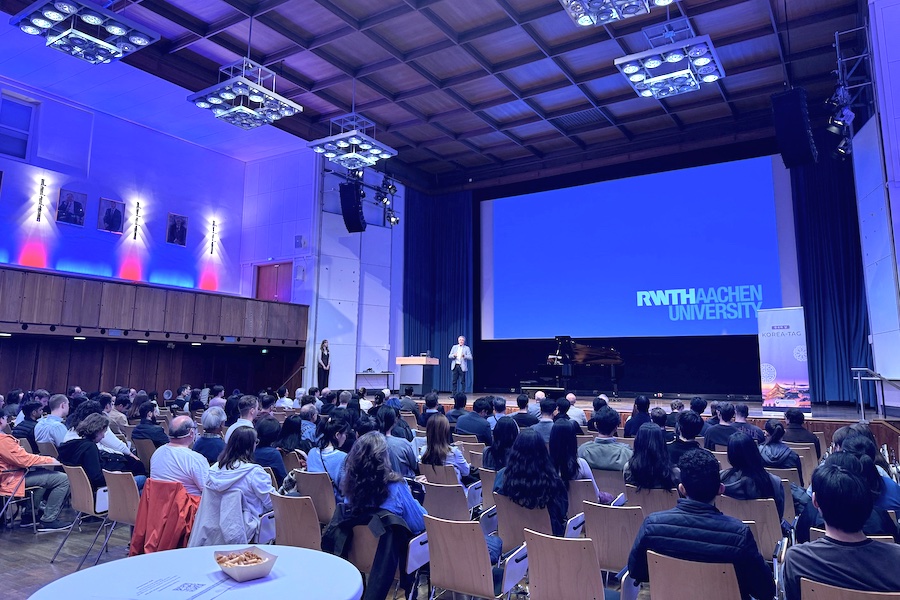
Prof. Dr. Thomas Gries, RWTH Aachen University's delegate for cooperation with Korea, welcomes participants to the first Korea Day in Aachen on 10 October 2026. © Institut für Textiltechnik (ITA) of RWTH Aachen University
The inaugural Korea Day in Aachen brought together representatives from science, business and Korean institutions to strengthen German-Korean cooperation in research, technology and education. The Institut für Textiltechnik (ITA) of RWTH Aachen University was among the participating organisations.


More than 300 guests attended the first Korea Day in Aachen on 10 October 2026. Organised by the Bonn office of the Embassy of the Republic of Korea and RWTH Aachen University, the event combined scientific and economic exchange with a programme highlighting Korean culture.

The initiative aimed to strengthen cooperation between universities, businesses and Korean institutions while increasing awareness of the existing relationships between the Aachen region and South Korea.

These connections include the partnership between Städteregion Aachen and the South Korean city of Ansan, which has developed through cooperation in science, business and technology.

Byun Chul-Hwan, Head of the Bonn Office of the Embassy of the Republic of Korea, emphasised the importance of the event: “Korea Day provides a valuable opportunity to experience the growing cooperation between Korea and Germany here in Aachen.”

Prof. Dr. Thomas Gries, RWTH Aachen's delegate for cooperation with Korea, highlighted the opportunities for further collaboration: “As one of Europe’s leading research universities, we see great potential in deepening cooperation with Korean partners—both in teaching and in innovative research projects.”

Research cooperation and international networking

Under the motto “Next Stop Korea”, the programme featured presentations on academic exchange, international cooperation and business opportunities.

RWTH alumni shared their experiences in South Korea, while the university's International Office introduced programmes supporting international mobility and cooperation. AGIT presented examples of successful corporate collaborations.

A panel discussion entitled “Germany and Korea – Partnerships for Innovation” explored current projects and future opportunities for cooperation between German and Korean research institutions and businesses.

The event also provided networking opportunities with participating organisations, including the Korea Germany Technology Cooperation Center (KGTCC) and the Institut für Textiltechnik (ITA) of RWTH Aachen University.

Cultural programme complements scientific exchange

Alongside the conference programme, visitors experienced different aspects of Korean culture.

Mezzo-soprano Ji Young Mennekes performed traditional congratulatory songs, while Town-K Dance Studio presented a K-pop dance performance.

Other activities included a Hanbok photo station, Korean calligraphy, gaming and Korean cuisine.
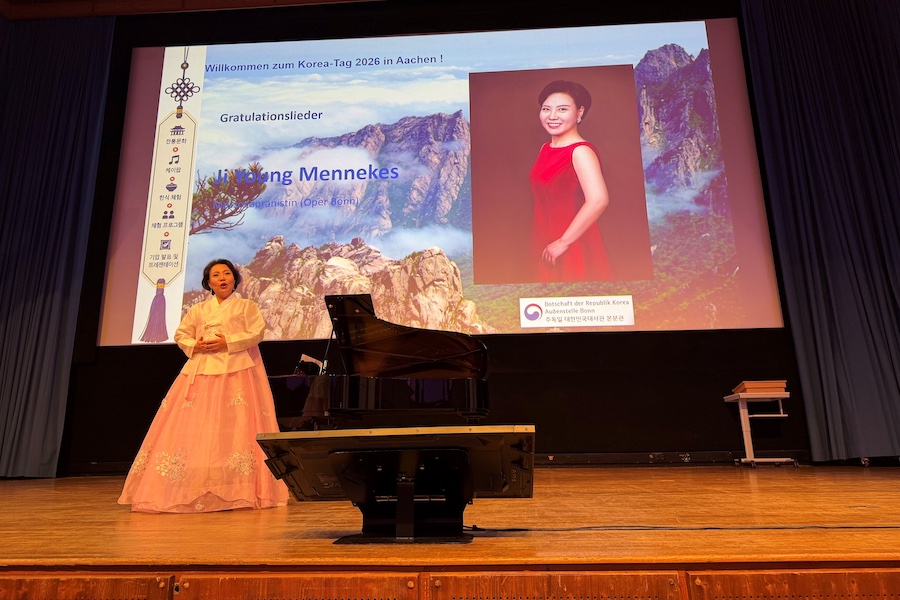
Mezzo-soprano Ji Young Mennekes performs during the cultural programme of the first Korea Day in Aachen, which attracted more than 300 participants. Photos: Institut für Textiltechnik (ITA) of RWTH Aachen University © 2026


RWTH Aachen plans to continue Korea Day

Following the positive response to the inaugural event, RWTH Aachen plans to repeat Korea Day in a similar format. The event is intended to build on existing partnerships between Aachen and South Korea and provide a continuing platform for cooperation in research, education, technology and business.

More News from Institut für Textiltechnik of RWTH Aachen University (ITA)

#Research & Development

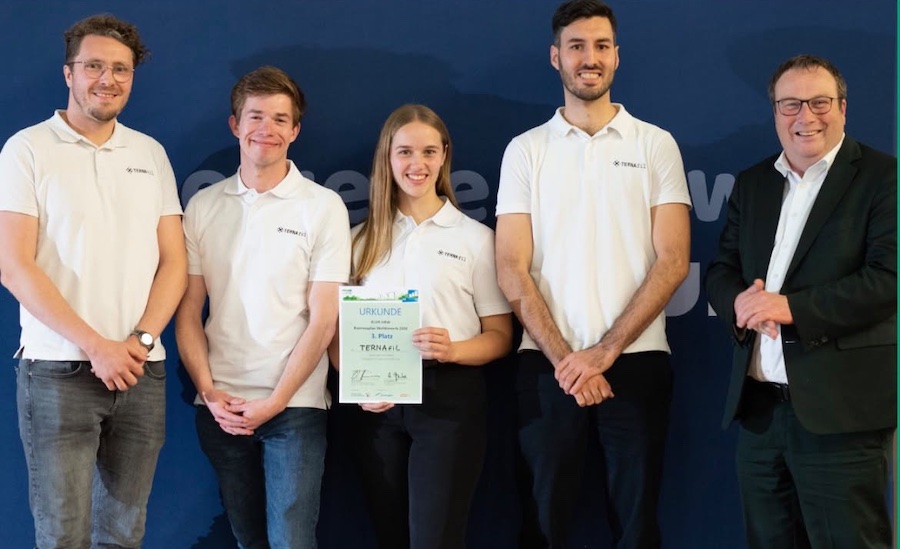
ITA spin-off TERNAfil wins third place at KUER.NRW 2026 with MAXCarbon technology

The Aachen-based ITA spin-off TERNAfil GmbH has secured third place in the KUER.NRW Business Plan Competition 2026 with MAXCarbon, an innovative carbon-ceramic hybrid fibre developed for applications in the hydrogen economy. The technology combines the mechanical properties of carbon fibres with the thermal and corrosion resistance of ceramic materials.

#Research & Development

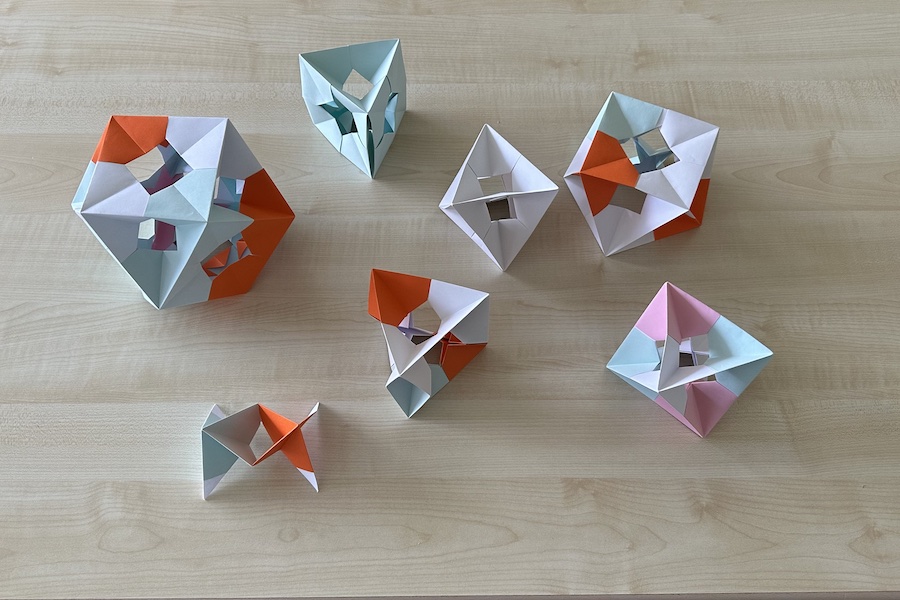
Aachen Summer School: Textiles become smart through 3D printing and origami

From 21 to 29 September 2026, the Aachen Summer School will transform Institut für Textiltechnik (ITA) of RWTH Aachen University into a laboratory of the future: over the course of a week, students will use origami folding techniques and 3D printing to develop active textile structures capable of performing programmable movements. This interdisciplinary event combines theoretical foundations with practical prototyping – from digital modelling right through to functional textile prototypes.

#Research & Development

ITA has developed a washable digital smart jacket with real-time feedback and an AI-powered app for rehabilitation

As part of the PhysioTaix research project, the Institut für Textiltechnik (ITA) of RWTH Aachen University is developing a digital smart jacket with integrated sensors. The jacket is washable and reusable; it tracks movements during rehabilitation exercises in real time and transmits the data to an app.

#Recycling / Circular Economy

2. RETRAKT EU Conference - „Join the Circle“: Turning challenges of the textile sector into chances

On 19 November 2026, the second RETRAKT EU Conference – “Join the Circle” will take place in Brussels. The event, which focuses on the transformation of the textile sector towards a circular economy, will be held under the motto: “Turning Challenges in the Textile Sector into Chances.”

More News on Research & Development

#Research & Development

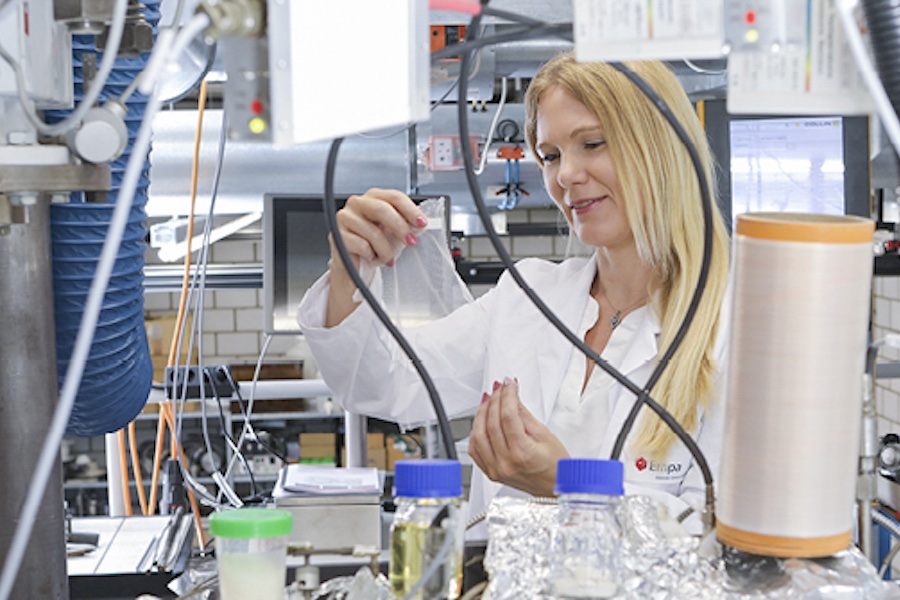
Empa develops liquid-core fibre for insecticide-treated mosquito nets

Empa researchers have developed a liquid-core fibre for mosquito nets that can incorporate insecticides unsuitable for conventional melt spinning. The fibre gradually releases the active ingredient through a polymer sheath. The team developed and tested the yarn over three years in the Innosuisse project MalCoFil with Swiss industry partners Vestergaard and Monosuisse.

#Weaving

“A complex design is only useful if the machine can reproduce it consistently”

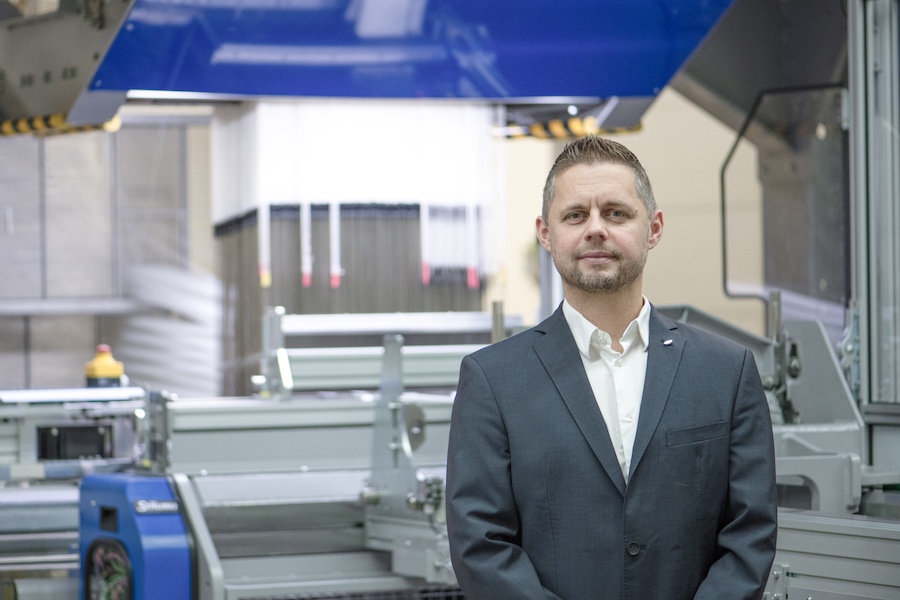
Andreas Schnabel, Head of R&D for Technical Weaving Systems at Stäubli, discusses how 3D weaving can create textile reinforcements tailored to the loads within a composite component, where near-net-shape weaving can reduce processing steps and material waste, and what it takes to produce complex structures reliably and economically. He also explains how manufacturers can adapt Stäubli’s modular TF weaving platforms to new applications and how the company’s centre of excellence in Bayreuth supports the transition from research to industrial production.

#Research & Development

DITF develops bio-based binding fibers for wood-fiber insulation materials

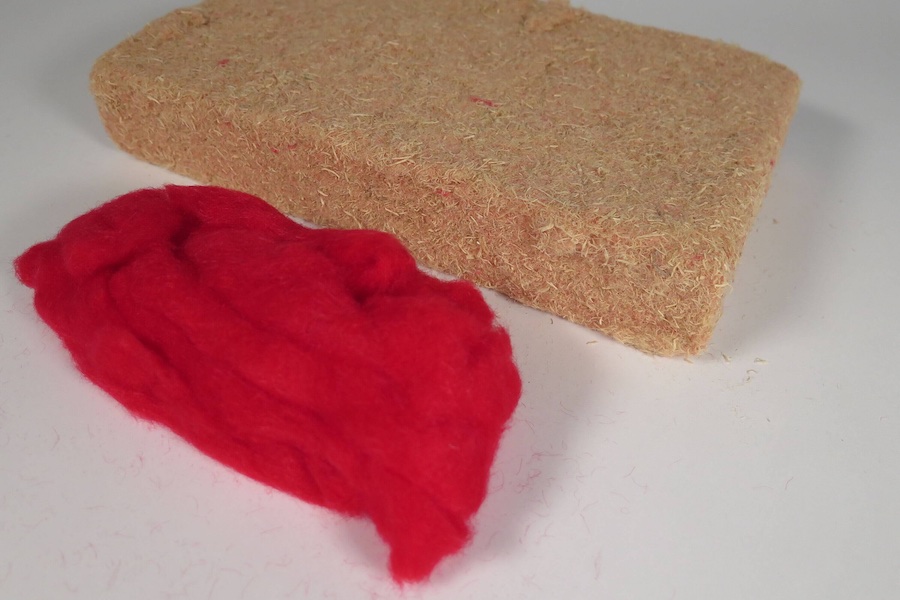
As part of the CelluWoodFlex project, the German Institutes of Textile- and Fiber-Research in Denkendorf (DITF) are developing bio-based cellulose ester fibers as alternative binding fibers for flexible wood fiber insulation materials. In addition to the spinning process and the production of suitable staple fibers, the institute is also investigating how wood and cellulose fibers can be separated and recycled at the end of their useful life.

Latest News

#Associations

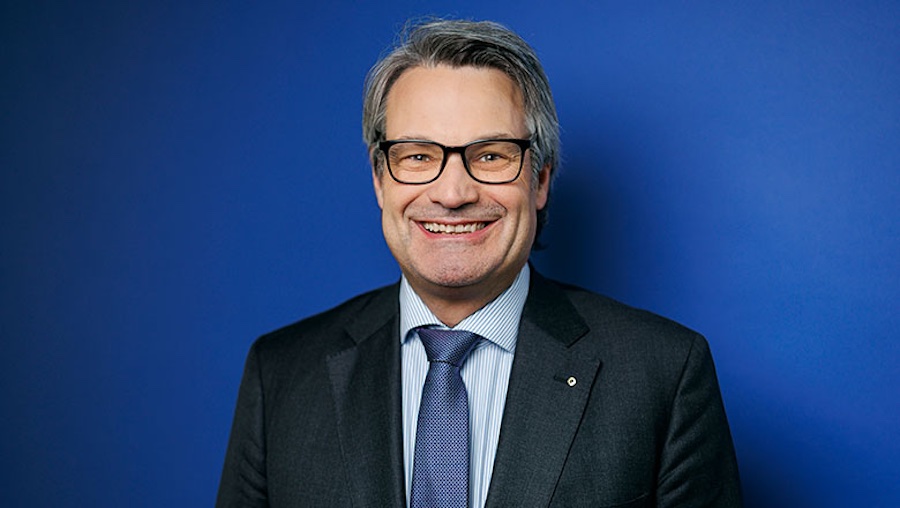
Christoph René Holler to succeed Uwe Mazura as managing director of textil+mode

Christoph René Holler will take over as managing director of textil+mode, the German textile and fashion industry confederation, on 1 January 2027. He succeeds Uwe Mazura, who has led the association for 13 years and will remain in charge of collective bargaining policy through the next round of negotiations before retiring.

#Heimtextil 2027

Heimtextil and The Florentin showcase the role of textiles in hotel design

Heimtextil has partnered with Frankfurt hotel The Florentin by Althoff Collection for its new Interior.Architecture.Hospitality campaign. The collaboration will give architects, interior designers and other contract-sector professionals a closer look at how textiles were used in the hotel. The two studios behind the project will discuss their work at Heimtextil on 14 January 2027 in Hall 4.1.

#EU Textile Strategy

EU Commission proposes advanced materials agenda with targets for 2035

The European Commission has proposed an Advanced Materials for Europe agenda to accelerate the development, production and adoption of safer and more sustainable advanced materials. The proposal sets three benchmarks for 2035 and calls for closer coordination among EU member states to help move new materials from the laboratory into industrial production.

#Raw Materials

Sourcing of traceable BCI cotton rises 43.5% to 33,000 tonnes

Retailers and brands sourced a record 33,000 metric tonnes of Traceable BCI Cotton over the past year, up 43.5% from 23,000 tonnes in 2024–2025, the Better Cotton Initiative (BCI) reported on 17 November 2026.

TOP