[pageLogInLogOut]

#Recycling / Circular Economy

17th Colloquium on Recycling for Textiles with accompanying trade exhibition in Chemnitz
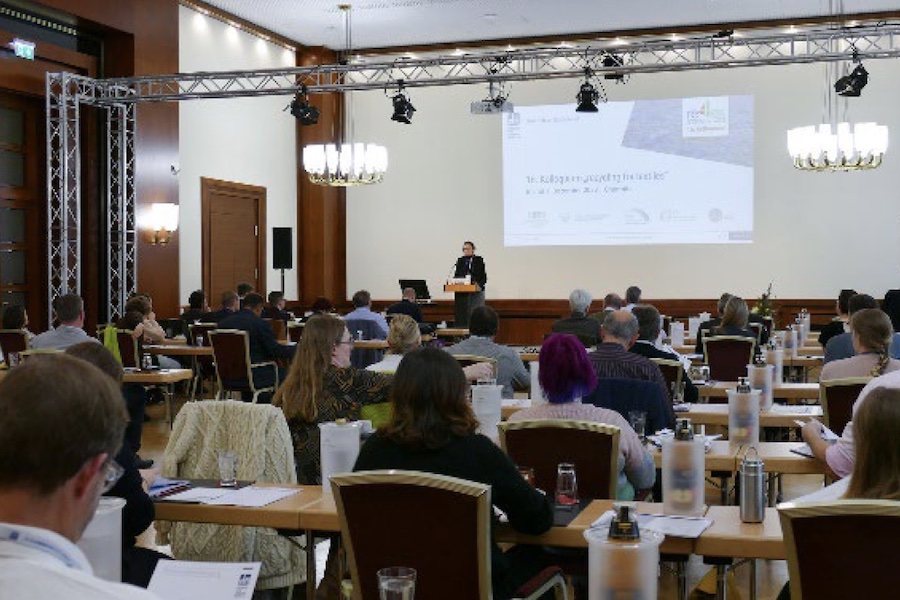
On 3 and 4 December 2025, the 17th colloquium on recycling for textiles will take place at the Hotel Chemnitzer Hof. The event brings together experts from industry, science and research to present and discuss current developments, technologies and business models for a sustainable circular economy in the textile industry.
The 17th colloquium on recycling for textiles will take place at the Hotel Chemnitzer Hof in Chemnitz (here is the 16th collo- quium in 2023). © 2025 STFI


Shaping the future – closing cycles

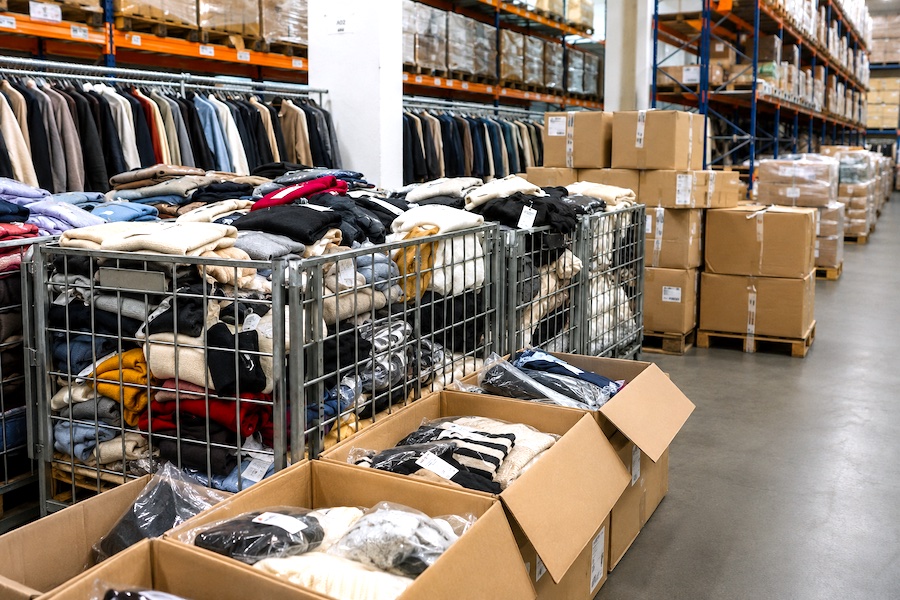
The thematic focus is on technologies for textile recycling, circular and sustainable textile products, and the implementation of circular economy principles. Other topics include the collection, sorting and man- agement of textile waste, as well as successful cooperation models for a circular textile industry. A con- cluding pitch session offers start-ups and universities the opportunity to present innovative ideas and solutions as forward-looking alternatives to conventional processes.

Trade exhibition celebrates its premiere

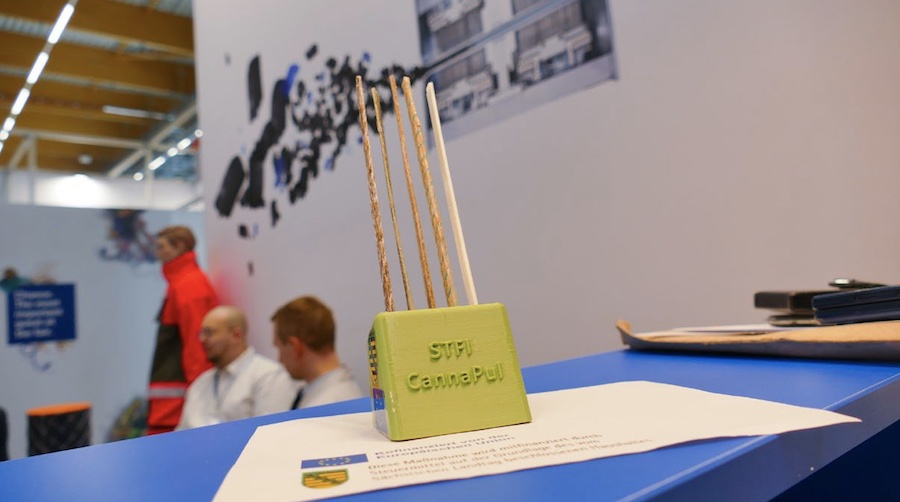
For the first time, the colloquium will be accompanied by a trade exhibition. Companies, research insti- tutions and service providers will present their products, services and latest research and development results. The trade exhibition offers participants numerous opportunities for direct exchange and the ini- tiation of new collaborations – supported by networking opportunities during conference breaks, at the business lunch and the evening event.

‘The colloquium has established itself as an important platform for professional exchange in the textile industry. With the new trade exhibition, we are expanding the concept to include a valuable component for direct knowledge transfer and the presentation of innovative solutions,’ explains Johannes Leis, STFI expert for textile recycling and circular economy.
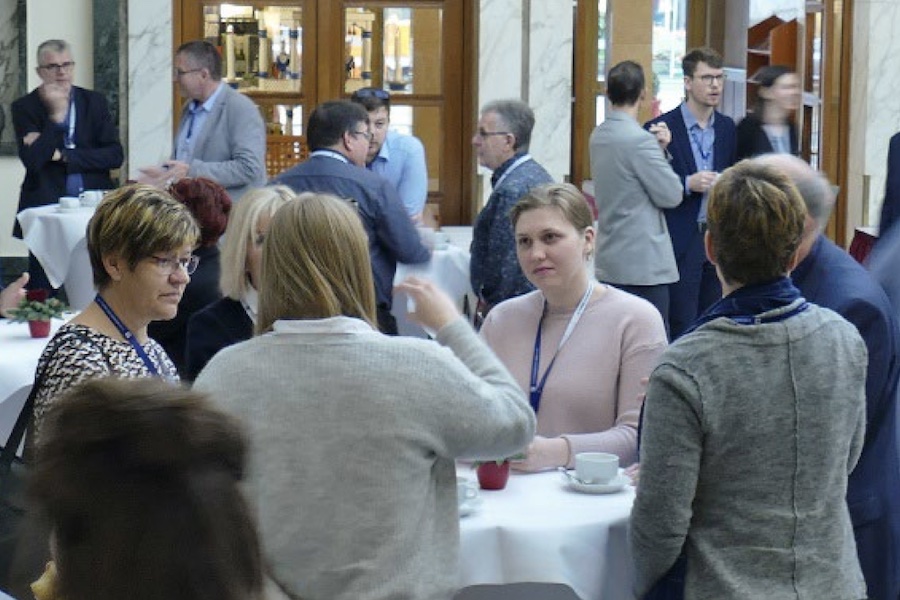
The STFI colloquium ‘recycling for textiles’ is the networking event for the textile circular economy (here the 16th colloquium in 2023). © 2025 STFI


Registration and programme

Participation is possible after prior online registration. The complete programme and registration de- tails can be found at:

https://www.stfi.de/veranstaltungen/kolloquium-re4tex

This event will be held in German.


More News from Sächsisches Textilforschungsinstitut e.V. (STFI)

#Research & Development

The region of renewable raw materials: Central German Alliance for Bioplastics

The development of sustainable plastic solutions is rapidly gaining importance in light of global environ- mental pollution, dwindling fossil resources and ambitious climate protection targets. As part of the re- gional alliance RUBIO, which brings together 18 partners from central Germany and the Berlin-Branden- burg area, the bio-based and biodegradable plastic polybutylene succinate (PBS) was comprehensively investigated, starting with the raw material, through the manufacturing process, to industrial application.

#Research & Development

Kendyr as a climate-friendly cotton alternative: STFI explores new value chains for salinised land in Central Asia

In large parts of Central Asia, decades of cotton irrigation have led to severe soil salinisation, with serious consequences for soil fertility and the future of cotton cultivation. An international research consortium, including the Saxon Textile Research Institute (STFI), has therefore investigated the potential of alternative fibre plants. The focus was on Apocynum spp. (kendyr), a bast fibre plant that can thrive on saline soils. The aim: to restore the agricultural use of former cotton fields and establish new textile value chains in the region.

#Research & Development

Tour de LOOP Exclusive specialist trip to Chemnitz – textile art and design in the European Capital of Culture 2025

The European Capital of Culture 2025, Chemnitz, opened its doors to textile designers, textile artists and experts from the fields of fashion, art and textiles: the Tour de LOOP on 26 and 27 May 2025 took participants on an exclusive professional tour of one of Europe's most traditional and innovative textile regions. 19 visitors from Europe explored Chemnitz and its textile region. They came from the Nether- lands, Austria, the Czech Republic, Great Britain and Germany.

#Research & Development

STFI is investigating textile applications for PU casting compounds

Polyurethane (PU) casting compounds are classically used as protective and insulating material in electronics and electrical engineering, e.g. in battery modules or on circuits or for embedding LEDs. In addition to their electrical insulating properties, they are heat resistant and mechanically flexible . In addition, the transition from liquid to solid aggregate state is so favorable that these PU masses can be applied with a precise fit.

More News on Recycling / Circular Economy

#Recycling / Circular Economy

Reju announces site selection for first U.S. industrial sized facility regeneration hub in Rochester, New York

Reju, the textile-to-textile regeneration company, today announced it has selected the site for its first U.S.-based industrial facility marking a significant milestone in its efforts to scale globally. This future Regeneration Hub will be in Rochester, New York, reinforcing Reju’s commitment to the adoption of circular textile system across key regions worldwide.

#Business

Canopy introduces a first-of-its-kind $2 billion USD investment blueprint to decarbonize global materials supply chains

Today, the global, solutions-driven not-for-profit Canopy joined partners at Davos to introduce a new finance model designed to accelerate the growth of low-carbon materials and transform the paper, packaging, and textile supply chains. The event was anchored by a keynote speech from Sri A Revanth Reddy, Hon’ble Chief Minister of Telangana, with India set to host the first iteration of the new investment blueprint.

#Recycled_Fibers

Borealis invests EUR 49 million in Burghausen, Germany to accelerate design for circularity

Borealis announces a EUR 49 million strategic investment to scale up production of Borstar® Nextension polypropylene (PP) at its manufacturing site in Burghausen, Germany. This will expand commercial production of next-generation single-site polypropylene (ssPP) grades that deliver enhanced purity, processability, and performance - supporting customers in key sectors including packaging, healthcare, mobility, and fibers, to meet evolving market and regulatory demands.

#Recycling / Circular Economy

From local actions to industrial innovations: SOLSTICE shares mid-project results

Since its launch in May 2024, the SOLSTICE project is accelerating the transition from linear models to circular regional ecosystems in the textile industry, focusing on four key territories: Grenoble-Alpes Métropole (France), Berlin (Germany), Prato (Italy), and Catalonia (Spain). By mid-project, SOLSTICE has already revealed both regional disparities and promising solutions to strengthen textile repair, reuse, and recycling infrastructure.

Latest News

#Fabrics

MUNICH FABRIC START: Between Attitude and Sensuality

The future begins where we reimagine it. After seasons of restraint, Spring.Summer 27 marks a conscious counter-trend: optimism, sensuality, and creative freedom are replacing pragmatism and neutrality. Physical presence and individuality are regaining importance – as a response to uncertainty, exhaustion, and algorithmic predictability. The overarching theme of PLEASURE stands for fashion as an emotional space, as an expression of attitude and cultural reflection. Colours, surfaces, and materials become vehicles for self-confidence and joie de vivre.

#Denim

organIQ seek: smart alternative to potassium permanganate

CHT Group announces new technical findings within its organIQ seek platform that significantly advance the transition toward permanganate-free denim bleaching. Through extensive industrial testing and application research, CHT confirms that organIQ seek can now be used with remarkable effectiveness as a substitute for potassium permanganate in spray bleach, while remaining aligned with sustainability expectations and cost realities in the European market. At the COLOMBIATEX in Medellín as well as at the Exintex in Puebla and the Kingpins Show in Amsterdam the CHT Group will present organIQ seek as an alternative to potassium permanganate.

#Functional Fabrics

PERFORMANCE DAYS: Focus topic shifts to the beginning of the value chain

Following the last Focus Topic in October 2025, which placed Textile-to-Textile Recycling at its core, PERFORMANCE DAYS continues to drive the conversation around circularity – this time with an expanded and more upstream perspective. The upcoming Focus Topic, “Textile to Textile: The Role of Collectors and Sorters,” presented during the spring edition on March 18–19, will spotlight one of the most essential yet often overlooked components of a functioning circular textile system: the efficient collection and sorting of post-consumer textiles.

#Knitting & Hosiery

Proven performance, optimised costs – the new RE 6 EL

Nowadays textile companies increasingly need to produce small production runs and respond to market changes with instantaneous pattern changes in order to operate profitably – meaning they require machines that offer maximum flexibility, reliability and cost efficiency. KARL MAYER understands the challenges of the market and is launching its new RE 6 EL. The Raschel machine offers the core strengths of the classic RSE 6 EL and essentially the same performance parameters, but has been further cost-optimised largely due to local production advantages. This makes the newcomer an efficiency champion in production, especially when it comes to frequent pattern changes.

TOP