[pageLogInLogOut]

#Research & Development

STFI is investigating textile applications for PU casting compounds

Polyurethane (PU) casting compounds are classically used as protective and insulating material in electronics and electrical engineering, e.g. in battery modules or on circuits or for embedding LEDs. In addition to their electrical insulating properties, they are heat resistant and mechanically flexible . In addition, the transition from liquid to solid aggregate state is so favorable that these PU masses can be applied with a precise fit.

Casting compound meets textile

The Sächsische Textilforschungsinstitut e.V. (STFI) is currently developing two applications on textiles. On the one hand, the PU casting resins are being investigated as a cover layer for sensors that are used to monitor mechanical load . The second approach is dedicated to 3D printing on pre-tensioned textiles in order to subsequently create three-dimensionally shaped structures.

The current research project “Texsafe” (Reg. No. 49MF220096) focuses on the development of large-area textile sandwich-structured surface elements for monitoring mechanical loads . Suitable coating materials should permanently measure the permittivity in order to detect changing mechanical parameters by elastic deformation. In addition, these materials must withstand large loads of up to 1000 kg without being destroyed and protect the textile from mechanical damage. In the course of the investigations, polyurethane-based casting resins from WEVO-CHEMIE GmbH, Ostfildern-Kemnat, have proven to be particularly suitable because they have tough elastic properties and a high elongation at break. The products of the Wevopur series meet these requirements and have already been successfully tested in extensive test series successfully. The first small-scale functional models were produced as part of the project, which enable the detection of mechanical loads (Figure 1). The potting compound proved to be particularly suitable for this application due to its low mixed viscosity, as the textile was well wetted or saturated . In a next step, the scaling to large-area textile sandwich-structured surface elements is to take place. The textiles finished in this way can be used in particular in truck loading space area recognition, for parking lot and floor sensor technology for access control and monitoring areas.
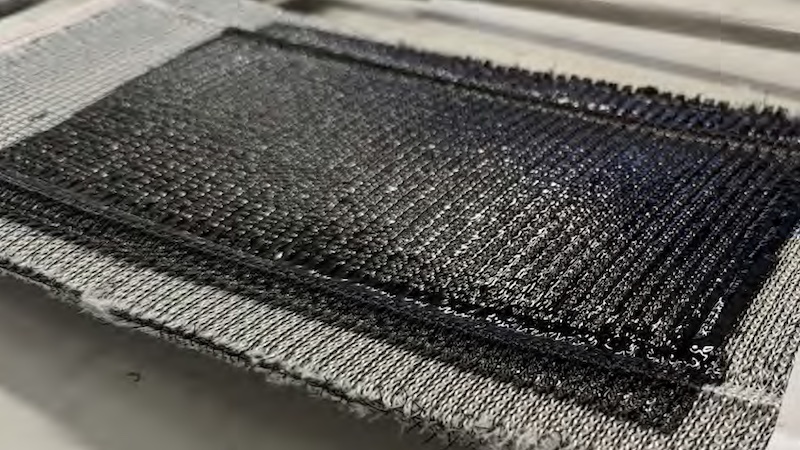
Figure 1: Functional model of a sandwich-structured surface element coated with a Wevopur casting resin (Copyright: STFI)


3D printing on textiles has been the subject of successful developments of the STFI. In this context, new materials for the different 3D application processes are tested. Within the framework of the research project “Machine and process development for 3D printing on pre-stretched textiles” (Reg. No. KK5081706WO1), selected Wevopur products were also .

The application for this special 3D printing requires printing materials that have high flexural strengths and SHORE hardnesses in the upper Shore D range, in order to reinforce pre-stressed textiles using 3D printing . In the experiment, stretchable PES knitted fabrics were tensioned homogeneously and without distortion in the longitudinal and transverse directions using a newly developed tensioning system with defined forces. Subsequently, the textiles were printed with various geometries using 3D printing. In addition to the classic FDM process, which uses thermoplastic filaments, the LDM process was also tested. In this process, pasty materials or liquids are processed.

Here, too, products from the Wevopur series proved to be desirable. The materials were applied to the pre-stretched textiles using a 2-component print head, thus reinforcing them at specific points. After the printed textile was released, defined deformations occurred defined deformations. This is also referred to as 4D printing. This technology can be used, for example, to manufacture individual textile lampshades or acoustic panels (Figure 2) and opens up further application possibilities in architecture . In the project, a good and durable bond with the textile was ensured, which is due to the customized viscosity and good adhesion of the Wevo materials (such as WEVOPUR 71/25 MT/3 with WEVONAT 30 0).
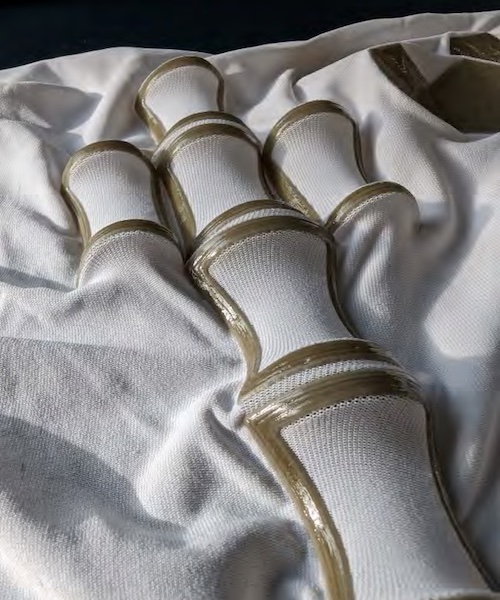
Figure 2: Sample of a pre-tensioned textile printed with WEVOPUR 71/25 MT/3 / WEVONAT 300 (Copyright: STFI)


The successful tests of polyurethane-based potting compounds in combination with textiles at STFI show new application potentials for the Wevopur product series from WEVO-CHEMIE GmbH.

Further information: http://www.stfi.de


More News from Sächsisches Textilforschungsinstitut e.V. (STFI)

#Recycling / Circular Economy

17th Colloquium on Recycling for Textiles with accompanying trade exhibition in Chemnitz

On 3 and 4 December 2025, the 17th colloquium on recycling for textiles will take place at the Hotel Chemnitzer Hof. The event brings together experts from industry, science and research to present and discuss current developments, technologies and business models for a sustainable circular economy in the textile industry.

#Research & Development

Kendyr as a climate-friendly cotton alternative: STFI explores new value chains for salinised land in Central Asia

In large parts of Central Asia, decades of cotton irrigation have led to severe soil salinisation, with serious consequences for soil fertility and the future of cotton cultivation. An international research consortium, including the Saxon Textile Research Institute (STFI), has therefore investigated the potential of alternative fibre plants. The focus was on Apocynum spp. (kendyr), a bast fibre plant that can thrive on saline soils. The aim: to restore the agricultural use of former cotton fields and establish new textile value chains in the region.

#Research & Development

Tour de LOOP Exclusive specialist trip to Chemnitz – textile art and design in the European Capital of Culture 2025

The European Capital of Culture 2025, Chemnitz, opened its doors to textile designers, textile artists and experts from the fields of fashion, art and textiles: the Tour de LOOP on 26 and 27 May 2025 took participants on an exclusive professional tour of one of Europe's most traditional and innovative textile regions. 19 visitors from Europe explored Chemnitz and its textile region. They came from the Nether- lands, Austria, the Czech Republic, Great Britain and Germany.

#Research & Development

STFI Theme Day: Advancing technologies for a circular textile economy

The circular textile economy is a topic that has garnered widespread attention. However, achieving this goal requires more than ambition—it calls for collaboration and robust networks. Recognizing this, the Sächsisches Textilforschungsinstitut e.V. (STFI) invites partners from industry, academia, and research to engage in a dynamic professional exchange focused on this critical subject.

More News on Research & Development

#Research & Development

Feasibility study shows potential to convert textile waste into PHB bioplastic

Textile waste could serve as a valuable source of raw materials for sustainable plastics in the future, according to the joint TexPHB feasibility study conducted by the Fraunhofer Institute for Applied Polymer Research IAP, Beneficial Design Institute GmbH and matterr GmbH. The study will be presented to the public for the first time at a network meeting on 25 November 2025 at the State Chancellery in Potsdam.

#Research & Development

IRG Polymer Recycling wraps up productive 2025 project cycle

The Industry Research Group (IRG) Polymer Recycling has completed another successful project year. Last week, partners from across the textile value chain met at the Institute for Textile Technology (ITA) at RWTH Aachen University for the full-term project meeting.

#Recycling / Circular Economy

CirTex Community discusses technical, social and regulatory pathways for textile circularity

Around 50 participants joined the third meeting of the DATIpilot Innovationscommunity Circular Textiles (CirTex) on 19 November 2025. The online event was organised in cooperation with the Dialog Textil-Bekleidung e.V. (DTB) and the Recycling Atelier at the Institute of Textile Technology Augsburg, and was held under the motto “MAKE IT CIRCULAR.”

#Research & Development

Catching heart disease early with AI-based sensor system

It slips on like a normal vest: Fraunhofer IZM has created a smart sensor system in cooperation with the Charité and the Technical University of Berlin. The vest records a vast array of cardiovascular parameters, which an AI-based system uses to support medical diagnostics and spot potentially dangerous developments.

Latest News

#Home Textiles

Beaulieu International Group announces the sale of its upholstery business to GH Private Equity

Beaulieu International Group (B.I.G.) has signed a Share Purchase Agreement with GH Private Equity to sell all shares of its upholstery activities, known under the brand name Tessutica. The closing was officially finalized on Thursday 27 November 2025.

#Yarn & Fiber

Fulgar voice at the Milan Fashion Institute

Daniela Antunes, Marketing Manager at Fulgar, participated as an expert speaker at the XVII edition of the Master in Brand & Product Management of the prestigious Milano Fashion Institute, which trains well-rounded professionals capable of managing both the creative and strategic-managerial aspects of the fashion & luxury sector.

#Fabrics

SENSIL® by NILIT and ROICA™ by Asahi Kasei collaborate to reduce apparel’s footprint

Rapidly transforming apparel into a lower-carbon industry requires collaboration, innovation, and creativity. In this spirit, SENSIL® by NILIT and ROICA™ by Asahi Kasei have collaborated to introduce the concept of a new fabric with less environmental impact, combining SENSIL® ByNature, a NILIT Biomass Balanced Nylon 6.6 yarn, and Biomass Balanced ROICA™ premium stretch fiber, both designed for high-performance apparel.

#Textiles & Apparel / Garment

Texworld Apparel Sourcing Paris unveils redesigned show layout for 2026

From February 2 to 4, 2026, Texworld Apparel Sourcing Paris will once again bring together all the key players in textiles and clothing at the Paris-Le Bourget Exhibition Center. For 3 days, visitors will discover, compare and select among 1,300 suppliers who will shape the collections of tomorrow, from ready-to-wear to luxury.

TOP