[pageLogInLogOut]

#Research & Development

CELLUN - a fiber composite made from biopolymers
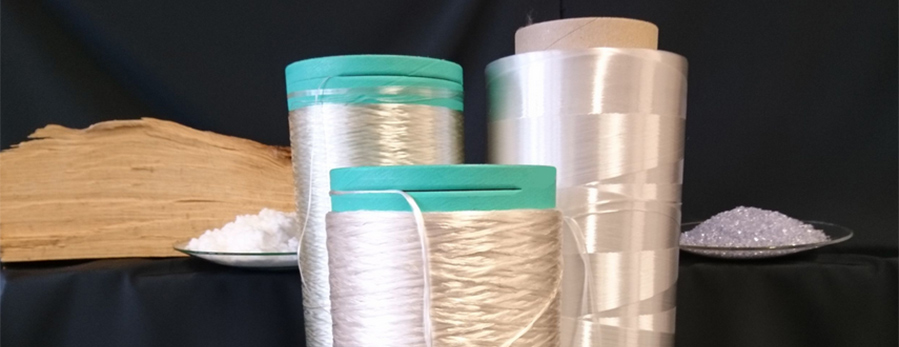
Starting materials for the production of sustainable composites. Photo: DITF
In collaboration with the project partners CG TEC, Cordenka, ElringKlinger, Fiber Engineering and Technikum Laubholz, the DITF are developing a new fiber composite material (CELLUN) with reinforcing fibers made of cellulose. The matrix of the material is a thermoplastic cellulose derivative that can be processed using industrial processing methods such as hot pressing or pultrusion. CELLUN made from renewable biopolymers enables the replacement of glass or carbon fibers in the production of industrial molded parts.

Organosheets are increasingly being used within the fast-growing segment of lightweight fiber composite construction. Organosheets are pre-consolidated semi-finished sheet products with a matrix of thermoplastics and various reinforcing fibers in a wide variety of textile designs. The thermoplastic matrix allows the organosheets to be processed using industry-established "fast" processes such as hot pressing, thermoforming, injection molding with organosheet inserts, or pultrusion. The processes produce highly recyclable, highly functionalized components with reproducible quality.

The textile reinforcement of organosheets consists mainly of glass, carbon, basalt or aramid fibers. These fibers have high stiffnesses and tensile strengths, but are energy-intensive to manufacture and recycle and can only be recycled in an increasingly low-grade condition.

In contrast, the CELLUN composite developed at DITF is a much more sustainable alternative. For the production of CELLUN, the reinforcing component is combined from non-fusible cellulose fibers as well as thermoplastic derivatized cellulose fibers as matrix to form a hybrid roving. The cellulosic reinforcing fibers used are regenerated fibers from the company Cordenka and the HighPerCell® cellulose fibers developed at DITF.
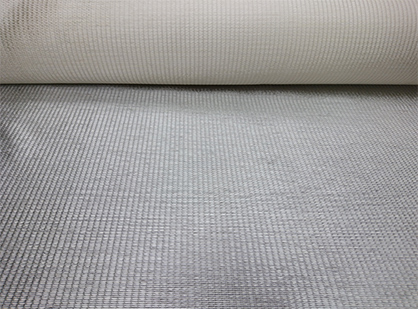
Hybrid textile produced from a hybrid yarn. Photo: DITF


CELLUN is now being further developed to industrial maturity as part of a joint project funded by the German Federal Ministry of Economics and Climate Protection (BMWK). The tasks of the DITF in the CELLUN joint project are primarily the production of suitable cellulose-based reinforcing fibers and the embedding of the fibers in the thermoplastic cellulose derivative matrix. The material is further processed in the in-house pilot plants into technical hybrid rovings and hybrid textiles. Using pultrusion and thermoforming processes or injection molding, molded parts can finally be produced that illustrate the technical application possibilities of the new material.


In the further course of the project, the focus will be on the complete recycling of the CELLUN material after the end of life (EOL). Two different approaches are being researched for this purpose. On the one hand, it is possible to thermally reshape CELLUN molded parts without any loss of quality. A second possible approach is to chemically separate the CELLUN material into its individual components again. These can then be used again 100% as new starting materials.

The novel CELLUN materials will offer a real advantage in the market for semi-finished technical products as an environmentally friendly, resource-conserving and cost-effective alternative to established composites in the lightweight construction and automotive sectors. By using renewable biopolymers, CELLUN will make a significant contribution to environmental and climate protection: on the one hand, conventional crude oil-based plastics can be substituted, and on the other hand, CELLUN reinforcement and matrix fibers can be produced with only low energy input and from natural raw materials.

More News from Deutsche Institute für Textil- und Faserforschung Denkendorf

#Research & Development

More safety and comfort for protective clothing thanks to auxetic fabrics

When everyday materials are pulled, they stretch or elongate in the direction of the pull and become narrower in cross-section. We can also observe this property in two-dimensional textiles. Auxetic structures behave differently here. They have the striking property of not changing under tensile stress or even increasing their width or thickness. These properties are advantageous, for example, in protective textiles or textile filter media. The DITF are researching auxetic fabrics for various applications.

#Research & Development

Panty liners prevent bacterial vaginosis

Worldwide, almost one third of women of childbearing age suffer from bacterial vaginosis. This is when the sensitive microbiome of the vagina becomes unbalanced. Such a disorder of the vaginal flora can cause urogenital infections, abscesses on the ovaries or fallopian tubes or premature births. This significantly increases the risk of infertility in women and of contracting a sexually transmitted disease or HIV.

#Research & Development

DITF send a signal for climate protection

The German Institutes of Textile and Fiber Research Denkendorf (DITF) have successfully implemented extensive investments in photovoltaic systems at their site in Denkendorf. The systems installed on the roofs of the buildings and covered parking lots have a total installed capacity of 840 kilowatt peak (kWp). The DITF invested 1.6 million euros in this with the support of the state of Baden-Württemberg. The system was ceremonially put into operation on September 17, 2025.

#Research & Development

4.2 million Euros for research into textile recycling

Around the world, used textiles are still rarely recycled and pile up into huge mountains of waste. A recent study by the Boston Consulting Group (BCG) drew attention to this problem. However, the low recycling rate is also due to the fact that only a small percentage of used textiles are actually suitable for recycling into high-quality materials and for demanding applications. The German Institutes of Textile and Fiber Research Denkendorf (DITF) are addressing this problem with their research.

More News on Research & Development

#Research & Development

Award-winning research for sustainable carbon fibre cycles

Sustainable recycling of carbon fibres is possible through targeted electrochemical surface modification, which makes the sizing of carbon fibres resistant to solvolysis. ITA PhD student Sabina Dann was awarded the MSW Award from RWTH Aachen University for her master's thesis on this development. The award ceremony took place on 12 November 2025 in Aachen.

#Research & Development

Kick-off for the Textile Production of the Future: Establishment of a Textile Technology and Development Centre in Mönchengladbach, Germany

The Institut für Textiltechnik (ITA) of RWTH Aachen University, together with its partners, is pleased to announce that it has received approval for its joint initiative, ‘Textile Factory 7.0’. The goal of the project is the establishment of a technology and development centre for the textile industry in Mönchengladbach.

#Research & Development

Bio-based fibers with good flame retardancy

Fibers made from bio-based plastics reduce dependence on fossil raw materials and promote the circular economy. The covalent bonding of flame-retardant additives can open the way for these fibers to enter the mass market.

#Research & Development

Exchange data between textile companies openly, securely and cost-effectively without a central platform – ITA makes it possible

The Institut für Textiltechnik (ITA) of RWTH Aachen University has launched a new demonstrator for an open and secure data space in the textile industry at the Digital Innovation Centre Europe (DICE). For the first time, the demonstrator shows directly and clearly how companies can share their data securely with each other without the need for a central platform. Data exchange is based on shared, freely usable technical foundations.

Latest News

#Spinning

Perfect quality through collaboration: Machinery from Trützschler, Toyota and Murata at Zirve Tekstil

In today’s textile industry, excellence is not achieved by chance – it’s the result of deliberate decisions, technical expertise, and the courage to go beyond conventional paths. The Turkish company Zirve Tekstil has done just that: by combining the best technologies from Trützschler, Toyota and Murata, they’ve created a production setup that delivers outstanding yarn quality – recognized worldwide.

#Associations

Engineering depth and diversity for composites

Airbond is the latest member of the British Textile Machinery Association (BTMA) to receive recognition for contributions to the composites industry. The engineering firm based in Pontypool, South Wales, has just received the Make UK Energy and Sustainability Award for its Lattice 3D Printing project.

#Technical Textiles

Carrington Textiles and Pincroft unite defence expertise at Enforce Tac

Carrington Textiles and Pincroft return to Enforce Tac for the third time, presenting a co-branded stand that brings together textile manufacturing and specialist finishing under one roof.

#Yarns

Eastman introduces Naia™ Lyte at Première Vision Paris, marking a major breakthrough in fiber tenacity for cellulose acetate filament yarn performance

Eastman unveils Naia™ Lyte, a new cellulose acetate filament yarn that represents an important milestone in performance for lightweight and premium fabrics, at Première Vision Paris. Presented for the first time to the international fashion and textile community, Naia™ Lyte expands the capabilities of acetate yarn by introducing enhanced tenacity, unlocking new creative and technical possibilities for designers, mills and brands.

TOP