[pageLogInLogOut]

#Research & Development

DITF produce nonwovens for certified FFP 2 protective masks
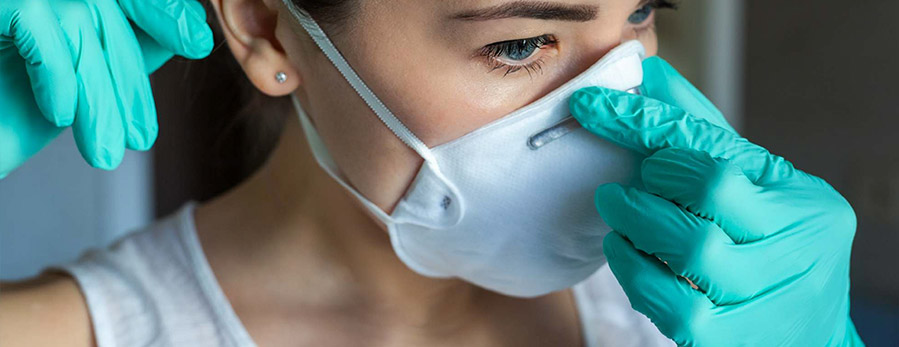
Crucial during the corona epidemic: suitable protective clothing. (Photo: ©iStockphoto.com/Igor Ploskin)
As of this week, it is mandatory to wear masks on buses and trains and when shopping in Germany. However, protective masks are still in short supply. While simple mouth and nose covers are currently sufficient for everyday life, FFP 2 or FFP 3 masks are urgently needed in hospitals and in the care sector. The German Institutes of Textile and Fiber Research (DITF) in Denkendorf have converted their research facilities to produce certified FFP 2 protective masks in order to be able to produce 200,000 certified FFP 2 protective masks in the coming weeks together with partners.

Research pilot plant was converted for production

The technical center of the textile research center in Denkendorf is not actually designed for the production of nonwovens for FFP 2 masks. Nevertheless, the team from the Nonwoven Technology Division managed to convert the plant in two weeks so that the material produced could achieve a separation efficiency of FFP 2 level. This material will be used to produce masks that will be worn by doctors and nurses, but also by firefighters and police during the corona pandemic.

The technical equipment is not the only difficulty the team has to master. For example, the scientists are still waiting for the delivery of spunbonded fabric in which the meltblown will be embedded. "We were lucky, however, with the starting material polypropylene for the meltblown, which is not only delivered quickly, but is even donated to us by the company Borealis," explains Professor Götz T. Gresser, board member at the DITF.


The protective masks are assembled by the Junker company and then tested and certified by DEKRA. After successful certification, they are delivered to the Ministry for Social Affairs and Integration of Baden-Württemberg, which coordinates the supply of protective equipment. "As a research institute we cannot produce large quantities, but any quantity helps", emphasizes Professor Michael R. Buchmeiser, Chairman of the Board of Directors of the DITF.

This is why the DITF is not only entering into production, but has been advising companies and organizations in their search for suitable filter media for textile masks since February. The scientists provide information on the normative requirements that the materials must meet and where they can be tested and certified. The DITF were also able to put the Ministry of Social Affairs in touch with one of their network partners who will supply further four million mouth and nose protection masks (MNS).

The DITF also use their procurement infrastructure to support institutions that are currently unable to purchase protective clothing on the market. In this way, 1,000 MNS masks could be passed on to the Denkendorf community.
More News from Deutsche Institute für Textil- und Faserforschung Denkendorf

#Research & Development

More safety and comfort for protective clothing thanks to auxetic fabrics

When everyday materials are pulled, they stretch or elongate in the direction of the pull and become narrower in cross-section. We can also observe this property in two-dimensional textiles. Auxetic structures behave differently here. They have the striking property of not changing under tensile stress or even increasing their width or thickness. These properties are advantageous, for example, in protective textiles or textile filter media. The DITF are researching auxetic fabrics for various applications.

#Research & Development

Panty liners prevent bacterial vaginosis

Worldwide, almost one third of women of childbearing age suffer from bacterial vaginosis. This is when the sensitive microbiome of the vagina becomes unbalanced. Such a disorder of the vaginal flora can cause urogenital infections, abscesses on the ovaries or fallopian tubes or premature births. This significantly increases the risk of infertility in women and of contracting a sexually transmitted disease or HIV.

#Research & Development

DITF send a signal for climate protection

The German Institutes of Textile and Fiber Research Denkendorf (DITF) have successfully implemented extensive investments in photovoltaic systems at their site in Denkendorf. The systems installed on the roofs of the buildings and covered parking lots have a total installed capacity of 840 kilowatt peak (kWp). The DITF invested 1.6 million euros in this with the support of the state of Baden-Württemberg. The system was ceremonially put into operation on September 17, 2025.

#Research & Development

4.2 million Euros for research into textile recycling

Around the world, used textiles are still rarely recycled and pile up into huge mountains of waste. A recent study by the Boston Consulting Group (BCG) drew attention to this problem. However, the low recycling rate is also due to the fact that only a small percentage of used textiles are actually suitable for recycling into high-quality materials and for demanding applications. The German Institutes of Textile and Fiber Research Denkendorf (DITF) are addressing this problem with their research.

More News on Research & Development

#Research & Development

Sustainable athletic wear made from bio-based Polyethylene

Conventional sports textiles made from petroleum-based synthetic fibres are to be replaced in the future by sustainable, bio-based, cooling textiles. Polyethylene, previously used mainly in the packaging industry, is thus qualified for use in textiles and, as a bio-based drop-in solution, offers a cost-effective, sustainable alternative for the future.

#Research & Development

Innovation center for textile circular economy inaugurated

Just over eight months after the foundation stone was laid, the new Innovation Center for Textile Circular Economy was officially inaugurated today at TITK Rudolstadt. Thuringia's Minister President Mario Voigt, TITK Director Benjamin Redlingshöfer, and other guests of honor cut the ribbon to the modern building complex and viewed the premises, which are now ready for occupancy. The “DICE – Demonstration and Innovation Center for Textile Circular Economy” is TITK's largest single investment to date. The Free State of Thuringia supported the total cost of €11.5 million with €8 million in GRW and FTI funding.

#Research & Development

Sustainable design of Geosynthetics and roof underlayments made from recyclates

Is it possible to recover plastic recyclates from previously unused waste streams in order to produce high-quality fibers and films? How can bio-based polymer fibers be manufactured so as to allow adjustable biodegradability? These are the questions being addressed by researchers from the Fraunhofer Cluster of Excellence Circular Plastics Economy CCPE in the Zirk-Tex project.

#Research & Development

India, ITA and innovation – enhanced cooperation in research, implementation and bilateral projects such as hydrogen mobility

The Indian Consul General, Dr Shuchita Kishore, visited the Institut für Textiltechnik (ITA) of RWTH Aachen University on 15 December to inspect the joint project between the ITA, the Indian Institute of Technology (IIT) Bombay and industrial partners from India and Germany and to tour the ITA.

Latest News

#Yarns

Yarn spinning partner Tearfil continues to support Spinnova’s fibre and technology

Spinnova Plc has signed non-binding Letter of Intent (LOI) with Portuguese yarn spinning company, Tearfil Textile Yarns to secure access to SPINNOVA® fibre volumes.

#Yarns

B.I.G. Yarns achieves EcoVadis Platinum Rating, ranking among top 1% of companies worldwide

B.I.G. Yarns, the carpet yarn brand of B.I.G. and a leading manufacturer of polyamide (PA), polypropylene (PP) and polyester (PET) yarns for contract, automotive, and high-end residential applications, has been awarded the EcoVadis Platinum Medal, placing the company among the top 1% of more than 130.000 companies assessed globally.

#Digital Printing

Mimaki upgrades TS330 series for vibrant and seamless dye sublimation printing

The TS330 Series now provides users with an extended colour gamut, offering the flexibility to serve different markets profitably from one solution – from fashion to décor to signage – with improved colour vibrancy, fidelity and accuracy. Mimaki also introduces a larger solution to the TS330 Series, the TS330-1800, able to accommodate single-piece, wide textile fabrics, ideal for larger home décor applications.

#Sustainability

Storm Creek achieves bluesign® PRODUCT status

Storm Creek (ASI#/PPAI#) is proud to announce a meaningful sustainability milestone: the company has achieved bluesign® PRODUCT status: becoming the first US-based supplier in the promotional products industry to earn this globally respected certification. While this marks an industry first, for Storm Creek, it represents something far more important: a continuation of doing what they believe is right.

TOP