[pageLogInLogOut]

#Recycling / Circular Economy

ReHubs names Béatrice Moureaux CEO to advance textile recycling in Europe

ReHubs CEO Béatrice Moureaux © 2026 ReHubs
ReHubs has appointed Béatrice Moureaux as Chief Executive Officer, marking a new chapter for the European alliance as it continues to strengthen its work to scale textile-to-textile recycling across Europe. Béatrice has served as Board Advisor to ReHubs since December 2025, working closely with its Board, team and members on the organisation’s strategy and projects. She brings more than 25 years of experience across technical textiles, advanced fibres, nonwovens and circular innovation.

Her appointment comes at a challenging time for Europe’s textile circularity transition. Despite advances in technology and growing policy ambition, the conditions needed to scale textile-to-textile recycling remain difficult. Recyclers need greater certainty of demand to invest in capacity, while brands need reliable and competitive supplies of recycled fibres to commit to greater volumes.

ReHubs’ strategy is focused on breaking this supply-demand deadlock. As a membership-based organisation, ReHubs brings together leading organisations from across the textile value chain to strengthen collaboration, improve the conditions for investment and support the development of a viable textile-to-textile recycling industry in Europe.

Béatrice Moureaux, CEO of ReHubs, sees breaking the supply-demand deadlock as a key challenge for scaling textile-to-textile recycling in Europe: “I’m proud to take on the role of CEO at such an important moment for ReHubs and our industry. The road ahead will be challenging, and breaking the supply-demand deadlock to scale textile-to-textile recycling in Europe will require an openness to collaboration across the value chain and the right conditions for investment. ReHubs has a strong community of organisations committed to making this transition happen, and I look forward to continuing to work with and support our members as we take this next step together.”

Kasper Damsø, NewRetex and Co-Chair of ReHubs, emphasises that technological progress must be accompanied by development across the entire value chain: “We have technologies today that can improve how textiles are sorted and recycled, but technology alone will not create a circular system. All steps along the value chain need to develop together. ReHubs has an important role in connecting these different parts and helping turn individual solutions into a functioning ecosystem. Béatrice understands both the technical realities and the importance of bringing people together, and I look forward to working with her as we take ReHubs forward.”

ReHubs’ recent report with Boston Consulting Group has put a particular focus on the economics of textile-to-textile recycling and the conditions required to attract investment and build capacity in Europe. This includes working with its members to better understand where targeted interventions can help create a viable market for recycled textiles.

Véronique Allaire Spitzer, Refashion and Co-Chair of ReHubs, highlights EPR as an important lever for advancing textile circularity in Europe: “Europe is at a turning point for textile circularity. EPR is a powerful lever to translate ambition into action, but its success depends on practical solutions and close collaboration across the value chain. As a pioneer PRO in the sector for over 15 years, Refashion knows the importance of bringing stakeholders together to build a truly circular textile industry. ReHubs can play this role at European level. Béatrice knows the organisation and its members well, and I am delighted to see her lead ReHubs into its next chapter.”

Moureaux takes over from Robert van de Kerkhof, PEPPER-i2, who has served as interim CEO. During his tenure, ReHubs strengthened its focus on the structural and economic barriers to scaling textile-to-textile recycling and increased its engagement across the European textile circularity ecosystem.

Robert van de Kerkhof will continue to support ReHubs as Chairman of the Board and will work closely with Moureaux through the transition.

Robert van de Kerkhof points to economics, investment and scale as key issues for the development of textile-to-textile recycling: “The last few years have made one thing very clear: scaling textile-to-textile recycling is not something any technology or organisation can achieve alone. ReHubs has helped put some of the most difficult questions around economics, investment and scale firmly on the industry agenda. Béatrice brings deep industry expertise and leadership to ReHubs. I have great confidence in her, and I look forward to supporting her and the ReHubs team as they build on what we have started and take the organisation forward.”


More News from REHUBS

#Recycling / Circular Economy

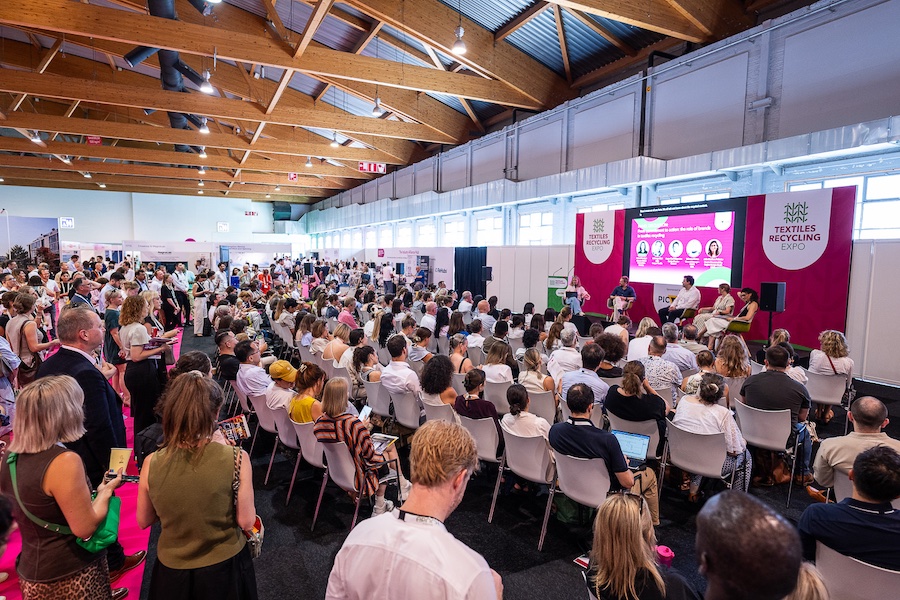
ReHubs calls on industry experts to shape Textiles Recycling Expo 2027 conference programme

ReHubs is proud to continue its collaboration with Textiles Recycling Expo as the Structural Partner for the third consecutive year, reinforcing its commitment to bringing together the organisations, expertise and solutions needed to scale textile-to-textile recycling across Europe.

#Recycling / Circular Economy

ReHubs elects new Board of Directors to lead the next phase of ReHubs’ strategy to recycle 2.7 million tonnes of textile waste annually by 2035

ReHubs has elected its new Board of Directors, marking an important milestone as the industry alliance continues to accelerate the industrial scale-up of textile-to-textile recycling across Europe. The election took place during the ReHubs Annual Event in Brussels on June 23rd, held alongside the Textile Recycling Expo and Future Fabrics Expo. The newly elected Board combines expertise from across the textile value chain, reflecting ReHubs' collaborative approach to solving the industry’s textile waste crises.

#Recycling / Circular Economy

Europe needs tipping point to scale textile-to-textile recycling, BCG and ReHubs say

A new report from Boston Consulting Group (BCG) and ReHubs, titled “Advancing Textile Circularity – Europe’s textile waste challenge: Scaling Textile-to-Textile requires enabling mechanisms”, highlights the urgent need for systemic action to tackle Europe’s growing textile waste and scale a circular textile economy.

#Recycling / Circular Economy

A circular European value chain turns post-consumer textile waste into new garments for Dutch retailer Zeeman

A closed-loop recycling project has successfully transformed 24 tons of post-consumer textiles into nearly 50,000 garments for Dutch retailer Zeeman, with each product containing a high-rate of 70% recycled content. This achievement represents a major milestone in accelerating textile-to-textile recycling in Europe.

More News on Recycling / Circular Economy

#Recycling / Circular Economy

ReSpin founder Åsa Strandberg receives Innovation Champion of the Year 2026 award

Åsa Strandberg, founder and CEO of Swedish textile recycling company ReSpin AB, has been named Innovation Champion of the Year 2026. The award recognises her development of RespinJenny, a patented technology designed to recycle textile waste into new, high-quality fibres without using water, chemicals or additional virgin raw materials. The distinction was presented by the Olle Oscarsson Foundation and Axera Inkubator at Guldgalan in Sweden.

#Recycling / Circular Economy

Circulose resumes recycling of discarded cotton textiles and appoints interim CEO

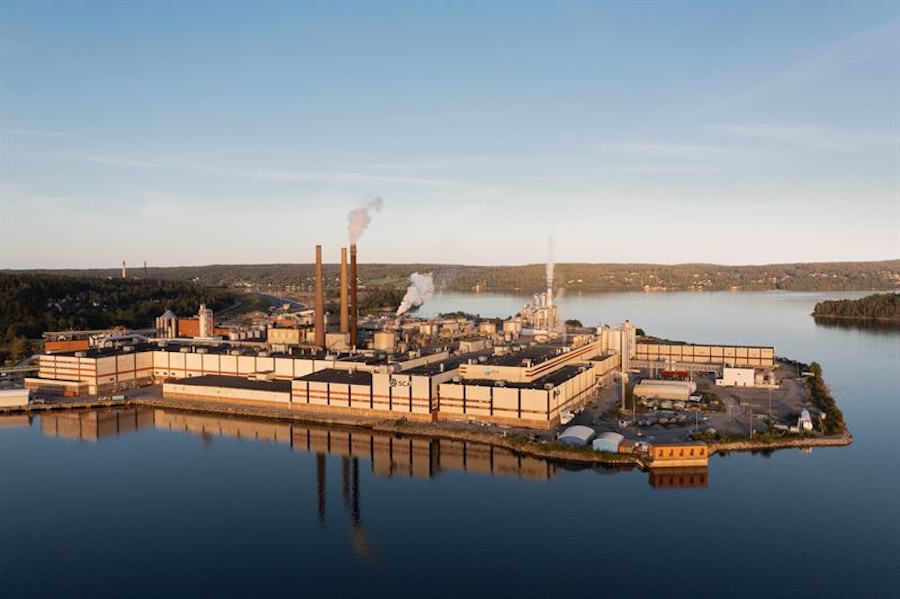
Circulose today announced its restart of commercial-scale production plant at Ortviken in Sundsvall, Sweden, marking a significant step in scaling next-generation materials for the global fashion industry. The Ortviken plant is the world’s first commercial-scale chemical textile recycling facility. Its restart demonstrates that the fashion industry is seeking ways to scale proven solutions that move beyond pilots and into commercial production.

#Recycled Fibers

Reju expands textile-to-textile recycling network with six international fabric manufacturers

Reju, a textile-to-textile regeneration company, is expanding its industrial network through collaborations with six fabric manufacturers in Europe and the Americas. The initiative aims to accelerate the integration of regenerated polyester into textile manufacturing and support the development of finished fabrics for commercial applications.

#Recycling / Circular Economy

H&M Foundation highlights economic barriers to scaling circular textile systems

Discussions at Textile Exchange 2026 underline the need for coordinated investment, reliable material flows and a fair distribution of costs and risks across the textile recycling value chain.

Latest News

#India ITME 2026

India’s textile industry: Current position, growth targets and industrial development

With ambitious export targets, major investments in manufacturing infrastructure and new international trade agreements, India is pursuing a comprehensive development strategy for its textile and apparel industry. An overview of the industry’s current position, government initiatives, progress achieved and challenges ahead.

#Weaving

“A complex design is only useful if the machine can reproduce it consistently”

Andreas Schnabel, Head of R&D for Technical Weaving Systems at Stäubli, discusses how 3D weaving can create textile reinforcements tailored to the loads within a composite component, where near-net-shape weaving can reduce processing steps and material waste, and what it takes to produce complex structures reliably and economically. He also explains how manufacturers can adapt Stäubli’s modular TF weaving platforms to new applications and how the company’s centre of excellence in Bayreuth supports the transition from research to industrial production.

#India ITME 2026

India ITME 2026: Textile technology meets India's investment ambitions

With ambitious growth targets, government incentive programmes and industrial development initiatives already underway, India is preparing for the next stage of its textile transformation. Against this backdrop, the 12th India ITME, taking place in Greater Noida from 4 to 9 December 2026, arrives at a particularly important moment for machinery manufacturers and textile producers alike.

#ITMA Asia + CITME 2026

ITMA ASIA + CITME 2026: Shanghai prepares for a record edition

With record demand for exhibition space, a strong presence of international technology suppliers and growing interest in automation and intelligent manufacturing, ITMA ASIA + CITME 2026 will provide an important overview of technological developments in the world’s largest textile producing region.

TOP