[pageLogInLogOut]

#Natural Fibers

Cotton made in Africa partners receive top marks in independent verifications
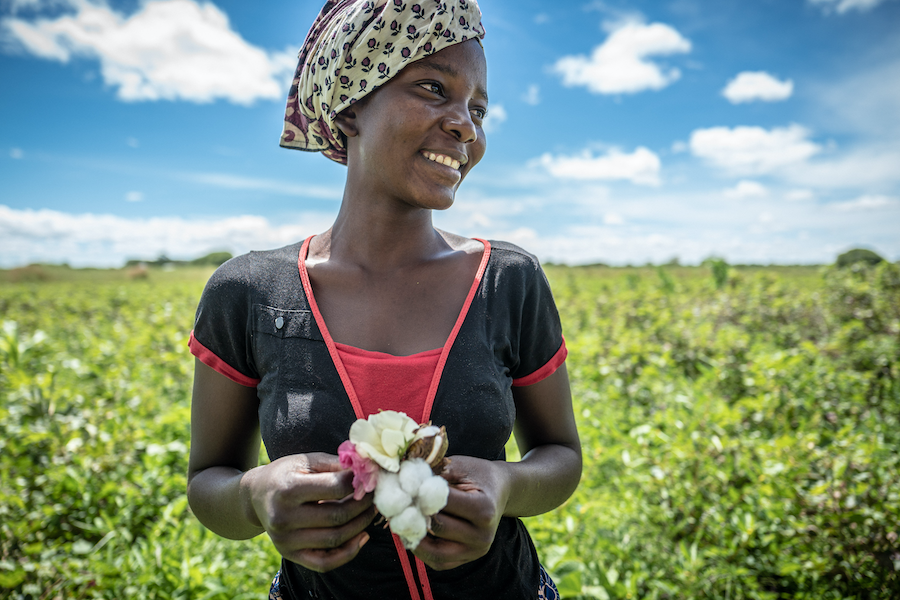
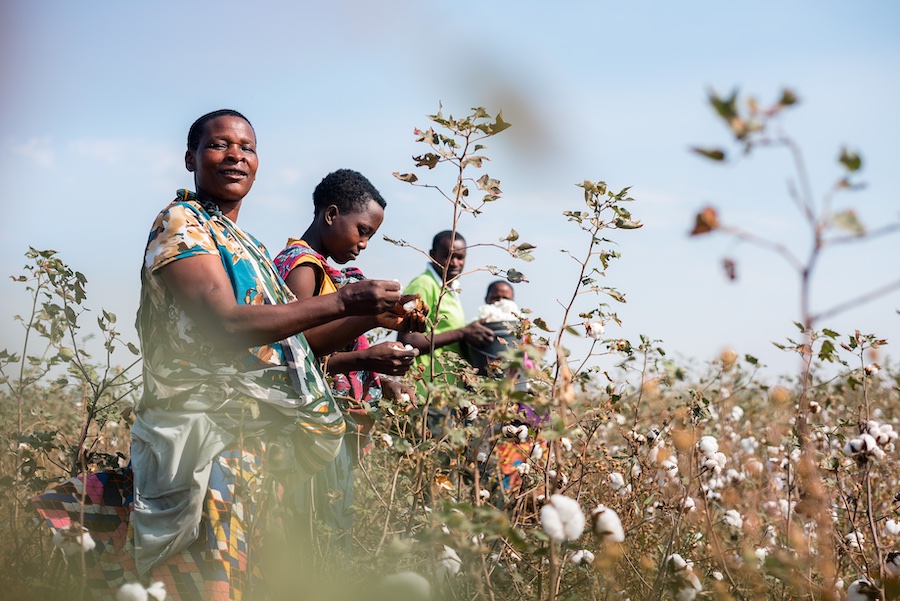
CmiA farmer; Credit_Martin J. Kielmann © 2026 CmiA
Cotton made in Africa® (CmiA) and CmiA Organic are two internationally recognised standards that aim to promote sustainable development in the African cotton sector south of the Sahara. To ensure the standards’ credibility among brands, retailers, and consumers, independent verifiers evaluate compliance on the ground. The verification results for 2025, now published in the Aggregated Verification & Implementation Report, were very strong: The verifiers awarded consistently very good remarks regarding management, people, prosperity, and the environment.


In 2025, 24 verification missions took place at 20 cotton companies in ten production countries in Africa South of the Sahara. Of these verifications, twelve were at the field level and twelve at the ginnery level, where the harvested cotton is prepared for further processing. The verifications focussed on the four main pillars of the CmiA standards’ sustainability aspects: management, people, planet, and prosperity.

Verifications completed with top marks

Compliance with minimum requirements and progress of sustainability performance are regularly checked through independent, on-site verifications. The 2025 Aggregated Verification & Implementation Report summarises these results, regarding the twelve principles and 288 indicators, for all partners. It clearly shows that the implementation of these criteria by partnering companies, both in the fields and in their businesses, earned a rating of “very good” for all pillars. The best results were achieved in the prosperity pillar, with the management pillar following at its heels. This was followed by the remaining pillars: people and planet.

“These results bear out our principle of consistently assisting partners in implementing the standards’ requirements through diverse approaches. Only close cooperation—as equals and on site—makes these results possible,” says Ruth Achterwinter, the CmiA verification manager at the Aid by Trade Foundation, adding, “The verifications are carried out on an ongoing basis by independent and qualified organisations. We make targeted use of the results to support our partners as needed.”

Success factors: Training and projects for cotton smallholders, events conducted with partners

In 2025, training once again offered valuable support to the approximately 715,000 CmiA farmers (almost 43,000 of whom are producers of CmiA Organic cotton) in implementing the standard’s requirements. The range of topics covered by the training is broad, ranging from best practices in climate-resilient cotton production to empowering women to methods for soil improvement.

In addition, the report demonstrates that the achievement of trustworthy and comprehensive cooperation between AbTF and its partners is based on projects and regular events; these include the Innovations Club, regional workshops, and collaboration with international cotton representatives and stakeholders.

Learn more about the Verification Report


More News from Cotton made in Africa (CmiA)

#Raw Materials

New study shows low environmental impact by Cotton made in Africa Organic Cotton from Tanzania

Today, the Aid by Trade Foundation (AbTF) is announcing the results of a comprehensive life-cycle analysis (LCA) for cotton produced in Tanzania under the Cotton made in Africa Organic (CmiA Organic) standard. The study emphasises the small ecological footprint of CmiA Organic verified cotton. This can largely be traced back to the absence of synthetic pesticides, artificial fertilisers, and artificial irrigation. Consequently, CmiA Organic cotton can help the textile industry meet regulatory requirements as well as science-based targets. The results also show that the consequences of climate change threaten the livelihoods of these cotton farmers, even though the type of agriculture they practise barely contributes to climate change.

#Raw Materials

International Women’s Day: Cotton made in Africa strengthens equality for women through targeted investments

On the occasion of International Women’s Day—which will be observed on 8 March under the motto “Rights. Justice. Action. For ALL Women and Girls”—the Aid by Trade Foundation (AbTF), which is responsible for Cotton made in Africa® (CmiA), underlines its long-standing and ongoing commitment to the equality of women in African cotton production areas.

#Natural Fibers

Human Rights Day: Cotton made in Africa reinforces its commitment to ensuring respect for human rights in cotton production

The sustainable cotton standard Cotton made in Africa (CmiA) has always focussed on respect for human rights, including by prohibiting child labour and discrimination. With the new version of the CmiA standard coming into force, AbTF raises requirements for due diligence in the areas of human rights and risk management.

#Natural Fibers

Cotton made in Africa launches public consultation for standard revision

The Aid by Trade Foundation (AbTF) is opening public consultation on its Cotton made in Africa standard today. Interested parties will have 60 days to provide feedback, helping shape the future of one of the world’s largest standards for sustainable cotton. The latest update to the standard, Version 5.0, focusses on increasing Cotton made in Africa’s effectiveness and adapting its criteria and indicators to external factors, which currently include biodiversity loss and a growing set of reporting requirements for companies.

More News on Natural Fibers

#Raw Materials

Brazil sets new cotton export record and consolidates global leadership

Brazil ended the 2025/26 commercial year with a new record, consolidating its position as the world’s largest cotton exporter. Between August 2025 and July 2026, the country shipped 3,373,941 tonnes of the fiber, 19% more than in the previous cycle, and reached record revenue of US$5.3 billion. The result represents a milestone in Brazil’s expansion in the international market and reinforces the country’s role as a strategic supplier to the global textile industry.

#Raw Materials

Better Cotton Initiative partners with Avalo in AI plant breeding for climate-resilient cotton

The Better Cotton Initiative (BCI) has partnered with agriculture solutions company Avalo, whose platform accelerates the speed at which plants with key resiliency traits may be developed.

#Natural Fibers

Plastic-free stretch technologies drive new direction for denim innovation

As the denim industry looks for ways to reduce its reliance on synthetic fibres, plastic-free stretch technologies are gaining momentum. Developments based on mechanical fabric construction and natural rubber are demonstrating that comfort and stretch can be achieved without conventional elastane, supporting both recyclability and circular product design.

#Raw Materials

ICAC International Seminar in Taipei to explore strategic synergies across the textile supply chain

The International Cotton Advisory Committee (ICAC) — together with the Taiwan Textile Federation (TTF), under the guidance of the Ministry of Economic Affairs and the Ministry of Foreign Affairs of Taiwan — will bring international cotton and textile leaders together in Taipei on September 10 for the ICAC International Seminar 2026.

Latest News

#Europe

European textile industry calls for €10 handling fee on ultra-fast-fashion imports

The introduction of the €3 customs duty on low-value imports marks an important milestone in Europe’s efforts to address the challenges created by the rapid growth of ultra-fast-fashion imports. Together with the abolition of the €150 customs duty exemption, it demonstrates that policymakers are willing to act when market distortions become impossible to ignore. However, the European textile and clothing industry considers this a first step rather than the final destination.

#Research & Development

From smart jackets to laser technology: Mona Neubaur explores Textile Factory 7.0

As part of her summer tour, North Rhine-Westphalia’s Minister for Economic Affairs and Climate Action, Mona Neubaur, visited Textilfabrik 7.0 in Mönchengladbach to experience the project’s innovations first-hand. Under the motto “smart and clean”, the visit focused on innovative technologies and sustainable alternatives for textile production - from smart jackets to the decolourisation of textiles using fungal cultures.

#CINTE Techtextil China 2026

Cinte Techtextil China 2026 has opened today, bringing global innovations and resources to Shanghai

As Asia’s premier platform catering to the evolving needs in technical textiles and nonwovens, Cinte Techtextil China has opened today at the Shanghai New International Expo Centre, gathering over 300 exhibitors from 15 countries and regions. Across Halls W3 to W5, this edition will create chances for fast-growing sectors and emerging trends – such as Mobiltech, Medtech & Protech, Indutech and more. The curated zones, pavilions, and fringe programme are designed to better connect exhibitors with targeted buyers from across China, Asia-Pacific, and further afield. Meanwhile, the Association Village will gather international industry associations to foster even more global collaboration.

#Textiles & Apparel / Garment

Texworld Apparel Sourcing Paris opens with focus on AI, circularity and new sourcing regions

More than 1,000 exhibitors from around the world are gathering at Paris-Le Bourget as Texworld Apparel Sourcing Paris opens its doors from August 31 to September 2. With around 500 textile manufacturers and a similar number of apparel and accessories suppliers, the trade fair reflects the ongoing transformation of global sourcing and the growing diversification of supply regions.

TOP