[pageLogInLogOut]

#Raw Materials

Cotton made in Africa puts farmer dialogue at the heart of agricultural training
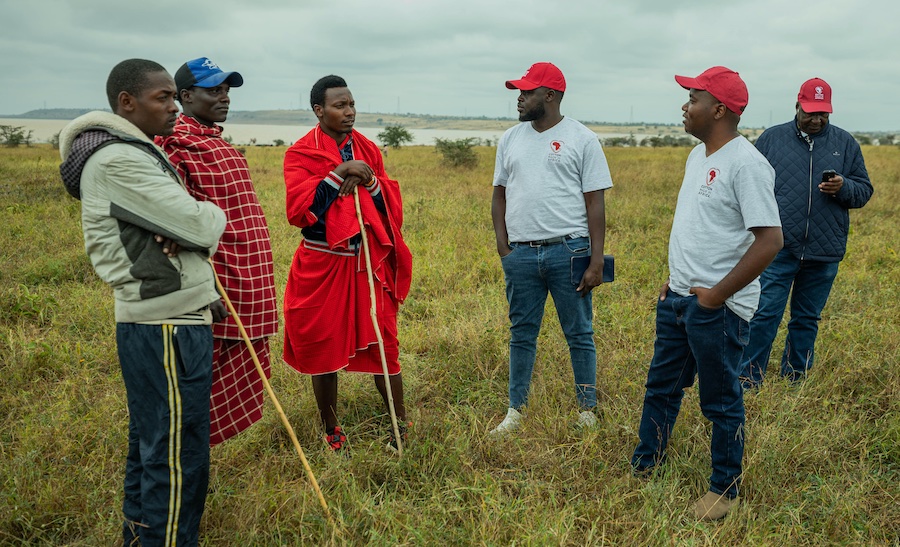
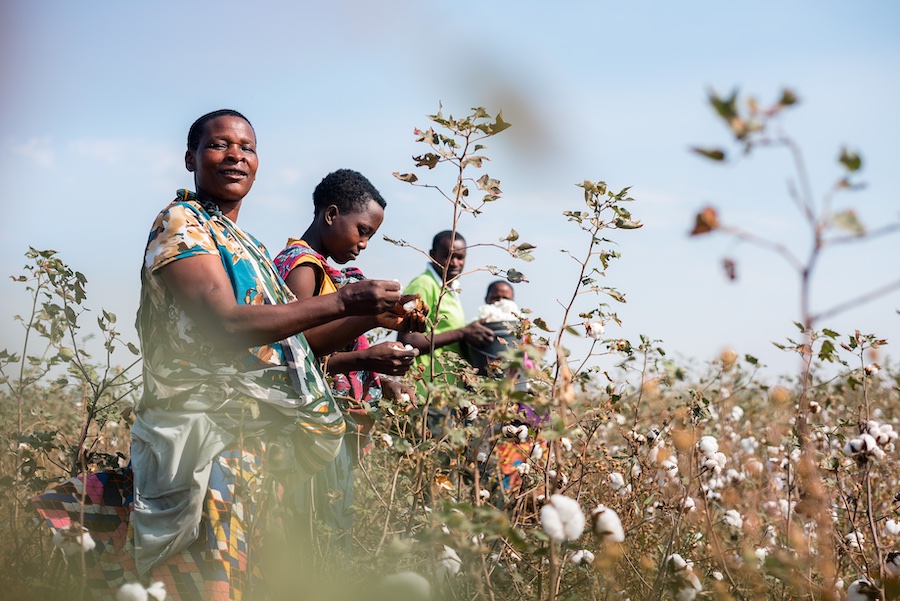
CmiA partners attend an APW Community Engagement and Biodiversity Training course in Tanzania. Credit: Patrick Tenga/African People & Wildlife © 2026
A new manual created by the Aid by Trade Foundation and African People & Wildlife shows how Cotton made in Africa aims to transform cotton cultivation through dialogue rather than directives.

Due to droughts and species extinction caused by climate change and biodiversity loss, agriculture is being forced to adapt rapidly. This is an especially great challenge for small-scale farmers in Africa South of the Sahara. Training can make a difference, but simply issuing instructions from above often fails to produce impact. In close cooperation with African People & Wildlife (APW), a community-based nature conservation organisation with 20 years of experience, the Hamburg-based Aid by Trade Foundation (AbTF) has published a pioneering manual: the CmiA Community Engagement Training Manual. In this manual, the two partners introduce a new approach to agricultural consulting and to establishing a partnership-based dialogue on an equal footing with small-scale cotton farmers.

Designed as a practical guide, the new training manual moves beyond the top–down paradigm that often characterises traditional agricultural consulting. It was developed by both organisations in collaboration over several years, building on APW’s tried and tested ACTIVE Community Engagement Model. Divided into four modules, the manual covers topics ranging from socio-cultural planning to the holding of participatory sessions and the evaluation of learning success.

Complex challenges call for new paths

This manual places cotton producers at the heart of a process that involves collaborative learning, communication, and decision-making. Through this process, agricultural advisors and lead farmers develop into 'community champions' (moderators of change). Their main focus is on engaging farming communities in a dialogue-driven process to bring about lasting positive changes in traditional farming practices.

The reason for this is that climate change, biodiversity loss, and their impact on rural communities require extensive adjustments to be made to cotton cultivation. In order to implement these adjustments, it is not sufficient to give purely technical recommendations for action and to verify their implementation; rather, it is necessary to take into account local knowledge, traditional practices, and farmers’ individual risk perceptions. The manual provides facilitators in the growing regions with a guide to analysing local needs collaboratively, helping them identify what adjustments smallholder farming truly requires in each context. This approach will lead to a greater acceptance of innovative cultivation methods, to joint action, and to the development of a deeper understanding of the need for change.

Communities at the center of action

“The manual reflects our conviction that agriculture can only function in the long term if rural communities are the focus of action,” says Alexandra Perschau, the head of cotton standards at the Aid by Trade Foundation, continuing, “Farmers are not passive recipients of recommendations for action; they are equal partners as the pivotal point of change. Their valuable experience and the rich, traditional knowledge of many people and communities form the basis of the new approach.”

Currently, the handbook is being introduced to CmiA implementation partners through an initial 'Training of Trainers' and CmiA regional workshops led by APW. Key contributors to this effort include Alais Morindat, the head of the ACTIVE Community Engagement programme at APW; Revocatus Magyane, the ACTIVE programme director and the senior programme officer of APW; and Dr Ben Sekamatte, an agricultural expert and consultant for CmiA from Uganda.

The CmiA Community Engagement Training Manual


More News from Cotton made in Africa (CmiA)

#Natural Fibers

Cotton made in Africa partners receive top marks in independent verifications

Cotton made in Africa® (CmiA) and CmiA Organic are two internationally recognised standards that aim to promote sustainable development in the African cotton sector south of the Sahara. To ensure the standards’ credibility among brands, retailers, and consumers, independent verifiers evaluate compliance on the ground. The verification results for 2025, now published in the Aggregated Verification & Implementation Report, were very strong: The verifiers awarded consistently very good remarks regarding management, people, prosperity, and the environment.

#Raw Materials

New study shows low environmental impact by Cotton made in Africa Organic Cotton from Tanzania

Today, the Aid by Trade Foundation (AbTF) is announcing the results of a comprehensive life-cycle analysis (LCA) for cotton produced in Tanzania under the Cotton made in Africa Organic (CmiA Organic) standard. The study emphasises the small ecological footprint of CmiA Organic verified cotton. This can largely be traced back to the absence of synthetic pesticides, artificial fertilisers, and artificial irrigation. Consequently, CmiA Organic cotton can help the textile industry meet regulatory requirements as well as science-based targets. The results also show that the consequences of climate change threaten the livelihoods of these cotton farmers, even though the type of agriculture they practise barely contributes to climate change.

#Raw Materials

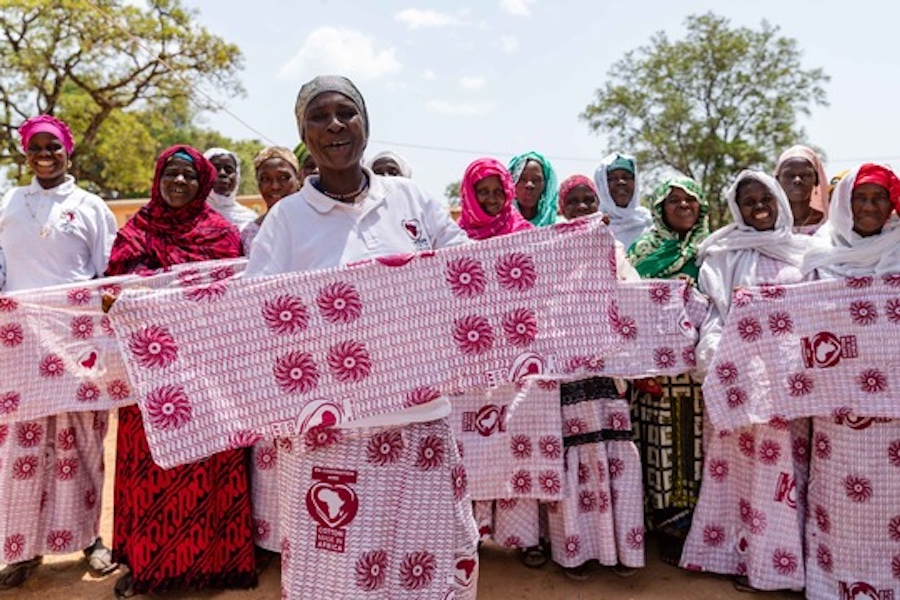
International Women’s Day: Cotton made in Africa strengthens equality for women through targeted investments

On the occasion of International Women’s Day—which will be observed on 8 March under the motto “Rights. Justice. Action. For ALL Women and Girls”—the Aid by Trade Foundation (AbTF), which is responsible for Cotton made in Africa® (CmiA), underlines its long-standing and ongoing commitment to the equality of women in African cotton production areas.

#Natural Fibers

Human Rights Day: Cotton made in Africa reinforces its commitment to ensuring respect for human rights in cotton production

The sustainable cotton standard Cotton made in Africa (CmiA) has always focussed on respect for human rights, including by prohibiting child labour and discrimination. With the new version of the CmiA standard coming into force, AbTF raises requirements for due diligence in the areas of human rights and risk management.

More News on Raw Materials

#Raw Materials

New Cotton Review examines competitiveness, market risk, and opportunities

From moving record volumes of Brazilian cotton to market, to managing price volatility, unlocking Ethiopia’s production potential, and strengthening African textile trade, the latest edition of Cotton: Review of the World Situation examines some of the most consequential opportunities and challenges facing the global cotton industry.

#Raw Materials

Kraig Labs ships first commercial spider silk yarn

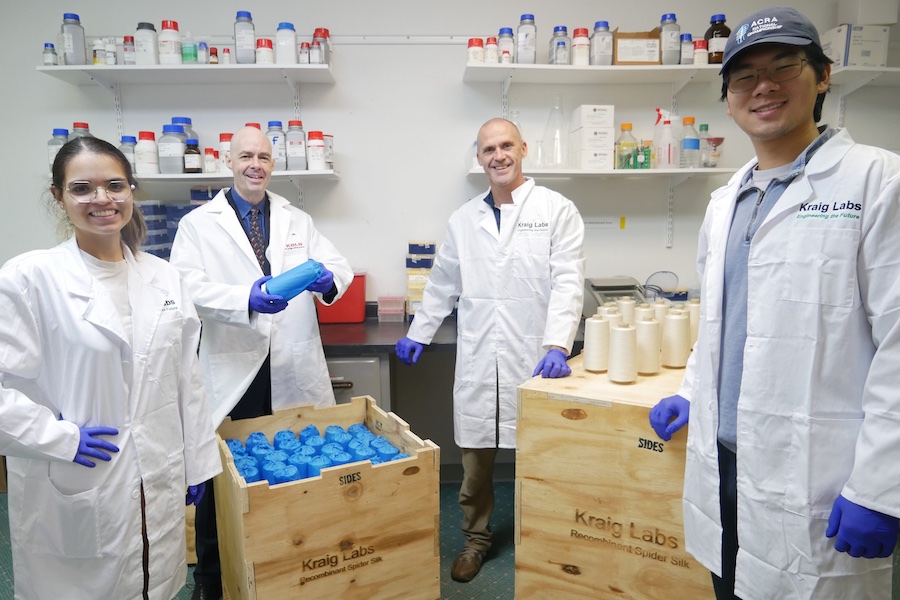
Kraig Biocraft Laboratories, Inc. (OTCQB: KBLB) (“the Company”, “Kraig Labs”, or “Kraig’s”), a world leader in spider silk technology*, today announced the shipment of its first commercial order of recombinant spider silk yarn. The custom-engineered yarn was produced to fulfill a purchase commitment from a globally recognized performance sports brand and is slated for development into a first-of-its-kind performance textile.

#Raw Materials

ALLIED expands down traceability with lot-level carbon footprint data

ALLIED Feather + Down has expanded its TrackMyDown traceability platform to include validated cradle-to-gate carbon footprint data linked to individual down lots. The initiative is designed to provide brands and consumers with more detailed environmental information on the materials used in finished products and could also support future data requirements associated with Digital Product Passports.

#Raw Materials

Redesigned World Cotton Day website offers tools, ideas and inspiration

With World Cotton Day just one month away, the International Cotton Advisory Committee (ICAC) has launched a completely redesigned www.WorldCottonDay.com, creating a new global home for everyone who wants to learn about, celebrate, and support cotton.

Latest News

#Digital Printing

Italian textile finishing specialist injects digital agility into luxury textile manufacturing with Kornit Digital

1st October 2026 – Kornit Digital, a global pioneer in sustainable, on-demand digital fashion and textile production technologies, shares the news that Tintoria Finissaggio 2000, one of Italy's leading textile dyeing and finishing specialists, has integrated the Kornit Presto MAX into its production environment to expand its premium textile offering to improve manufacturing efficiency and support growing demand for sustainable, agile fabric production.

#Recycling / Circular Economy

ReHubs names Béatrice Moureaux CEO to advance textile recycling in Europe

ReHubs has appointed Béatrice Moureaux as Chief Executive Officer, marking a new chapter for the European alliance as it continues to strengthen its work to scale textile-to-textile recycling across Europe. Béatrice has served as Board Advisor to ReHubs since December 2025, working closely with its Board, team and members on the organisation’s strategy and projects. She brings more than 25 years of experience across technical textiles, advanced fibres, nonwovens and circular innovation.

#Textiles & Apparel / Garment

YKK subsidiary Golden Hill Tower Limited marks 25 years of operations in Myanmar

Golden Hill Tower Limited, a subsidiary of YKK Corporation, celebrated its 25th anniversary with a ceremony in Myanmar on September 21, 2026. The event brought together approximately 230 guests, including senior executives from the YKK Group, to commemorate the company's development since the launch of its serviced apartment business in November 2000.

#Knitting & Hosiery

SHIMA SEIKI to showcase digital product creation at Apparel Sourcing Week

Leading digital textile solutions provider SHIMA SEIKI MFG., LTD. of Wakayama, Japan will exhibit at Apparel Sourcing Week 2026 in Bengaluru, India next month. The exhibition provides a platform for the entire apparel value chain, bringing together manufacturers, brands, suppliers and solution providers in one location.

TOP