[pageLogInLogOut]

#Raw Materials

Fashion for Good mobilises industry to adopt mass balance attribution and accelerate decarbonisation

Fashion for Good launches today the Mass Balance Demonstrator project, a collaborative industry initiative to implement and scale the mass balance attribution (MBA) chain-of-custody model for biomass-attributed PET in textile applications. The project represents a concrete step toward accelerating brand-driven decarbonisation across the apparel value chain.


While the portfolio of both preferred existing and next-generation materials offers opportunities for decarbonising the apparel industry, biosynthetics currently represent only a small fraction in material projections for 20301. The reality is that the dedicated commercial scale infrastructure required for biosynthetic materials is not yet fully developed, keeping production volumes prohibitively low and costs too high for widespread industry transition, despite their validated technical performance.

Borrowed from industries such as renewable energy and sustainable wood and paper, the mass balance attribution is a chain-of-custody model which allows renewable and fossil-based feedstocks to be physically mixed. It tracks how much renewable input entered the system and proportionally allocates that amount to the outputs, verified through audits and certification bodies.

How does mass balance attribution (mba) work

A chemical manufacturer introduces renewable feedstocks (such as agricultural residues or used cooking oil) into a production system that also processes fossil-based feedstocks. These feedstocks move through the same infrastructure and chemical processes, and by the time they become resin, they are chemically indistinguishable. The amount of renewable feedstock entering the system is carefully measured and recorded through a verified accounting system, creating a record of renewable input while accounting for process losses and conversion factors.

That accounted input is then allocated to specific products using mass balance principles. If 30% of the feedstock entering the system is renewable, a corresponding share of the output can carry a renewable attribution. In this project, this will be the biomass-attributed polyester (PET) but it could also be used for other fibres such as nylon. This does not necessarily mean each product physically contains renewable content; rather, the claim reflects the share of renewable input assigned to that product. Crucially, the system is strictly controlled: producers cannot allocate more renewable attribution than the amount of renewable feedstock entering the system, and once attributed, those certified attributes cannot be counted again elsewhere.

“We are at a point where the industry wants to move and adopt biosynthetics, but the production frameworks and commercial infrastructure haven’t caught up. The Mass Balance Demonstrator project is about closing that gap: building the impact and commercial evidence, the blueprint, and the feedback loops that will allow the MBA model to scale with integrity.” Katrin Ley, Managing Director at Fashion for Good.

The goals of the project

The Mass Balance Demonstrator project, an initiative led by Fashion for Good, brings together BESTSELLER, Beyond Yoga (Levi Strauss & Co.), ON, Paradise Textiles, Environmental Resources Management (ERM), Indorama Ventures, ISCC, UPM Biochemicals, and Textile Exchange. The consortium is designed not only to demonstrate what is possible today, but to generate insights that the wider industry can build on now and in the future.

“Polyester is our second biggest fiber by volume in BESTSELLER, which means we are continuously investigating improvements in this category. By taking part in this project we as a company are building experience within mass balance attribution and bio-attributed polyester. Hopefully, as we collaborate with other great partners, this can initiate pathways that can support scaling of renewable feedstocks (or inputs) going forward.” Anders Schorling Overgård, Material Research Lead at BESTSELLER

At its core, the project adopts and implements the mass balance attribution chain-of-custody model to enable the production of biomass-attributed PET for textile applications, demonstrating that existing manufacturing systems can integrate renewable feedstocks today. The project is structured around four interconnected objectives:

Producing biomass-attributed materials: the project will physically produce biomass-attributed resin and yarns, generating real-world output that matches performance parity.

Quantifying the climate impact: a comprehensive cradle-to-grave greenhouse gas (GHG) emissions model will be developed for the produced materials, delivering science-based insights into their decarbonisation potential and overall environmental footprint.

Developing a blueprint for industry scale-up: the project will deliver a practical roadmap for scaling biomass-attributed PET in the apparel sector, identifying key supply chain actors, assessing lifecycle accounting approaches for different chain-of-custody models, and evaluating the techno-economic feasibility of market deployment.

Informing climate frameworks and industry standards: insights from the project will be shared with climate initiatives and standard-setting bodies to help credible guidance on mass balance attribution.


If you’d like to learn more, please find more information at this link:

https://www.fashionforgood.com/case-study/mass-balance-demonstrator/


(1)Fashion for Good, & Boston Consulting Group. Scaling next-gen materials in fashion: An executive guide. Available here.

More News from Fashion for Good

#Recycling / Circular Economy

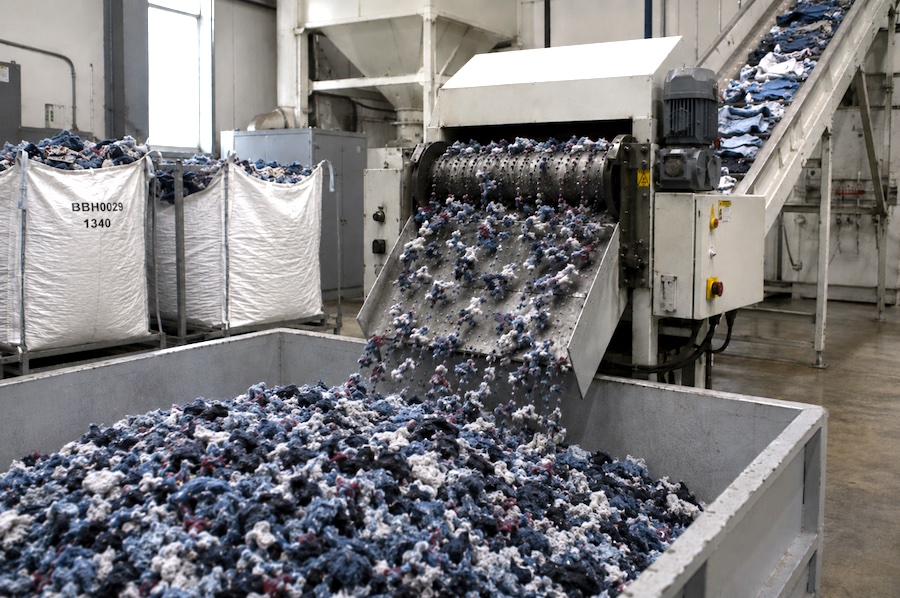
Solving the Feedstock Gap: Unlocking Post-consumer Feedstocks for Textile-to-Textile Recycling in Europe

Fashion for Good launches Project FAE (Feedstock Activation Europe) to develop the sorting and pre-processing infrastructure needed to channel non-rewearable post-consumer textiles into textile-to-textile (T2T) recycling at scale. The project is a practical response to one of the most pressing problems in textile circularity: making post-consumer waste a viable, commercially competitive raw material for recyclers.

#Recycled Fibers

Advancing the future of stretch: Fashion for Good launches new project to validate bio-based and recycled elastane

Launched today, Stretching Circularity is a collaborative project initiated by Fashion for Good dedicated to accelerating the adoption of lower-impact elastane alternatives that are compatible with circular textile systems. By validating bio-based and recycled elastane solutions through pilot-scale testing and demonstrator garments, the initiative aims to remove one of the most significant technical barriers to a circular textile economy.

#Recycling / Circular Economy

Fashion for Good releases open-source blueprint for near-net-zero textile manufacturing

Fashion for Good launches the first open-source blueprint for near-net-zero textile manufacturing, tackling one of fashion’s biggest emissions hotspots. Developed under the Future Forward Factory project, the blueprint offers Tier 2 manufacturers in India five practical, financially viable pathways to reduce carbon emissions by up to 93%.

#New Materials

From premiums to parity: How Fashion for Good is rewriting the economics of new materials

Fashion for Good launches Price Parity Toolkit: developed with support from Laudes Foundation, Canopy and Finance Earth, the framework introduces an innovative financing approach (premium decoupling) to remove price premiums from the supply chain and unlock faster adoption of lower-impact materials across the industry.

More News on Raw Materials

#Man-Made Fibers

Lenzing commissions 14 MW power‑to‑heat facility, strengthening grid stability and heat management

The Lenzing Group has successfully commissioned a new power‑to‑heat (P2H) facility with an electrical capacity of 14 megawatts. The installation converts renewable electricity directly into process heat, is fully integrated into the existing heat network at the industrial site, and represents a key building block for a fossil‑free heat supply. As project partner, VERBUND was responsible for the energy‑market integration and will operate the facility for balancing energy marketing, enabling it to respond flexibly to short‑term fluctuations in the power grid.

#Raw Materials

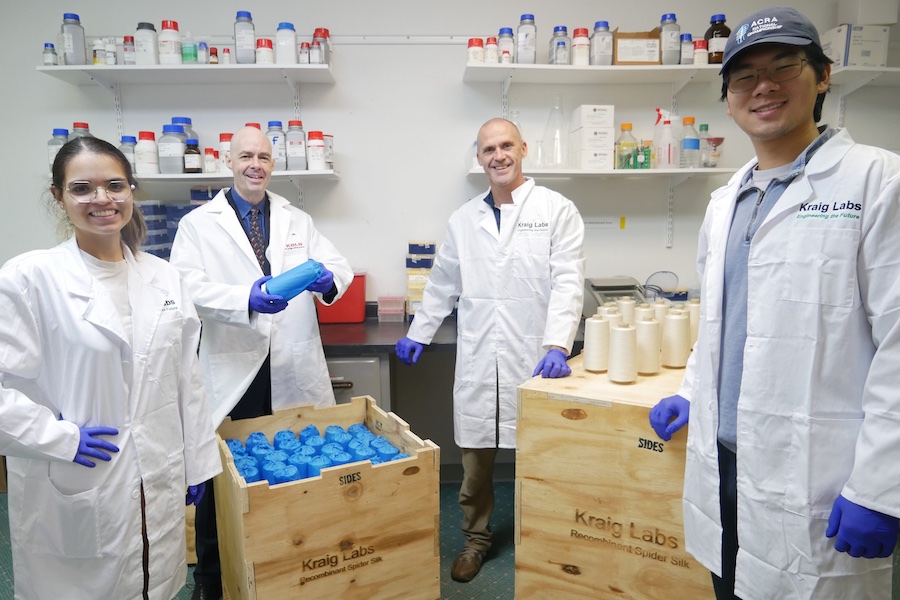
Kraig Biocraft reaches next step in production growth

Kraig Biocraft Laboratories, Inc. (OTCQB: KBLB) (“the Company”, “Kraig Labs”, or “Kraig’s”), a world leader in spider silk technology*, today announced that it has produced more than 1.3 metric tons of recombinant spider silk cocoons in a single month. This is a new world record and shatters the Company’s previous production record by a factor of five. Today marks a pivotal step forward in the transition of spider silk from laboratory innovation to an industrial-scale material platform.

#Raw Materials

New study shows low environmental impact by Cotton made in Africa Organic Cotton from Tanzania

Today, the Aid by Trade Foundation (AbTF) is announcing the results of a comprehensive life-cycle analysis (LCA) for cotton produced in Tanzania under the Cotton made in Africa Organic (CmiA Organic) standard. The study emphasises the small ecological footprint of CmiA Organic verified cotton. This can largely be traced back to the absence of synthetic pesticides, artificial fertilisers, and artificial irrigation. Consequently, CmiA Organic cotton can help the textile industry meet regulatory requirements as well as science-based targets. The results also show that the consequences of climate change threaten the livelihoods of these cotton farmers, even though the type of agriculture they practise barely contributes to climate change.

#Raw Materials

Better Cotton Initiative strengthens regenerative focus in standard update

The Better Cotton Initiative (BCI) has strengthened the regenerative focus of its field-level standard with the launch of a new version of its Principles & Criteria (P&C), which marks the next step in the organisation’s journey to becoming a regenerative standards system.

Latest News

#Techtextil 2026

Techtextil 2026 recognition for the UK’s FET

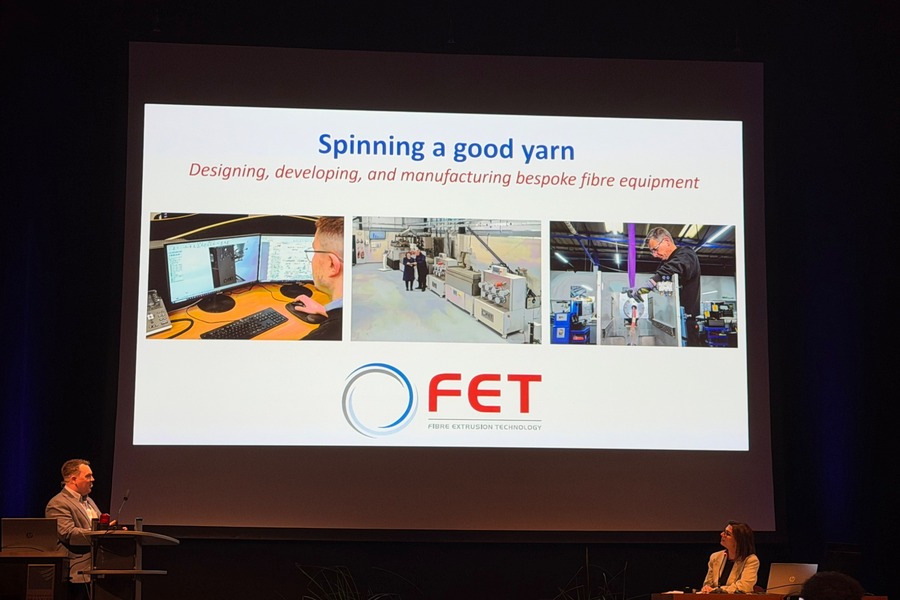
Fibre Extrusion Technology (FET) will receive the Techtextil 2026 New Production Technology Innovation Award at next week’s Techtextil in Frankfurt (April 21-24). The Leeds-based member of the British Textile Machinery Association (BTMA) has developed the FET-500, a new toxic solvent-free gel small scale system for the production of ultra-high-molecular-weight polyethylene (UHMWPE).

#Techtextil 2026

Lower CO2, stronger bonds: Indorama Ventures enables customers’ performance at Techtextil

At Techtextil 2026 in Frankfurt am Main, Indorama Ventures presents its latest material innovations aimed at supporting customers in achieving both performance and sustainability targets. The company highlights solutions based on recycled and bio-based raw materials as well as advanced binder fibers, addressing current market demands for lower CO₂ emissions, improved efficiency, and reliable supply.

#Digital Printing

Kornit Digital redefines apparel production for the on-demand era unveiling Atlas MATRIX at Konnections 2026

Kornit Digital Ltd. (NASDAQ: KRNT, “Kornit Digital”, “Kornit”, or the “Company”), a global pioneer in sustainable, on-demand digital fashion and textile production, today unveiled its Atlas MATRIX at Konnections 2026, redefining apparel production in the on-demand era.

#Recycled Fibers

Recover™ and Prosperity Textile announce strategic denim partnership

Recover™, a global producer of low-impact, high-quality recycled cotton fiber at scale, has announced a strategic partnership with Prosperity Textile, a vertically integrated denim fabric manufacturer operating at industrial scale.

TOP