#Recycling / Circular Economy
Solving the Feedstock Gap: Unlocking Post-consumer Feedstocks for Textile-to-Textile Recycling in Europe
THE CHALLENGE: A TECHNICAL AND ECONOMIC GAP
When post-consumer textiles are collected, they are first sorted for rewearability and directed to resale markets. What remains (the “non-rewearables”) has few viable
destinations today: only a small fraction enters T2T recycling(1). The majority is downcycled, landfilled, or incinerated. Secondhand export markets, which have historically absorbed significant volumes, are contracting: declining material quality is limiting resellability, while trade restrictions are tightening further. Besides, weak demand in destination countries is leading to excess stock accumulation and, without sufficient recycling or reuse infrastructure to handle it, most of it often ends up landfilled.
New recycling capacities coming online across Europe could change this, offering a route to valorise a much larger share of non-rewearable textiles. However, that opportunity will only be realised if the upstream feedstock infrastructure is in place to supply them at acceptable cost and quality, which today, is not the case.
The core challenge is feedstock infrastructure (the sorting, pre-processing, and supply systems that sit upstream of recycling) has not yet proven sufficient to meet recycling needs. Post-consumer textiles are heterogeneous and costly to process, and recyclers have stringent specifications of what they can take in, often having different material specifications between different technologies. Sorters see large sections of waste unsellable to recyclers, along with high collection and processing costs for recyclable fractions, while recyclers require competitively priced feedstock. Neither side can close the gap alone: for many sorters preparing material at the price, quantity and quality recyclers need remains challenging, while some recyclers can’t absorb the cost of doing it themselves. That’s why most continue to rely on post-industrial waste, which is often cleaner, more consistent, and easier to process.
The integration of post-consumer feedstock into T2T recycling, however, is a matter of when, not if: demand for recycled fibres is growing, and regulatory pressure is increasing. EU Extended Producer Responsibility legislation will require brands to take financial responsibility for their products at end of life, making functional recycling pathways a commercial necessity.
"We have been talking about textile circularity for years, and the honest truth is that the technology is no longer the bottleneck. What is holding us back is much more unglamorous: the sorting lines, the pre-processing steps, the supply systems that need to exist before a single fibre can be recycled. Project FAE is our attempt to tackle that unglamorous, necessary work head-on - together with the brands, sorters and recyclers who know this problem better than anyone. If we get this right, we unlock something the industry has been trying to reach for a long time." Katrin Ley Managing Director at Fashion for Good
Addressing these challenges requires coordinated action across the full value chain: from the brands that put garments into the world, to the sorters that handle them at end of use, to the recyclers that need consistent, quality input material. The Feedstock Activation Europe (FAE) project, an initiative from Fashion for Good, includes brand partners adidas (the lead sponsor), BESTSELLER, and INDITEX. Strategic partner Rehubs is involved, with Rematters offering on-ground assistance.
THE APPROACH: FROM TECHNICAL ASSESSMENT TO COMMERCIAL FRAMEWORK
The project draws on advisory expertise from across the value chain: including sorters such as Boer Group, Circle-8 Textile Ecosystems, Erdotex, Formació i Treball, Humana People to People, Kringwinkel Antwerpen, New Retex, Nouvelles Fibres Textiles, Plaxtil-Essaimons, Sympany, Texaid, and Texlimca; as well as recyclers spread across mechanical, thermomechanical and chemical technologies such as Circ, Circulose, CuRe Technology, eeden, Infinited Fiber Company, Kipas (fibR-e), Matterr, Meltem Kimya, Recover, Reju, OnceMore from Södra, and WornAgain. The project is also supported by ecosystem partners including InvestNL, Landbell Group, Refashion, Reverse Resources, TEXroad, Wargon Innovation, WRAP,ZDHC and Global Fashion Agenda.
“Circularity will not be achieved through product innovation alone. The bigger and more urgent work is building the infrastructure that does not yet exist at the scale we need: sorting, pre-processing, and supply systems that enable post-consumer textile waste to move toward closed-loop recycling. This is not a challenge any single organisation can solve. Project FAE brings together the brands, sorters, and recyclers willing to work together to realize this pathway in the EU, and we are proud to be part of that work” Gudrun Messias; Director, Sustainability Direction at adidas AG
The project works across two parallel tracks:
The first aims to solve feedstock preparation for recycling to unlock the valorisation potential of post-consumer waste, via advanced pre-processes, including fibre blend separation, elastane removal, and contaminant extraction. Project FAE will assess the technological and commercial feasibility of these advanced pre-processing technologies, identifying what is ready to deploy and what still needs development.
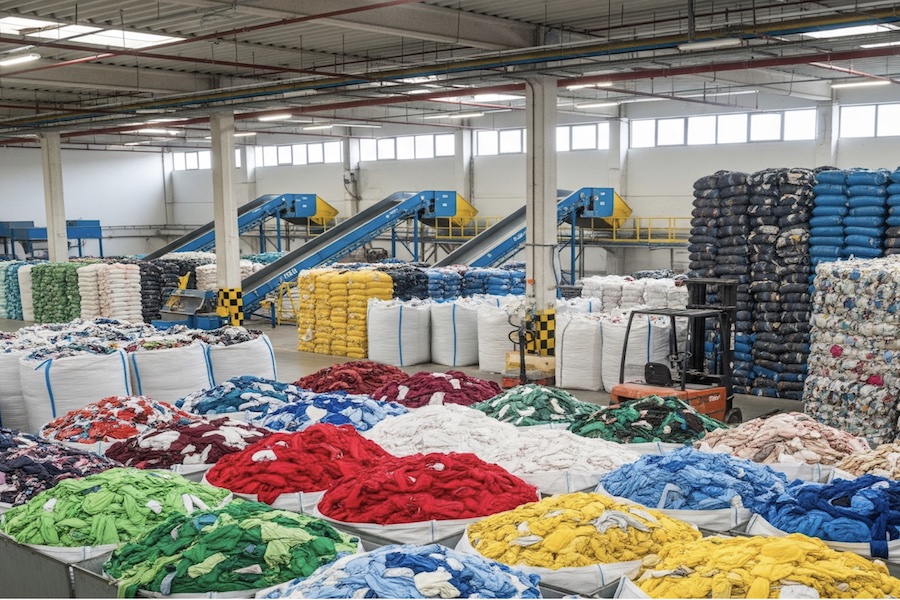
The second focuses on infrastructure. Project FAE will develop a framework for regional hubs for large-scale sorting and pre-processing hubs across Europe - facilities that aggregate post-consumer textile volumes, apply automated sorting and mechanical pre-processing, and produce feedstock streams tailored to the specifications of different recyclers. By building at scale and leveraging centralised and automated sorting and pre-processing technologies, the hub model addresses one of the core business model challenges facing sorters today: the cost and complexity of preparing feedstock at the quality and volume recyclers require. At scale, and leveraging automation, it aims to reduce per-unit processing costs, improve feedstock quality, and create a more viable business case for both sorters and recyclers.
Together, the two are intended to produce not just technical findings, but a practical and commercial framework the wider industry can act on, with the ambition to support real implementation in the coming years, as part of broader efforts to build a viable post-consumer waste value chain in Europe.
Read more about the project here.
https://www.fashionforgood.com/case-study/feedstock-activation-europe/
(1) European Environment Agency. (2023). Europe’s used textiles are an increasing waste and export problem. Available at this link:
https://www.eea.europa.eu/en/newsroom/news/europes-used-textiles-are-an