[pageLogInLogOut]

#Raw Materials

ECCO introduces first shoe featuring innovative protein-based fibre
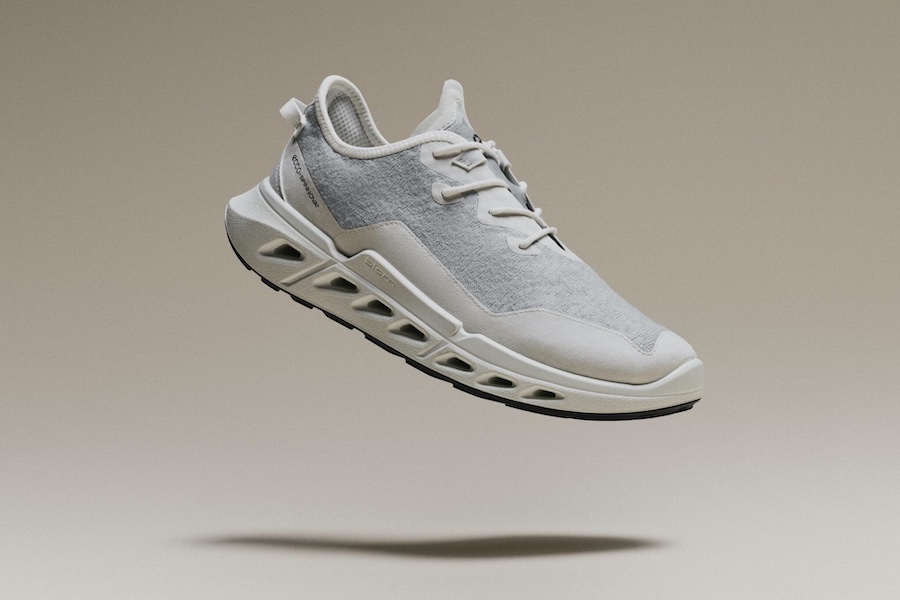
ECCO, in partnership with Spinnova, announces the launch of the limited edition ECCO BIOM® 720, a first-of-its-kind shoe utilising an often overlooked leather by-product, transformed into a protein-based fibre. The fibres are produced using patented technology that advances material innovation while reducing waste and supporting full resource use across the leather and textile industry.


ECCO and Spinnova began their collaboration in 2020 through a joint venture exploring how leather by-product raw materials could be utilised as textile fibres. Using the unique technology, by‑products that are typically discarded, burned for energy or composted during leather production, are instead transformed into durable fibres, giving residual materials an entirely new function and lifespan. Unlike traditional recycling methods that downcycle leather into lower‑value applications, this process preserves the natural integrity of the leather fibre, enabling performance suitable for textile manufacturing.

The technology is based on mechanical refining rather than chemical dissolving. Wet blue shavings – thin layers removed to achieve consistent leather thickness – are processed into continuous textile fibre filaments that can be cut into textile‑grade fibres. The resulting material has tensile strength comparable to wool and elongation at break roughly twice that of cotton, combining durability and flexibility. This enables versatile use across woven and knitted textile structures, while supporting more efficient manufacturing with reduced production waste.

The launch demonstrates how innovation can transform an undervalued by‑product into a valuable new resource. By upcycling leather offcuts into premium textile fibres, ECCO and Spinnova have developed a circular solution that preserves material integrity, reduces waste, and creates new possibilities for footwear and textile applications. With the protein-based fibre now debuting in ECCO footwear, this milestone marks the transition from long‑term development to real‑world application.

“This launch is a meaningful moment for us, as it represents the culmination of over five years of close development work with ECCO. Together, we have shown that leather by-product can be transformed into a high‑quality textile fibre with commercial relevance, and it is rewarding to now see this innovation become part of a finished product”, says Janne Poranen, Chief Executive Officer of Spinnova Plc.

“Working closely with Spinnova, we’ve explored how new approaches to materials can unlock value from existing resources. By combining our expertise with their pioneering technology, we’re pushing how footwear can be made”, comments Thomas Gøgsig, Chief Executive Officer of ECCO.

ECCO BIOM® 720 is available from April 29 at www.ecco.com, and ECCO retail stores in the UK and Germany.
More News from SPINNOVA PLC

#Man-Made Fibers

Swiss industrial engineering and manufacturing company Sulzer joins Spinnova’s ecosystem

Sulzer, a Swiss industrial engineering and manufacturing company, has joined Spinnova’s ecosystem (consortium) to enable the availability of SPINNOVA® fibre in the textile materials market. Sulzer will contribute its expertise to support Spinnova’s development work.

#Recycling / Circular Economy

Textile‑to‑textile recycling leader Circulose joins Spinnova’s ecosystem to accelerate technology scale‑up

Textile‑to‑textile recycling leader Circulose joins Spinnova’s ecosystem (consortium) to help advance the scale‑up of Spinnova’s technology. Spinnova has actively sought partners to accelerate commercial scale‑up, and Circulose, as a key player in textile recycling, strengthens the ecosystem by providing a raw material that is in high demand across the industry.

#Yarns

Yarn spinning partner Tearfil continues to support Spinnova’s fibre and technology

Spinnova Plc has signed non-binding Letter of Intent (LOI) with Portuguese yarn spinning company, Tearfil Textile Yarns to secure access to SPINNOVA® fibre volumes.

#Man-Made Fibers

Fashion for Good-backed Spinnova consortium gains momentum with Tommy Hilfiger joining

Fashion for Good has endorsed Spinnova’s ambition to build a multi-stakeholder ecosystem (consortium) to scale its fibre technology innovation and increase the availability of sustainable SPINNOVA® fibre in the textile materials market. The collaboration marks an important step in Spinnova’s strategy to bring SPINNOVA® fibre to wider commercial adoption through coordinated value chain cooperation.

More News on Raw Materials

#Raw Materials

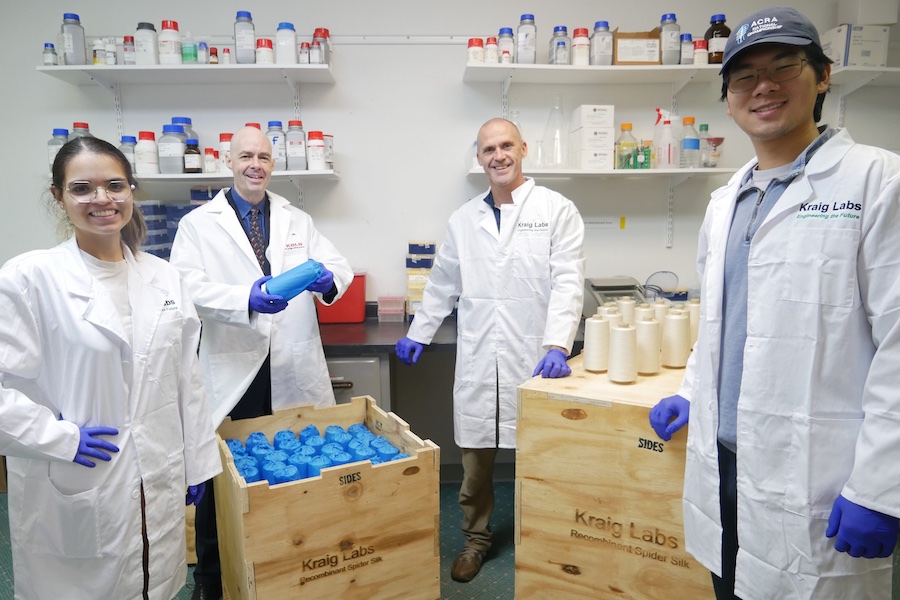
Kraig Biocraft Laboratories reports major progress converting record-setting spider silk cocoon production into reeled silk

Kraig Biocraft Laboratories, Inc. (OTCQB: KBLB) (“the Company”, “Kraig Labs”, or “Kraig’s”), a world leader in spider silk technology*, today announced significant progress in the processing of its recently produced recombinant spider silk cocoons into reeled silk.

#Textile processing

trinamiX mobile NIR spectroscopy: New applications for the footwear and textile industry

trinamiX GmbH expands its solution portfolio for the circular economy, now enabling the identification of materials used in the footwear and textile industries. With its mobile near-infrared (NIR) spectroscopy solutions, trinamiX supports manufacturers, sorters, recyclers, and brand owners in reliably identifying materials and improving transparency across increasingly complex value chains.

#Raw Materials

Fiber traceability - A vehicle to ensure sustainability or injustice?

The Bremen Cotton Exchange is making a new paper available for download. In this paper, analyst Veronica Bates Kassatly and statistician Terry Townsend examine the justifications behind this approach and assess the consequences for textile and apparel sustainability claims and global legislation.

#Man-Made Fibers

Lenzing commissions 14 MW power‑to‑heat facility, strengthening grid stability and heat management

The Lenzing Group has successfully commissioned a new power‑to‑heat (P2H) facility with an electrical capacity of 14 megawatts. The installation converts renewable electricity directly into process heat, is fully integrated into the existing heat network at the industrial site, and represents a key building block for a fossil‑free heat supply. As project partner, VERBUND was responsible for the energy‑market integration and will operate the facility for balancing energy marketing, enabling it to respond flexibly to short‑term fluctuations in the power grid.

Latest News

#Sustainability

Number of GOTS-certified facilities grow 15% globally as demand for credible sustainability standards continues to strengthen

Global Organic Textile Standard (GOTS) certification continued to grow in 2025, with nearly 18,000 certified facilities worldwide, despite ongoing geopolitical uncertainty and rapidly evolving regulatory requirements across global textile supply chains.

#Man-Made Fibers

The LYCRA Company strengthens sustainability leadership, appoints Alistair Williamson as VP of Product Sustainability

The LYCRA Company has appointed longtime executive Alistair Williamson as vice president of product sustainability, reaffirming its commitment to developing sustainable solutions for apparel and personal care products. In this role, he will guide the company’s next chapter of sustainability strategy and oversee all initiatives aimed at reducing environmental impact across products, operations, and innovation platforms.

#Sustainability

bluesign technologies introduces bluepass

bluesign technologies ag (www.bluesign.com) today announces the launch of bluepass, a new certification mark and product labeling system created to deliver clear, substantiated, and verifiable sustainability claims at scale.

#Texprocess 2026

Texprocess 2026: Style3D | ASSYST showcases AI, 3D, 2D and automation and meets strong industry response

Four days, countless discussions and a clear signal from the industry: the future of fashion is digital and AI-driven. At Texprocess 2026, Style3D | ASSYST demonstrated how AI, 3D and automation are already fundamentally transforming processes from design to production.

TOP