[pageLogInLogOut]

#Raw Materials

Aid by Trade Foundation, International Cotton Advisory Committee and bizpando start cooperation
bizpando AG, operator of a compliance platform, has joined forces with the Aid by Trade Foundation (AbTF) and the International Cotton Advisory Committee (ICAC) to launch a project to promote carbon credits in cotton production. The aim is to empower African smallholder farmers through effective agricultural techniques and digital solutions to improve soil quality, sequester CO? and create additional sources of income.
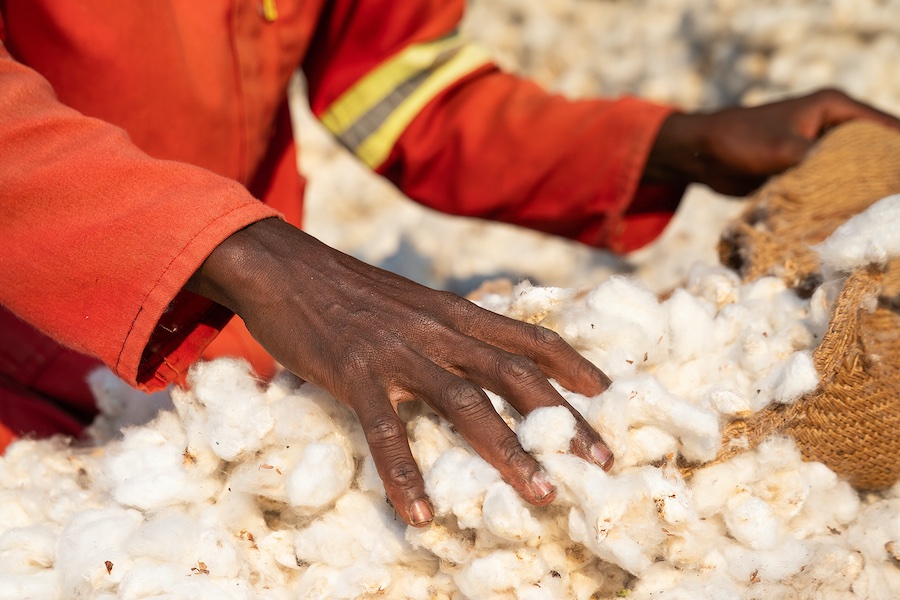
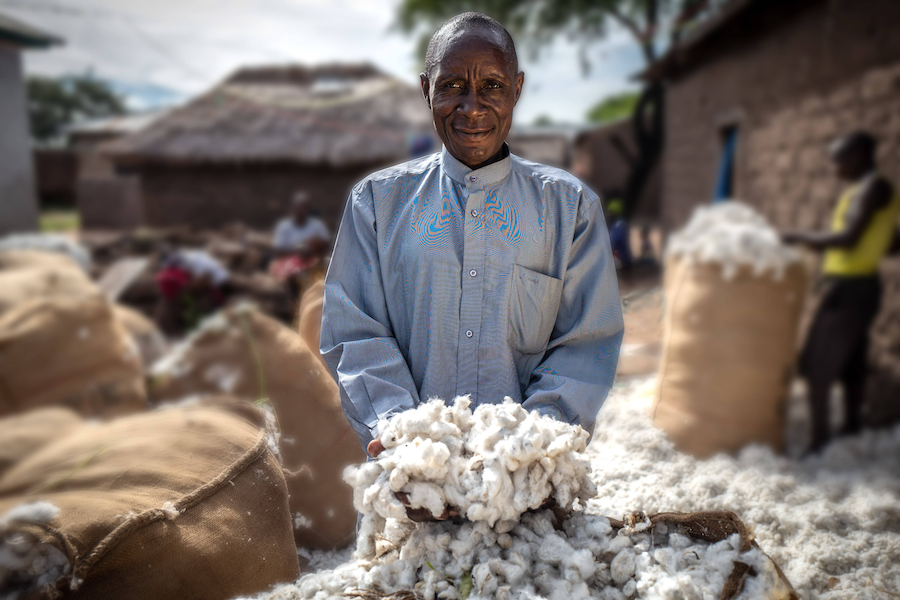
Harvested CmiA cotton in hands of a ginnery worker © 2025  Credit: Isabela Pacini AbTF
Harvested CmiA cotton in hands of a ginnery worker © 2025 Credit: Isabela Pacini AbTF


Sustainability and economic benefits for smallholder farmers

By using sustainable agricultural strategies such as the use of biochar, minimal tillage and the cultivation of cover crops, up to 5.75 tonnes of CO? per hectare per year can be sequestered in the soil. This potential not only offers important opportunities for climate protection but also brings considerable economic benefits for producers.

As part of the newly concluded cooperation between AbTF, ICAC and bizpando, African farmers who grow cotton in accordance with the Cotton made in Africa (CmiA) standard benefit from additional income from the sale of carbon credits. At the same time, their costs are lowered as the use of pesticides and fertilisers can be reduced. In addition, improved soil quality and the water-retaining properties of biochar lead to higher agricultural yields. Tina Stridde, Managing Director of the Aid by Trade Foundation, emphasises: "Our work is grounded in the principles of climate-smart agriculture, which not only protects the environment and conserves resources but also enhances the productivity of cotton producers. Beyond the licensing income generated from Cotton made in Africa-verified cotton, collaborations like this foster sustainable opportunities for smallholder farmers in Africa."

Climate protection through carbon credits

The use of biochar can make a decisive contribution to climate protection and soil fertility. Keshav Kranthi, Chief Scientist at ICAC, explains: "Biochar improves soil structure, stores water and nutrients and promotes microbial growth. It is a sustainable solution that has a positive impact on both the environment and the profitability of agriculture." Eric Trachtenberg, Executive Director ICAC adds: "With simple techniques, cotton farmers can improve the quality of their soil and at the same time sequester carbon in the soil for more than 100 years. We support them in this endeavour."

Technological implementation by bizpando

bizpando plays a central role in the digital implementation of this project. A GPS-supported measurement system is being developed to map the areas under cultivation of smallholder farmers in such a way that double counting of areas can be ruled out. The platform will also enable digital recording to validate cotton production to reliably verify the origin and quantity of carbon credits. The bizpando platform will be used to issue the necessary certificates for the carbon credits, market them directly and ensure that proceeds are paid out directly to the farmers. "Our project combines digital solutions for climate protection with social responsibility. Using simple methods and complex digital background processes, we help farmers to operate more sustainably while significantly increasing their income. This allows us to reduce administrative costs and maximise the farmers‘ benefit from the cooperation," explains Jasper Bhaumick, CEO of bizpando AG.

Next steps

Over the next few months, the partners plan to expand the bizpando platform technically to include digital solutions for land surveying and payment methods, acquire certifications and prepare local measures such as training and further collaboration with stakeholders. The first carbon credits are to be generated by 2026 at the latest, and local activities have already been initiated.


More News from Aid by Trade Foundation (AbTF)

#Raw Materials

Aid by Trade Foundation reaches new milestones in supply chain transparency

The Aid by Trade Foundation (AbTF) is reaching new milestones as it leads the way towards greater physical traceability for Cotton made in Africa® (CmiA) cotton. With around 700 suppliers and producers in a total of 25 countries, the Aid by Trade Foundation has reached a new record number of partners who can trace CmiA cotton from the product back to its origin. This is more than double the previous year’s figure.

#Natural Fibers

Cashmere producers stress the importance of The Good Cashmere Standard®

At the invitation of the Aid by Trade Foundation (AbTF), over 70 experts from the cashmere production and supply chain, as well as other specialists, met at the GCS Unit Meeting in Shanghai, China to discuss the progress and new objectives of The Good Cashmere Standard (GCS). The meeting focused on implementation and verification of the standard, important aspects of animal welfare and the importance of the standard in the global textile market.

#Natural Fibers

Aid by Trade Foundation publishes 2024 annual report: Growing impact for environment and people

The Aid by Trade Foundation (AbTF) is on a growth track. Despite a challenging global economy, AbTF increased its income by six percent from 2023 to 2024, reaching a total of EUR 8.6 million. This revenue has been invested in comprehensive measures for the sustainable production of cotton and cashmere as well as for expanded measures to ensure transparency in global value chains. In addition to gaining new partners in 2024—including big names like Mango, Nordstrom, and CWS Workwear—AbTF was able to expand its global stakeholder network active in the production of raw materials or textiles.

#Raw Materials

Aid by Trade Foundation receives Honorary Award of the German Africa Foundation 2025

On the evening of 25 June, the Hamburg-based Aid by Trade Foundation (AbTF) received the Honorary Award of the German Africa Foundation 2025. Prof. Dr Michael Otto, the foundation’s founder and a prominent entrepreneur, accepted the award at a ceremony held at the German Bundestag. The Parliamentary State Secretary to the Federal Minister for Economic Cooperation and Development (BMZ), Dr Bärbel Kofler, presented the award in the presence of guests from politics, business and civil society as well as representatives of African embassies.

More News on Raw Materials

#Raw Materials

A Powerful Opening: Global thought leaders launch the International Cotton Conference Bremen

The International Cotton Conference Bremen will open on 25 March 2026 in the Parliament building of the Free Hanseatic City of Bremen with a keynote session of exceptional calibre. Distinguished international experts will set the stage for the conference by offering incisive perspectives on the most pressing challenges and the defining trends shaping the future of the global cotton trade. Their insights will span a broad spectrum — from geopolitically driven disruptions affecting global supply chains to the opportunities emerging from innovation-led agriculture capable of supporting a growing world population. Together, these opening keynotes will frame the dialogue of the conference, highlighting both the complexity of today’s market environment and the pathways toward a resilient and forward-looking cotton sector.

#Raw Materials

Lenzing Group positions bio‑based materials as a strategic asset for Europe’s economic security

The Lenzing Group, a leading supplier of regenerated cellulose fibers for the textile and nonwovens industries, hosted a high‑level roundtable in Brussels to discuss how bio‑based materials can strengthen Europe’s economic security and support the shift toward a fossil‑free future. Organized in cooperation with Euractiv, the event brought together representatives of the European Commission, the UK Mission to the EU, academia, civil society, and industry.

#Natural Fibers

Beyond Cotton: Natural Fibres in the Spotlight at the Bremen Cotton Conference - Branded by DNFI

Climate targets, fragile supply chains, and rising regulatory requirements are fundamentally changing the perspective of the textile industry - the focus is increasingly shifting toward the base material. Not only cotton, but natural fibres are gaining significant importance: they stand out not only because of their outstanding functional properties, but also because they make a valuable contribution to the bioeconomy and responsible product development.

#Raw Materials

International Women’s Day: Cotton made in Africa strengthens equality for women through targeted investments

On the occasion of International Women’s Day—which will be observed on 8 March under the motto “Rights. Justice. Action. For ALL Women and Girls”—the Aid by Trade Foundation (AbTF), which is responsible for Cotton made in Africa® (CmiA), underlines its long-standing and ongoing commitment to the equality of women in African cotton production areas.

Latest News

#Techtextil 2026

DIENES at Techtextil 2026: Flexible pilot lines for bio-based fiber development

The growing relevance of bio-based materials in technical textiles is accompanied by increasing demands for reproducibility, high-quality data, and scalable process routes. Especially when working with cellulose and its derivatives, chitosan, lignin-based approaches, or bio-based PAN as a carbon-fiber precursor, R&D teams face variable feedstock quality, tighter process windows, and the need for reliable comparability across trials. This calls for flexible, data-driven experimental setups that can be reconfigured efficiently when recipes, solvents, and raw-material batches change.

#Texprocess 2026

Gunold showcases embroidery product range and services at Texprocess

At Texprocess 2026, GUNOLD will present numerous hands-on examples related to embroidery in Hall 8, Booth E20. The focus is on creative embroidery designs as well as the extensive product range of threads, nonwovens, and accessories for embroidery and embellishment. “Trade visitors can once again look forward to many new and creative embroidery designs. Of course, we will also showcase the matching products required to bring these ideas to life,” announces Marketing Manager Stephan Gunold.

#Nonwovens

EDANA and more than 70 industry organisations call for consistent exemptions in EU packaging regulation

EDANA, together with more than 70 industry associations and organisations, has issued a joint statement commenting on the European Commission’s Delegated Act under Article 29 of the Packaging and Packaging Waste Regulation (PPWR).

#Techtextil 2026

Where performance becomes product strategy: Techtextil 2026 puts functional apparel in the spotlight

The demand for high-performance textile solutions for the apparel industry increases – and with it the sector’s innovative strength. Techtextil 2026 addresses these developments: The Performance Apparel Textiles area (Hall 9.0) presents around 130 exhibitors from 13 countries showcasing innovative materials for workwear, protective clothing, smart fashion, outdoor and sports. Global key players such as Concordia Textiles, Getzner, Kermel, Klopman International and YKK Europe are among the participants. The live show “Performance Apparels on Stage” brings forward-looking wearables on stage and demonstrates textile innovations where they matter most: in action.

TOP