[pageLogInLogOut]

#Natural Fibers

Cashmere producers stress the importance of The Good Cashmere Standard®

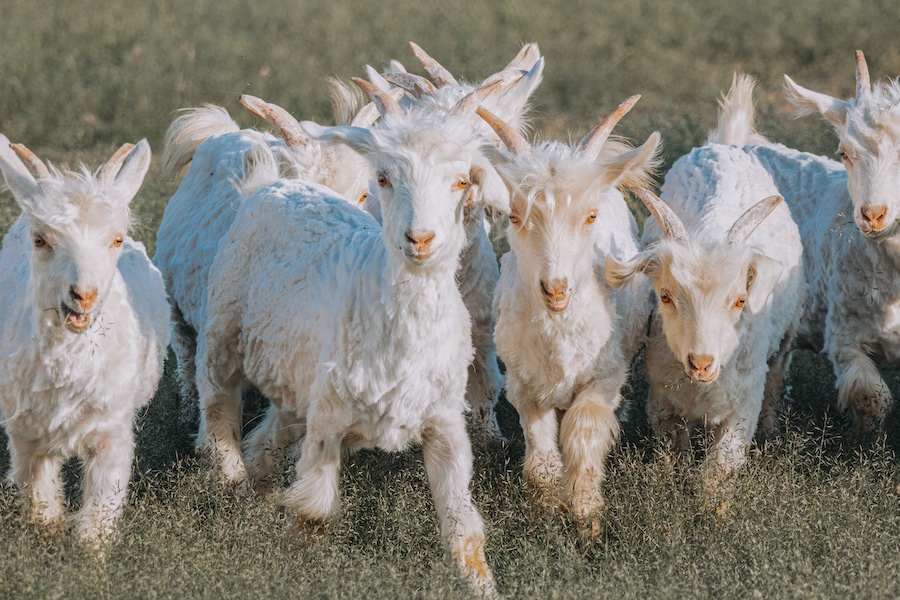
Cashmere goats © 2025 AbTF
At the invitation of the Aid by Trade Foundation (AbTF), over 70 experts from the cashmere production and supply chain, as well as other specialists, met at the GCS Unit Meeting in Shanghai, China to discuss the progress and new objectives of The Good Cashmere Standard (GCS). The meeting focused on implementation and verification of the standard, important aspects of animal welfare and the importance of the standard in the global textile market.


The Good Cashmere Standard, the largest standard in the world for sustainable cashmere, welcomed animal welfare and cashmere experts, and GCS partner companies to its two-day conference, to discuss together the future of the sustainable cashmere industry. The issues discussed included species-appropriate animal husbandry, and the expanded GSC verification system. Other important points at the meeting were exchanges of experiences with local actors regarding the implementation of standard requirements at cashmere goat farms, and the importance of seamless transparency in verified cashmere fibre in the supply chain – an issue that is becoming increasingly important due to the expected regulations in the EU and the USA.

One of the highlights was the speech by the herdswoman Chaoluomenqiqige, who runs a GSC model farm with her husband Zhaonashun. She shared her personal experiences with The Good Cashmere Standard and stressed the positive effect that the standard had had on her operation – because of the progressive animal welfare practices, for example. “It is impressive how much commitment herders put into their everyday work”, says Tina Stridde, Managing Director of the Aid by Trade Foundation. “This makes the model farms important centres of innovation and inspiration for all partners of The Good Cashmere Standard.”

Through this event, the Aid by Trade Foundation reaffirmed its commitment to continuous improvement of The Good Cashmere Standard together with local actors, and to promoting responsible cashmere production. The important conclusions from the GSC Unit Meeting will influence the further development of the standard, and help promote animal welfare, transparency, and sustainability in the cashmere production.

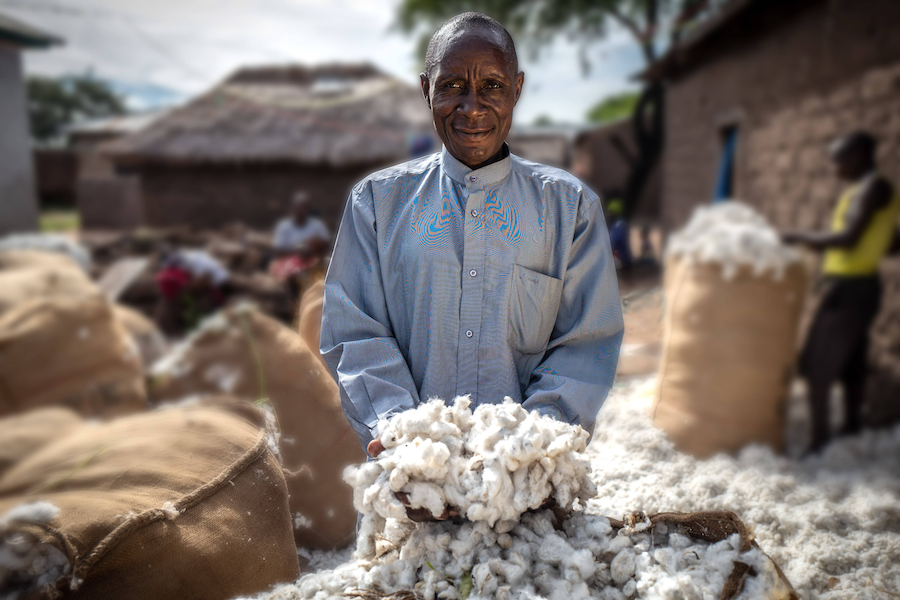
More News from Aid by Trade Foundation (AbTF)

#Raw Materials

Aid by Trade Foundation presents annual report for 2025: Market position and impact of sustainably verified natural fibres strengthened

Despite global supply chain challenges, the Aid by Trade Foundation (AbTF) was able to further expand its international role in promoting sustainably verified natural fibres in 2025. In doing so, the foundation remains true to its fundamental approach of leveraging market forces. Last year, it generated total revenues of EUR 7.8 million; this included EUR 6.7 million collected through the successful marketing of four standards: Cotton made in Africa (CmiA), CmiA Organic, The Good Cashmere Standard (GCS), and the Regenerative Cotton Standard (RCS). AbTF invested the resulting income in projects aiming to protect biodiversity, support women, increase transparency in the textile supply chain, and implement its verification system.

#Natural Fibers

Cashmere specialist joins AbTF Board of Trustees

The Aid by Trade Foundation (AbTF) is pleased to welcome Brian Yu, the chief executive officer of the Artwell Group, to its board of trustees. As CEO, Brian Yu developed Artwell into the world’s largest supplier of responsibly produced cashmere knitwear.

#Natural Fibers

The Good Cashmere Standard expands Animal Welfare Assessment on audited farms

With the Animal-related Animal Welfare Assessment (ARAWA), the Aid by Trade Foundation (AbTF) conducts a pioneering project for the second consecutive year in 2025, parallel to the independent verifications of The Good Cashmere Standard® (GCS). ARAWA assessments provide a comprehensive overview of the health status of a herd on an audited farm, going beyond standard verification procedures. They are inherently complex, which still makes them a rarity in the standard sector, but offer support in identifying non-conformities and provide a holistic overview of the herd's well-being. Therefore, the Aid by Trade Foundation will continue this crucial project and even further expand it by 2027.

#Raw Materials

Aid by Trade Foundation reaches new milestones in supply chain transparency

The Aid by Trade Foundation (AbTF) is reaching new milestones as it leads the way towards greater physical traceability for Cotton made in Africa® (CmiA) cotton. With around 700 suppliers and producers in a total of 25 countries, the Aid by Trade Foundation has reached a new record number of partners who can trace CmiA cotton from the product back to its origin. This is more than double the previous year’s figure.

More News on Natural Fibers

#Raw Materials

Brazil sets new cotton export record and consolidates global leadership

Brazil ended the 2025/26 commercial year with a new record, consolidating its position as the world’s largest cotton exporter. Between August 2025 and July 2026, the country shipped 3,373,941 tonnes of the fiber, 19% more than in the previous cycle, and reached record revenue of US$5.3 billion. The result represents a milestone in Brazil’s expansion in the international market and reinforces the country’s role as a strategic supplier to the global textile industry.

#Raw Materials

Better Cotton Initiative partners with Avalo in AI plant breeding for climate-resilient cotton

The Better Cotton Initiative (BCI) has partnered with agriculture solutions company Avalo, whose platform accelerates the speed at which plants with key resiliency traits may be developed.

#Natural Fibers

Plastic-free stretch technologies drive new direction for denim innovation

As the denim industry looks for ways to reduce its reliance on synthetic fibres, plastic-free stretch technologies are gaining momentum. Developments based on mechanical fabric construction and natural rubber are demonstrating that comfort and stretch can be achieved without conventional elastane, supporting both recyclability and circular product design.

#Raw Materials

ICAC International Seminar in Taipei to explore strategic synergies across the textile supply chain

The International Cotton Advisory Committee (ICAC) — together with the Taiwan Textile Federation (TTF), under the guidance of the Ministry of Economic Affairs and the Ministry of Foreign Affairs of Taiwan — will bring international cotton and textile leaders together in Taipei on September 10 for the ICAC International Seminar 2026.

Latest News

#Europe

European textile industry calls for €10 handling fee on ultra-fast-fashion imports

The introduction of the €3 customs duty on low-value imports marks an important milestone in Europe’s efforts to address the challenges created by the rapid growth of ultra-fast-fashion imports. Together with the abolition of the €150 customs duty exemption, it demonstrates that policymakers are willing to act when market distortions become impossible to ignore. However, the European textile and clothing industry considers this a first step rather than the final destination.

#Research & Development

From smart jackets to laser technology: Mona Neubaur explores Textile Factory 7.0

As part of her summer tour, North Rhine-Westphalia’s Minister for Economic Affairs and Climate Action, Mona Neubaur, visited Textilfabrik 7.0 in Mönchengladbach to experience the project’s innovations first-hand. Under the motto “smart and clean”, the visit focused on innovative technologies and sustainable alternatives for textile production - from smart jackets to the decolourisation of textiles using fungal cultures.

#CINTE Techtextil China 2026

Cinte Techtextil China 2026 has opened today, bringing global innovations and resources to Shanghai

As Asia’s premier platform catering to the evolving needs in technical textiles and nonwovens, Cinte Techtextil China has opened today at the Shanghai New International Expo Centre, gathering over 300 exhibitors from 15 countries and regions. Across Halls W3 to W5, this edition will create chances for fast-growing sectors and emerging trends – such as Mobiltech, Medtech & Protech, Indutech and more. The curated zones, pavilions, and fringe programme are designed to better connect exhibitors with targeted buyers from across China, Asia-Pacific, and further afield. Meanwhile, the Association Village will gather international industry associations to foster even more global collaboration.

#Textiles & Apparel / Garment

Texworld Apparel Sourcing Paris opens with focus on AI, circularity and new sourcing regions

More than 1,000 exhibitors from around the world are gathering at Paris-Le Bourget as Texworld Apparel Sourcing Paris opens its doors from August 31 to September 2. With around 500 textile manufacturers and a similar number of apparel and accessories suppliers, the trade fair reflects the ongoing transformation of global sourcing and the growing diversification of supply regions.

TOP