[pageLogInLogOut]

#Raw Materials

Better Cotton launches 2023-24 Annual Report: Impact, expansion and farmer resilience
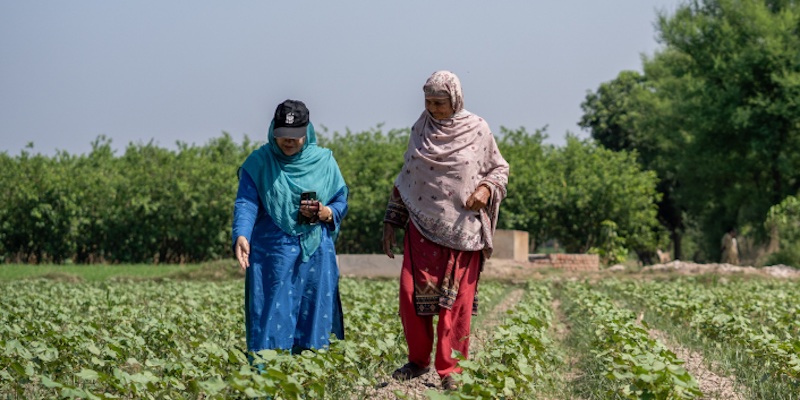
Better Cotton has published its 2023-24 Annual Report, highlighting its global impact, programme expansion, and the resilience of cotton-growing communities. The report provides a comprehensive overview of the organisation’s field-level impact from the 2022-23 cotton season, alongside insights into its membership growth, financial developments and key project updates and innovations from 2023-24.
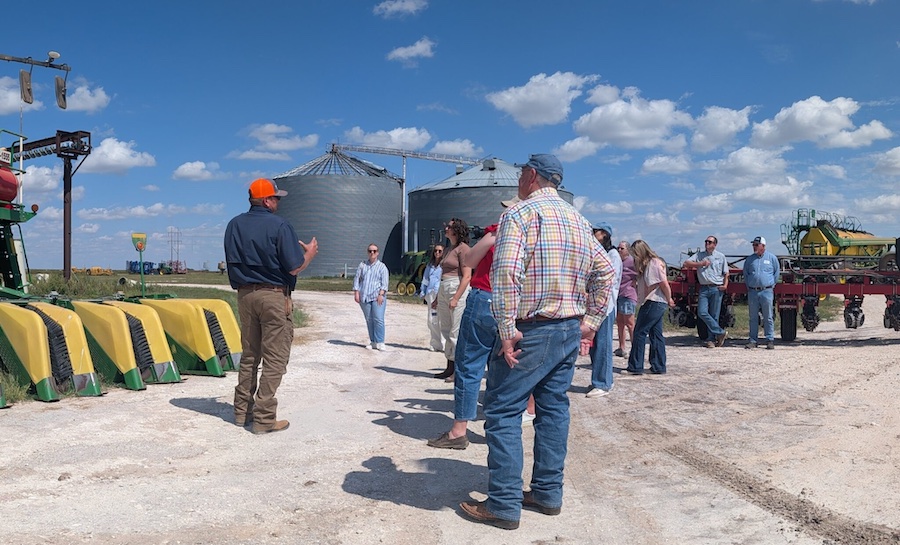
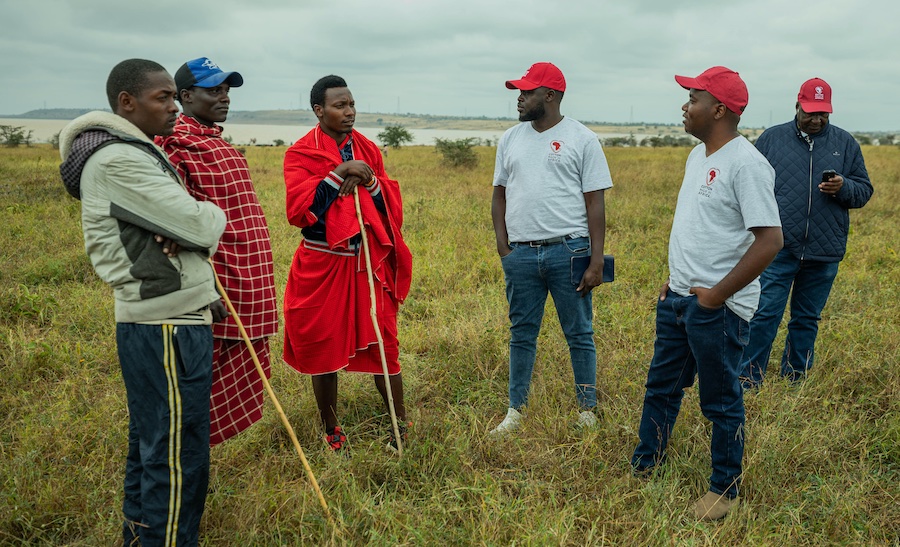
Photo credit: Eventrra/Better Cotton


With a strong commitment to improving the lives and livelihoods of farmers and promoting sustainable farming practices, Better Cotton remains at the forefront of efforts to foster a more equitable and sustainable cotton across the industry. 

"Better Cotton is at an exciting juncture, and if there is one key takeaway from 2023, it is the need for us to come together and build on the momentum we’ve created. The proven solutions we’ve developed have taken us far, but continued commitment and investment in cotton farming communities are essential to accelerate the wider impact our world needs", commented Alan McClay, CEO at Better Cotton.

Key Highlights 

In the 2022-23 cotton season, 5.47m MT of Better Cotton were produced, representing 22% of global volumes (25.03m MT). This spanned 22 countries around the world in collaboration with close to 60 Programme Partners.

In the 2022-23 cotton season, out of 2.43 million farmers who received training, more than 2.13 million received a licence to sell their cotton as ‘Better Cotton’.

In 2023, Better Cotton welcomed 311 new members, including 37 Retailers and Brands and 264 Suppliers and Manufacturers.

Volume of Better Cotton Grown (2022-23 Season Data) 

In Brazil, the largest producer of Better Cotton, the volume of licensed Better Cotton grew from 1.97m MT in the 2021-22 season to more than 2.64m MT in the 2022-23 season. 

In India, yields also increased from around 863,000 MT in the 2021-22 season to more than 917,000 MT in the 2022-23 season. 

In contrast, Pakistan’s cotton farmers were hit hard by devastating floods which led to a significant drop in the volumes of Better Cotton produced from 817,000 MT in the 2021-22 season to 305,000 the following year. 

Production in Africa also decreased from around 630,000 MT to 442,000. This was primarily due to a Jassid pest infestation in Mali that affected up to 50% of the country’s cotton crop. 

Elsewhere, the 2022-23 cotton season was one of continued growth for several countries including the USA, Australia, Turkey, Egypt, Israel and Greece. 
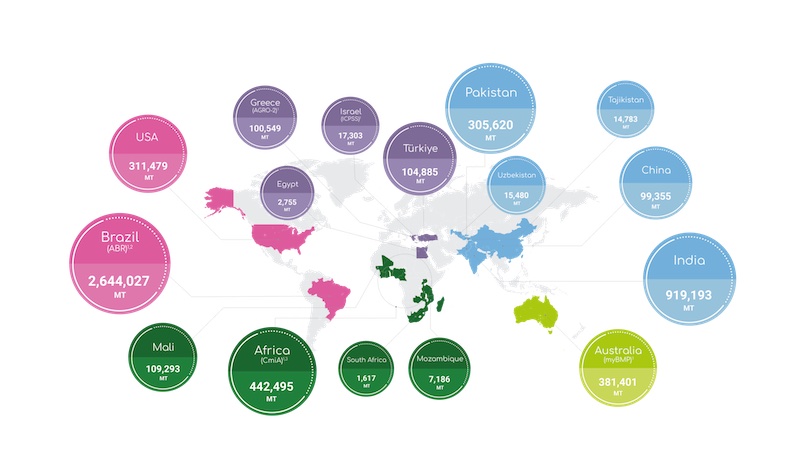
Volume of Better Cotton Grown (2022-23 Season Data) © 2024 BCI


Better Cotton Licensed Farmers Around the World (2022-23 Season Data) 

The most notable growth in licensed farmer numbers during the 2022-23 season came across Africa, where the total aligned with Better Cotton and its Strategic Partner, Cotton made in Africa (CmiA) improved from 570,000 in the 2021-22 season to more than 610,000 in the 2022-23 season. 

In Pakistan, the number of Better Cotton licensed farmers fell from 510,000 to just over 351,000, again due to the effects of the floods. Modest gains were seen in Turkey, Egypt, Greece and the USA.
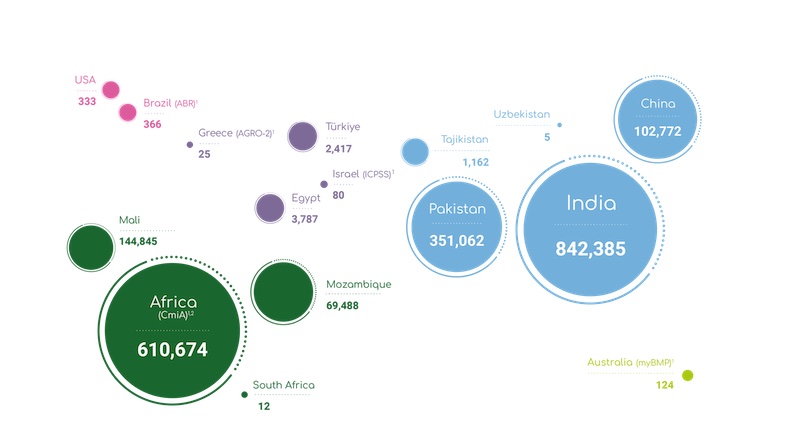
Better Cotton Licensed Farmers Around the World (2022-23 Season Data)  © 2024 BCI
Better Cotton Licensed Farmers Around the World (2022-23 Season Data) © 2024 BCI


Membership and Operational Highlights 

Despite a challenging business landscape, member sourcing was almost on par with 2022 sourcing results: 343 retailers and brands sourced 2.5 million MT of Better Cotton in 2023.? 

Throughout 2023, Better Cotton made a number of key announcements, including the launch of Better Cotton Traceability in November. The new solution enables members to trace Better Cotton back to its country of origin. 

In 2023, Better Cotton expanded its global reach with new programmes in Spain and Côte d’Ivoire, the latter in partnering with the Professional Association of Cotton Companies of Côte d’Ivoire to support 200,000 farmers over five years. 

In addition, the India Impact Report, published in September, revealed significant progress, including a 53% reduction in pesticide use and a 15.6% decrease in overall costs on Better Cotton farms, showcasing the ongoing positive impact of its initiatives across eight cotton seasons. 
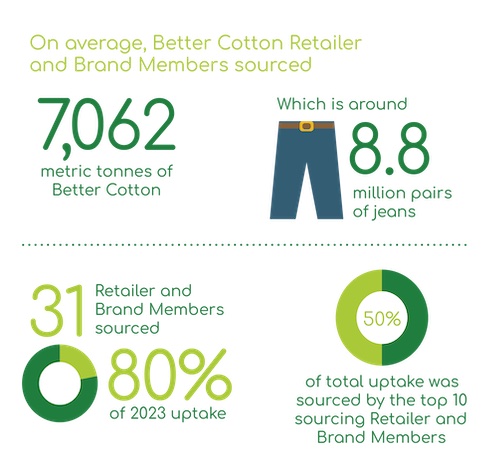
Better Cotton Retailer and Brand Member sourcing (2023) © 2024 BCI


Outlook to 2023-24 

In response to the changing legislative landscape, Better Cotton has been working with members, peer sustainability standards schemes and other relevant stakeholders to evolve our standard requirements and Claims Framework. In 2025, we will publish our Claims Framework v.4.0 to address these new realities.

As part of this, complemented by a robust approach to assurance, we are developing a new label which will enable brands sourcing Physical Better Cotton to market products to consumers as containing Better Cotton for the very first time. 

We are also working on evolving our assurance programme to an accredited certification scheme, where all licensing decisions will be carried out by independent, third parties moving forward. 

This shift will enable legal compliance and further strengthen the credibility of our assurance activities and the Better Cotton label.

https://bettercotton.org/wp-content/uploads/2024/09/2023-24-Annual-Report.pdf

More News from Better Cotton

#Raw Materials

Better Cotton Initiative marks certification anniversary with progress update and accreditation

One year since becoming a certification scheme, the Better Cotton Initiative (BCI) has announced that more than 3,000 supply chain actors have been certified. At farm level, more than 30% of farms and producer units supplying BCI Cotton have received a positive audit outcome.

#Raw Materials

Better Cotton Initiative opens enrollment in the US with promising opportunities for producers

Producer enrollment for the US Program of the Better Cotton Initiative (BCI) is open until May 15 for the 2026-2027 season. With over 2,600 members spanning the cotton supply chain and more than 11,000 users of its Better Cotton Platform (BCP) as of 2025, BCI’s standard is implemented in 15 countries and covers one fifth of global cotton production.

#Natural Fibers

Better Cotton Initiative partners with Uzbek government agency to offset certification costs

The Better Cotton Initiative (BCI) has today announced a strategic agreement with Uzbekistan’s Light Industry Agency to increase financial support for cotton farming clusters adopting sustainable agricultural practices.

#Natural Fibers

Better Cotton Initiative surpasses 50% traceable BCI Cotton milestone

Two years since the launch of its traceability solution, the Better Cotton Initiative (BCI) has announced that over 50% of BCI Cotton volumes entering global fashion and textile supply chains are now traceable, deriving from 15 countries.

More News on Raw Materials

#Man-Made Fibers

Lenzing AG to become majority owner of TreeToTextile AB and accelerates industrialization of new fibers

The Lenzing Group is taking another strategic milestone by acquiring a controlling majority in the Swedish innovation company TreeToTextile AB. This step strengthens Lenzing’s position as a leading provider of sustainable, wood‑based specialty fibers and expands its innovation pipeline with a highly scalable, patent‑protected technology platform. The transaction is executed through the issuance of new shares.

#Raw Materials

Cotton Incorporated appoints Bev Sylvester as Chief Marketing Officer

Cotton Incorporated announces the appointment of Bev Sylvester as chief marketing officer. In this newly created role, Sylvester will oversee Cotton Incorporated’s marketing strategy, brand positioning, consumer engagement and global outreach to increase demand for cotton and strengthen its relevance in the marketplace.

#Sustainability

OEKO-TEX® chooses TextileGenesis to advance digital traceability for organic cotton

OEKO-TEX® today announced a full collaboration with TextileGenesis, a Lectra company, to digitally trace and authenticate organic cotton, strengthening fraud prevention across the supply chain. This announcement follows a successful pilot and brings together OEKO-TEX®’s certification expertise and closed testing system with TextileGenesis’ digital traceability platform to deliver a secure, end-to-end solution for managing certified organic cotton flows.

#Raw Materials

Cotton production continues to exceed consumption, some growers shift away from cotton

World cotton lint production in the 2025/26 season is currently estimated at 26 million tonnes, continuing to exceed world consumption, which is estimated at 25.2 million tonnes, according to the February 2026 edition of Cotton This Month. Global production is estimated to be 1% higher than the previous season, while consumption is estimated to be 0.4% higher, resulting in a continued supply surplus in the world cotton market.

Latest News

#Functional Fabrics

“Action helps us change what we do!”

DAY 0 takes place deliberately before PERFORMANCE DAYS begins. It is conceived as a space for reflection, dialogue and active engagement — a moment to pause before the fair, rethink established systems and address sustainability not as a trend, but as a fundamental transformation challenge. Under the guiding metaphor “Turn the Tap Off”, DAY 0 focuses on root causes rather than symptoms, systemic change rather than isolated solutions, and collective responsibility rather than individual silos.

#Textiles & Apparel / Garment

Pets in fashion: functional and sustainable textiles find new market at Intertextile Apparel

China’s pet economy is booming, especially amongst younger generations, and pet apparel – from designer outfits to functional garments – was a RMB 3.5 billion (over USD 500 million) market in 2024, growing more than 20% annually¹. To help exhibitors harness this trend, Intertextile Shanghai Apparel Fabrics – Spring Edition 2026 will launch the Pet Boutique, presenting a range of innovative, sustainable materials that prioritise both functionality and comfort for pets.

#Sustainability

VAUDE eliminates PFAS from all products

PFAS (per- and polyfluoroalkyl substances) are now detectable worldwide – in drinking water, soil and the human body. These so-called “forever chemicals” are considered hazardous to health and potentially carcinogenic, as they do not break down and remain in the environment permanently. Despite these risks, PFAS are still used in a wide range of products. More than 15 years ago, VAUDE made a strategic decision to gradually eliminate PFAS from all product categories.

#Composites

Alliance for European Flax-Linen & Hemp expands bio-materials presence at JEC World 2026

The Alliance for European Flax-Linen & Hemp is pleased to announce its participation at JEC World 2026, featuring a significantly expanded presence and an enhanced offering for the global composites industry.

TOP