[pageLogInLogOut]

#Raw Materials

Better Cotton, in collaboration with African Export-Import Bank, joins WTO and FIFA efforts to scale more sustainable cotton production in africa
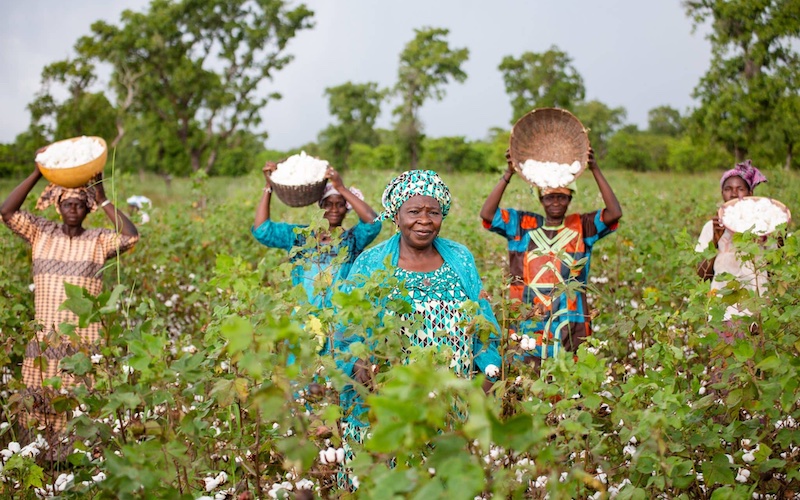
Better Cotton is to conduct sustainability mapping and assessments in West and Central Africa to enhance its understanding of the needs of smallholder farmers in the region and identify context-specific interventions.
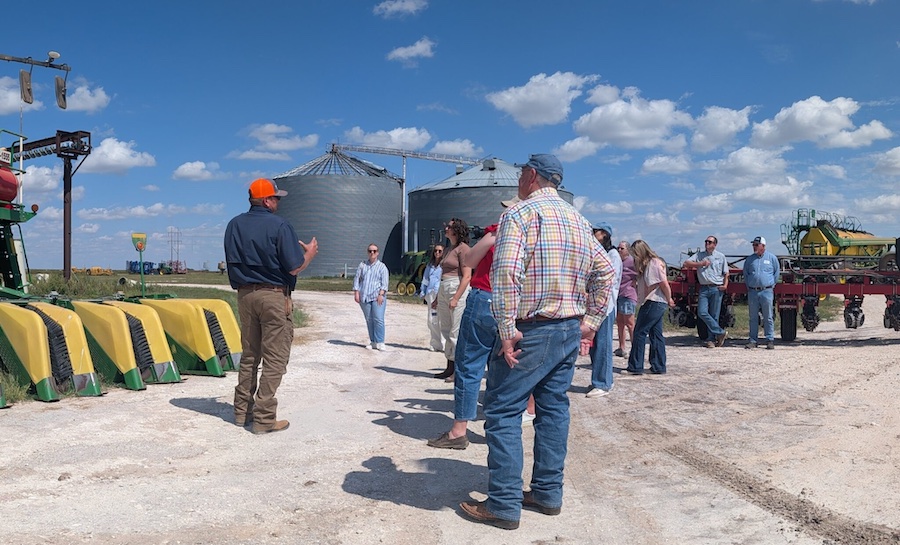
Tata Djire, Agronomist, with cotton farmers in a field in Togoya Photo Credit: Better Cotton/Seun Adatsi. Location: Kolondieba, Mali. 2019


Funded by the African Export-Import Bank (Afreximbank), these assessments will inform ways in which targeted support can aid the production of more sustainable and regenerative cotton across Better Cotton’s programmes in Mali and Côte d’Ivoire – which engage a combined 200,000 farmers and farm workers. 

This collaboration between Better Cotton and Afreximbank is part of wider efforts on the continent, led by the World Trade Organization (WTO) and football governing body FIFA, which aim to support the development of the cotton-to-textile value chain in West and Central Africa and improve economic returns for the sector. 

In 2022, the WTO and FIFA formalised a partnership to enhance the participation of Burkina Faso, Benin, Chad and Mali – known as the Cotton Four (C4) – as well as neighbouring countries like Côte d’Ivoire, within apparel value chains.

In February of this year, the pair officially launched a coalition, ‘Partenariat pour le Coton’ – of which Better Cotton is a member – to accelerate work on this front. 

In doing so, they issued a call for investment, emphasising that the current balance of exporting 90% cotton raw material falls short of the region’s economic potential. While raw material exports generate vital revenues, organisations active on the continent believe there is scope to bolster local processing capacities in order to boost incomes. 

Better Cotton’s assessments – conducted with support from its Programme Partners in Mali and Côte d’Ivoire – will connect farming communities to the WTO and FIFA’s mission to strengthen supply chains in the region.? 

Better Cotton remains committed to Africa and continues to build upon its presence on the continent. In November 2023, the organisation launched its programme in Côte d’Ivoire and co-hosted an event in Chad to discuss opportunities to establish a programme in the country. 

"Africa is a vibrant and exciting region for cotton production and our expansion on the continent is demonstrative of that. At the heart of our mission are cotton farmers, workers and the surrounding communities – these assessments will help optimise our efforts and pave the way for continued sustainable economic development across Mali and Côte d’Ivoire", says Alan McClay, Chief Executive Officer at Better Cotton. 

Kanayo Awani, Executive Vice President at Intra-African Trade Bank, Afreximbank, comments:" Through initiatives like these, we are committed to supporting Africa’s smallholder farmers and the entire cotton value chain, enabling them to extract maximum value from their produce, boost value addition, attain higher levels of sustainability and improve quality, all while prioritising superior products with global market potential.”

More News from Better Cotton

More News on Raw Materials

#Natural Fibers

2026 ICAC report projects World cotton trade to reach 10.3 million tonnes by 2028/29

The International Cotton Advisory Committee has released the 2026 World Cotton Trade Report, which provides analysis of global cotton trade patterns, key trading relationships, import and export trends, and the geopolitical and policy developments shaping cotton trade flows.

#Sustainability

The first widely accessible Life Cycle Assessment study for cashmere production published by Textile Exchange.

Crucial new data to better understand, measure, and address the impacts of cashmere production has been made available to the fashion, textile, and apparel industry through a new Life Cycle Assessment (LCA) published by Textile Exchange.

#Natural Fibers

"Review" examines the outlooks for seven major cotton producers

The newest issue of Cotton: Review of the World Situation provides an in-depth look at how seven important cotton-producing countries are responding to changing markets, rising production costs, climate pressures, evolving technologies, and growing demands for quality and sustainability.

#Raw Materials

AMSilk and Ajinomoto Foods Europe expand partnership to enable industrial-scale production of silk proteins

AMSilk GmbH (“AMSilk”), a global leader leader in biotech produced silk materials, today announced a significant expansion of its partnership with Ajinomoto Foods Europe (AFE), marking a key step in scaling the industrial production of its silk proteins. Building on the collaboration first established in 2023, the two companies have now entered into a long-term manufacturing and supply agreement, enabling the transition from industrial validation to dedicated, large-scale production.

Latest News

#Knitting & Hosiery

The new RDJ 7/3 defines the design footprint of modern athletic shoes

Stylish, functional, and efficient to produce – spacer fabrics are the all-arounders among textile materials. These versatile fabrics are particularly in demand in the sports and casual footwear sector, as they combine comfort, breathability, and design freedom. At the same time, this industry is trend-driven, dynamic, and price-sensitive like few others. Innovations are therefore a decisive factor for success. With the RDJ 7/3, KARL MAYER offers a solution specifically tailored to these requirements. The particular strength of the new double raschel machine: its exceptional flexibility, thanks to its three jacquard bars.

#Research & Development

Smart textiles reversibly change shape in an energy-efficient manner in response to ambient temperature

Self-actuating textile structures are used in a wide range of applications, such as medical technology, automation, architecture, agriculture, and the apparel industry. An example is the use of shading nets in greenhouses, which can be deployed and retracted depending on the sunlight intensity. The German Institutes of Textile and Fiber Research Denkendorf (DITF) are developing textiles based on shape-memory polymers with reversibly controllable geometry.

#Spinning

Barmag expands its portfolio for PA6/PA6.6 applications — also available as a retrofit solution

With the new type 6020 ceramic oiler, Barmag is introducing a powerful addition to its product portfolio for processing PA6 and PA6.6 yarns. The solution is specifically designed for low-titer applications in the range of 5 to 100 denier.

#Spinning

Pre-Cleaner CL-X: Proven in cotton cleaning – creating value beyond the spinning mill

Since its market launch, the CL-X has firmly established itself in blowroom lines worldwide. Hundreds of installations confirm its ability to deliver superior cleaning efficiency, lower waste, higher productivity and significant energy savings. Now, new customer applications show that the CL-X not only continues to excel in spinning preparation – it is also entering a completely new field of application: ginning.

TOP