[pageLogInLogOut]

#Raw Materials

ICA Bremen: Successful ‘Cotton Classing & Testing’
© 2023 Bremen Cotton Exchange
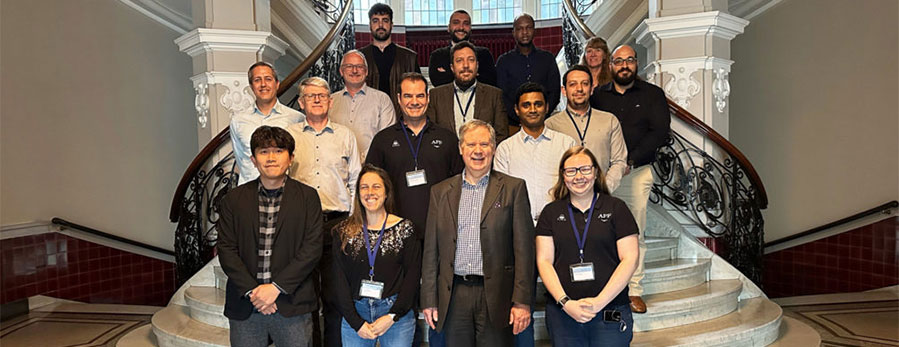
The six-day programme returned to Bremen, Germany from 2 – 9 May. The training course was delivered by industry experts from ICA Bremen and the Bremen Fibre Institute (FIBRE). The popular training concentrates purely on quality issues in raw cotton. Participating delegates came from all over the world including Türkiye, India and Australia.

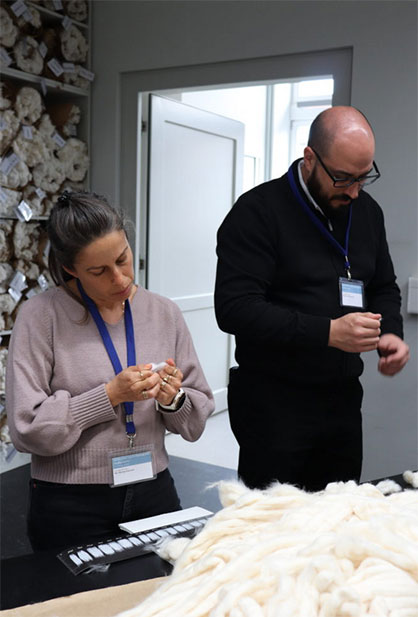
Twelve Delegates from all over the world attend the 2023 training course.

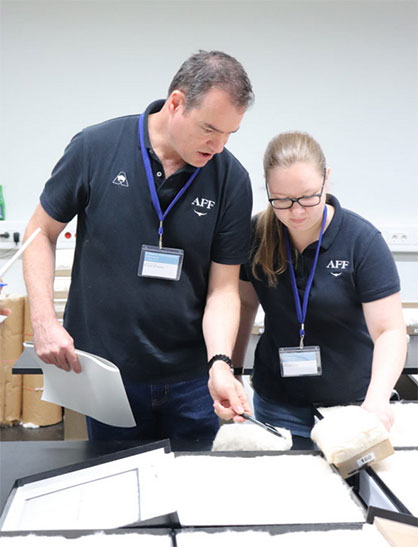
Delegates who attended the training developed a unique skill set in laboratory testing and cotton quality by expert Axel Drieling (FIBRE), with Jens Wirth (ICA Bremen) and Karsten Froese (ICA Bremen) in the manual testing area.

Bill Kingdon (ICA Bremen Managing Director) said: “The training provides an excellent opportunity for cotton professionals to learn and develop unique skills in cotton quality from industry leading experts.”
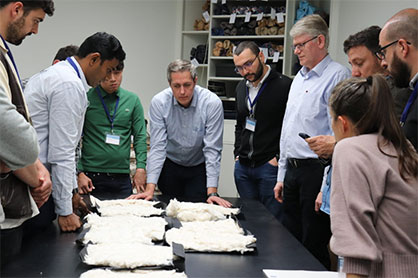
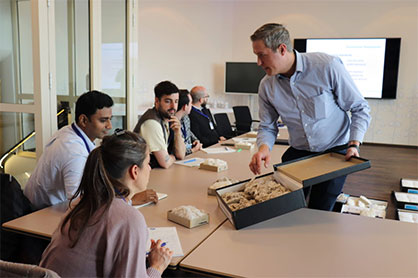
Participants in the arbitrage room  © 2023 Bremen Cotton Exchange
Participants in the arbitrage room © 2023 Bremen Cotton Exchange


Introduction to cotton quality © 2023 Bremen Cotton Exchange


Manual testing © 2023 Bremen Cotton Exchange


The training incorporates a wide range of modules – from the classing of cotton from various growths to practical HVI training on the latest Uster 1000 and Premier ART2 machines. It also includes a welcome meal and a farewell meal allowing delegates the perfect opportunity to network with their fellow delegates.

Find out more about the Cotton Classing & Testing Traning on the website of ICA Bremen
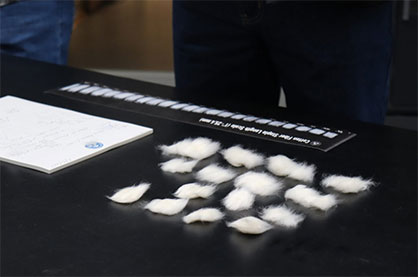
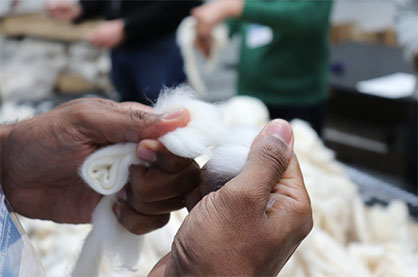
Stapel  © 2023 Bremen Cotton Exchange
Stapel © 2023 Bremen Cotton Exchange


Pulling stapel © 2023 Bremen Cotton Exchange


Cotton classing  © 2023 Bremen Cotton Exchange
Cotton classing © 2023 Bremen Cotton Exchange


More News from Bremer Baumwollbörse

#Natural Fibers

Bremen Cotton Exchange: Fritz A. Grobien re-elected as President

The members of the Bremen Cotton Exchange have re-elected Fritz A. Grobien as President during the association’s 152nd General Assembly on June 18, 2026. The election confirms the organization’s commitment to maintaining its role as a leading international platform for the cotton and fiber industry amid a period of geopolitical and economic uncertainty.

#Raw Materials

Fiber traceability - A vehicle to ensure sustainability or injustice?

The Bremen Cotton Exchange is making a new paper available for download. In this paper, analyst Veronica Bates Kassatly and statistician Terry Townsend examine the justifications behind this approach and assess the consequences for textile and apparel sustainability claims and global legislation.

#Raw Materials

A Powerful Opening: Global thought leaders launch the International Cotton Conference Bremen

The International Cotton Conference Bremen will open on 25 March 2026 in the Parliament building of the Free Hanseatic City of Bremen with a keynote session of exceptional calibre. Distinguished international experts will set the stage for the conference by offering incisive perspectives on the most pressing challenges and the defining trends shaping the future of the global cotton trade. Their insights will span a broad spectrum — from geopolitically driven disruptions affecting global supply chains to the opportunities emerging from innovation-led agriculture capable of supporting a growing world population. Together, these opening keynotes will frame the dialogue of the conference, highlighting both the complexity of today’s market environment and the pathways toward a resilient and forward-looking cotton sector.

#Natural Fibers

Beyond Cotton: Natural Fibres in the Spotlight at the Bremen Cotton Conference - Branded by DNFI

Climate targets, fragile supply chains, and rising regulatory requirements are fundamentally changing the perspective of the textile industry - the focus is increasingly shifting toward the base material. Not only cotton, but natural fibres are gaining significant importance: they stand out not only because of their outstanding functional properties, but also because they make a valuable contribution to the bioeconomy and responsible product development.

More News on Raw Materials

#Raw Materials

AMSilk and Ajinomoto Foods Europe expand partnership to enable industrial-scale production of silk proteins

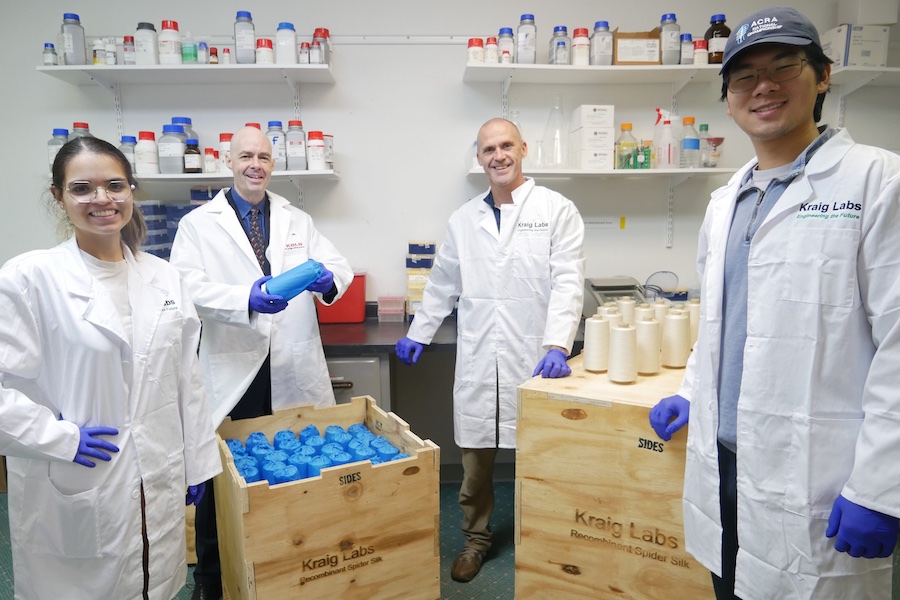
AMSilk GmbH (“AMSilk”), a global leader leader in biotech produced silk materials, today announced a significant expansion of its partnership with Ajinomoto Foods Europe (AFE), marking a key step in scaling the industrial production of its silk proteins. Building on the collaboration first established in 2023, the two companies have now entered into a long-term manufacturing and supply agreement, enabling the transition from industrial validation to dedicated, large-scale production.

#Natural Fibers

Global cotton trade poised for recovery as India and China drive import demand

The July 2026 issue of Cotton This Month highlights a changing global cotton market, with consumption and trade expected to strengthen despite a modest decline in production during the 2026/27 season. The next issue of Cotton This Month will be released on August 1, 2026.

#Natural Fibers

Cotton made in Africa partners receive top marks in independent verifications

Cotton made in Africa® (CmiA) and CmiA Organic are two internationally recognised standards that aim to promote sustainable development in the African cotton sector south of the Sahara. To ensure the standards’ credibility among brands, retailers, and consumers, independent verifiers evaluate compliance on the ground. The verification results for 2025, now published in the Aggregated Verification & Implementation Report, were very strong: The verifiers awarded consistently very good remarks regarding management, people, prosperity, and the environment.

#Natural Fibers

Cotton ConneXions Insight to Impact brings supply chain leaders together around cotton innovation

Cotton Incorporated’s Cotton ConneXions Insight to Impact brought together more than 300 industry leaders from 140 companies across 10 countries, including more than 45 top global brands and sourcing organizations, underscoring strong global interest in cotton-rich product development, sourcing and supply chain collaboration.

Latest News

#Textile processing

YKK develops concept EXCELLA® zipper tape using nonwoven fabric partially derived from used clothing

YKK Corporation has developed a concept version of its premium EXCELLA® zipper series made from nonwoven fabric sheets created by fiberizing used clothing and other textile materials. Based on a proposal by fashion designer Yuima Nakazato, this item was created as a result of collaboration between Nakazato, Seiko Epson Corporation and YKK. The concept zipper was incorporated as a material component for pieces in the newest YUIMA NAKAZATO Couture Collection, “INFERNO,” which was unveiled in Paris, France on July 8, 2026.

#Textiles & Apparel / Garment

Texworld Apparel Sourcing Paris highlights evolving global sourcing landscape

From 31 August to 2 September 2026, Texworld Apparel Sourcing Paris will bring together more than 1,000 international exhibitors at Paris-Le Bourget Exhibition Centre. This edition reflects the new global balance of textile and apparel sourcing, highlighting a strong diversity of sourcing countries — some unexpected.

#Textile processing

Dedicated car seat model of SHIMA SEIKI’s P-CAM® R Cutting Machine unveiled

Leading Japanese textile solutions provider SHIMA SEIKI MFG., LTD. of Wakayama, Japan, showed a special version of its P-CAM® R multi-ply computerized cutting machine dedicated to the production of car seats for the first time, at a private exhibition held over two days on Thursday, July 2nd and Friday, July 3rd at the Kariya City Industrial Promotion Center in Aichi Prefecture.

#Research & Development

ALADIN paves the way for circular and demand-driven textile production in Europe

Textile production can be organized sustainably by utilizing short supply chains and preventing overproduction. This can already be achieved today by intelligently connecting and efficiently utilizing existing infrastructure. At the same time, production becomes circular when innovative technologies and materials are used that enable high-quality recycling. The ALADIN research project, launched in May 2026 and co-funded with five million euros under the EU Horizon Europe program, is creating the conditions for this.

TOP