[pageLogInLogOut]

#Raw Materials

A serenade from USTER for Cotton Day
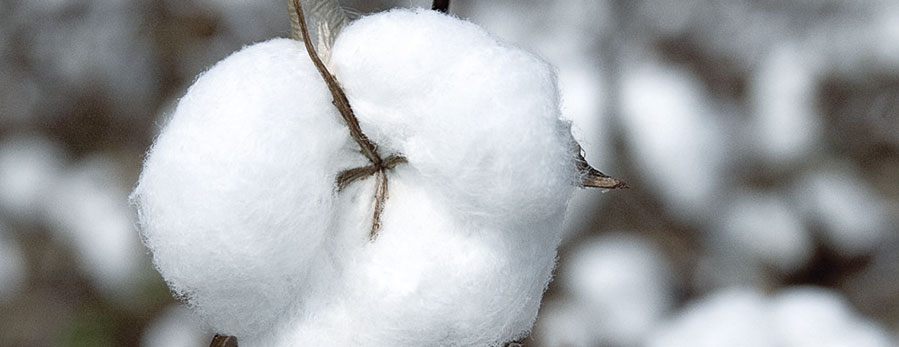
Cotton tuft © 2022 Uster
World Cotton Day – on October 7 every year – is a celebration of the world’s most important natural fiber. It’s a good time to take a closer look at cotton from all the different angles – the growers and traders, spinners, fashion addicts and even museum visitors.

This article is dedicated to cotton, a unique fiber. It is a true multi-talent: from jeans to banknotes (US paper money is made with 75% cotton and 25% linen), it is almost unthinkable to imagine our everyday life without cotton. The fluffy fiber is found in many different products as an ideal and much-appreciated raw material.

Measured for value

Cotton can be precisely described with 14 quality characteristics – focusing on length, strength, fineness, color, maturity, trash and moisture content of the fiber. The value of cotton as a raw material depends on its quality. Key factors are long and uniform fiber length, optimal fineness for each application and high strength for precious fibers. 
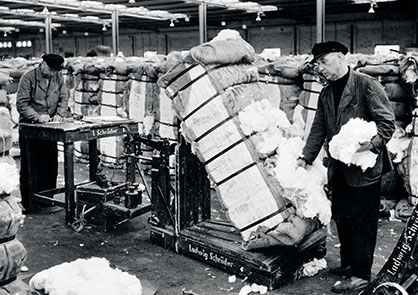
Historical picture taken at a port (c) photo of the Brockmöller collection (Kulturhaus Walle) © 2022 Uster


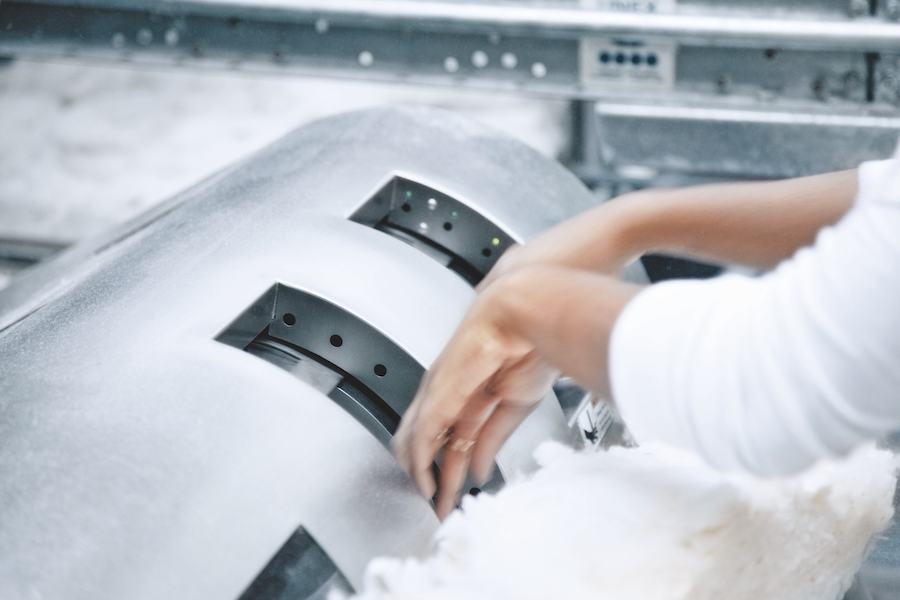
Some cotton growers and traders rely on their years of experience to set the right price for a batch of cotton, but over half of world cotton production is classed objectively by High Volume Instruments (HVI) from Uster Technologies. The HVI provides the most accurate and repeatable test results for the efficient classification of cotton quality – and more than 3,300 units are installed in 70 countries.

Measured for bale mix and efficiency

For spinning mills, cotton purchasing accounts for more than 50% of costs, so it’s critical to get it right. Sorting bales according to quality and end-use is best done on the basis of good data. Consistent data from HVI is the first step in successful production in spinning operations – in terms of both quality and cost. 


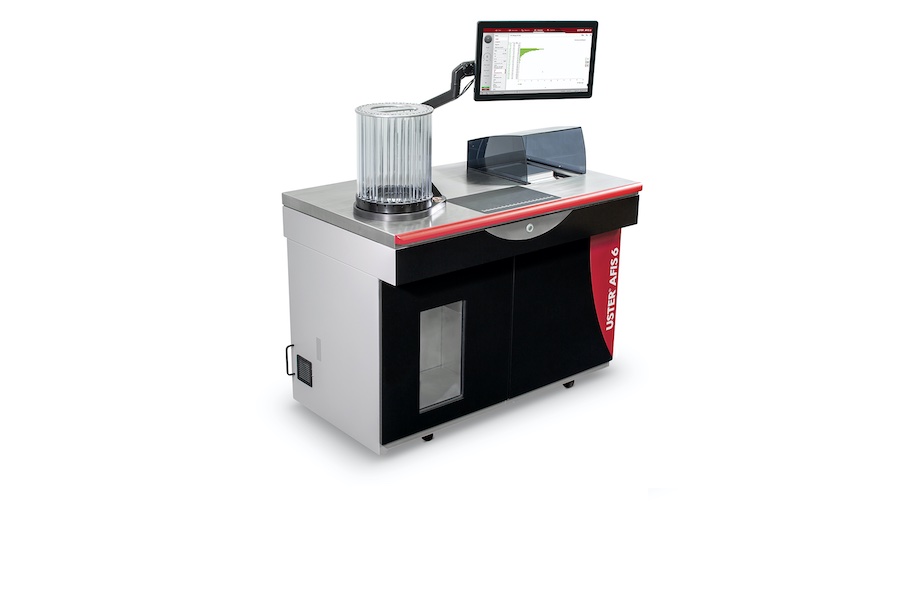
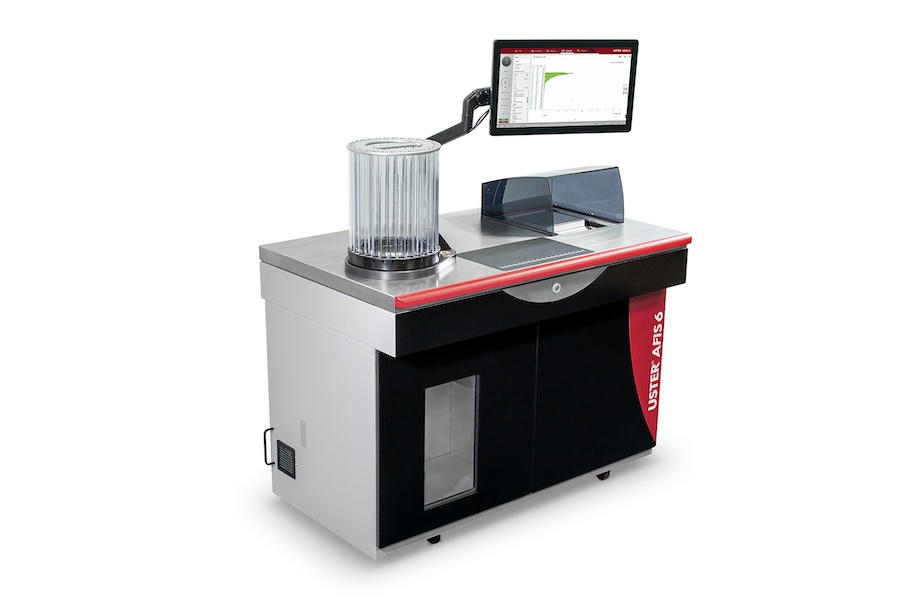
Some of the costliest mistakes in yarn manufacturing arise from poor control of the raw material at bale mix before spinning preparation. But fiber testing is also essential during the spinning preparation stages, to minimize any negative financial impact of excess waste, unnecessary cuts, reworking, and customer claims. Another fiber measurement instrument is responsible for profitable production: Uster AFIS Pro 2 provides the essential data necessary for modern process optimization techniques in the spinning mill, and best practice in process control.

100% cotton

A look into the cultural history of cotton is also illuminating. The cotton story goes back over 5,000 years. Did you know that cotton was a driver for industrialization? Today, cotton fiber is found in clothing and cosmetics items. Applications span the invention of toilet paper to the recycling of denim pants into vehicle construction components. 

100% cotton is printed on tags of countless items of clothing and on signposts leading to a special exhibition at the Übersee-Museum (overseas museum) in Bremen, Germany. The exhibition offers a fascinating look at cotton’s cultural history and shares surprising, new, but also controversial stories about the soft fiber (www.uebersee-museum.de/en/100-cotton).

Uster is proud that the curators of the Übersee-Museum considered the HVI as part of cotton’s essential history. The Uster cotton classing instrument was selected as an exhibit and visitors have the opportunity to try their hand as a cotton tester to determine color, length and price.

This year’s jubilee of Bremen Cotton Exchange played an important role initiating the special exhibition. The Bremen Cotton Exchange has been shaping the global cotton trade through its competence, neutrality and authority for 150 years.

Everlasting

The first evidence of cotton use was found in India and Pakistan, and dates back to around 6,000 B.C. That means cotton’s been keeping people dressed for over 8,000 years.

Cotton’s place in the world was even demonstrated during the recent pandemic times, when home-working became a necessity for many. In that situation, the need for smart office wear was replaced by an increased emphasis on comfort in everyday clothing. This sparked a trend for ‘sofa to street’ apparel which is still here today. People clearly love the gentler touch of their cotton gear, and that has translated into a real fashion choice.

One apt description, first applied to Indian cotton was ‘Woven Wind’ – expressing the touch and feel of these fabrics. India was the foremost cotton processing country for hundreds of years, and it’s fitting that its traditions with the world’s favorite fiber still hold good today.

More News from Uster Technologies AG

#Spinning

Measure and control the fiber – optimize yarn quality

Producing consistent yarn quality is an everyday challenge – and a very difficult one. Detailed knowledge and understanding of the fiber raw material is absolutely critical to achieving the best possible quality in the yarn. To help spinners, Uster experts have put together guidelines for avoiding yarn irregularity claims, in a special edition of the Uster News Bulletin.

#ITMA Asia + CITME Singapore 2025

Uster presents novelties at ITMA Asia + CITME 2025

There’s news from Uster Technologies to be announced for the industry’s upcoming event in Singapore. The Uster 360Q universe is growing with new products, solutions and services. Innovation developments can also be recorded in the fields of man-made fiber testing and fabric inspection. Uster innovations address the industry’s trending topics as mill management and process control, optimization of delivered fabric quality and yield.

#Spinning

Uster Technologies marks 150 years of empowering quality excellence

Uster Technologies marks 150 years of excellence – a milestone that reflects continuous adaptation to customer needs and industry change. Over the decades, Uster has evolved from manufacturing quality testing instruments into a trusted partner shaping the future of textile production.

#Recycling / Circular Economy

Challenges of making yarn from recycled fibers

What does it take to spin quality yarn from recycled fibers? Uster Technologies brought textile industry leaders together to discuss the role of technology, data and automation – as well as the current challenges in using recycled raw material. Experts from Rieter, Säntis Textiles, Otto Yarns, and TVU commented on the current situation and looked into the future of spinning in a panel discussion organized at Uster headquarters.

More News on Raw Materials

#Raw Materials

A Powerful Opening: Global thought leaders launch the International Cotton Conference Bremen

The International Cotton Conference Bremen will open on 25 March 2026 in the Parliament building of the Free Hanseatic City of Bremen with a keynote session of exceptional calibre. Distinguished international experts will set the stage for the conference by offering incisive perspectives on the most pressing challenges and the defining trends shaping the future of the global cotton trade. Their insights will span a broad spectrum — from geopolitically driven disruptions affecting global supply chains to the opportunities emerging from innovation-led agriculture capable of supporting a growing world population. Together, these opening keynotes will frame the dialogue of the conference, highlighting both the complexity of today’s market environment and the pathways toward a resilient and forward-looking cotton sector.

#Raw Materials

Lenzing Group positions bio‑based materials as a strategic asset for Europe’s economic security

The Lenzing Group, a leading supplier of regenerated cellulose fibers for the textile and nonwovens industries, hosted a high‑level roundtable in Brussels to discuss how bio‑based materials can strengthen Europe’s economic security and support the shift toward a fossil‑free future. Organized in cooperation with Euractiv, the event brought together representatives of the European Commission, the UK Mission to the EU, academia, civil society, and industry.

#Natural Fibers

Beyond Cotton: Natural Fibres in the Spotlight at the Bremen Cotton Conference - Branded by DNFI

Climate targets, fragile supply chains, and rising regulatory requirements are fundamentally changing the perspective of the textile industry - the focus is increasingly shifting toward the base material. Not only cotton, but natural fibres are gaining significant importance: they stand out not only because of their outstanding functional properties, but also because they make a valuable contribution to the bioeconomy and responsible product development.

#Raw Materials

International Women’s Day: Cotton made in Africa strengthens equality for women through targeted investments

On the occasion of International Women’s Day—which will be observed on 8 March under the motto “Rights. Justice. Action. For ALL Women and Girls”—the Aid by Trade Foundation (AbTF), which is responsible for Cotton made in Africa® (CmiA), underlines its long-standing and ongoing commitment to the equality of women in African cotton production areas.

Latest News

#Techtextil 2026

Where performance becomes product strategy: Techtextil 2026 puts functional apparel in the spotlight

The demand for high-performance textile solutions for the apparel industry increases – and with it the sector’s innovative strength. Techtextil 2026 addresses these developments: The Performance Apparel Textiles area (Hall 9.0) presents around 130 exhibitors from 13 countries showcasing innovative materials for workwear, protective clothing, smart fashion, outdoor and sports. Global key players such as Concordia Textiles, Getzner, Kermel, Klopman International and YKK Europe are among the participants. The live show “Performance Apparels on Stage” brings forward-looking wearables on stage and demonstrates textile innovations where they matter most: in action.

#Denim

Jeanologia launches Billy

The new AI extracts precise laser designs from a garment image in minutes, transforming how vintage denim is recreated for production. If Jeanologia’s laser changed the way jeans were made at the end of the last century, its AI now takes the next step: moving from reproducing wear to designing it. / archive photo © 2026 Jeanologia

#INDEX 2026

EDANA unveils nominees for INDEX™26 Awards: Highlighting the next generation of nonwoven excellence

EDANA is proud to unveil the highly anticipated nominees for the INDEX™26 Awards, the nonwoven industry’s highest accolade for technical and sustainable excellence. Out of a record-breaking field of entries, these finalists represent the cutting edge of material science—from bio-based hygiene fibers and PFAS-free protective textiles to revolutionary water-filtration machinery. Each nominee has been selected by a jury of industry experts for their ability to solve critical global challenges, including the transition to a circular economy and the pursuit of enhanced consumer performance.

#Textiles & Apparel / Garment

Coats to showcase innovative reinforcement and filler materials for leather goods and accessories at APLF 2026

Coats, a world-class Tier 2 manufacturer and trusted partner for the apparel and footwear industries, will be promoting four advanced materials from its ‘Lifestyle Solutions’ portfolio at APLF 2026 in Hong Kong in March. Each innovation has been specifically engineered to help luxury and premium brands elevate the craft, durability, sustainability and creative expression required in the manufacturing of handbags, purses, and other high-end designer accessories.

TOP