[pageLogInLogOut]

#Raw Materials

CmiA helps to improve educational infrastructure: Study confirms positive impacts of community projects

© 2021 Cotton made in Africa
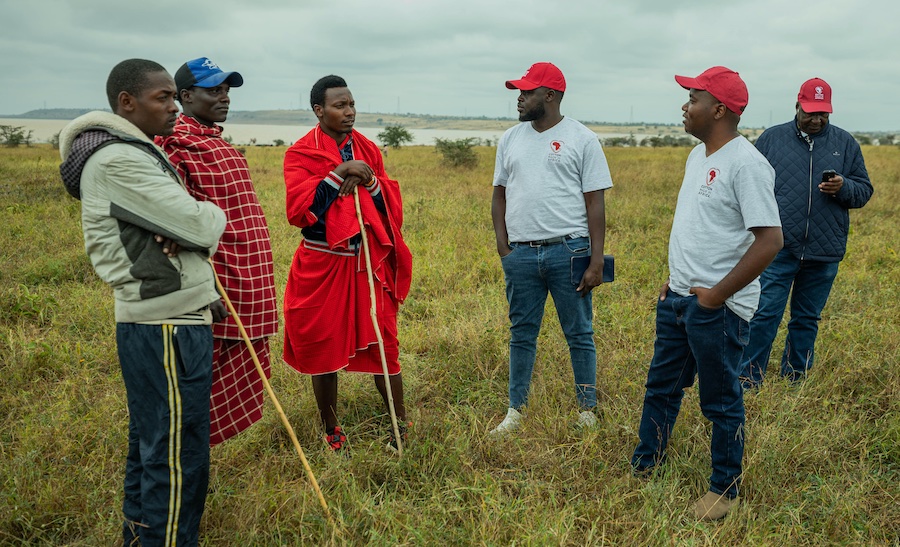
In addition to its regular activities around the Cotton made in Africa (CmiA) standard, the initiative supports local cotton companies in implementing community projects in the subject areas of health, education, gender equality, and the environment. To gain deeper insights into the actual impact of these community projects, the Aid by Trade Foundation (AbTF) commissioned a case study to measure the effects of the projects, with a focus on education infrastructure and quality for local cotton farming communities.

Key findings of the study show that the most significant change can be seen in a reduction of dropout rates: Whereas an average of 56 students dropped out of school over the previous year at control sites, only 11 students did so at CmiA project schools. In addition, school attendance rates are much higher for CmiA project sites (83 percent) than for control sites (68 percent). These findings are also reflected in the beneficiaries’ perception of the projects. The overwhelming majority of community members indicated they were “very satisfied” (59.53 percent) or “satisfied” (36.12 percent) with CmiA projects. “Parents feel good as their students study in a more comfortable area,” states one of the interviewed farmers. Many respondents believe that there has been a positive change in their communities in the past five years. They listed improved education and learning environments as a primary outcome of the CmiA community projects.

To further improve the impact of CmiA’s educational projects, which are a long-term investment, the study also identified remaining challenges. Despite all efforts by CmiA and its partners, there is still a fundamental lack of schools in the area, and schools are often too far for pupils. Pupil-to-teacher ratios also remain high. Respondents brought up a lack of science labs, classrooms, or teachers’ housing as challenges concerning education infrastructure in their region. “There’ll be more development if these projects continue to be implemented,” one respondent concluded.

“These results underline that CmiA is on the right track in supporting cotton farming communities via the CmiA Community Cooperation Programme. The study will serve as a basis for us to learn and provide further support tailored to the communities in the CmiA cotton growing areas,” concludes Nina Schöttle, project manager for monitoring, evaluation, and learning at the Aid by Trade Foundation.

Please download the study here:

https://cottonmadeinafrica.org/wp-content/uploads/CmiA-Community-Education-Project-Evaluation-Report.pdf


The study

The study was conducted in 2021 by Silverleaf Advisory Services, the advisory branch of the Silverleaf Academy, an independent and locally based organisation with an established network of low-cost primary schools in Tanzania. The Silverleaf education model prioritises student-centred approaches and parental engagement in order to improve the educational infrastructure in Tanzania, including through the use of curriculum tablet technology and intensive teacher training. The study was rolled out at ten CmiA project sites and an additional five control sites in Bariadi District, Tanzania. It contained a quantitative survey of more than 450 community members as well as qualitative interviews and focus group discussions, including with village leaders and educators. Depending on the needs of the communities, educational projects by CmiA may involve building classrooms, latrines, boreholes, student dormitories, or school canteens. The study evaluated the effects of these projects based on pupils’ performance, school infrastructure, and the learning environment.

More News from TEXDATA International

#Recycling / Circular Economy

textile.4U publishes special edition “Top 100 Textile Recycling Companies 2025”

With a comprehensive 176-page special edition, textile.4U is dedicating its latest issue entirely to one of the most dynamic and influential topics in today’s textile industry: textile recycling. The new issue, published exclusively in high-quality print, presents the Top 100 textile recycling companies researched and selected by TexData – organizations that already play a key role in the transition to circular textiles or are expected to have a significant impact in the near future.

#Recycling / Circular Economy

Responsible Textile Recovery Act of 2024 signed by Governor

Senator Josh Newman (D-Fullerton) is proud to announce that Senate Bill 707 (SB 707), the Responsible Textile Recovery Act of 2024, has been signed into law by the Governor of California, Gavin Newsom. This groundbreaking legislation establishes the country’s first Extended Producer Responsibility (EPR) textile recycling program, marking a significant step forward in the state’s efforts to combat waste and promote sustainability.

#Textiles & Apparel / Garment

Modtissimo promotes sustainability with 28 coordinates in the Green Circle

Modtissimo is proving more and more to be a textile and clothing show that delivers the latest innovations in the area of sustainability, with the iTechStyle Green Circle being the main showcase for companies' creations. In this 60+4 edition, taking place on 12 and 13 September, 28 coordinates will be exhibited in a section organised by CITEVE and curated by Paulo Gomes.

#Europe

The EU and Egypt team up to mobilise private sector investments at Investment Conference and sign a Memorandum of Understanding underpinning €1 billion in macro-financial assistance for Egypt

At the EU-Egypt Investment Conference, co-organised by the EU and the Government of Egypt on 29-30 June, the EU and Egypt are teaming up to intensify private sector investments in Egypt. They are also signing a Memorandum of Understanding (MoU) for the disbursement to Egypt of up to €1 billion in Macro-Financial Assistance.

More News on Raw Materials

#Natural Fibers

38th International Cotton Conference Bremen: Let´s Talk about Cotton!

The 38th International Cotton Conference Bremen, to be held on 25-27 March 2026 in Bremen’s parliament building on market square, once again sends a powerful signal for professional excellence and international dialogue. The focus is on the latest market trends and technical innovations throughout the entire value chain – from agriculture and quality assurance to processing and the circular economy. With its high-calibre speakers, the conference remains an indispensable forum for anyone involved in shaping the cotton industry scientifically, technically, or economically.

#Natural Fibers

Human Rights Day: Cotton made in Africa reinforces its commitment to ensuring respect for human rights in cotton production

The sustainable cotton standard Cotton made in Africa (CmiA) has always focussed on respect for human rights, including by prohibiting child labour and discrimination. With the new version of the CmiA standard coming into force, AbTF raises requirements for due diligence in the areas of human rights and risk management.

#Research & Development

How innovations drive BASF’s success

“Innovation has always been part of BASF’s DNA. Especially in these volatile times, it is crucial to leverage our innovative strength to develop competitive solutions that differentiate us as a company in our markets and give us a competitive edge,” said Dr. Stephan Kothrade, Member of the Board of Executive Directors of BASF and Chief Technology Officer, at the company’s Research Press Briefing held today. To achieve this, BASF implemented its “Winning Ways” strategy about a year ago with the clear goal of becoming the preferred chemical company to enable its customers’ green transformation.

#Natural Fibers

38th International Cotton Conference Bremen launches registration and unveils key topics

Participants can now register online for the 38th International Cotton Conference Bremen, which will be held on 25-27 March 2026 at the Haus der Bürgerschaft parliament building on market square. All visitors can look forward to a high-calibre conference programme, numerous additional meetings and a valuable exchange of knowledge and information. The comprehensive range of topics covering the entire value chain will provide practical expertise, address current developments, answer key industry questions, and provide new impetus for the future.

Latest News

#Heimtextil 2026

Mimaki demonstrates versatile, simple TRAPIS textile printing at Heimtextil 2026

Mimaki’s textile pigment transfer printing system, TRAPIS, is able to print on a diverse range of fabrics - unlike traditional processes - including natural fibres and synthetic fabrics. The full solution will be shown on Mimaki’s booth (Hall 3.0 Stand A97), as the company returns to Heimtextil to showcase its advancements in sustainable, high quality and efficient textile printing.

#ITM 2026

The Technology Hub for global denim trends: ITM 2026

The ITM 2026 International Textile Machinery Exhibition, to be held at the Tüyap Fair and Congress Center in Istanbul from June 9–13, 2026, brings together groundbreaking technologies in denim production. From smart production systems to eco-friendly raw materials, from digital washing solutions to laser effect technologies, innovations that will shape the future of denim will be showcased for the first time at ITM 2026.

#Recycled_Fibers

Leading fashion brands step up to unlock the next chapter of Circulose

Since 2024, under new ownership and leadership, Circulose has set a renewed strategic direction focused on securing long-term commitments with partner brands to bring CIRCULOSE® back to market at scale. This strategy has proven successful.

#Research & Development

More safety and comfort for protective clothing thanks to auxetic fabrics

When everyday materials are pulled, they stretch or elongate in the direction of the pull and become narrower in cross-section. We can also observe this property in two-dimensional textiles. Auxetic structures behave differently here. They have the striking property of not changing under tensile stress or even increasing their width or thickness. These properties are advantageous, for example, in protective textiles or textile filter media. The DITF are researching auxetic fabrics for various applications.

TOP