[pageLogInLogOut]

#Raw Materials

Gap Inc. joins both U.S. Cotton Trust Protocol and Textile Exchange’s 2025 sustainable cotton challenge

Today leading global apparel company Gap Inc. has joined the U.S. Cotton Trust Protocol and Textile Exchange’s 2025 Sustainable Cotton Challenge as part of its integrated sustainability strategy and to help it achieve its commitment to use only 100% sustainably-sourced cotton by 2025.

Sourcing Trust Protocol cotton will help Gap Inc. meet its science-based target to reduce GHG emissions and water stewardship commitment

Gap Inc.’s target of sourcing 100% of its cotton from more sustainable sources by 2025 is set across its collection of purpose-led lifestyle brands including Old Navy, Gap, Banana Republic and Athleta.

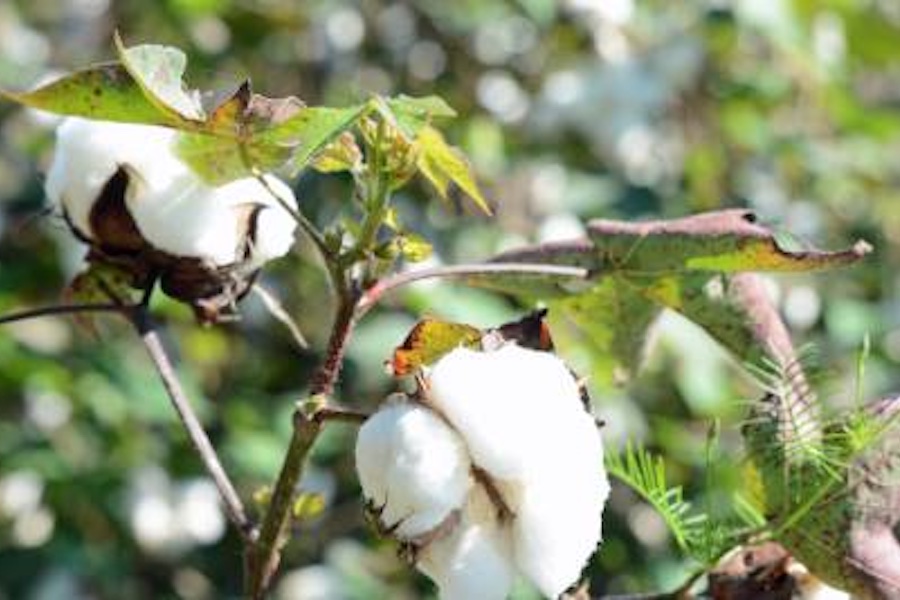
The Trust Protocol will help Gap Inc. meet this goal by providing verified data on the sustainability practices used on U.S. cotton farms. Participating cotton growers will benefit from data-driven insights and best practices from across the industry, as well as a stronger connection to brands asking for sustainably-grown cotton. The Trust Protocol opened for membership in October 2020 and provides brands and retailers with the critical assurance they need to prove that the cotton in their supply chain is more responsibly grown. 
© 2020 Cotton USA
© 2020 Cotton USA


“Continuous improvement is important to Gap Inc., which is why we have decided to begin sourcing more sustainable fiber through the U.S. Cotton Trust Protocol. As part of our commitment to address climate change by aligning with the best science and industry practices, we have ambitious targets across metrics to lower carbon emissions and preserve precious natural resources like water. As an American company with purpose-led brands committed to sustainability, joining the U.S. Cotton Trust Protocol makes perfect sense,” said Alice Hartley, Director of Product Sustainability for Gap Inc. “With two thirds of U.S. cotton not using any irrigation at all, this allows us to further our commitment to sustainable cotton and enables us to support U.S. cotton growers.”

The U.S Cotton Trust Protocol underpins and verifies sustainability progress through sophisticated data collection and independent third-party verification. Member brands like Gap Inc. have access to aggregate year-over-year data in six areas: water use; greenhouse gas emissions; energy use; soil carbon, soil loss and land use efficiency.


“Gap Inc.’s brands are in every household, including my own, and I am personally honored it has chosen to work with us because it’s a global company that takes sustainability seriously,” said Dr. Gary Adams, president of the U.S. Cotton Trust Protocol. “Gap Inc. has made significant strides since setting sustainability goals, and the Trust Protocol’s farm-level data will help it in its mission to improve its impact and protect our natural resources. By signing on to the Trust Protocol, Gap Inc. will support our shared mission to educate U.S. growers around the most sustainable growing practices and support grower enrollment.”

In addition to joining the U.S. Cotton Trust Protocol, Gap Inc. has also accepted the Textile Exchange 2025 Sustainable Cotton Challenge. Formed in 2017 when His Royal Highness The Prince of Wales convened a group of CEOs to address critical challenges facing the world, it is the vision of the 2025 Sustainable Cotton Challenge that more than 50 percent of the world’s cotton is converted to more sustainable growing methods. Brands and retailers joining the challenge and committing to source more sustainable cotton can choose from Textile Exchange’s list of recognized organic and sustainable cotton initiatives, which have the ability to increase the income of smallholder farmers, eliminate highly hazardous pesticides, eliminate or reduce the amount of pesticides and synthetic fertilizer used, reduce water use and improve water quality and soil health. The U.S. Cotton Trust Protocol was recognized as one such initiative in April 2020.

Gap Inc. began sourcing from more sustainably-grown cotton programs in 2016 and within just three years more than half (57%) of the cotton in its products came from these sources. It has joined the U.S. Cotton Trust Protocol and the 2025 Sustainable Cotton Challenge to help enable it to bridge the remaining 43% to use 100% sustainably-sourced cotton across all its products by 2025.

The U.S. Cotton Trust Protocol enables brands and retailers like Gap Inc. to better track the cotton entering their supply chain: the combination of a unique credit accounting system and the Permanent Bale Identification (PBI) system enables brands to have improved transparency throughout the supply chain. The Protocol works together with Field to Market: The Alliance for Sustainable Agriculture and Control Union Certifications North America, and is on the Textile Exchange’s list of 36 preferred fibers and materials from which more than 170 brands and retailers can select through Textile Exchange’s Material Change Index program. It is also part of Cotton 2040 and the CottonUp guide.

More News from TEXDATA International

#People

Happy Holidays!

Dear reader, the year 2025 is drawing to a close. We are entering what we hope will be a peaceful holiday season, spending time with our families and taking a moment to pause and reflect. We hope we have been able to support you once again this year with relevant news and articles, and we look forward to surprising you with many innovations in the coming year. Enjoy the festive season, stay healthy, and we wish you a happy and joyful holiday season.

#Recycling / Circular Economy

textile.4U publishes special edition “Top 100 Textile Recycling Companies 2025”

With a comprehensive 176-page special edition, textile.4U is dedicating its latest issue entirely to one of the most dynamic and influential topics in today’s textile industry: textile recycling. The new issue, published exclusively in high-quality print, presents the Top 100 textile recycling companies researched and selected by TexData – organizations that already play a key role in the transition to circular textiles or are expected to have a significant impact in the near future.

#Recycling / Circular Economy

Responsible Textile Recovery Act of 2024 signed by Governor

Senator Josh Newman (D-Fullerton) is proud to announce that Senate Bill 707 (SB 707), the Responsible Textile Recovery Act of 2024, has been signed into law by the Governor of California, Gavin Newsom. This groundbreaking legislation establishes the country’s first Extended Producer Responsibility (EPR) textile recycling program, marking a significant step forward in the state’s efforts to combat waste and promote sustainability.

#Textiles & Apparel / Garment

Modtissimo promotes sustainability with 28 coordinates in the Green Circle

Modtissimo is proving more and more to be a textile and clothing show that delivers the latest innovations in the area of sustainability, with the iTechStyle Green Circle being the main showcase for companies' creations. In this 60+4 edition, taking place on 12 and 13 September, 28 coordinates will be exhibited in a section organised by CITEVE and curated by Paulo Gomes.

More News on Raw Materials

#Natural Fibers

38th International Cotton Conference Bremen: Let´s Talk about Cotton!

The 38th International Cotton Conference Bremen, to be held on 25-27 March 2026 in Bremen’s parliament building on market square, once again sends a powerful signal for professional excellence and international dialogue. The focus is on the latest market trends and technical innovations throughout the entire value chain – from agriculture and quality assurance to processing and the circular economy. With its high-calibre speakers, the conference remains an indispensable forum for anyone involved in shaping the cotton industry scientifically, technically, or economically.

#Natural Fibers

Human Rights Day: Cotton made in Africa reinforces its commitment to ensuring respect for human rights in cotton production

The sustainable cotton standard Cotton made in Africa (CmiA) has always focussed on respect for human rights, including by prohibiting child labour and discrimination. With the new version of the CmiA standard coming into force, AbTF raises requirements for due diligence in the areas of human rights and risk management.

#Research & Development

How innovations drive BASF’s success

“Innovation has always been part of BASF’s DNA. Especially in these volatile times, it is crucial to leverage our innovative strength to develop competitive solutions that differentiate us as a company in our markets and give us a competitive edge,” said Dr. Stephan Kothrade, Member of the Board of Executive Directors of BASF and Chief Technology Officer, at the company’s Research Press Briefing held today. To achieve this, BASF implemented its “Winning Ways” strategy about a year ago with the clear goal of becoming the preferred chemical company to enable its customers’ green transformation.

#Natural Fibers

38th International Cotton Conference Bremen launches registration and unveils key topics

Participants can now register online for the 38th International Cotton Conference Bremen, which will be held on 25-27 March 2026 at the Haus der Bürgerschaft parliament building on market square. All visitors can look forward to a high-calibre conference programme, numerous additional meetings and a valuable exchange of knowledge and information. The comprehensive range of topics covering the entire value chain will provide practical expertise, address current developments, answer key industry questions, and provide new impetus for the future.

Latest News

#Weaving

Lindauer Dornier announces leadership transition in weaving machine business

After more than ten successful years at Lindauer DORNIER GmbH, Mr Wolfgang Schöffl will leave the family-owned company at the end of the year to enter well-deserved retirement.

#Heimtextil 2026

Texpertise Focus AI: Messe Frankfurt puts Artificial Intelligence centre stage at its international textile and apparel trade fairs

Under the banner 'Texpertise Focus AI, Messe Frankfurt will place a strong emphasis on Artificial Intelligence (AI) across its international textile and apparel trade fairs from 2026 onwards, setting a future-shaping signal for the industry. The initiative highlights the responsible use of AI along the entire textile value chain, from fibre production to the point of sale. The programme will launch at Heimtextil in Frankfurt in January 2026.

#Technical Textiles

Autoneum and Polestar set new benchmarks for passenger experience and sustainability

As the global market leader in sustainable acoustic and thermal management, Autoneum is a key supplier of interior and exterior components for the highly anticipated Polestar 5 model. The successful collaboration between Autoneum and Polestar marks a significant milestone in sustainable automotive engineering: the electric grand tourer sports car features several innovations in lightweight, fully recyclable polyester-based components that ensure a superior driving experience. Polestar 5 was revealed at the IAA Mobility 2025 in Munich and is available in 24 markets.

#Natural Fibers

Cashmere producers stress the importance of The Good Cashmere Standard®

At the invitation of the Aid by Trade Foundation (AbTF), over 70 experts from the cashmere production and supply chain, as well as other specialists, met at the GCS Unit Meeting in Shanghai, China to discuss the progress and new objectives of The Good Cashmere Standard (GCS). The meeting focused on implementation and verification of the standard, important aspects of animal welfare and the importance of the standard in the global textile market.

TOP