[pageLogInLogOut]

#Raw Materials

Which cotton merchants and mills are sourcing the largest volumes of ‘better cotton’?

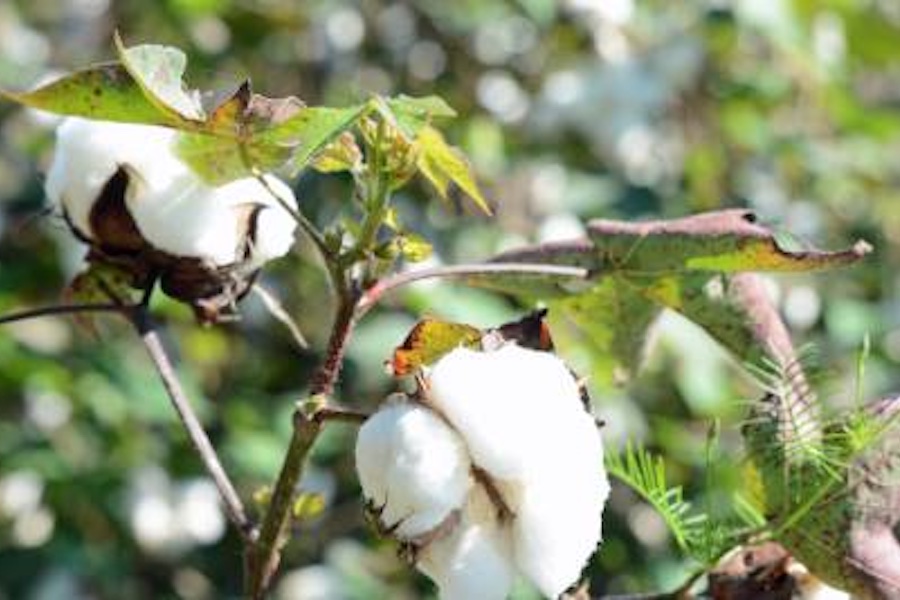
As demand for Better Cotton – cotton grown by licensed BCI Farmers in line with the Better Cotton Principles and Criteria – increases, more and more organisations throughout the cotton supply chain are joining the Better Cotton Initiative (BCI) and supporting increased uptake of Better Cotton*. Earlier in the year, we announced the BCI Retailer and Brand Members that sourced the largest volumes of cotton as Better Cotton in 2018. Now we are launching the Cotton Merchants and Mills Leaderboard.

The Merchants and Mills Leaderboard highlights the top 20 cotton merchants and top 50 mills, based on volumes of cotton sourced as Better Cotton. Access the 2018 Better Cotton Leaderboard.

Cotton merchants and mills are supporting the transformation of the cotton sector by joining BCI and sourcing increased volumes of Better Cotton for BCI Retailer and Brand Members – forming a critical link between Better Cotton supply and demand.

“Market demand for more sustainable cotton has dramatically increased over the years. It began with a few retailers sourcing more sustainable cotton in limited quantities for small collections. Over time, retailers have grown their collections and implemented overarching sustainable sourcing targets which has increased the volumes of more sustainable cotton sourced, including Better Cotton. We see this demand increasing further over the next 5 to 10 years.” – Osman Ustundag, Cotton Purchasing Manager at Kipa? Holding, a BCI Member since 2011.

Increased sourcing of Better Cotton generates essential funding for farmer training and support. This is in turn driving more sustainable practices in cotton production, making it better for the people who produce it and the environment it grows in.

BCI has a goal to train five million cotton farmers on more sustainable practices by 2020. Find out more in the BCI 2018 Annual Report:

http://stories.bettercotton.com/2018-AnnualReport/index.html

“With the creation of BCI in 2009, a holistic and pragmatic approach for farmers to embed sustainable farming practices was launched. Better Cotton addressed the gap that existed between retailers’ sustainable sourcing targets and market supply of more sustainably produced cotton. Using innovative models such as mass-balance during sourcing, the market now has access to a large and growing supply base to procure from.” – Amit Shah, CEO and Founding Director at Spectrum International, a BCI Member since 2013. Amit Shah also holds the position of Treasurer on the BCI Council.

Find out which merchants and mills sourced the largest volumes of cotton as Better Cotton in the 2018 Better Cotton Leaderboard.

https://bettercotton.org/better-cotton-leaderboard-2018/

More News from TEXDATA International

#ITM 2026

ITM 2026: The new geography of textile production

New production hubs are emerging across North Africa and Central Asia, while Türkiye is accelerating its transformation toward higher-value, technology-driven and more sustainable textile manufacturing.

#Research & Development

“Production is a product”

From technical textiles and AI-driven robotics to the limitations of textile circularity: Professor Dr Thomas Gries looks back on more than two decades of development at ITA Aachen. In the interview, he explains why production technology remains a decisive success factor, discusses international collaborations and innovation ecosystems, and shares his views on the transformation of production landscapes and the challenges facing an increasingly regulated industry.

#Knitting & Hosiery

“We need to move away from the price trap and return to a value-driven mindset.”

With its new Textile Innovation Center, KARL MAYER is sending a strong signal for innovation, collaboration, and the future of textile applications. In this interview, Karl Josef Mayer discusses new opportunities in warp knitting, the processing of staple fibres, recycling, the changing role of machinery manufacturers, and why the textile industry must once again focus more strongly on the value of textiles. by Oliver Schmidt

#Associations

“Innovation, resilience and international experience remain the great strengths of the Swiss textile machinery industry”

Geopolitical uncertainty, growing competitive pressure from China, new free trade agreements and the shift towards a circular economy are currently reshaping the global textile industry. In this interview, Cornelia Buchwalder discusses the current mood within the Swiss textile machinery sector, the industry’s distinctive innovative strength, new market opportunities in India and Asia, and the technological trends that could shape the upcoming trade fair cycle leading up to ITMA 2027.

More News on Raw Materials

#Raw Materials

Redesigned World Cotton Day website offers tools, ideas and inspiration

With World Cotton Day just one month away, the International Cotton Advisory Committee (ICAC) has launched a completely redesigned www.WorldCottonDay.com, creating a new global home for everyone who wants to learn about, celebrate, and support cotton.

#Raw Materials

ICAC’s 84th Plenary Meeting to be held March 24-26, 2027, in Alexandria, Egypt

Registration will soon be open for the International Cotton Advisory Committee’s 84th Plenary Meeting, to be held March 24-26, 2027, in Alexandria, Egypt. The local Organizing Committee in Egypt has chosen “Building a Resilient and Competitive Future for Cotton and Textiles” as the theme for the event, which will be held at the Rixos Montaza Alexandria Resort.

#Raw Materials

Cotton Brazil Dialogues 2026 concludes with 50 international participants immersed in Brazilian cotton production

The Cotton Brazil Dialogues concludes its 2026 edition after a series of technical visits to farms, cotton gins and reference centers, as well as workshops focused on Brazilian cotton production. A total of 50 participants from 14 countries took part in the field trips. The initiative is led by the Brazilian Association of Cotton Growers (Abrapa) and the National Association of Cotton Exporters (Anea), with support from the Brazilian Trade and Investment Promotion Agency (ApexBrasil).

#Raw Materials

Global cotton production projected to outpace consumption, but risks remain

Global cotton production is projected to reach 26.2 million tonnes in the 2026/27 season, marginally outpacing estimated consumption of 25.9 million tonnes. However, early-season production risks — including weather volatility and pest pressures — could narrow that buffer as the crop progresses, according to the September 2026 issue of Cotton This Month, published by the International Cotton Advisory Committee (ICAC).

Latest News

#Industry 4.0 / Digitalization

Coats Digital launches AI-powered GSD RealMotion for motion analysis

Coats Digital has launched GSD RealMotion, an AI-powered solution designed to provide apparel manufacturers with greater visibility into factory-floor operations. By analysing shop-floor video and applying Coats Digital’s GSD methodology, the solution turns video recordings into structured, motion-by-motion method studies.

#Textile chemistry

Archroma and Lameirinho partner in pioneering deployment of InOneGO single-step dyeing

Archroma, a global leader in specialty chemicals, and Lameirinho, a leading home textiles manufacturer based in Portugal, are collaborating to bring InOneGO by Archroma, a new single-step dyeing process, into commercial production. Lameirinho’s first InOneGo bedlinens collection is now available worldwide.

#Knitting & Hosiery

KARL MAYER launches extra-wide HKS 3-M EL for increased productivity

KARL MAYER has launched a new extra-wide version of its HKS 3-M EL tricot machine, designed to increase productivity particularly in the manufacture of textiles for sports, activewear and athleisure applications.

#Research & Development

Reducing development times for technical textiles by accelerated thermo-oxidative aging in a high-pressure autoclave

Synthetic polymers used in technical textiles can be effectively protected against degradation caused by heat, oxygen, and water through the use of stabilizer systems. This enables service lives of several decades, extending to more than 50 years. As the use of durable technical textiles continues to grow, so does the demand for reliable methods to predict their service life within economically feasible testing periods. For the first time the German Institutes of Textile and Fiber Research Denkendorf (DITF) developed methods for robust service life prediction for textiles in an IGF research project.

TOP