[pageLogInLogOut]

#INDEX 20

NIRI experts at the cutting edge of nonwoven technology and sharing new developments at this season’s industry events
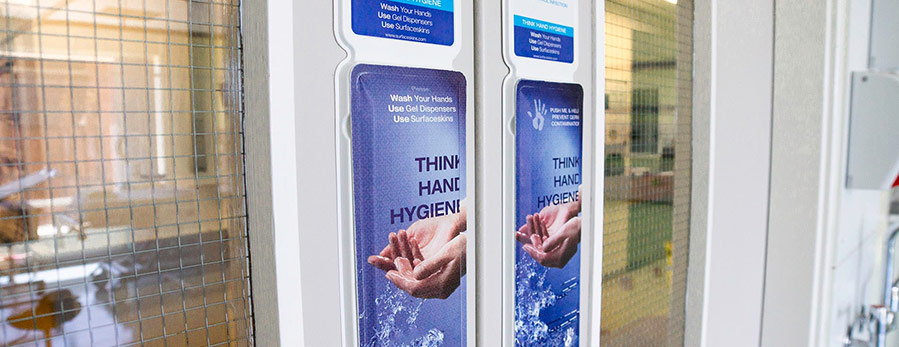
Surfaceskins self-cleaning alcohol gel product ranges © 2021 NIRI
After the inevitable delays due to COVID, experts from the Nonwovens Innovation & Research Institute (NIRI) are looking forward to joining colleagues and clients at Virtual RISE 2021 and INDEX 20.

For RISE 2021, and in its new hybrid format, 28th – 30th September, Dr. Matthew Tipper, CEO at NIRI, will be presenting the latest thoughts on innovating a sustainable future for nonwovens; a European perspective. Over 70 percent of materials used in the manufacture of nonwovens are synthetic - there is a clear need and demand for more sustainable nonwovens, and key aligning factors include a growing consumer awareness of the use of plastics in products; the impact of the EU directive on single-use plastics; ocean microplastics, and the increasing awareness of extended producer responsibility for clothing producers. Matt comments,

“At NIRI, we have extensive expertise and an applied research focus on sustainability and the development of new technologies for nonwovens. For example, one of our most recent initiatives involves partners from across Europe and the US, using NIRI’s state-of-the-art facilities to explore the feasibility for sustainable fabric production for zero carbon fashion – a significant issue for consumers and the textile and fashion industries, alike. It will be refreshing and positive to present our work at Virtual RISE this year, and to engage in discussions with industry peers and partners, looking at the impact of the changes happening in Europe as well as exploring the response of the European nonwovens industry to a dynamic landscape.”

Dr Ross Ward © 2021 NIRI


In October, Matt will be representing NIRI along with Dr. Ross Ward, New Business Development Manager, at INDEX 20, postponed from last year. Matt will be leading a seminar on infection prevention, with a presentation on nonwoven-enabled hand hygiene devices for infection control. This builds on NIRI’s experience with the development of Surfaceskins and their self-cleaning alcohol gel product ranges. Matt explains,


“Optimal hand hygiene may be compromised by contact with contaminated environmental surfaces. The in-vitro efficacy of nonwoven-enabled alcohol-release door pad – Surfaceskins – during handheld contact was investigated and found to reduce surface contamination of S. aureus, E. faecalis and E. coli for up to seven days. Evidence of increasing healthcare worker use of alcohol had gel dispensers following the installation of Surfaceskins doorplates in two operating theatre suites will form part of NIRI’s presentation at INDEX this year.”

Dr Matthew Tipper © 2021 NIRI


Ross will be at INDEX presenting NIRI’s latest developments in adsorbent technology for high-performance nonwoven applications. NIRI has developed a nonwoven adsorbent technology for selective filtration of atoms, molecules, compounds and particles from gaseous and liquid environments. The engineered nonwoven can be tailored depending upon the nature and volume of unwanted matter, specific application, carrier fluid and separation requirements. Ross comments on the presentation for INDEX,

“I’ll be detailing case studies of how our technology can be adapted for different applications, including capturing SARS-CoV-2 on PPE to reduce the risk of viral transfer between staff and patients in a healthcare setting. The technology has the potential to enhance the performance of a broad range of nonwoven products and is currently being developed for multiple high-performance applications, such as blood filtration, wound care, air filtration and wastewater filtration.”

To find out more about NIRI’s commercial R&D services and developments in nonwoven technology, join us at RISE 21 or INDEX 20, or contact us: http://www.nonwovens-innovation.com



More News from TEXDATA International

#Texprocess 2026

Texprocess 2026: Automation, digitalisation and AI redefine textile processing

Making investment decisions in textile processing has become significantly more demanding. Increasing energy costs, a shortage of skilled labour and ongoing geopolitical uncertainties are compelling companies to focus on technologies that deliver clear gains in efficiency and process reliability. This applies equally to apparel manufacturing and to the processing of technical textiles and high-performance materials. As a result, modernisation initiatives are assessed more carefully – even as the need to upgrade production systems continues to intensify.

#Techtextil 2026

Techtextil 2026: Between innovation pressure & market reality

From 21 to 24 April 2026, Techtextil in Frankfurt am Main will once again become the central meeting point for the international technical textiles and nonwovens industry. Running in parallel, Texprocess will focus on the industrial implementation of textile processing technologies as the leading platform in this field. Together, the two trade fairs form a closely integrated presentation and working platform along the entire textile value chain – from material development to finished applications.

#Techtextil 2026

Between geopolitical pressure and industrial resilience

In this interview, Dr. Janpeter Horn (VDMA) discusses the current challenges facing textile machinery manufacturers, shaped by geopolitical tensions, regulatory developments and subdued investment. He also outlines why innovation strength, integrated solutions and strategic positioning remain key to global competitiveness.

#Texprocess 2026

Between investment restraint and modernization pressure

Texprocess 2026 takes place in a complex market environment shaped by uncertainty and innovation pressure. In this interview, Elgar Straub (VDMA) explains why the trade fair is particularly relevant this year and which technologies are driving efficiency and competitiveness.

More News on INDEX 20

Latest News

#INDEX 2026

“We clearly see that reliability, flexibility, service and total cost of ownership are becoming increasingly important again.”

The nonwovens industry continues to face a challenging market environment. Nevertheless, AUTEFA Solutions reports successful projects, new line sales and growing demand for energy-efficient and flexible solutions. In this interview, André Imhof of AUTEFA Solutions talks about competitiveness against Chinese suppliers, new service and recycling concepts, the growing importance of application development and the opportunities created by countercyclical investments.

#INDEX 2026

“Needle punching technology is more universal and sustainable than ever!”

Needle punching technology was long regarded as a rather traditional and comparatively slow technology within the nonwovens industry. In this interview, Johann Philipp Dilo explains why needle punching is more relevant than ever today – ranging from energy efficiency and resource conservation to hygiene applications, new machine concepts and design-oriented nonwoven solutions.

#Research & Development

Textile climate control system in workwear – exhibition at the 2026 SME Innovation Day!

Conventional protective workwear often reaches its limits during strenuous physical activity. In particular, the transport of sweat and excess body heat poses a problem. The German Institutes of Textile and Fiber Research (DITF) conducted research on flow-optimized, air-conducting textile structures that enable targeted climate control directly on the body. These structures can be integrated straight into protective work garments. The textile climate control system supports the body’s natural thermoregulation. This contributes to improved workplace safety and comfort.

#Nonwovens

PET spunbond from China – EDANA welcomes imposition of provisional anti-dumping measures

On 13 May 2026, after eight months of investigation, the European Commission imposed provisional anti-dumping duties of 45.6-50.0% on imports of PET spunbond from China. EDANA welcomes this expression of the Commission’s clear determination to protect EU industries from the unfair trade practices of Chinese producers.

TOP