[pageLogInLogOut]

#Natural Fibers

Better Cotton’s 10-year US impact report shares key data insights and promotes cross-sector collaboration
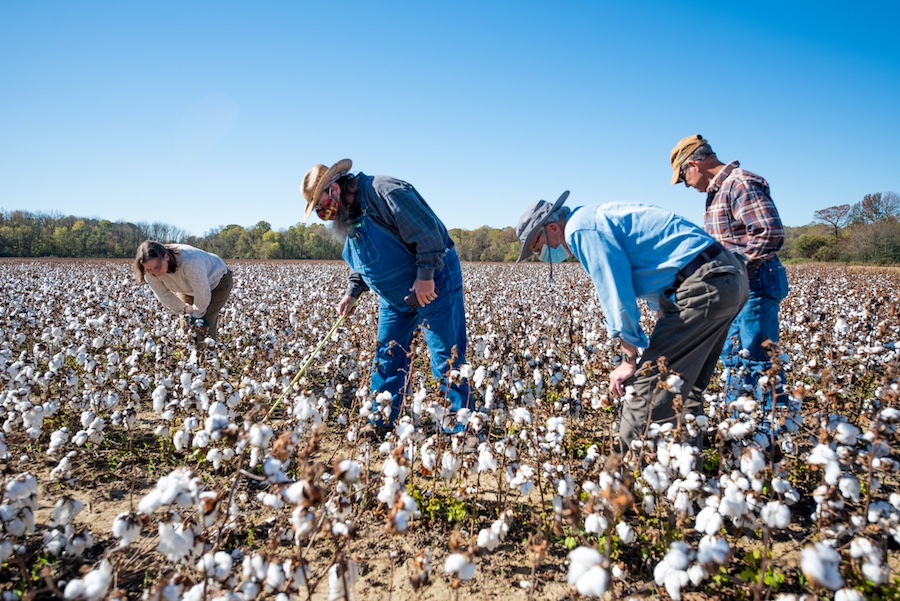
Better Cotton, the world’s largest cotton sustainability initiative, has reached 10 years of operations in the United States having built a vast community of licensed growers and collaborators across 17 states.
On-farm research collaboration between Better Cotton and Agricenter International. Photo credit: Dermarcus Bowser. Location: Memphis, Tennessee, 2020.


This active network, including more than 300 licensed growers who produce over 11.5% of the country’s total cotton volumes, is one of the highlights of the organisation’s first US Impact Report, which spotlights key data insights and shows the impact of cross-sector collaboration in the US.

First presented to members of the organisation at the 2025 Better Cotton Conference, in June, the US 10-Year Impact Report covers the Better Cotton Programme in the US from 2014 through 2024.

It describes environmental improvements along the US Cotton Belt, profiles Better Cotton Programme Partners and licensed growers helping drive change at the farm-level, and features updates from allied organisations and institutes that play an instrumental role in championing sustainability in the country’s cotton sector.

Ashley Barrington, Senior Country Manager of Better Cotton’s US Programme, said: “Better Cotton’s US Impact Report speaks to the people on the frontline of our industry whose commitment and dedication has been intrinsic to continuous improvements at the farm-level. Collaboration is at the heart of our mission, and this report is testament to that. The insights it generates will help us take stock of progress and plan for the future.”

The commitment of growers to accelerating sustainability efforts has helped optimise soil health and biodiversity, while reducing pesticide application and improving water use efficiency across the regions where Better Cotton operates.

Notably, to reduce the reliance on potentially harmful synthetic products, the number of Better Cotton licensed growers applying organic fertiliser increased from 6% in 2014/15 to 17% in 2023/24. There has also been a reduction in the overall use of Highly Hazardous Pesticides (HHPs) since the 2020/21 cotton season, with a 26% decrease in pounds of HHP active ingredient applied per acre.

Better Cotton also gathered information on growers’ adoption of a wide array of regenerative practices which the report categorises according to impact area, i.e. biodiversity, soil health and water quality. As of 2020, over 80% of reporting US licensed growers have implemented measures to address those priorities.

The Better Cotton US Impact Report also spotlights the work of organisations and institutions that play an integral role in the success of the US cotton sector. These include the Soil Health Institute, Textile Exchange, the U.S. Cotton Trust Protocol, and Cotton Incorporated.

More News from Better Cotton

#Natural Fibers

Better Cotton Initiative partners with Uzbek government agency to offset certification costs

The Better Cotton Initiative (BCI) has today announced a strategic agreement with Uzbekistan’s Light Industry Agency to increase financial support for cotton farming clusters adopting sustainable agricultural practices.

#Natural Fibers

Better Cotton Initiative surpasses 50% traceable BCI Cotton milestone

Two years since the launch of its traceability solution, the Better Cotton Initiative (BCI) has announced that over 50% of BCI Cotton volumes entering global fashion and textile supply chains are now traceable, deriving from 15 countries.

#Natural Fibers

BCI warns against ‘dangerous dilution’ of EU corporate directives

The approval of the European Commission’s Omnibus I proposal by the European Parliament’s Committee on Legal Affairs, accepting controversial changes to key sustainability directives is of great concern. These changes, namely to the Corporate Sustainability Reporting Directive (CSRD) and the Corporate Sustainability Due Diligence Directive (CSDDD), threaten to significantly dilute business reporting and due diligence obligations.

#Natural Fibers

Better Cotton Initiative marks World Cotton Day with launch of innovative product label

The Better Cotton Initiative (BCI) has launched an innovative product label for the fashion and textile sectors which allows retailer and brand members to provide consumers with greater clarity about the origin and percentage of BCI Cotton in their products.

More News on Natural Fibers

Latest News

#Recycling / Circular Economy

Advanced Recycling Conference 2025 fuels innovation across key waste streams

The Advanced Recycling Conference (ARC) 2025 brought together nearly 220 experts from 28 countries to spotlight pioneering advancements and foster industry collaboration in recycling across diverse waste streams including plastics, textiles, automotive and other materials.

#Dyeing, Drying, Finishing

Navis TubeTex announces U.S. partnership with Icomatex

Navis TubeTex, a global leader in advanced dyeing and finishing machinery solutions, is pleased to announce a new partnership with Icomatex (www.icomatex.com), a respected European manufacturer of high-quality stenters and textile finishing equipment. Under this agreement, Navis TubeTex will exclusively represent the Icomatex stenter line in the United States.

#Recycling / Circular Economy

ADVANSA launches ADVA®tex: A new step toward textile-to-textile recycling

ADVANSA has introduced ADVA®tex, a new filling fibre made entirely from recycled pre-consumer textile waste, positioning the material as a significant step forward in textile-to-textile (T2T) recycling. The fibre is designed for use in duvets, pillows, mattresses, and furniture applications and is available in three versions.

#Knitting & Hosiery

KARL MAYER celebrates 35 years of EL pattern drive

KARL MAYER is celebrating an anniversary this year: on 30 November 1990, the first warp knitting machine with electronic guide bar control, the KS 4 EL, was delivered – another milestone for patterning. As early as 1980, the SU gearbox with the MRS42SU had initiated the transition from mechanical chains to digital data.

TOP