[pageLogInLogOut]

#Natural Fibers

Better Cotton Conference marks new phase
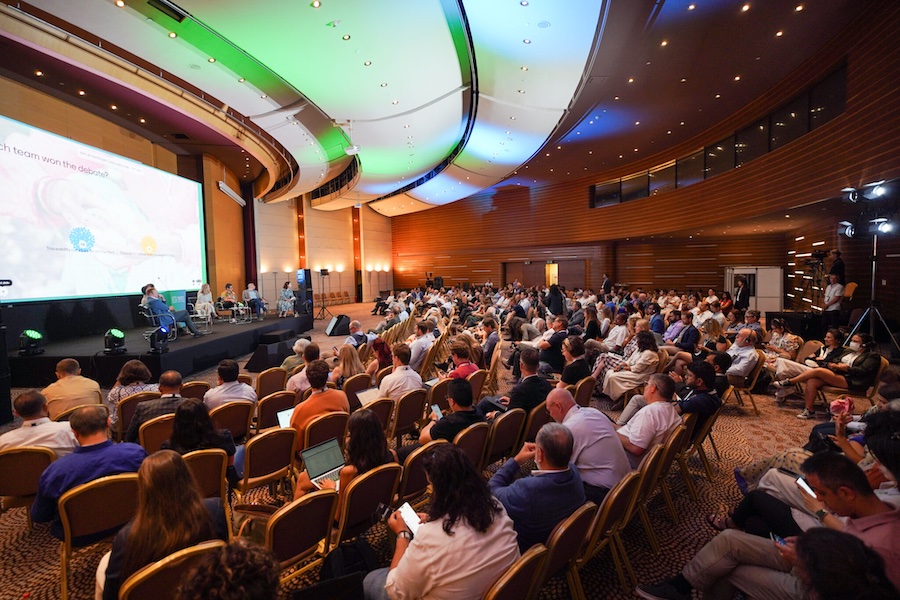
The 2025 annual conference of Better Cotton, the world’s largest cotton sustainability initiative, marked a new phase for the organisation, with the introduction of its new CEO, the announcement that it will become a regenerative standard, and the initial snapshot of its first US Impact Report.
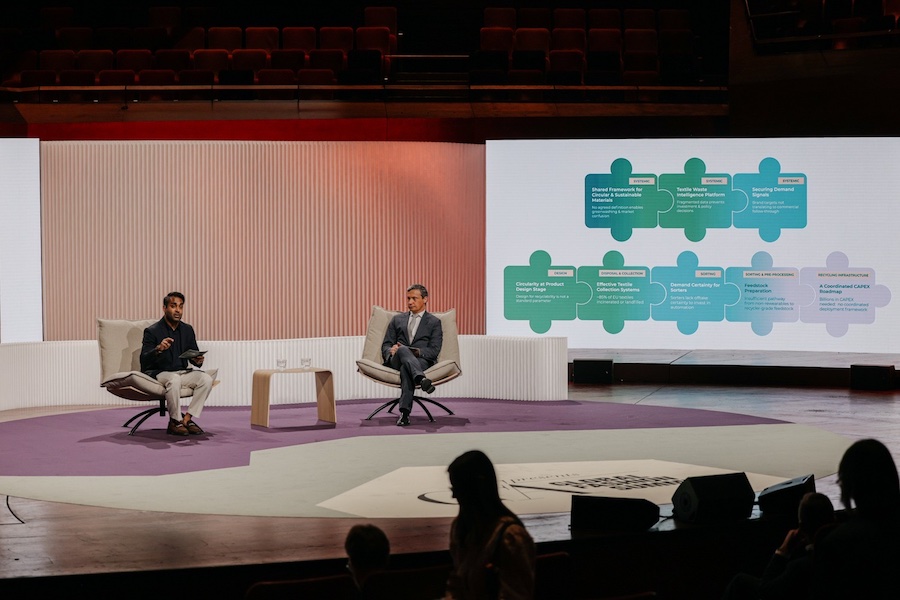
Photo credit: Better Cotton/Evronas. Location: ?zmir, Türkiye, 2025. Description: Better Cotton Conference 2025 participants attend a session on traceability.


Held in ?zmir, Türkiye, on 18 and 19 of June, the event welcomed more than 370 attendees from over 20 countries, sparking conversation and debate on topics ranging from gender equality and climate finance to traceability and cross-commodity collaboration.

Better Cotton’s outgoing CEO, Alan McClay, bid farewell to the organisation’s vast network after a decade at the helm. “We need to take our place more loudly and explicitly and authoritatively in the broader community,” he said. “For too many years we’ve been doing our own thing almost under the radar to the extent that some legislation now gets passed without even knowing the constraints and the opportunities, the conditions and the impact that this can have on several hundreds of millions of farmers around the world.”

McClay welcomed his successor, Nick Weatherill, a former Executive Director of the International Cocoa Initiative, who joined him on stage. “You are leaving a very powerful legacy, and I am inheriting a very precious lifeforce. You have my word that I will look after it,” Weatherill told his predecessor.

From Protecting to Restoring Landscapes

At a session focused on regenerative practices, Better Cotton announced that it will become a regenerative standard within the next year. “It is increasingly clear that we need approaches that don’t simply mitigate or reduce harm, but that actively restore the environment,” said Better Cotton’s Senior Director of Demand and Engagement, Eva Benavidez Clayton. “While Better Cotton’s field level standard is already recognised to cover many of the core tenets of regenerative agriculture, this move will further ensure that farmers who meet our standard are adopting the most commonly agreed regenerative practices.”

Better Cotton also presented a snapshot of its first ever United States Impact Report, which reflects on the past decade (2014-2024) of Better Cotton’s progress and presence in the country. The report introduces the US programme and its partners, provides a general picture of large-scale cotton farming in the US, and paints a more complete picture of the US cotton landscape. 

Introducing the report, Benavidez Clayton said: “Better Cotton is a global standard, but we firmly believe in local application. [The report] does have key data on acreage, production, practice adoption, water, and input usage. Since storytelling is so important, and making things real for people, there are also profiles on farmers and projects that really bring the work to life.”

Farmers Front and Centre

The 2025 Better Cotton Conference placed cotton farmers and field-level organisations front and centre to capture the event’s theme: ‘It Starts with Farmers’.

Cotton farmers and field-level partners from different parts of the world participated at the conference, representing countries such as Brazil, Côte d’Ivoire, India, Pakistan, the US, and Uzbekistan.

Alan McClay said: “While it takes all of us to create lasting change, real progress must start with farmers. That is increasingly the framing that will drive all of Better Cotton’s work moving forward.”

One of the event’s sessions asked a provocative question, as part of a speculative debate, with arguments and counterarguments: “Can Traceability Prove Beneficial to Farmers?” With Better Cotton representation on both sides, the discussion highlighted the many opportunities and challenges that surround traceability as it relates to farming communities, and explored ways in which solutions involving farmers can be deployed. The audience cast their votes, with a verdict in favour of traceability being capable of benefitting farmers.
More News from Better Cotton

#Raw Materials

Better Cotton Initiative opens enrollment in the US with promising opportunities for producers

Producer enrollment for the US Program of the Better Cotton Initiative (BCI) is open until May 15 for the 2026-2027 season. With over 2,600 members spanning the cotton supply chain and more than 11,000 users of its Better Cotton Platform (BCP) as of 2025, BCI’s standard is implemented in 15 countries and covers one fifth of global cotton production.

#Natural Fibers

Better Cotton Initiative partners with Uzbek government agency to offset certification costs

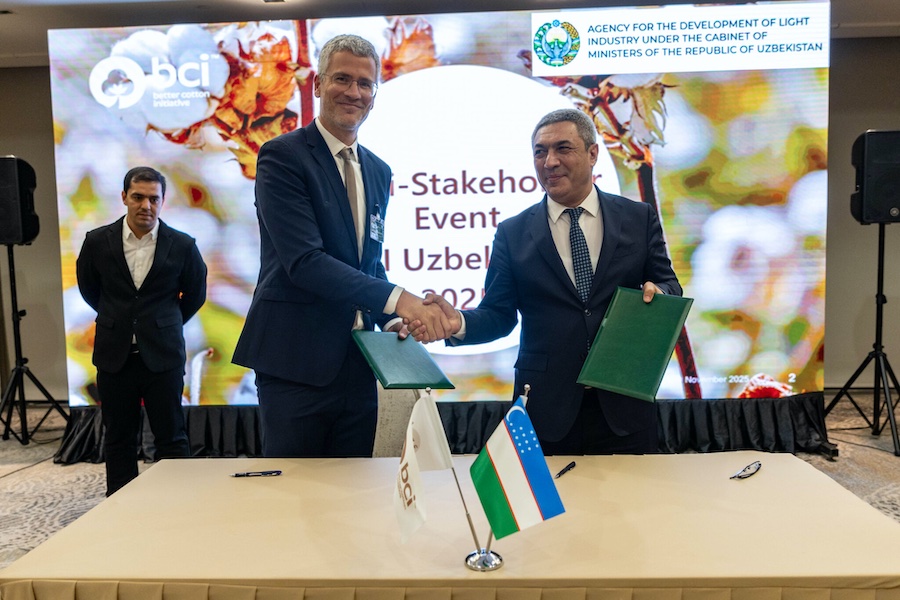
The Better Cotton Initiative (BCI) has today announced a strategic agreement with Uzbekistan’s Light Industry Agency to increase financial support for cotton farming clusters adopting sustainable agricultural practices.

#Natural Fibers

Better Cotton Initiative surpasses 50% traceable BCI Cotton milestone

Two years since the launch of its traceability solution, the Better Cotton Initiative (BCI) has announced that over 50% of BCI Cotton volumes entering global fashion and textile supply chains are now traceable, deriving from 15 countries.

#Natural Fibers

BCI warns against ‘dangerous dilution’ of EU corporate directives

The approval of the European Commission’s Omnibus I proposal by the European Parliament’s Committee on Legal Affairs, accepting controversial changes to key sustainability directives is of great concern. These changes, namely to the Corporate Sustainability Reporting Directive (CSRD) and the Corporate Sustainability Due Diligence Directive (CSDDD), threaten to significantly dilute business reporting and due diligence obligations.

More News on Natural Fibers

#Europe

ICAC to support European Commission on pending PEF legislation

The International Cotton Advisory Committee (ICAC) is proud to announce that it has been included as a member of the European Commission’s Technical Advisory Board (TAB) on the Product Environmental Footprint methodology. The Commission developed the Product Environmental Footprint (PEF) to assess and communicate the life cycle environmental performance of products and organizations.

#Raw Materials

Cotton production continues to exceed consumption, some growers shift away from cotton

World cotton lint production in the 2025/26 season is currently estimated at 26 million tonnes, continuing to exceed world consumption, which is estimated at 25.2 million tonnes, according to the February 2026 edition of Cotton This Month. Global production is estimated to be 1% higher than the previous season, while consumption is estimated to be 0.4% higher, resulting in a continued supply surplus in the world cotton market.

#Natural Fibers

Modern testing methods for raw cotton

The 38th International Cotton Conference Bremen will take place from 25 to 27 March 2026 at the Bremen Parliament. This conference has traditionally stood for in-depth expertise and international exchange. The program will focus on technical innovations, market trends, and regulatory frameworks across the entire value chain – from agriculture to the circular economy. With high-profile speakers, the conference is regarded as the key meeting point for the global cotton industry. Today’s focus: Cotton quality and testing methods.

#Natural Fibers

AMSilk’s silk protein yarns debut in Balenciaga collection

AMSilk GmbH (“AMSilk”), a global leader in advanced biomaterials made from silk proteins, today announced that its bioengineered yarns are featured in commercially available garments within Balenciaga’s Spring 2026 collection.

Latest News

#Dyeing, Drying, Finishing

Orthopac RVMC-20 plus: German Engineering for Smarter Weft Straightening

In times of rising cost pressure and growing quality demands, textile producers worldwide are searching for solutions that combine precision, efficiency, and sustainability. With its latest innovation, the Orthopac RVMC-20 plus, Mahlo once again demonstrates the strength of German engineering: improving proven technology to meet today’s challenges.

#Knitting & Hosiery

KARL MAYER and Lenzing partner to advance warp knitting with scalable cellulose fiber solutions

The Lenzing Group, a leading supplier of regenerated cellulosic fibers for the textile and nonwovens industries, together with KARL MAYER, the global market leader in warp knitting machines and warp preparation systems, debut a joint innovation project during Premiere Vision, Paris.

#Textile chemistry

RUDOLF gets the exclusive global distribution rights for Sanitized® textile technologies

With effect from today, RUDOLF officially assumes exclusive global distribution rights for Sanitized® textile technologies from SANITIZED AG. This is the next milestone in the strategic collaboration announced in 2025, with the partnership between the two companies now fully implemented and expanded worldwide.

#Home Textiles

‘Crucial for sourcing’ why buyers plan to return for Intertextile Shanghai Home Textiles – Spring Edition 2026

From 11 – 13 March 2026, Intertextile Shanghai Home Textiles – Spring Edition will return to National Exhibition and Convention Center, with a strong lineup of exhibitors set to present new products and collections. As one of the region’s key platforms for home textile trade, the fair attracts numerous buyers each spring who rely on the show to refresh assortments across contract spaces and every corner of the home, from bedroom and bathroom to living, dining, and outdoor.

TOP