#Market Analysis & Forecasts
Industrial hemp market by type, source, application and region - Global forecast to 2027
Reportlinker.com announces the release of the report "Industrial Hemp Market by Type, Source, Application and Region - Global Forecast to 2027" - https://www.reportlinker.com/p05791873/?utm_source=GNW
Industrial hemp is defined as the plant Cannabis sativa L. and any part of such plant, whether growing or not, with a delta-9-tetrahydrocannabinol (THC) concentration of not more than 0.3% on a dry weight basis. As industrial hemp contains less than 0.3% tetrahydrocannabinol (THC), it has a wide range of applications in the textile, food, and beverage, construction, animal care, personal care, pharmaceutical, paint, lubricant, bioplastic, and biofuel industries. One of the major drivers of the global industrial hemp market is the legalization of hemp cultivation in various countries.
Furthermore, growing awareness of hemp’s nutrient-rich profile and its benefits to human health is expected to boost hemp cultivation even more. The high content of essential fatty acids in hemp seed and oil aids in the prevention of many common ailments, leading to its increased use in food and beverages, pharmaceuticals, and personal care products.
By application, there is an increased use of industrial hemp in animal nutrition, driving the growth of the industrial hemp market
Hemp production produces byproducts, one of which is hemp meal.Because of its high fiber, fat, and protein content, hemp meal is a potential feedstuff for animal agriculture and a possible substitute for soybean meal in many livestock diets.
Furthermore, hemp products face regulatory hurdles before they can be legally incorporated into livestock feedstuffs, due to concerns that tetrahydrocannabinol (THC), found in hemp biomass, could be transferred to animal products intended for human consumption.Hempseed and hempseed cakes could be used as feed materials for all animal species, according to the scientific opinion of the European Food Safety Authority (EFSA) Panel on Additives and Products or Substances Used in Animal Feed, with species-specific differences in the rate of inclusion in the diet.
Hemp oil, as a rich source of essential fatty acids, can be used as a supplement in animal feed, while hemp seeds and hempseed cakes can be used as a fat and protein source in animal diets.
• By type, increase in the popularity of hemp bast drives the growth of industrial hemp market
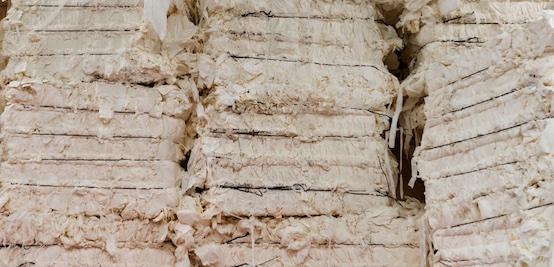
Hemp bast fibers are cellulosic fibers found in the phloem of bast fiber crops such as industrial hemp which are natural fibers derived from plants.The main components of hemp bast fibers are cellulose (53-91%), hemicellulose (4-18%), lignin (1-21%), and pectin (1-17%).
The benefits of bast fibers include lighter product weight, lower energy consumption, and a smaller environmental footprint.Bast fibers can be spun and woven and are thus widely used in the textile industry.
Furthermore, bast fibers are far stronger than cotton and do not mildew.Hemp bast fibers have exceptional properties such as strength, durability, and anti-bacterial and anti-fungal properties.
Traditional textiles made from hemp fibers include sailcloth and hemp denim. These materials are durable, adaptable, and breathable. The fibers can be used to make strong ropes, twines, and cords that will not rot or degrade even when exposed to salt water. The bast fibers have an excellent strength-to-weight ratio and are used to improve composite panels, which are commonly found in vehicles, aircraft, boots, and ever-changing building structures.
The European region is projected to grow at the highest CAGR during the forecast period
In the forecasted period, the European region will be the fastest growing. The area dedicated to hemp cultivation in the EU has increased significantly in recent years, rising 75% from 19.970 ha in 2015 to 34,960 ha in 2019. France has the largest agricultural area dedicated to hemp cultivation in the EU, with nearly 18,000 hectares, followed by Italy, the Netherlands, and Estonia. Simultaneously, hen production increased by 62.4%, from 103,750 tons to 168,455 tons. France produces the most, accounting for more than 70% of EU output, followed by the Netherlands (10%) and Austria (4%). In Europe, hemp fibers are primarily used for specialty pulp and paper, with applications ranging from cigarette paper to Bible paper, bank notes, and technical filters. However, with the European Commission’s increased R&D support and funding, new applications of hemp fibers in automotive and construction materials have emerged. The increased consumption of hemp seeds as food, as well as their widespread use in other food products such as smoothies, yogurt, cereals, and bars, particularly in countries such as Germany and the Netherlands, is expected to drive hemp growth in this region.
The break-up of Primaries:
• By Value Chain Side: Demand Side-41%, Supply Side-59%
• By Designation: CXOs-31%, Managers – 24%, D-Level- 30%, and Executives- 45%
• By Region: Europe - 25%, Asia Pacific – 15%, North America - 45%, RoW – 5%, South America-10%
Leading players profiled in this report:
• Marijuana Company of America Inc. (US)
• Cronos Group Inc. (Canada)
• Ecofibre Limited (Australia)
• Green Thumb Industries (US)
• Curaleaf Holdings Inc. (US)
• GenCanna (US)
• HempFlax BV (Netherlands)
• Konoplex Group (Russia)
• Hemp Oil Canada (Canada)
• BAFA (Germany)
• Dun Agro Hemp Group (Netherlands)
• Colorado Hemp Works (US)
• Canah International (Romania)
• South Hemp Tecno (Italy)
• MH Medical Hemp GmbH (Germany)
Research Coverage:
The report segments the industrial hemp market on the basis of type, application, source, and region. In terms of insights, this report has focused on various levels of analyses—the competitive landscape, end-use analysis, and company profiles, which together comprise and discuss views on the emerging & high-growth segments of the global industrial hemp, high-growth regions, countries, government initiatives, drivers, restraints, opportunities, and challenges.
Reasons to buy this report:
• To get a comprehensive overview of the industrial hemp market
• To gain wide-ranging information about the top players in this industry, their product portfolios, and key strategies adopted by them
• To gain insights into the major countries/regions in which the industrial hemp market is flourishing
Read the full report:
https://www.reportlinker.com/p05791873/?utm_source=GNW