[pageLogInLogOut]

#Market Analysis & Forecasts

Textile recycling market shows promising growth

The "Global Textile Recycling Market" report has been added to ResearchAndMarkets.com's offering.

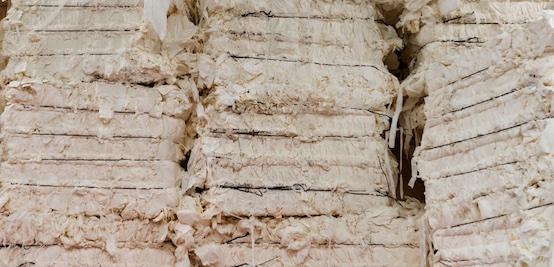
Textile waste is the second-greatest pollution-generated industry in the global economy. Recycled textile products help to reduce textile waste landfills and protect the environment from pollution. Various global and regional players have entered the market. The growth in apparel and home furnishing industries and strict standards for textile waste further drive the global textile recycling market. The report estimates that the growth of the global textile recycling market, globally and regionally, will represent national and regional output growth rates. The demands in most countries are expected to grow going forward. The growth in the automotive industry and increasing textile waste collection further drive the global textile recycling market.

The rate of growth is expected to pick up in the coming years. The Asia-Pacific region, especially China, Japan, and India, should grow relatively faster over the next five years, but the impact on the total market growth rate is not expected to be significant enough to off-balance the slower growth rates in the West.

In terms of industrial GDP values, China and the U.S. are the largest globally. Japan and Germany are ranked third and fourth. The growth of these economies significantly helps the global textile recycling market. The growing per capita apparel consumption and demand for recycled textile fiber in developing countries further drive the global textile recycling market. The growing fashion trends and rise in middle-class families' disposable income further drive the global textile recycling market. The strict norms on textile landfills in North America and Europe provoke textile manufacturers to enter into the textile recycling business. Moreover, the high cost of textile landfills reduces the profit margins of the manufacturing industry. Thus, textile recycling production is a lucrative opportunity for textile manufacturers.

Additionally, continuous government support and policies for the textile recycling business drive the global textile recycling market. Due to the rise in the cost of textile landfills, various global textile manufacturers focus on collecting textile waste. These manufacturers collect pre-and post-consumer waste from industry, construction sites, local schools, charity houses, and households. The ease of availability of textile waste and the rise in advanced textile recycling technology attract global textile manufacturers' attention.


This post-consumer waste required enormous infrastructure for sorting the textile waste. The key global companies are trying to create partnerships, joint ventures, and collaborations with small and medium textile recycling companies for post-consumer textile waste. For instance, in 2022, India-based Arvind Limited created a joint venture with PurFi Global LLC. PurFi Global LLC develops textile fibers from post-consumer waste. This joint venture helped Arvind Limited to increase its fiber production from post-consumer textile waste.

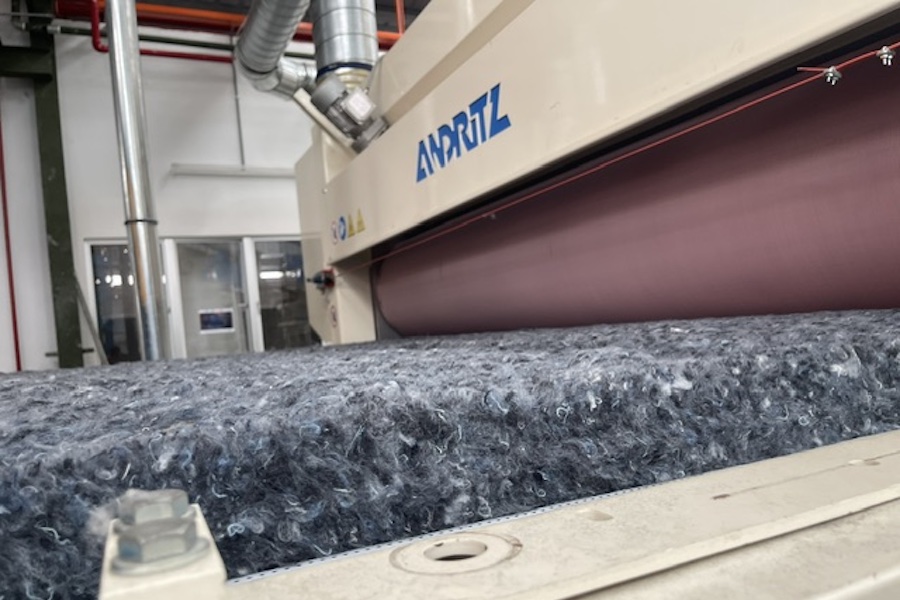
Manufacturers widely accept mechanical processes for textile recycling. The mechanical process is one of the oldest and most-efficient procedures in the world. Due to the ease of use and availability of textile waste, the mechanical textile recycling process is preferred by developing countries. Whereas the chemical textile recycling process is in the research and development phase. The chemical textile recycling process requires a high initial investment, advanced equipment, specific chemicals, and skilled labor. The companies from North America and Europe are strategically shifting from mechanical to chemical processes. The chemical textile recycling process can produce highly pure and quality fiber compared to the mechanical process.

The report will include details about various types of materials used in textile recycling, end-use industries for textile recycling, distribution channels of textile recycling, types of textile waste, and processes of textile recycling. Estimated values are based on manufacturers' total revenues. Projected revenue values are in constant U.S. dollars, unadjusted for inflation. The report contains comprehensive information regarding the textile recycling industry and the users thereof.

The global textile recycling market is segmented into the following categories -

  • Material type (polyester, cotton, nylon, wool).
  • Process type (chemical and mechanical).
  • Textile waste (post-consumer waste and pre-consumer waste).
  • Distribution channel (online and offline).
  • End-use (apparel, home furnishing, industrial).
  • Region: North America, Europe, Asia-Pacific (APAC), and the rest of the world (RoW).

For more information about this report visit

https://www.researchandmarkets.com/r/f3cis9



More News from TEXDATA International

#Techtextil 2026

Performance Apparels: Functional textiles drive innovation at Techtextil 2026

From high-performance fibres and advanced membranes to smart textiles and sustainable material concepts – functional apparel is becoming one of the most dynamic innovation fields in technical textiles. At Techtextil 2026, exhibitors demonstrate how new materials, finishing technologies and digital functions are shaping the next generation of protective, workwear and outdoor systems.

#Texprocess 2026

Texprocess 2026: Automation, digitalisation and AI reshape textile processing

Investment decisions in textile processing have become increasingly complex. Rising energy prices, labour shortages and geopolitical uncertainties are forcing companies to prioritise technologies that deliver measurable improvements in efficiency and process stability. This applies not only to apparel production, but also to the processing of technical textiles and high-performance materials. Modernisation projects are therefore being evaluated more selectively – but the pressure to upgrade production systems continues to grow. Texprocess 2026 reflects this tension between cautious investment behaviour and increasing technological demand.

#Techtextil 2026

Textile Chemicals & Dyes: Innovation in Textile Chemistry moves into focus at Techtextil 2026

From PFAS-free finishes and water-saving dyeing technologies to advanced coatings and recycling-compatible formulations, innovation in textile chemistry is accelerating across the industry. Reflecting this development, Techtextil 2026 introduces Textile Chemicals & Dyes as a dedicated product segment, highlighting the growing role of chemical solutions in shaping the next generation of technical textiles.

#Recycling / Circular Economy

textile.4U publishes special edition “Top 100 Textile Recycling Companies 2025”

With a comprehensive 176-page special edition, textile.4U is dedicating its latest issue entirely to one of the most dynamic and influential topics in today’s textile industry: textile recycling. The new issue, published exclusively in high-quality print, presents the Top 100 textile recycling companies researched and selected by TexData – organizations that already play a key role in the transition to circular textiles or are expected to have a significant impact in the near future.

More News on Market Analysis & Forecasts

#Market Analysis & Forecasts

Fluff pulp market maintains steady growth

Despite being impacted by political and economic woes, the global fluff pulp market in 2024 will reach 7.3 million air dried tonnes with a value of $9.7 billion, according to a new Smithers produced study, The Future of Fluff Pulp to 2029. This is up from 6.2 million air dried tonnes valued at $5.5 billion in 2019.

#Market Analysis & Forecasts

Current market study forecasts annual growth of 17 % for bio-based polymers between 2023 and 2028

Demand from Asia and the USA in particular is driving growth, Europe is lagging behind.

#Market Analysis & Forecasts

Economic and geopolitical headwinds influence industrial nonwovens growth to 2029

The global consumption of industrial nonwovens in 2024 is 5.3 million tonnes or 83.4 billion square metres (m2), valued at $21.2 billion, according to The Future of Industrial Nonwovens to 2029 from Smithers. Growth rates for 2019-24 were 6.9% (tonnes), 6.9% (m2) and 6.7% ($). This reflects a recovery in some markets from Covid-19 as well as an adjustment to the Russian invasion of Ukraine in 2022 and its repercussions (inflation, energy supply/price, global economic growth reductions).

#Market Analysis & Forecasts

Construction fabric market valuation set to total US$ 18.0 billion by 2034 amid rising demand for sustainable building materials, analyses Future Market Insights

The global construction fabric market is estimated to be valued at US$ 12.0 billion in 2024. Global sales of construction fabrics are projected to grow at a steady CAGR of 4.1% during the forecast period, totaling US$ 18.0 billion by 2034.

Latest News

#Spinning

Graf at EXINTEX – Strengthening presence in Latin America

Graf successfully participated in EXINTEX, one of the leading textile exhibitions in Latin America, together with its local agent Eurotecnica. The exhibition provided an excellent platform to engage with customers, partners and industry experts across the region.

#Techtextil 2026

Freudenberg Performance Materials presents Mehlerheytex and Filc at Techtextil 2026

Freudenberg Performance Materials will showcase textile innovations that increase efficiency, performance and sustainability in industry and mobility at Techtextil 2026. For the first time since the merger of Mehler Texnologies and Heytex, the MehlerHeytex brand will make its debut as a leading expert in coated technical textiles. Moreover, Freudenberg Performance Materials Filc (Filc), specialist for advanced needlepunch nonwovens and laminated materials, will present its groundbreaking solutions for automotive applications. Filc customers can benefit from the perfect combination of functionality, comfort and sustainability. The Freudenberg Performance Materials experts are looking forward to welcoming visitors to the trade fair at Stand A11 in Hall 11.0 from April 21 – 24, 2026.

#Recycling / Circular Economy

Advanced Recycling Conference 2026 to showcase innovations – Call for abstracts

The call for abstracts is now open for the Advanced Recycling Conference (ARC) 2026, taking place on 17–18 November 2026 in Cologne, Germany, and online. Europe’s leading platform for advanced recycling brings together hands-on solutions and cutting-edge research on recycling technologies for various waste streams like plastics, polymers, textiles or automotive, highlighting progress towards a circular renewable carbon economy.

#Sustainability

Practical toolkit to drive coordinated climate action launched

An open-access workshop toolkit enables brands, suppliers, policymakers and investors across the textile industry to apply the System Map in their own work, identifying leverage points to halve emissions and enable a just transition.

TOP