[pageLogInLogOut]

#Market Analysis & Forecasts

Global synthetic fibers market report 2021-2028

The "Global Synthetic Fibers Market Size, Share & Trends Analysis Report by Product (Polyester, Nylon, Acrylics), by Application (Clothing, Home Furnishing), by Region (APAC, North America), and Segment Forecasts, 2021-2028" report has been added to ResearchAndMarkets.com's offering.

The global synthetic fibers market size is estimated to reach USD 99.78 billion by 2028 registering a CAGR of 6.6%.

Increasing demand for clothing and apparel due to the changing fashion trends across the globe is likely to drive the market growth over the forecast period.

The properties offered by these products, such as stretching, waterproofing, and resistance to stain, sunlight, & oil, are likely to boost their demand during the forecast period. In addition, product application in various industries, such as clothing, home furnishing, automotive, filtration, and others, is expected to add significant growth to the market.

The market is heavily dependent upon the demand and changing consumer preferences, especially from the clothing and home furnishing products. Increasing adoption of strong and durable fabric for various land & air adventure sports applications involving parachutes and ropes is expected to have a positive impact on the market growth over the forecast period.

The majority of the players in the market are adopting recycling and advance technology methods. It involves the usage of recycling secondary raw materials (MPS) from synthetic textile fiber wastes and composites that exhibit anti-microbial properties. This trend is expected to increase during the forecast period in the wake of rising environmental and health concerns across the globe.

Synthetic Fibers Market Report Highlights

• Polyester is expected to account for the maximum revenue share by 2028 on account of the high product penetration in various application industries as it is long-lasting and durable, thus substitute for many natural fibers, such as cotton

• The nylon product segment is estimated to register the fastest CAGR over the forecast period

• This is owing to the extensive product use for clothing, reinforcement materials in automobiles, and injected molded parts for vehicles and mechanical equipment

• The clothing application segment led the market, in terms of revenue as well as volume, in 2020, on account of changing consumer fashion trends and demand for cost-effective & easy-to-maintain clothes across various geographies

• Asia Pacific is expected to be the largest as well as the fastest-growing regional market with a CAGR of more than 7% over the forecast period

• This growth is credited to the high product demand from the clothing, home furnishing, and automotive application industries of the region

• North America emerged as the second-largest regional market in 2020 on account of the product demand from the clothing and automotive application segments


Company Profiles

• Bombay Dyeing

• E. I. du Pont de Nemours and Company

• Indorama Corporation

• Lenzing AG

• Mitsubishi Chemical Holdings Corporation

• Reliance Industries Limited

• China Petroleum Corporation (Sinopec Corp.)

• Teijin Limited

• Toray Chemical Korea, Inc.

• Toyobo Co., Ltd.

For more information about this report visit:

https://www.researchandmarkets.com/r/rcon7n



More News from TEXDATA International

#ITM 2026

ITM 2026: The new geography of textile production

New production hubs are emerging across North Africa and Central Asia, while Türkiye is accelerating its transformation toward higher-value, technology-driven and more sustainable textile manufacturing.

#Research & Development

“Production is a product”

From technical textiles and AI-driven robotics to the limitations of textile circularity: Professor Dr Thomas Gries looks back on more than two decades of development at ITA Aachen. In the interview, he explains why production technology remains a decisive success factor, discusses international collaborations and innovation ecosystems, and shares his views on the transformation of production landscapes and the challenges facing an increasingly regulated industry.

#Knitting & Hosiery

“We need to move away from the price trap and return to a value-driven mindset.”

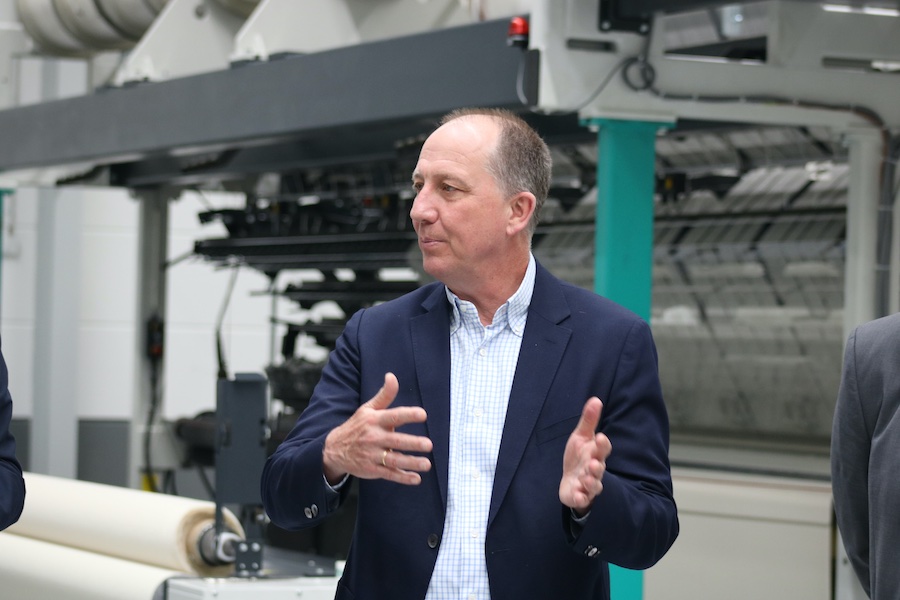
With its new Textile Innovation Center, KARL MAYER is sending a strong signal for innovation, collaboration, and the future of textile applications. In this interview, Karl Josef Mayer discusses new opportunities in warp knitting, the processing of staple fibres, recycling, the changing role of machinery manufacturers, and why the textile industry must once again focus more strongly on the value of textiles. by Oliver Schmidt

#Associations

“Innovation, resilience and international experience remain the great strengths of the Swiss textile machinery industry”

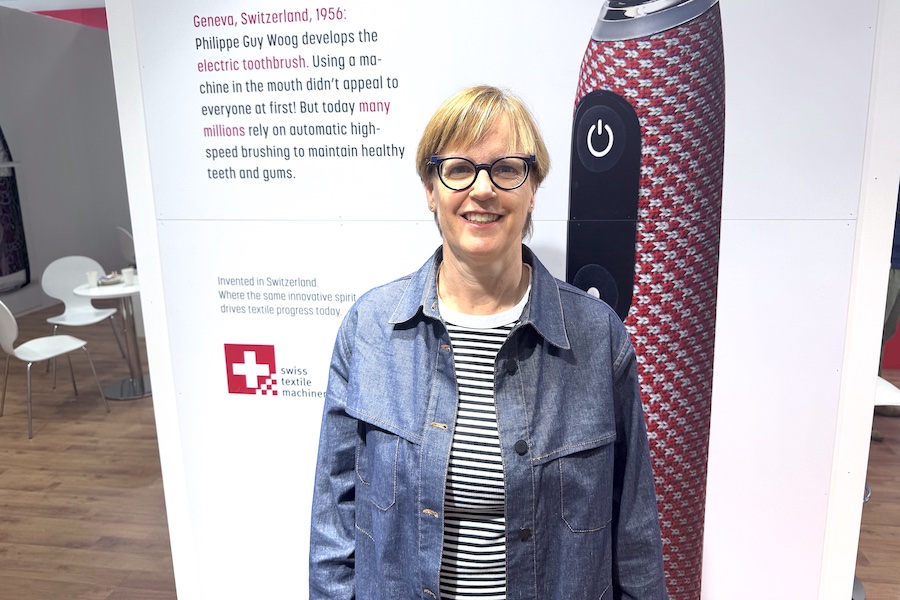
Geopolitical uncertainty, growing competitive pressure from China, new free trade agreements and the shift towards a circular economy are currently reshaping the global textile industry. In this interview, Cornelia Buchwalder discusses the current mood within the Swiss textile machinery sector, the industry’s distinctive innovative strength, new market opportunities in India and Asia, and the technological trends that could shape the upcoming trade fair cycle leading up to ITMA 2027.

More News on Market Analysis & Forecasts

Latest News

#Raw Materials

Global cotton production projected to outpace consumption, but risks remain

Global cotton production is projected to reach 26.2 million tonnes in the 2026/27 season, marginally outpacing estimated consumption of 25.9 million tonnes. However, early-season production risks — including weather volatility and pest pressures — could narrow that buffer as the crop progresses, according to the September 2026 issue of Cotton This Month, published by the International Cotton Advisory Committee (ICAC).

#Europe

European textile industry calls for €10 handling fee on ultra-fast-fashion imports

The introduction of the €3 customs duty on low-value imports marks an important milestone in Europe’s efforts to address the challenges created by the rapid growth of ultra-fast-fashion imports. Together with the abolition of the €150 customs duty exemption, it demonstrates that policymakers are willing to act when market distortions become impossible to ignore. However, the European textile and clothing industry considers this a first step rather than the final destination.

#Research & Development

From smart jackets to laser technology: Mona Neubaur explores Textile Factory 7.0

As part of her summer tour, North Rhine-Westphalia’s Minister for Economic Affairs and Climate Action, Mona Neubaur, visited Textilfabrik 7.0 in Mönchengladbach to experience the project’s innovations first-hand. Under the motto “smart and clean”, the visit focused on innovative technologies and sustainable alternatives for textile production - from smart jackets to the decolourisation of textiles using fungal cultures.

#CINTE Techtextil China 2026

Cinte Techtextil China 2026 has opened today, bringing global innovations and resources to Shanghai

As Asia’s premier platform catering to the evolving needs in technical textiles and nonwovens, Cinte Techtextil China has opened today at the Shanghai New International Expo Centre, gathering over 300 exhibitors from 15 countries and regions. Across Halls W3 to W5, this edition will create chances for fast-growing sectors and emerging trends – such as Mobiltech, Medtech & Protech, Indutech and more. The curated zones, pavilions, and fringe programme are designed to better connect exhibitors with targeted buyers from across China, Asia-Pacific, and further afield. Meanwhile, the Association Village will gather international industry associations to foster even more global collaboration.

TOP