[pageLogInLogOut]

#Raw Materials

Sustainability scorecard for sheep farming
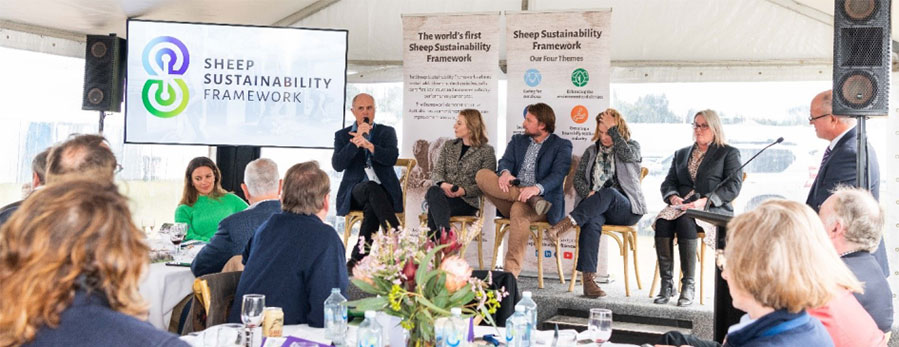
IWTO discuss Sustainability scorecard for sheep farming (c) 2022 IWTO
On 15 July 2022, the first ever Annual Report of the Sheep Sustainability Framework was unveiled at the Australian Sheep and Wool Show in Bendigo. The report was the first fruit of the Australian sheep and wool industry’s commitment to creating a data-driven yearly snapshot of its performance in matters relating to sustainability. International Wool Textile Organisation explores some of the most important points revealed in the report.

A World First

The report is the first of its kind and will go a long way towards improving sustainability in the sheep industry. It emerged from the Sheep Sustainability Framework (SSF), led by Sheep Producers Australia (SPA) and Wool Producers Australia (WPA). The SSF focuses on four themes: caring for sheep, enhancing the environment and climate, taking care of all stakeholders in the industry, and ensuring financial resilience for the industry. The report measures the extent to which the industry is meeting these goals, in light of a nine focus areas and 21 priorities.

Key Findings from The Report

The first annual report of the SSF revealed the following important points, among others:

  • The Australian sheep industry is climate neutral as of 2021, and has held steady on net emissions. Gains in productivity have driven emissions intensity down by nine per cent between 2005 and 2020.
  • Rates of ground cover have improved, with 63.4pc of sheep grazing land over 50pc ground cover since summer 2019.
  • Worms and breech flystrike are among the biggest health challenges for the industry. Genetic improvement is one of the measures being used to prevent disease.
  • The industry is rapidly shifting away from the practice of mulesing. Non-mulesed and ceased-mulesed wool has increased as a proportion of the total clip (exact figures to be released in the mid-year update report).


Lucinda Corrigan, Independent Chair of the SSF Board says the report is an evolving document with more indicators under development. “In order to be able to create the data needed for the Annual Report, we undertook a Life Cycle Assessment of the entire Australian flock to determine the carbon footprint of our industry,” she explained. “We also harnessed satellite imagery to measure and display vegetation changes across our sheep-grazing regions. The deep insights generated from these projects represent an important development in our understanding of the impacts on and of our 234-year-old industry.”


The report is available to download on the SSF website:

https://www.sheepsustainabilityframework.com.au/


More News from TEXDATA International

#Texprocess 2026

Texprocess 2026: Automation, digitalisation and AI reshape textile processing

Investment decisions in textile processing have become increasingly complex. Rising energy prices, labour shortages and geopolitical uncertainties are forcing companies to prioritise technologies that deliver measurable improvements in efficiency and process stability. This applies not only to apparel production, but also to the processing of technical textiles and high-performance materials. Modernisation projects are therefore being evaluated more selectively – but the pressure to upgrade production systems continues to grow. Texprocess 2026 reflects this tension between cautious investment behaviour and increasing technological demand.

#Techtextil 2026

Textile Chemicals & Dyes: Innovation in Textile Chemistry moves into focus at Techtextil 2026

From PFAS-free finishes and water-saving dyeing technologies to advanced coatings and recycling-compatible formulations, innovation in textile chemistry is accelerating across the industry. Reflecting this development, Techtextil 2026 introduces Textile Chemicals & Dyes as a dedicated product segment, highlighting the growing role of chemical solutions in shaping the next generation of technical textiles.

#Recycling / Circular Economy

textile.4U publishes special edition “Top 100 Textile Recycling Companies 2025”

With a comprehensive 176-page special edition, textile.4U is dedicating its latest issue entirely to one of the most dynamic and influential topics in today’s textile industry: textile recycling. The new issue, published exclusively in high-quality print, presents the Top 100 textile recycling companies researched and selected by TexData – organizations that already play a key role in the transition to circular textiles or are expected to have a significant impact in the near future.

#Recycling / Circular Economy

Responsible Textile Recovery Act of 2024 signed by Governor

Senator Josh Newman (D-Fullerton) is proud to announce that Senate Bill 707 (SB 707), the Responsible Textile Recovery Act of 2024, has been signed into law by the Governor of California, Gavin Newsom. This groundbreaking legislation establishes the country’s first Extended Producer Responsibility (EPR) textile recycling program, marking a significant step forward in the state’s efforts to combat waste and promote sustainability.

More News on Raw Materials

#Raw Materials

A Powerful Opening: Global thought leaders launch the International Cotton Conference Bremen

The International Cotton Conference Bremen will open on 25 March 2026 in the Parliament building of the Free Hanseatic City of Bremen with a keynote session of exceptional calibre. Distinguished international experts will set the stage for the conference by offering incisive perspectives on the most pressing challenges and the defining trends shaping the future of the global cotton trade. Their insights will span a broad spectrum — from geopolitically driven disruptions affecting global supply chains to the opportunities emerging from innovation-led agriculture capable of supporting a growing world population. Together, these opening keynotes will frame the dialogue of the conference, highlighting both the complexity of today’s market environment and the pathways toward a resilient and forward-looking cotton sector.

#Raw Materials

Lenzing Group positions bio‑based materials as a strategic asset for Europe’s economic security

The Lenzing Group, a leading supplier of regenerated cellulose fibers for the textile and nonwovens industries, hosted a high‑level roundtable in Brussels to discuss how bio‑based materials can strengthen Europe’s economic security and support the shift toward a fossil‑free future. Organized in cooperation with Euractiv, the event brought together representatives of the European Commission, the UK Mission to the EU, academia, civil society, and industry.

#Natural Fibers

Beyond Cotton: Natural Fibres in the Spotlight at the Bremen Cotton Conference - Branded by DNFI

Climate targets, fragile supply chains, and rising regulatory requirements are fundamentally changing the perspective of the textile industry - the focus is increasingly shifting toward the base material. Not only cotton, but natural fibres are gaining significant importance: they stand out not only because of their outstanding functional properties, but also because they make a valuable contribution to the bioeconomy and responsible product development.

#Raw Materials

International Women’s Day: Cotton made in Africa strengthens equality for women through targeted investments

On the occasion of International Women’s Day—which will be observed on 8 March under the motto “Rights. Justice. Action. For ALL Women and Girls”—the Aid by Trade Foundation (AbTF), which is responsible for Cotton made in Africa® (CmiA), underlines its long-standing and ongoing commitment to the equality of women in African cotton production areas.

Latest News

#Techtextil 2026

Gebr. Otto highlights versatility at Techtextil with regional supply chains, yarn innovations and new hygiene segment

At this year’s Techtextil, Gebr. Otto places its versatility at the center of its presentation. In addition to spinning, twisting and dyeing – traditionally focused on fine cotton – textile processors will also find a competent development partner for technical specialty solutions. The Dietenheim-based spinning mill has now built up a decade of experience in the production of technical yarns, particularly from aramids. A new hygiene segment has also been established, where yarns for medical and hygiene products are currently being produced. In the future, this department could also develop textile products for the food sector. Gebr. Otto will once again be present at the BW-i joint stand, booth D81, hall 12.1. What is wound onto the spool is determined by the customer: Gebr. Otto develops according to specific customer requirements and transforms its own ideas into yarn innovations.

#Europe

Commission presents proposal for EU Inc. - unlocking the full potential of the Single Market for Europe's entrepreneurs

Today, the European Commission presented its proposal for EU Inc., a new single set of corporate rules, building the cornerstone and starting point for the EU's 28th regime. EU Inc. is an optional, digital-by-default European corporate framework. It will make it easier for businesses to start, operate and grow across the EU – incentivising them to stay in Europe, and encourage those who once looked elsewhere to return.

#Man-Made Fibers

OnceMore® from Södra brings end-to-end traceability for circular Man-made Cellulosic Fibers (MMCF) using TextileGenesis

OnceMore® from Södra, the world’s first large-scale process for recycling blended fabrics into high‐quality dissolving pulp, will begin using TextileGenesis, a Lectra company, to strengthen traceability from raw material to retail across the value chain. OnceMore® produces dissolving pulp made from blended textile waste and wood sourced from responsibly managed Swedish forests. By integrating TextileGenesis, OnceMore® supports the growing need for verified data and secure, transparent tracking throughout increasingly complex supply chain.

#Sustainability

Experts publish APAC policy priorities

Cascale today announced the publication of its APAC Policy Priorities Paper, developed by the Asia-Pacific (APAC) Policy Member Expert Team (MET) to identify key regional sustainability challenges and provide practical, aligned recommendations for policymakers and industry stakeholders across Asia-Pacific.

TOP