[pageLogInLogOut]

#Raw Materials

CSITC adds ABRAPA as a round trial sample provider

Beginning with the Q2 2026 Round Trials, the ICAC's Committee on the Commercial Standardization of Instrument Testing of Cotton has expanded its sample provision framework by adding the Brazilian Cotton Growers Association (ABRAPA) as an official sample provider.

Since 2003, CSITC has conducted quarterly Round Trials to help ensure that cotton testing laboratories around the world produce accurate, consistent, and comparable measurements of fiber quality characteristics. Identical cotton samples are distributed to participating laboratories, which test the samples using their normal procedures and submit results for evaluation.

Until now, sample provision and dispatch have been conducted exclusively by the USDA Agricultural Marketing Service (AMS); moving forward, ABRAPA will also provide and distribute Round Trial samples. This approach will diversify the range of cotton varieties used in the program, better reflecting the international cotton trade while maintaining the homogeneity required for reliable testing.

Round Trials help improve cotton instrument testing worldwide by providing detailed, confidential diagnostic results to each participating facility. Participating laboratories do not receive pass/fail ratings. Instead, they receive a comprehensive analysis of their results and deviations from reference values, enabling them to identify potential issues and improve testing accuracy over time.

For more information, please visit https://csitc.org/


More News from International Cotton Advisory Committee (ICAC)

#Raw Materials

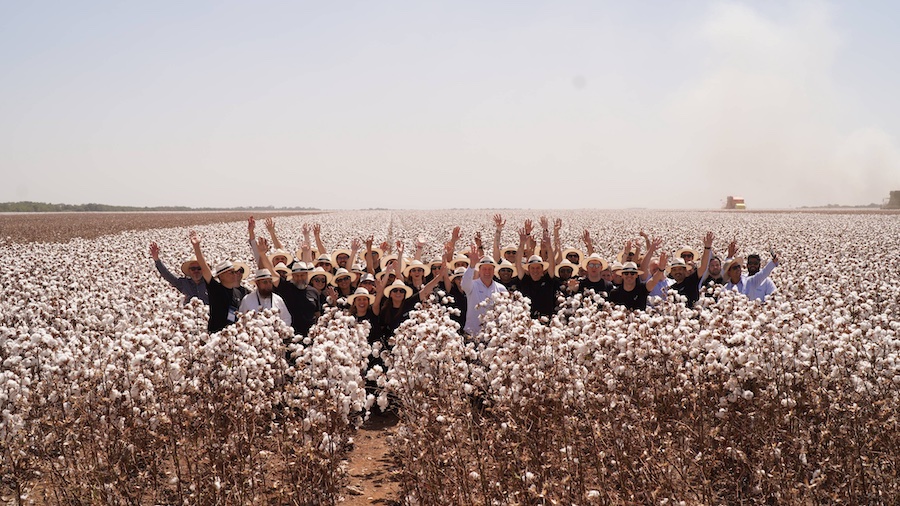
Global Cotton area and production are projected to decline in the 2026/27 Season

The June 2026 issue of Cotton This Month projects a modest contraction in global cotton area, production, and trade during the 2026/27 season, reflecting weaker demand sentiment, rising production costs, and shifting environmental factors across major producing nations.

#Raw Materials

China projected to increase cotton production, yields, and imports in 2026/27

World cotton production in the 2026/27 season is projected at 25.9 million tonnes, exceeding global consumption of 25.2 million tonnes, according to the May 2026 issue of Cotton This Month. That means both production and consumption are expected to remain close to current season levels, while global cotton trade is projected to decline by 2.7% to approximately 9.6-9.7 million tonnes.

#Raw Materials

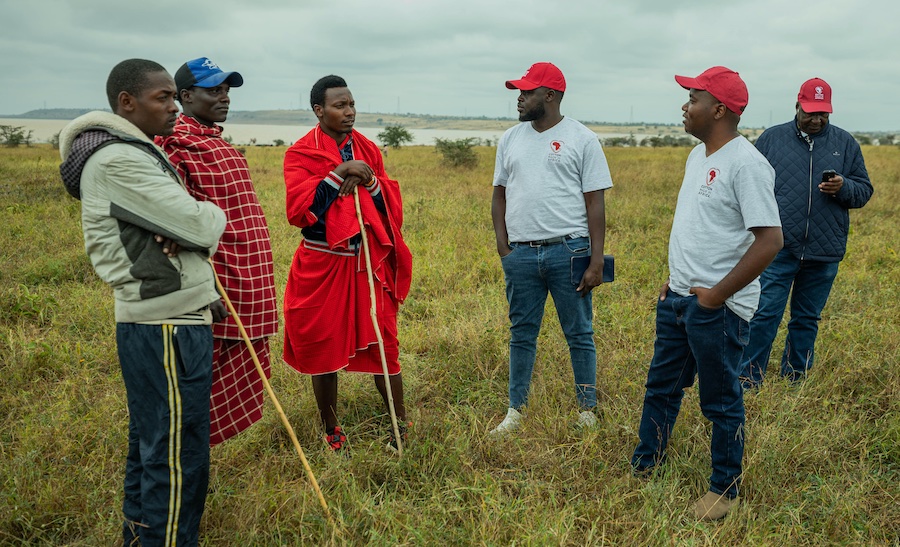
ICAC launches Carbon Credits Initiative to deliver new income streams to cotton farmers

The International Cotton Advisory Committee (ICAC) has announced a new initiative designed to unlock additional income streams for cotton farmers through participation in carbon credit markets, linking sustainable production practices directly to financial returns.

#Raw Materials

Global production expected to decline in 2026/27 as policy shifts and weak demand reshape trade

Early projections for the 2026/27 season indicate that global cotton lint production will decline by 4% to 24.9 million tonnes, while world consumption is expected to remain stable at approximately 25 million tonnes, according to the April 2026 issue of Cotton This Month.

More News on Raw Materials

#Raw Materials

New U.S. cotton study uses real-world grower data to reveal where fiber impacts occur

Cotton Incorporated has released a critically reviewed life cycle assessment (LCA) of U.S. cotton fiber production that examines how cotton’s environmental impacts are measured and where meaningful improvements can be made across the value chain. The new data, grounded in real‑world grower inputs, measures what drives U.S. cotton’s environmental footprint from field to gin.

#Raw Materials

ECCO introduces first shoe featuring innovative protein-based fibre

ECCO, in partnership with Spinnova, announces the launch of the limited edition ECCO BIOM® 720, a first-of-its-kind shoe utilising an often overlooked leather by-product, transformed into a protein-based fibre. The fibres are produced using patented technology that advances material innovation while reducing waste and supporting full resource use across the leather and textile industry.

#Raw Materials

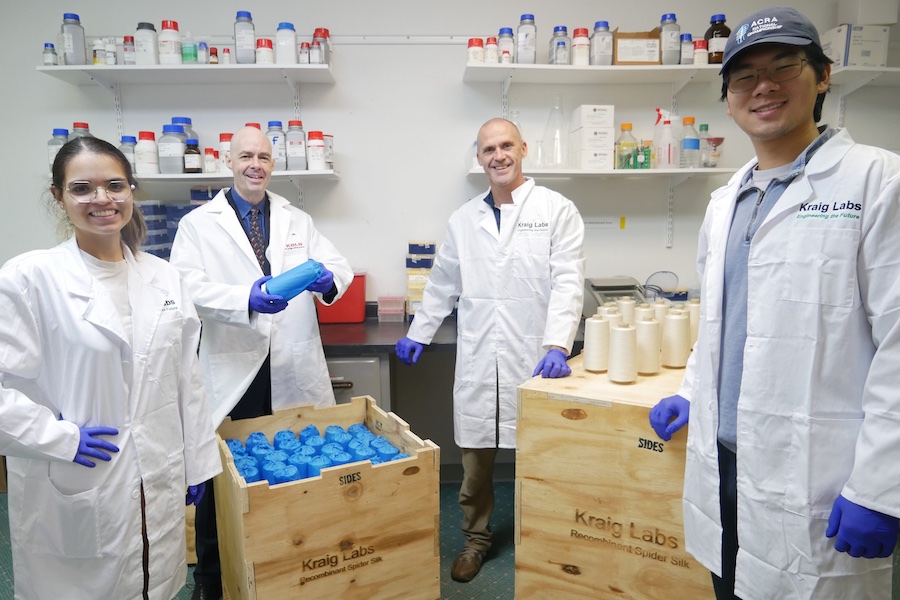
Kraig Biocraft Laboratories reports major progress converting record-setting spider silk cocoon production into reeled silk

Kraig Biocraft Laboratories, Inc. (OTCQB: KBLB) (“the Company”, “Kraig Labs”, or “Kraig’s”), a world leader in spider silk technology*, today announced significant progress in the processing of its recently produced recombinant spider silk cocoons into reeled silk.

#Textile processing

trinamiX mobile NIR spectroscopy: New applications for the footwear and textile industry

trinamiX GmbH expands its solution portfolio for the circular economy, now enabling the identification of materials used in the footwear and textile industries. With its mobile near-infrared (NIR) spectroscopy solutions, trinamiX supports manufacturers, sorters, recyclers, and brand owners in reliably identifying materials and improving transparency across increasingly complex value chains.

Latest News

#

“Production is a product”

From technical textiles and AI-driven robotics to the limitations of textile circularity: Professor Dr Thomas Gries looks back on more than two decades of development at ITA Aachen. In the interview, he explains why production technology remains a decisive success factor, discusses international collaborations and innovation ecosystems, and shares his views on the transformation of production landscapes and the challenges facing an increasingly regulated industry.

#Knitting & Hosiery

“We need to move away from the price trap and return to a value-driven mindset.”

With its new Textile Innovation Center, KARL MAYER is sending a strong signal for innovation, collaboration, and the future of textile applications. In this interview, Karl Josef Mayer discusses new opportunities in warp knitting, the processing of staple fibres, recycling, the changing role of machinery manufacturers, and why the textile industry must once again focus more strongly on the value of textiles. by Oliver Schmidt

#Associations

“Innovation, resilience and international experience remain the great strengths of the Swiss textile machinery industry”

Geopolitical uncertainty, growing competitive pressure from China, new free trade agreements and the shift towards a circular economy are currently reshaping the global textile industry. In this interview, Cornelia Buchwalder discusses the current mood within the Swiss textile machinery sector, the industry’s distinctive innovative strength, new market opportunities in India and Asia, and the technological trends that could shape the upcoming trade fair cycle leading up to ITMA 2027.

#Textile processing

YKK invests USD 150 million in new manufacturing facility in India

YKK Corporation has announced plans to construct a new manufacturing facility in India, reinforcing its long-term commitment to one of the world's fastest-growing textile and apparel production hubs. The new factory will be built at Origins by Mahindra in Chennai, Tamil Nadu, and will become the third manufacturing site of YKK India Private Limited. The facility is expected to be completed by February 2028 and represents an investment of approximately USD 150 million, covering land, buildings, machinery and equipment.

TOP