[pageLogInLogOut]

#Industry 4.0 / Digitalization

Lenzing presented first blockchain pilot project at Hong Kong Fashion Summit

The Lenzing Group has made a huge leap forward in introducing blockchain technology, allowing for a new level of transparency and traceability in the textile industry. After joining the platform of the technology company TextileGenesis™ earlier this year, the world market leader in specialty fibers made from the renewable raw material wood presented the first pilot at this year’s Fashion Summit in Hong Kong on September 05, 2019. This pioneering pilot project was conducted in close cooperation with TextileGenesis™, WWF and Hong Kong based brand Chicks.
  • Pioneering pilot project conducted with Hong Kong based brand Chicks
  • A large majority of consumers wants brands to disclose their supply chain
  • Transparency ensured from fiber-to-retail

A baseline survey on EU consumer attitudes to sustainability and supply chain transparency in the fashion industry conducted by Ipsos MORI in October 2018 shows that a large majority of consumers (80 %) wants brands to disclose their supply chain. The blockchain technology enables brands and consumers to identify TENCEL™ branded fibers across each production and distribution step from fiber-to-retail of the finished garment or home textiles. The technology also allows consumers to verify the garment composition and the underlying textile supply chain at the point of sale, simply by scanning the barcode with a mobile device.

“Together with TextileGenesis™ we pursue the ambitious goal to achieve an unparalleled level of transparency for fashion brands and consumers. We will use blockchain technology to maximize the digital traceability of fibers, thus making an important contribution to green up the fashion industry”, says Stefan Doboczky, Chief Executive Officer of the Lenzing Group. “This strong belief in and commitment to sustainability will support the business with TENCEL™ fibers.”

In an industry’s first, Lenzing issued blockchain based TENCEL™ fibercoins to its supply chain partners in direct relation to physical shipments. These digital tokens serve as an authentication mechanism, against any adulteration, and provides secure digital chain-of-custody across the entire textile value chain. Recognizing that data integrity and ease of use are critical, the supply chain players conducted transactions through the data upload mechanism on the platform. To ensure real-world complexity, a total of 49 distinct garment stock-keeping unit (~25000 pieces), of Chicks, were tracked on the digital platform from fibers up to retail.
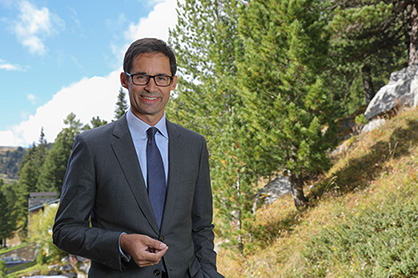
Stefan Doboczky (CEO) (c) 2019 Lenzing


“This is an important milestone for the apparel industry. Our focus is to drive meaningful step-change in an industry where less than 5 percent of top 250 apparel brands can track their garments back to the fiber origin”, says Amit Gautam, CEO & Founder of TextileGenesis™.

Lenzing is carrying out further pilot tests over the next few months involving partners along the entire value chain and expects the platform to be fully operational as of 2020.

More News from Lenzing

#Nonwovens

VEOCEL™ Lyocell production expands to Asia – Launching a new chapter for nonwovens in the region

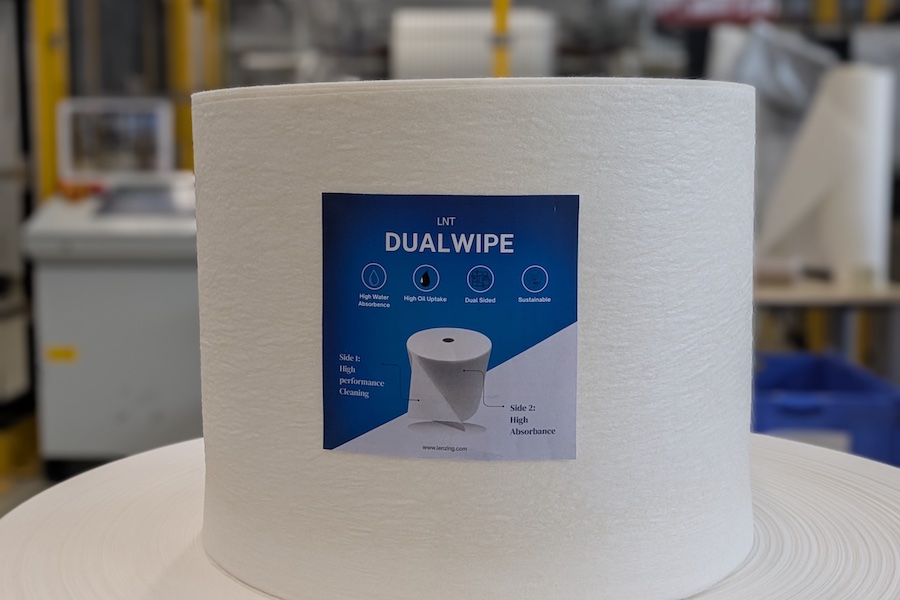
VEOCEL™, Lenzing's flagship specialty nonwovens brand, expands production at its Thai plant in Prachinburi. This is the first-ever production of its nonwoven-grade lyocell fibers in Asia. Built in 2022 with a 100,000-ton annual production capacity, the facility - previously focused on fibers for textile applications - now can directly meet the demand for VEOCEL™’s biodegradable¹, wood-based lyocell fibers for nonwovens products. These fibers are an essential ingredient for high-quality nonwovens products, ranging from baby wipes to facial sheet masks and everyday personal hygiene items.

#Man-Made Fibers

Lenzing advances its transformation: Higher EBITDA, stronger free cash flow and more than EUR 200 million in cost savings

The business performance of the Lenzing Group in 2025 was affected particularly in the second half of the year by external factors such as international tariff measures, subdued demand and declining market prices. As a result, revenue decreased slightly by 2.3 percent to EUR 2.6 billion, primarily due to lower fiber sales volumes and lower prices for fibers and pulp, which were further negatively impacted by currency developments. Nevertheless, thanks to the comprehensive Performance Program, Lenzing was able to improve its operating performance and key financial indicators compared with the previous year.

#Man-Made Fibers

“Lead Transformation – Generate Impact”: Lenzing presents its 2025 Annual and Sustainability Report

The Lenzing Group has published its 2025 Annual and Sustainability Report, entitled LEAD TRANSFORMATION – GENERATE IMPACT. The report shows how Lenzing is actively shaping change in the industry and making a lasting impact: economically, ecologically, and socially. Lenzing is consistently focused on the future: with targeted investments in premiumization, excellence, innovation, and sustainability, the company is strengthening its position as a leading provider of sustainable, cellulose-based premium fibers. The combined report is available in digital format.

#Raw Materials

Lenzing Group positions bio‑based materials as a strategic asset for Europe’s economic security

The Lenzing Group, a leading supplier of regenerated cellulose fibers for the textile and nonwovens industries, hosted a high‑level roundtable in Brussels to discuss how bio‑based materials can strengthen Europe’s economic security and support the shift toward a fossil‑free future. Organized in cooperation with Euractiv, the event brought together representatives of the European Commission, the UK Mission to the EU, academia, civil society, and industry.

More News on Industry 4.0 / Digitalization

#Research & Development

Textilfabrik 7.0 launched: Mönchengladbach becomes a real-world lab for sustainable textile production

With the official kick-off event of the Textilfabrik 7.0 (T7), a major transformation project for the German textile and apparel industry has been launched in the Monforts Quarter in Mönchengladbach. At the “Textile Roundtable,” an event format organized by the Zukunftsagentur Rheinisches Revier, representatives from industry, research, politics, and the regional economy came together to jointly lay the foundation for CO₂-neutral, circular, and economically viable textile production in Germany.

#Man-Made Fibers

OnceMore® from Södra brings end-to-end traceability for circular Man-made Cellulosic Fibers (MMCF) using TextileGenesis

OnceMore® from Södra, the world’s first large-scale process for recycling blended fabrics into high‐quality dissolving pulp, will begin using TextileGenesis, a Lectra company, to strengthen traceability from raw material to retail across the value chain. OnceMore® produces dissolving pulp made from blended textile waste and wood sourced from responsibly managed Swedish forests. By integrating TextileGenesis, OnceMore® supports the growing need for verified data and secure, transparent tracking throughout increasingly complex supply chain.

#Denim

Jeanologia launches Billy

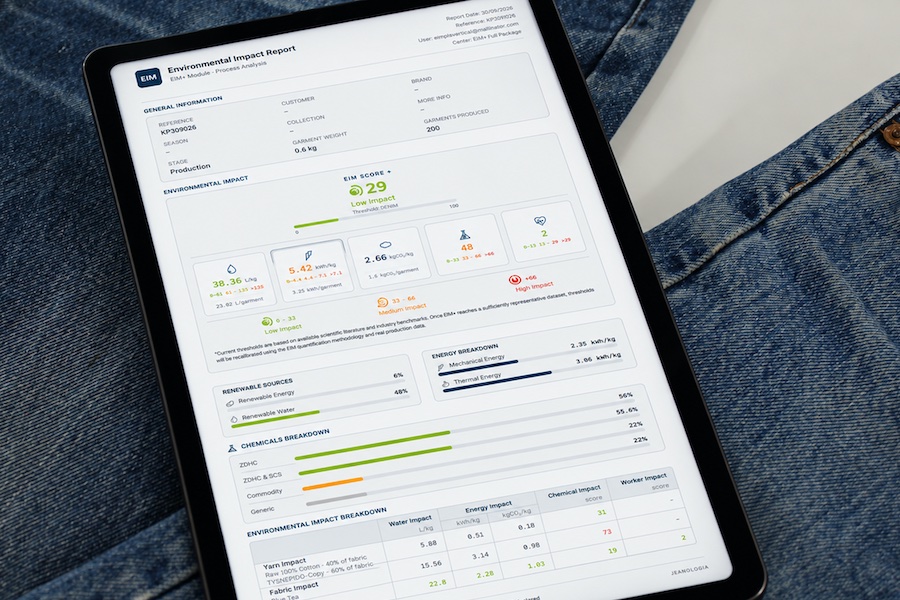
The new AI extracts precise laser designs from a garment image in minutes, transforming how vintage denim is recreated for production. If Jeanologia’s laser changed the way jeans were made at the end of the last century, its AI now takes the next step: moving from reproducing wear to designing it. / archive photo © 2026 Jeanologia

#Dyeing, Drying, Finishing

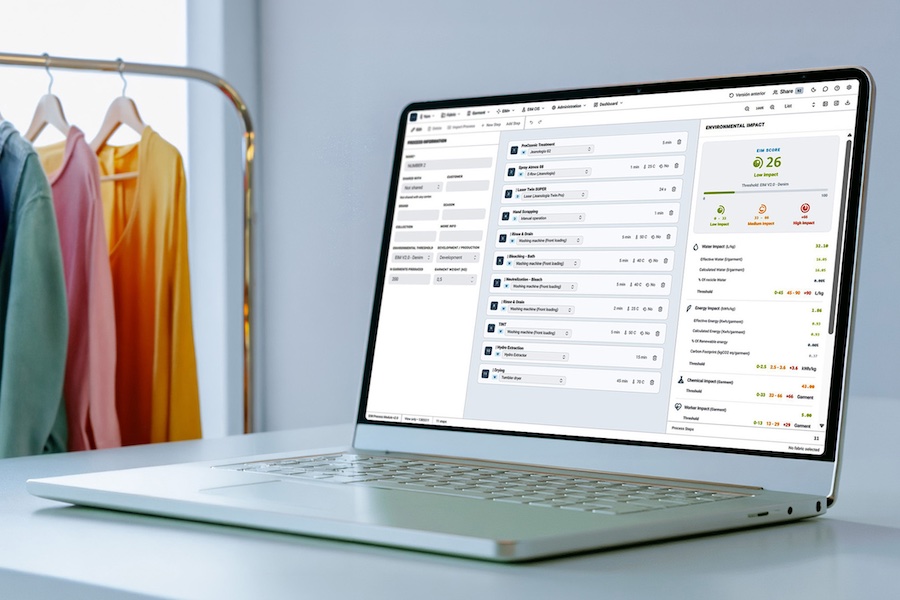
Monforts unveils interactive digital platform for textile finishers

Monforts has launched a new digital platform designed to give textile manufacturers faster, more intuitive access to the company’s finishing technologies, technical expertise and aftersales support worldwide.

Latest News

#Techtextil 2026

AI, Start-ups, Research: Techtextil and Texprocess bring together players in the textile industry

From start-ups to universities and research institutes: at Techtextil and Texprocess, the world’s leading innovation trade fairs in Frankfurt am Main, exhibitors present future-oriented concepts for the global textile industry. With the international Campus & Research area, a strong participation from start-ups and the latest AI applications for textile processing, both trade fairs showcase current developments in the textile industry. By bringing together innovation, research and application, they enable new partnerships across the textile value chain.

#Techtextil 2026

IVGT joint stand brings innovation and networking to Techtextil 2026

At Techtextil 2026 and the parallel Texprocess 2026, key transformation topics such as artificial intelligence, digitalisation, sustainability, recycling and the circular economy will be reflected across the show. Against this backdrop, the IVGT, together with 16 member companies, will present its joint stand in Hall 12.1 (Stand D62) as a platform for exchange and networking.

#Man-Made Fibers

Indorama Ventures supports Southeast Asia’s textile customers with reliable regional supply and global innovative portfolio

Indorama Ventures, one of the leading global polyester fiber and filament yarn suppliers globally, will participate in Indo Intertex 2026 in Jakarta this April, making its diverse global portfolio available to apparel, home textile, and hygiene customers across Southeast Asia.

#Raw Materials

New study shows low environmental impact by Cotton made in Africa Organic Cotton from Tanzania

Today, the Aid by Trade Foundation (AbTF) is announcing the results of a comprehensive life-cycle analysis (LCA) for cotton produced in Tanzania under the Cotton made in Africa Organic (CmiA Organic) standard. The study emphasises the small ecological footprint of CmiA Organic verified cotton. This can largely be traced back to the absence of synthetic pesticides, artificial fertilisers, and artificial irrigation. Consequently, CmiA Organic cotton can help the textile industry meet regulatory requirements as well as science-based targets. The results also show that the consequences of climate change threaten the livelihoods of these cotton farmers, even though the type of agriculture they practise barely contributes to climate change.

TOP