[pageLogInLogOut]

#ITMA 2023

LAIP, dyeing technology consistency with environmental and market needs
© 2023 LAIP
LAIP was founded in 1958 with the intention ever since to supply the market of the textile dyeing industry with innovation and quality. The context in which the company lives is the Prato district, Italy, strongly characterized by unrivaled textile know-how. Therefore, the obvious need to work is quality without forgetting innovation, two fundamental production concepts. Thanks to this attitude the market globally recognizes the continuous evolution of LAIP. At ITMA 2023 LAIP will be showcasing its latest machines both for fabric yarn and fiber dyeing.

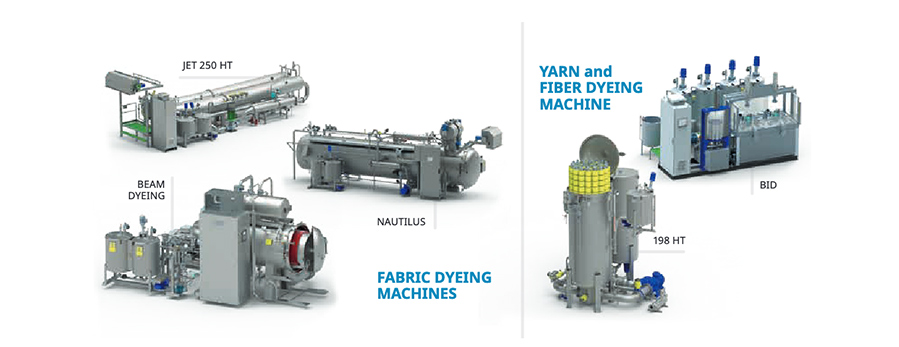
Among them:

198 HT, the highly demanded machine for tow – packages and fibre dyeing, it allows the same liquor ratio to be maintained even with partial loads!

BID, (Bobbins Injection Dyeing) ensures absolute repeatability, productivity and reliability for multicolour printing and dyeing of yarn in bobbins.

Nautilus, the cutting-edge machine. Conceived with a double belt, it is suitable for dyeing delicate fabrics keeping the low liquor ratio constant by the maximum fabric load up to 40%.

The low water consumption means low electrical consumption and energy saving.

Jet 250 HT, the easy machine that never stops to get perfectly dyed fabrics with no abrasions nor creases.

Beam, the ideal machine to dye high end silk and technical fabrics, tubular and warp knit for sportwear enabling the optimisation of production times and superlative technical performance.


The company is driven to always face new challenges and the interaction with customers stimulate the design and technology department to find suitable solutions to face the new and important needs of dyehouses. From this ability to dialogue, the innovations - that will then be globally disseminated - are born.

It is not easy in the world of dyeing to find eco-friendly solutions, as requested by many customers. Yet they must be faced and resolved. This is where innovation comes from:

super-efficient pumps, low liquor ratio, ease of use, automated systems, efficiency improvement and industry 4.0 features. All aimed at creating ever more performing dyeing machines in terms of sustainability that goes towards an ecological transition that sees LAIP and its customers seriously committed.


LAIP stand: HALL 11 • BOOTH C105


More News from L.A.I.P. s.r.l.

More News on ITMA 2023

Latest News

#Dyeing, Drying, Finishing

Orthopac RVMC-20 plus: German Engineering for Smarter Weft Straightening

In times of rising cost pressure and growing quality demands, textile producers worldwide are searching for solutions that combine precision, efficiency, and sustainability. With its latest innovation, the Orthopac RVMC-20 plus, Mahlo once again demonstrates the strength of German engineering: improving proven technology to meet today’s challenges.

#Knitting & Hosiery

KARL MAYER and Lenzing partner to advance warp knitting with scalable cellulose fiber solutions

The Lenzing Group, a leading supplier of regenerated cellulosic fibers for the textile and nonwovens industries, together with KARL MAYER, the global market leader in warp knitting machines and warp preparation systems, debut a joint innovation project during Premiere Vision, Paris.

#Textile chemistry

RUDOLF gets the exclusive global distribution rights for Sanitized® textile technologies

With effect from today, RUDOLF officially assumes exclusive global distribution rights for Sanitized® textile technologies from SANITIZED AG. This is the next milestone in the strategic collaboration announced in 2025, with the partnership between the two companies now fully implemented and expanded worldwide.

#Europe

ICAC to support European Commission on pending PEF legislation

The International Cotton Advisory Committee (ICAC) is proud to announce that it has been included as a member of the European Commission’s Technical Advisory Board (TAB) on the Product Environmental Footprint methodology. The Commission developed the Product Environmental Footprint (PEF) to assess and communicate the life cycle environmental performance of products and organizations.

TOP