[pageLogInLogOut]

#Europe

Coronavirus: Commission presents “Staying safe from COVID-19 during winter” strategy

Today, the Commission adopted a strategy for sustainably managing the pandemic over the coming winter months, a period that can bring a risk of increased transmission of the virus owing to specific circumstances such as indoor gatherings. The strategy recommends continued vigilance and caution throughout the winter period and into 2021 when the roll out of safe and effective vaccines will occur. The Commission will then provide further guidance on a gradual and coordinated lifting of containment measures.

A coordinated EU-wide approach is key to provide clarity to people and avoid a resurgence of the virus linked to the end of year holidays. Any relaxation of measures should take into account the evolution of the epidemiological situation and sufficient capacity for testing, contact tracing and treating patients.

Vice-President for Promoting the European Way of Life, Margaritis Schinas, said: “In these extremely difficult times, guidance to Member States to promote a common approach to the winter season and in particular on how to manage the end of the year period, is of vital importance. We need to curtail future outbreaks of infection in the EU. It is only through such a sustained management of the pandemic, that we will avoid new lockdowns and severe restrictions and overcome together.”

Stella Kyriakides, Commissioner for Health and Food Safety, said: “Every 17 seconds a person loses their life due to COVID-19 in Europe. The situation may be stabilising, but it remains delicate. Like everything else this year, end of the year festivities will be different. We cannot jeopardise the efforts made by us all in the recent weeks and months. This year, saving lives must come before celebrations. But with vaccines on the horizon, there is also hope. All Member States must now be ready to start vaccination campaigns and roll-out vaccines as quickly as possible once a safe and effective vaccine is available.”


Recommended control measures

The staying safe from COVID-19 during winter strategy recommends measures to keep the pandemic under control until vaccines are widely available. It focuses on:

• Physical distancing and limiting social contacts, key for the winter months including the holiday period. Measures should be targeted and based on the local epidemiological situation to limit their social and economic impact and increase their acceptance by people.

• Testing and contact tracing, essential for detecting clusters and breaking transmission. Most Member States now have national contact tracing apps. The European Federated Gateway Server (EFGS) enables cross-border tracing.

• Safe travel, with a possible increase in travel over the end-of-year holidays requiring a coordinated approach. Transport infrastructure must be prepared and quarantine requirements, which may take place when the epidemiological situation in the region of origin is worse than the destination, clearly communicated.

• Healthcare capacity and personnel: Business continuity plans for healthcare settings should be put in place to make sure COVID-19 outbreaks can be managed, and access to other treatments maintained. Joint procurement can address shortages of medical equipment.

• Pandemic fatigue and mental health are natural responses to the current situation. Member States should follow the World Health Organisation European Region's guidance on reinvigorating public support to address pandemic fatigue. Psychosocial support should be stepped up too.

• National vaccination strategies. The Commission stands ready to support Member States where necessary in the deployment of vaccines as per their deployment and vaccination plans. A common EU approach to vaccination certificates is likely to reinforce the public health response in Member States and the trust of citizens in the vaccination effort.

More News from TEXDATA International

#Texprocess 2026

Texprocess 2026: Automation, digitalisation and AI reshape textile processing

Investment decisions in textile processing have become increasingly complex. Rising energy prices, labour shortages and geopolitical uncertainties are forcing companies to prioritise technologies that deliver measurable improvements in efficiency and process stability. This applies not only to apparel production, but also to the processing of technical textiles and high-performance materials. Modernisation projects are therefore being evaluated more selectively – but the pressure to upgrade production systems continues to grow. Texprocess 2026 reflects this tension between cautious investment behaviour and increasing technological demand.

#Techtextil 2026

Textile Chemicals & Dyes: Innovation in Textile Chemistry moves into focus at Techtextil 2026

From PFAS-free finishes and water-saving dyeing technologies to advanced coatings and recycling-compatible formulations, innovation in textile chemistry is accelerating across the industry. Reflecting this development, Techtextil 2026 introduces Textile Chemicals & Dyes as a dedicated product segment, highlighting the growing role of chemical solutions in shaping the next generation of technical textiles.

#Recycling / Circular Economy

textile.4U publishes special edition “Top 100 Textile Recycling Companies 2025”

With a comprehensive 176-page special edition, textile.4U is dedicating its latest issue entirely to one of the most dynamic and influential topics in today’s textile industry: textile recycling. The new issue, published exclusively in high-quality print, presents the Top 100 textile recycling companies researched and selected by TexData – organizations that already play a key role in the transition to circular textiles or are expected to have a significant impact in the near future.

#Recycling / Circular Economy

Responsible Textile Recovery Act of 2024 signed by Governor

Senator Josh Newman (D-Fullerton) is proud to announce that Senate Bill 707 (SB 707), the Responsible Textile Recovery Act of 2024, has been signed into law by the Governor of California, Gavin Newsom. This groundbreaking legislation establishes the country’s first Extended Producer Responsibility (EPR) textile recycling program, marking a significant step forward in the state’s efforts to combat waste and promote sustainability.

More News on Europe

#Europe

Commission presents proposal for EU Inc. - unlocking the full potential of the Single Market for Europe's entrepreneurs

Today, the European Commission presented its proposal for EU Inc., a new single set of corporate rules, building the cornerstone and starting point for the EU's 28th regime. EU Inc. is an optional, digital-by-default European corporate framework. It will make it easier for businesses to start, operate and grow across the EU – incentivising them to stay in Europe, and encourage those who once looked elsewhere to return.

#Associations

European Business Coalition welcomes provisional application of EU–Mercosur Agreement and calls for Swift and full implementation

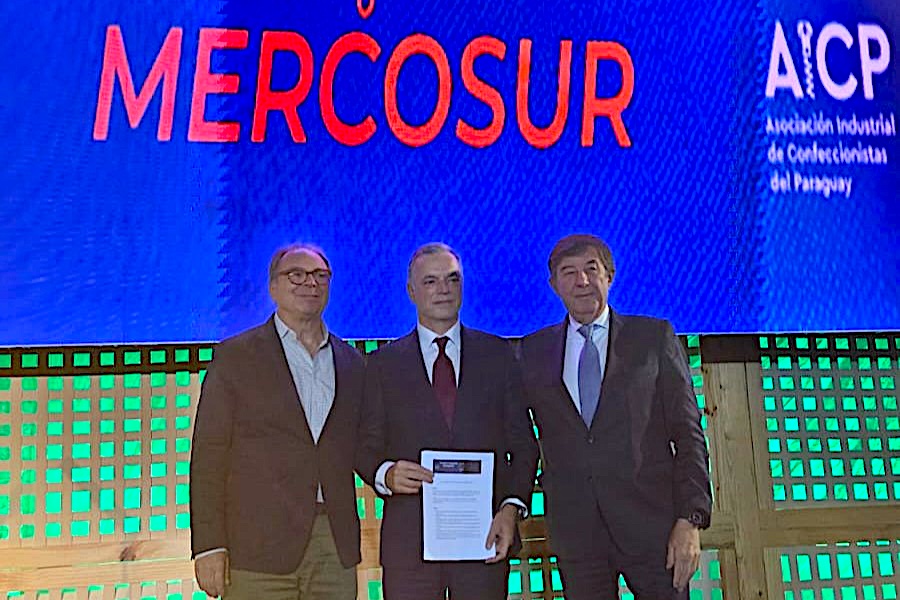
With the European Commission’s decision to provisionally apply the EU–Mercosur Interim Trade Agreement, a process spanning more than 25 years now moves decisively into its implementation phase.

#Europe

Antwerp Declaration community urges EU leaders to deliver emergency measures as Europe’s competitiveness crisis deepens

EURATEX, representing the European textile and fashion industry, joins the Antwerp Declaration Community’s call on EU Heads of State and Government to adopt emergency measures that restore industrial competitiveness and deliver tangible results for Europe’s manufacturing base in 2026.

#Europe

New EU rules to stop the destruction of unsold clothes and shoes

The European Commission today (Feb 9) adopted new measures under the Ecodesign for Sustainable Products Regulation (ESPR) to prevent the destruction of unsold apparel, clothing, accessories and footwear.

Latest News

#Techtextil 2026

Gebr. Otto highlights versatility at Techtextil with regional supply chains, yarn innovations and new hygiene segment

At this year’s Techtextil, Gebr. Otto places its versatility at the center of its presentation. In addition to spinning, twisting and dyeing – traditionally focused on fine cotton – textile processors will also find a competent development partner for technical specialty solutions. The Dietenheim-based spinning mill has now built up a decade of experience in the production of technical yarns, particularly from aramids. A new hygiene segment has also been established, where yarns for medical and hygiene products are currently being produced. In the future, this department could also develop textile products for the food sector. Gebr. Otto will once again be present at the BW-i joint stand, booth D81, hall 12.1. What is wound onto the spool is determined by the customer: Gebr. Otto develops according to specific customer requirements and transforms its own ideas into yarn innovations.

#Man-Made Fibers

OnceMore® from Södra brings end-to-end traceability for circular Man-made Cellulosic Fibers (MMCF) using TextileGenesis

OnceMore® from Södra, the world’s first large-scale process for recycling blended fabrics into high‐quality dissolving pulp, will begin using TextileGenesis, a Lectra company, to strengthen traceability from raw material to retail across the value chain. OnceMore® produces dissolving pulp made from blended textile waste and wood sourced from responsibly managed Swedish forests. By integrating TextileGenesis, OnceMore® supports the growing need for verified data and secure, transparent tracking throughout increasingly complex supply chain.

#Sustainability

Experts publish APAC policy priorities

Cascale today announced the publication of its APAC Policy Priorities Paper, developed by the Asia-Pacific (APAC) Policy Member Expert Team (MET) to identify key regional sustainability challenges and provide practical, aligned recommendations for policymakers and industry stakeholders across Asia-Pacific.

#Spinning

Temco launches a new DTY all-in-one solution

Temco introduces the DTY All-in-One Solution – a fully harmonized set of components engineered to give customers a highly stable, low maintenance and reproducible process environment. The solution reduces interruptions, extends component lifetimes and supports consistent yarn quality across all machine positions. All-in-One Solution – a fully harmonized set of components engineered to provide maintenance and reproducible process environment.

TOP