[pageLogInLogOut]

#Dyeing, Drying, Finishing

Interstoff opts for advanced Svegea colarette systems

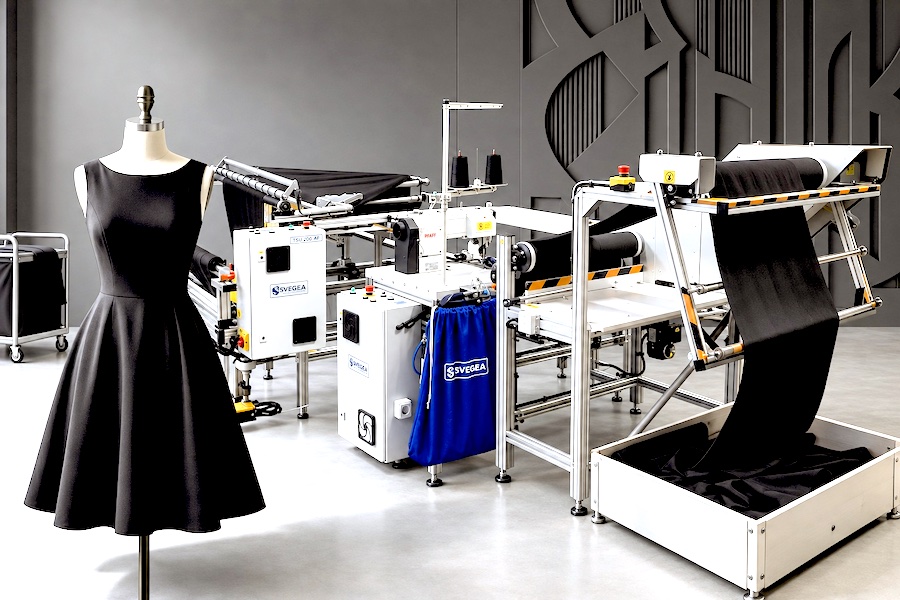
Svegea – a member of TMAS, the Swedish textile machinery association – has delivered no less than six of its EC 200 automatic collarette machines to the Bangladesh-based Interstoff Group in the past 12 months.


Svegea EC 200 system in situ at Interstoff Apparels.


Interstoff, which belongs to the Pandughar Group, was founded in 2000 as a modest garment factory with just 62 sewing machines.

Today its three divisions – Interstoff Apparels, Interstoff Clothing and South East Textile – have a combined workforce of over 10,000 people, producing around 72 million fully finished and packaged garments each year.

Recognition

Interstoff is further equipped with the very latest knitting and dyeing and finishing machinery sourced from Europe and Japan to enable a daily production capacity of 30,000 kg of fabrics. Through continuous innovation in yarns and processes, the company’s fabrics consistently earn recognition for their environmental responsibility and quality. Its fabric laboratory is certified by leading brands such as H&M, M&S, Sainsbury’s and Tesco.

Two Svegea collarette machines have now been commissioned at each of the three Interstoff divisions for the high speed production of tubular apparel components such as cuffs, collars and neck tapes.

Interstoff chose the EC 200 machines over the faster EC 300 model primarily because some of its fabrics include seams. The faster crush-cutting knife system in Svegea’s EC 300 series can struggle with multiple fabric layers or seams stitched with polyester thread, since it cuts by pressure rather than slicing. By contrast, the EC 200 uses scissor-action knives – two sharp circular blades with a slight overlap – which function like scissors and handle seams without issue.

The machines run directly from turntables at speeds of up to 40 metres per minute, depending on the fabric width, material properties and optimal settings. They are equipped with Svegea’s standard drive system in an electronic master/slave configuration. Each machine has been specially equipped with a third knife set, enabling the simultaneous cutting of up to three bands. This means that total output in linear metres per minute can be significantly higher when cutting multiple bands in parallel.


Efficiency and fabric savings

“Advances in automation continue to make the specialised, bespoke machines we engineer more efficient,” says Svegea Managing Director Håkan Steene. “We have enjoyed great success in Bangladesh over the past few years, working with our invaluable regional partner Tech Cell, and have established strong relationships with the leading integrated garment manufacturing operations in the country.”

“We have had a strong relationship with Svegea over the years and these machines are now helping us to significantly increase production as well as achieving fabric savings and being able to divert manpower to other areas of production,” adds Interstoff Apparels director Shaikh Mohammad Ilias.

“Many of the world’s leading fashion brands have chosen to establish operations in Bangladesh, drawn to the country’s efficiencies and highly integrated network of rapidly responding suppliers,” says TMAS Secretary General Therese Premler-Andersson. “Hoping to build on this success, the Bangladesh government has now initiated plans to achieve exports of ready-made garment worth $50 billion by as early as this year – and approaching $100 billion by 2030. Members of TMAS have been very active in the region recently, providing the latest tools for automating textile and garment manufacturing processes – driving both sustainability and competitiveness. TMAS members look forward to meeting up with new and existing customers at the forthcoming ITMA Asia exhibition in Singapore this October.”

Svegea will be demonstrating both semi- and fully-automatic cutting machines at ITMA Asia + CITME from October 28-31, at stand D109 in Hall 6.
More News from Textile Machinery Association of Sweden

More News on Dyeing, Drying, Finishing

#ITM 2026

New Monforts systems deliver round-the-clock production for Kipaş

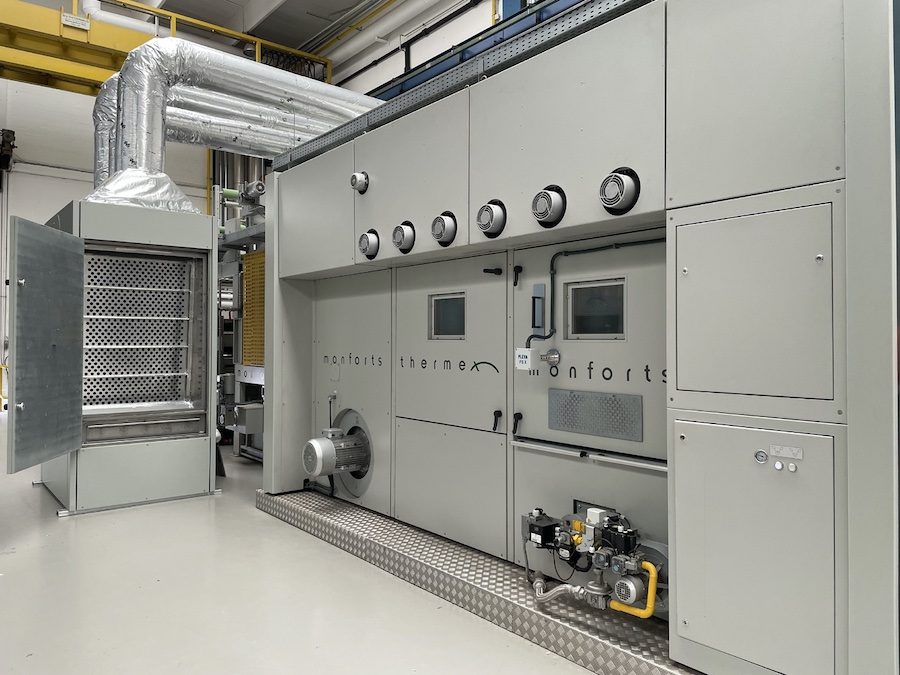
As a valued Monforts customer for many years, Türkiye’s Kipaş Textile has just installed a new Thermex dyeing range and a Monfortex sanforizer at its new dyeing and finishing plant in Kahramanmaraş.

#ITM 2026

SETEX turns dyeing and finishing data into daily production control

At ITM 2026, SETEX will show how textile mills can use machine, recipe, quality and energy data for more reliable daily production decisions — not as another reporting layer, but as part of the running dyeing and finishing process. With OrgaTEX X3 MES, E390x/C390x controllers, CamCOUNT and FabricInspector Portable, SETEX connects planning, machine execution and fabric-related quality insight within existing mill structures.

#Dyeing, Drying, Finishing

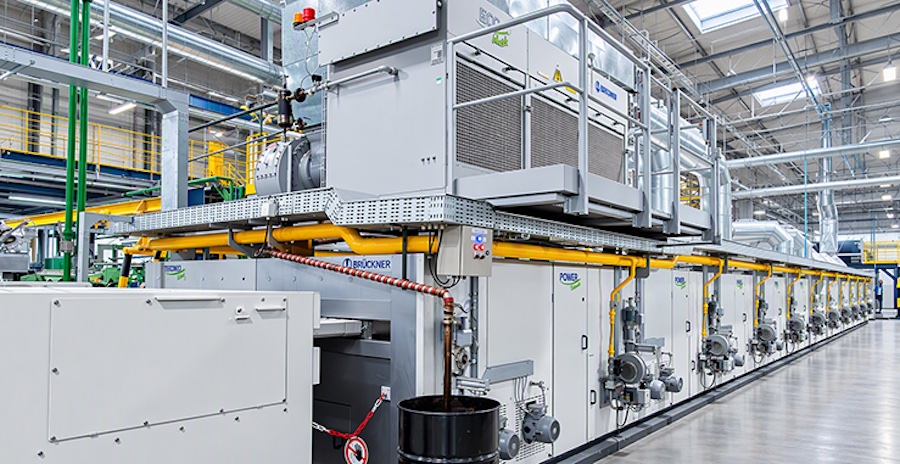
Tradition and Innovation – Phoenox Textiles Ltd. relies on state-of-the-art carpet back-coating line from Brückner

For more than 70 years, Phoenox Textiles Ltd. has been synonymous with quality, reliability, and inno-vation in the textile industry. Founded in 1954 in Huddersfield (Yorkshire, UK), a region with a long tradition in textiles, this family-owned business has continued to evolve without losing sight of its roots. Today, in its fourth generation under the leadership of the Mosley family, Phoenox successfully combines decades of experience with a clear, forward-looking corporate strategy.

#ITM 2026

Monforts sees growing potential for technical textiles in Türkiye

For many years now, Türkiye has been one of the most important markets for textile finishing, coating and continuous dyeing equipment, making ITM 2026 from June 9-13 a key event for Germany’s Monforts. At the Istanbul exhibition at stand 1117D in Hall 11, the company will put the emphasis on its machines which continue to lead the field in conventional dyeing and finishing, and also highlight the strong opportunities for Turkish textile manufacturers in the growing field of technical textiles.

Latest News

#Research & Development

GenuTrace client advisory: Is your cotton supply chain UFLPA ready?

U.S. Customs and Border Protection has released updated operational guidance (CBP Publication No. 5560-0526) expanding its forced labor enforcement framework. The guidance supersedes the original 2022 UFLPA Operational Guidance and now covers all forced labor enforcement authorities — UFLPA, CAATSA, and WROs/Findings — in a single unified document. For cotton importers, the enforcement posture has not softened. It has become more structured, more documented, and more demanding. Learn more about UFLPA.

#Carpets

DOMOTEX Hannover 2028 off to a strong start with expanded portfolio

Preparations for DOMOTEX 2028 are already gaining strong momentum. Following its successful repositioning as the Home of Flooring & Interior Finishing, around 100 international manufacturers have already secured their place during the initial registration phase.

#Knitting & Hosiery

STOLL: Agreement signed for the divestiture of selected assets

In early 2025, KARL MAYER announced its strategic decision to focus on its core business areas of WARP KNITTING, WARP PREPARATION, and TECHNICAL TEXTILES. As part of this move, the flat knitting machine business under the STOLL brand was discontinued and the production site in Reutlingen was closed in October 2025.

#Research & Development

TERNAfil wins first place at PitchMiUp Night 2026 in Minden

The RWTH spin-off TERNAfil has developed MAXCarbon, a new high-performance hybrid fibre that combines the mechanical performance of carbon with the temperature and corrosion resistance of ceramic materials. For this development, TERNAfil was awarded first prize at the PitchMiUp Night in Minden on 21 May 2026.

TOP