[pageLogInLogOut]

#Dyeing, Drying, Finishing

Dilo auf der Techtextil 2022

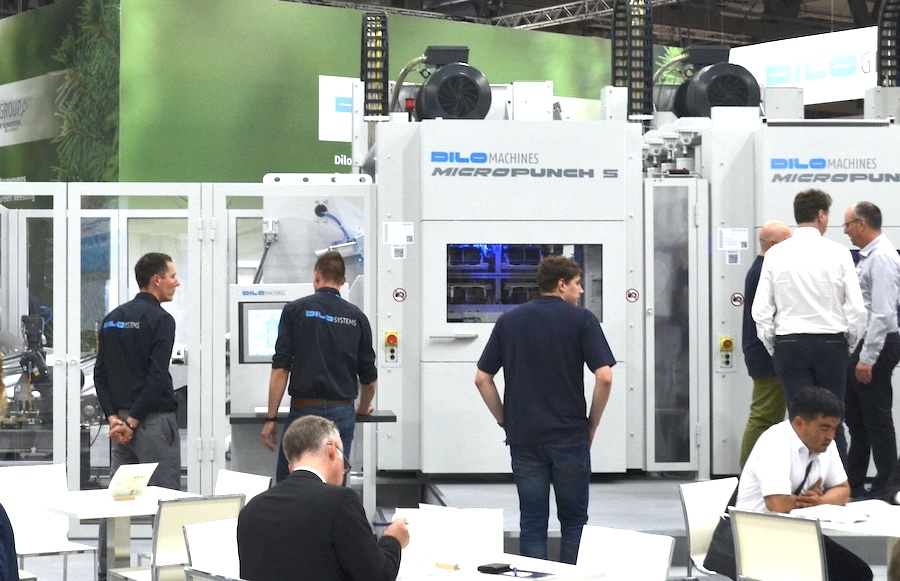
Die Techtextil in Frankfurt nimmt wieder ihren angestammten Platz innerhalb der bedeutenden Messen der Branche ein und bietet damit das zentrale Forum für den Dialog innerhalb des Fachgebiets der Textilherstellung, und mit den benachbarten Zulieferbereichen wie dem Textilmaschinenbau, der Faserherstellung oder der Hilfsmittel- und Zubehörproduktion (Techtextil, Frankfurt/Main, D 21. – 24.06.2022 Halle 12.0 Stand B95).

Die DiloGroup sieht in dieser Veranstaltung traditionell eine gute Möglichkeit, den Kundenkreis über Neuentwicklungen zu informieren, die Verbesserungen der Produktionstechnik mit Schwerpunkt Nadelvliesstoffe definieren.
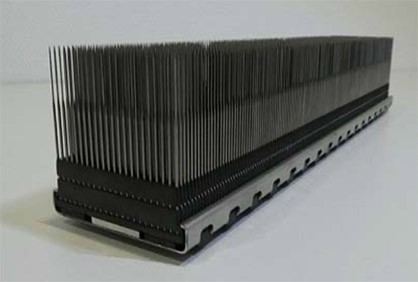
Nadelkassette © 2022 Dilo


Mehr und mehr zeigt sich, dass gerade die Textilwirtschaft in den strengen Fokus der Regulierungsbehörden gerät, die auf die Beachtung von Nachhaltigkeitsgrundsätzen drängen und Gesetzeswerke auf den Weg bringen. Demnach sind alle industriellen Branchen aufgerufen, Einsparungen im Sektor des Material- und Energieverbrauchs zu erreichen. Dabei spielt selbstverständlich der Textilmaschinenbau eine herausragende Rolle, indem er diese verschärften Anforderungen aufgreift und Lösungen anbietet für Faserstoffrecycling und die Reduktion des Verbrauchs von Strom, Wasser und Hilfsmitteln. Die DiloGroup unternimmt große Anstrengungen, zusammen mit einem Kreis von Partnerfirmen, diesen Herausforderungen zu entsprechen. Dabei sind mehrere Schwerpunkte in der Entwicklungsarbeit zu nennen:

1. Intensivvernadelung

Die Nadelvliestechnologie ist per se ein Herstellungsverfahren, das auf seiner mechanischen Basis eine hohe Energieeffizienz besitzt. Insoweit richten sich die Entwicklungsanstrengungen der DiloGroup darauf, mit Methoden der „Intensivvernadelung“ Vliesstoffe, statt mit Wasserstrahl, genadelt herzustellen und dies auch für Leichtvliesstoffe aus feinen Fasern für den Bereich Medizin und Hygiene im Flächengewichtsbereich 30 – 100 g/m2. Durch die Vernadelung können die umweltrelevanten Kosten in der Produktion: Strom, Gas, Wasser pro Jahr auf ca. 1/3 bis 1/5 gesenkt werden.

Abgesehen von den perspektivischen Vorzügen des mechanischen Intensivvernadelungs-Verfahrens gegenüber dem hydrodynamischen ist die Wasserstrahlverfestigung bei geringen Flächenmassen und höchsten Produktionsleistungen derzeit das bedeutendste Produktionsverfahren, das Dilo auch als Gesamtanlagenanbieter in Generalunternehmerschaft mit Partnern anbietet.

2. „Faserstoff-Recycling“

Fasermaterialien in Vliesstoffen und Bekleidungsabfällen können insbesondere dann erfolgreich wieder verwertet werden, je besser es gelingt im Reißprozess Stapellängen erhaltend zu arbeiten. In der klassischen Reißerei werden die Stapellängen stark eingekürzt und sind deshalb als Rohstoff nur noch für untergeordnete Zwecke der thermischen und akustischen Dämmung oder z. B. als Schutztextilien, Transportdecken, Malervliese etc. einsetzbar.

Bei textilen Abfällen im Rahmen der Altkleiderverwertung ist das „fädige“ Reißen über besondere Reißmaschinen und –verfahren so einsetzbar, dass mit den wieder gewonnenen Fasern größerer Stapellänge natürlich auch Vliesstoffanlagen beschickt und damit Produktmerkmale besser spezifiziert und kontrolliert werden können.


3. Additive Vliesstoffherstellung

Das additive Herstellverfahren des „3D-Lofters“ ist insbesondere für Autoformteile mit unterschiedlich verteilten Massen geeignet; aber auch im Bereich der Kleidungs- und Schuhproduktion dürfte sich ein zunehmendes Einsatzpotential entwickeln.
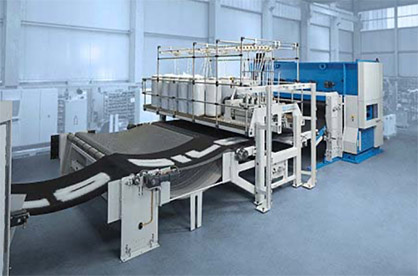
3D-Lofter © 2022 Dilo


4. „IsoFeed“-Krempelspeisung

Im Sektor der Krempelspeisung bildet das „IsoFeed“-Konzept ein großes Potential einer sehr viel gleichmäßigeren Krempelbeschickung, so dass gleichzeitig die Flormassenverteilung mit ihrer Variationsbreite eingeengt werden, und damit der Fasermaterialverbrauch, bei gleicher Qualität des Endproduktes, sinken kann.

Über die genannten Richtungen der Weiterentwicklung der Vernadelungstechnik einschließlich der Module der Industrie 4.0 Anwendungen zur Digitalisierung soll auf der kommenden Messe Techtextil der Dialog im Kundenkreis vertieft werden. Daneben referieren wir über zahlreiche Universal- und Spezialanwendungen der gesamten Vliesstofftechnologie.
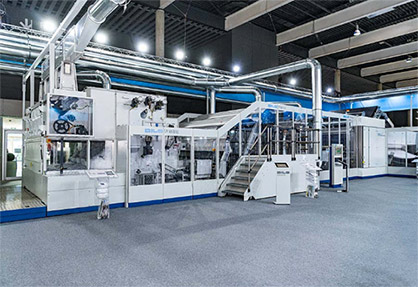
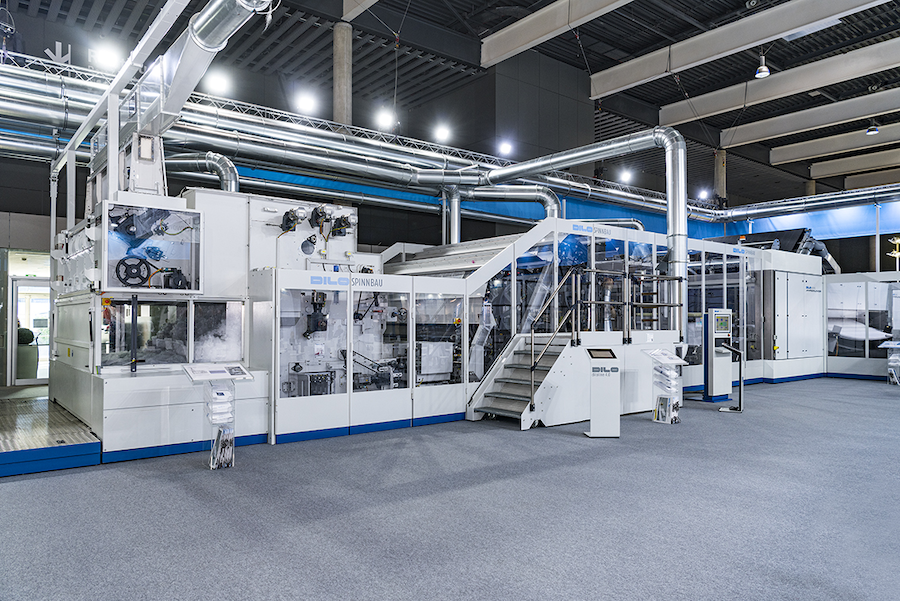
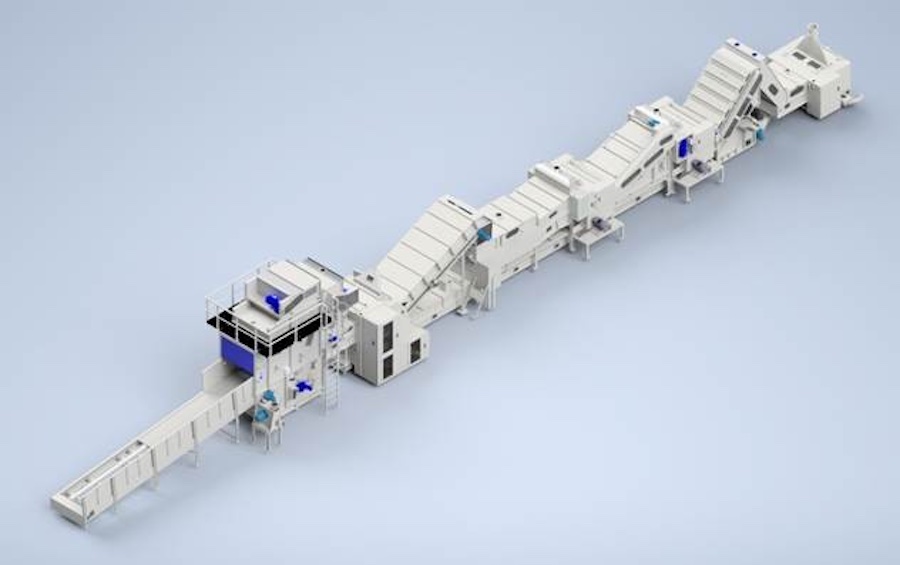
Dilo Vernadelungslinie © 2022 Dilo


More News from Dilo, Oskar Maschinenfabrik KG

#ITMA Asia + CITME Singapore 2025

Dilo Group at ITMA ASIA Singapore 2025

At ITMA ASIA Singapore, the Dilo Group will exhibit at Booth No. H2 – D202. Together with Kansan Materials, Izmir, the company will present its latest developments and looks forward to welcoming visitors to exchange ideas and explore innovations in needling technology.

#Nonwoven machines

ALMA boosts floor covering production with high-performance line from DiloGroup

ALMA in Florence is a specialist in the floor covering sector providing high quality products in a vast range of styles, colours and aesthetics. For its own fibre supply Messrs. ALMA keep an inhouse production of PP fibre in order to accommodate their need of excellent raw materials and broad production needs.

#Nonwoven machines

Dilo Systems and Kansan Group partnership announcement

Dilo Systems GmbH, a Germany-based manufacturer specializing in complete nonwoven lines, and Kansan Group, a Turkish manufacturer specializing in nonwoven converting lines, end-of-line solutions, and Wetlaid Nonwoven machinery, have signed a strategic partnership agreement to supply custom nonwoven lines.

#IDEA 2025

Dilo Systems and Kansan Group announce partnership

Dilo Systems GmbH, a Germany-based supplier specializing in complete nonwoven lines, and Kansan Group, a Turkish manufacturer specializing in nonwoven converting lines, end-of-line solutions, and Wetlaid Nonwoven machinery, have signed a strategic partnership agreement.

More News on Dyeing, Drying, Finishing

#Techtextil 2026

Smart sensors, smart savings - Reducing energy and cost in textile finishing

As energy prices, sustainability requirements and quality expectations continue to rise, manufacturers of technical textiles face increasing pressure to optimize efficiency while ensuring process reliability. At the same time, skilled labor shortages require production systems that are intuitive, automated and easy to manage. PLEVA addresses these challenges with robust, maintenance-friendly sensor technologies combined with intelligent process control.

#Dyeing, Drying, Finishing

Navis TubeTex and Fibroline announce upcoming Innovation Days

Navis TubeTex and Fibroline LLC announced their upcoming Innovation Days, a collaborative 3-day event designed to showcase advancements in product development technologies, and next-generation sustainable manufacturing solutions.

#Dyeing, Drying, Finishing

BW Converting expands Southeast Asian presence with new agency partnerships in Vietnam and Indonesia

BW Converting is strengthening its presence in Southeast Asia through new agency partnerships in Vietnam and Indonesia, reinforcing the company’s commitment to supporting textile manufacturers across the region. The expansion comes as BW Converting prepares to exhibit at SaigonTex 2026 (April 8–11, Saigon Exhibition and Convention Center, Ho Chi Minh City, Vietnam) and INDO INTERTEX 2026 (April 15–18, Jakarta International Expo, Indonesia).

#Dyeing, Drying, Finishing

Monforts unveils interactive digital platform for textile finishers

Monforts has launched a new digital platform designed to give textile manufacturers faster, more intuitive access to the company’s finishing technologies, technical expertise and aftersales support worldwide.

Latest News

#Techtextil 2026

Gebr. Otto highlights versatility at Techtextil with regional supply chains, yarn innovations and new hygiene segment

At this year’s Techtextil, Gebr. Otto places its versatility at the center of its presentation. In addition to spinning, twisting and dyeing – traditionally focused on fine cotton – textile processors will also find a competent development partner for technical specialty solutions. The Dietenheim-based spinning mill has now built up a decade of experience in the production of technical yarns, particularly from aramids. A new hygiene segment has also been established, where yarns for medical and hygiene products are currently being produced. In the future, this department could also develop textile products for the food sector. Gebr. Otto will once again be present at the BW-i joint stand, booth D81, hall 12.1. What is wound onto the spool is determined by the customer: Gebr. Otto develops according to specific customer requirements and transforms its own ideas into yarn innovations.

#Europe

Commission presents proposal for EU Inc. - unlocking the full potential of the Single Market for Europe's entrepreneurs

Today, the European Commission presented its proposal for EU Inc., a new single set of corporate rules, building the cornerstone and starting point for the EU's 28th regime. EU Inc. is an optional, digital-by-default European corporate framework. It will make it easier for businesses to start, operate and grow across the EU – incentivising them to stay in Europe, and encourage those who once looked elsewhere to return.

#Man-Made Fibers

OnceMore® from Södra brings end-to-end traceability for circular Man-made Cellulosic Fibers (MMCF) using TextileGenesis

OnceMore® from Södra, the world’s first large-scale process for recycling blended fabrics into high‐quality dissolving pulp, will begin using TextileGenesis, a Lectra company, to strengthen traceability from raw material to retail across the value chain. OnceMore® produces dissolving pulp made from blended textile waste and wood sourced from responsibly managed Swedish forests. By integrating TextileGenesis, OnceMore® supports the growing need for verified data and secure, transparent tracking throughout increasingly complex supply chain.

#Sustainability

Experts publish APAC policy priorities

Cascale today announced the publication of its APAC Policy Priorities Paper, developed by the Asia-Pacific (APAC) Policy Member Expert Team (MET) to identify key regional sustainability challenges and provide practical, aligned recommendations for policymakers and industry stakeholders across Asia-Pacific.

TOP