[pageLogInLogOut]

#Associations

StitchTogether project - Turkish social partners present the Istanbul Declaration
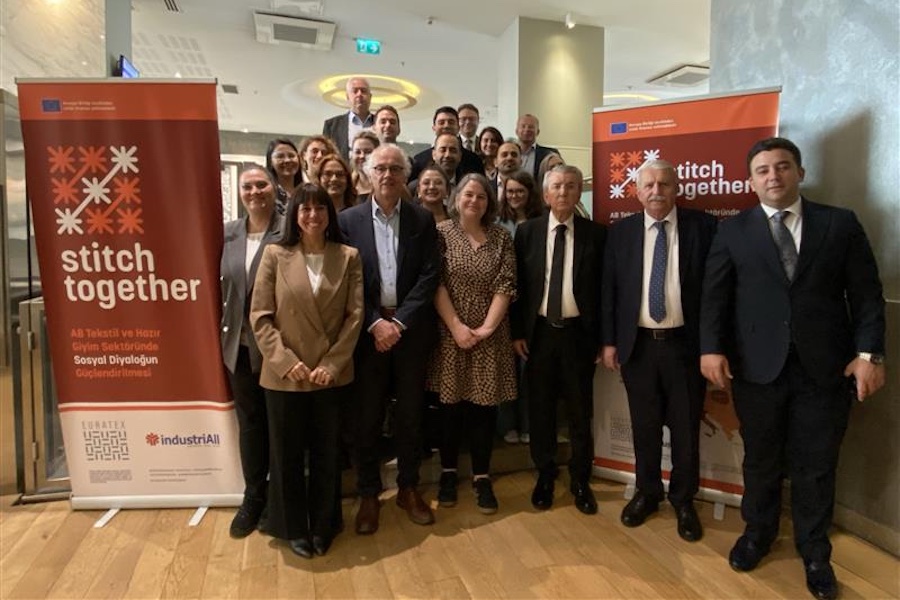
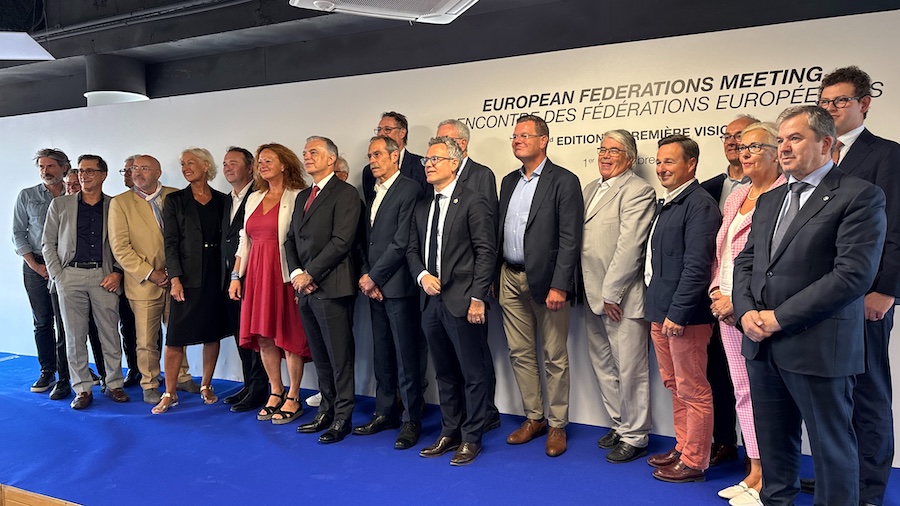
On 8-9 April 2025, social partners from the Turkish textile industry met in Istanbul to discuss different topics such as the green and digital transition, due diligence and brand responsibility, skills and training in the textile sector, as well as the next steps in their efforts to achieve broader and more effective social dialogue.
© 2025 EURATEX
© 2025 EURATEX


In the context of the EU-funded StitchTogether project, which aims at promoting social partnerships in the European Textiles and Clothing Industry in seven countries in the EU and Türkiye, this seminar was also the occasion to draft the Istanbul Declaration: a joint statement to emphasise the social partners’ strong commitment to work together.

The meeting in Türkiye brought together representatives of the Turkish textile industry, including the Turkish employer association (TTSiS), national trade unions (Teksif, Öz Iplik Is, DiSK Tekstil), brands representatives, the Ministry of Labour and stakeholders from the International Labour Organisation (ILO) and the Social Labour Convergence Programme, to discuss the future of the industry.

Together, social partners call upon the Government and the European Union to support the upcoming transformation of the textile and clothing industries, technology and skills upgrades, regional development and just transition. The Istanbul Declaration also includes a series of priorities, confirming social partners’ commitment in working together for a more competitive and fair Turkish textile industry.

Judith Kirton-Darling, IndustriAll Europe's general secretary stated that “There are more than 1 million workers in the textile industry in Türkiye, who are facing many challenges which they have to adapt to. We stand in solidarity with our Turkish partners and recall the fundamental importance of freedom of association and freedom of collective bargaining in both law and practice, essential for the sector’s economic resilience.”

Dirk Vantyghem, EURATEX Director General, stressed that “Turkish companies face important challenges to adapt to a fast changing environment. This requires flexibility and joint efforts from workers and employers alike, to remain competitive. A constructive and open social dialogue is critical in this regard.”

More News from European Apparel and Textile Confederation (EURATEX)

#Associations

Europe is losing its textile industry

EURATEX has released its latest Economic Update on the performance of the European textile and apparel industry in 2025. For the third consecutive year, the sector recorded negative results across all key indicators — production, turnover and employment — confirming a continued erosion of competitiveness across Europe.

#Associations

European Business Coalition welcomes provisional application of EU–Mercosur Agreement and calls for Swift and full implementation

With the European Commission’s decision to provisionally apply the EU–Mercosur Interim Trade Agreement, a process spanning more than 25 years now moves decisively into its implementation phase.

#Europe

Antwerp Declaration community urges EU leaders to deliver emergency measures as Europe’s competitiveness crisis deepens

EURATEX, representing the European textile and fashion industry, joins the Antwerp Declaration Community’s call on EU Heads of State and Government to adopt emergency measures that restore industrial competitiveness and deliver tangible results for Europe’s manufacturing base in 2026.

#Europe

FITA, ABIT and EURATEX underline strategic importance of Mercosur – EU Partnership Agreement for the textile and apparel industry

The Argentine Textile Industry Federation (FITA), the Brazilian Textile and Apparel Industry Association (ABIT), and the European Apparel and Textile Confederation (EURATEX) continue to monitor the process of internalizing the Mercosur-European Union Partnership Agreement. This agreement is essential for the competitiveness of our industries, on both sides of the Atlantic.

More News on Associations

#Associations

“Innovation, resilience and international experience remain the great strengths of the Swiss textile machinery industry”

Geopolitical uncertainty, growing competitive pressure from China, new free trade agreements and the shift towards a circular economy are currently reshaping the global textile industry. In this interview, Cornelia Buchwalder discusses the current mood within the Swiss textile machinery sector, the industry’s distinctive innovative strength, new market opportunities in India and Asia, and the technological trends that could shape the upcoming trade fair cycle leading up to ITMA 2027.

#Associations

Turkmenistan: Italian textile machinery focuses on high technology and specialization

The Italian textile machinery industry flies to Ashgabat to participate with a large “Made in Italy” delegation at TURKMEN TEXTILE EXPO 2026, the major international showcase taking place from June 4 to 6, 2026. The Italian presence, coordinated by the Italian Trade Agency (ICE) and ACIMIT (the Association of Italian Textile Machinery Manufacturers), aims to consolidate Italy’s primary technological role in a highly strategic market with interesting prospects.

#Associations

Egypt: Workshop on Italian textile technologies concludes

The workshop dedicated to Italian technologies for the textile industry, held in Cairo on May 5–6, 2026 and focusing on the most advanced innovative solutions for the sector, has come to a close.

#Associations

Italian textile machinery sector faces weak start to 2026 despite domestic growth

In the first quarter of 2026, order intake for Italian textile machinery manufacturers recorded a decrease of 5% compared to the same period in 2025, reflecting a still challenging start to the year. The decline affected foreign markets (-7%), while the domestic market showed growth (+21%).

Latest News

#Knitting & Hosiery

“We need to move away from the price trap and return to a value-driven mindset.”

With its new Textile Innovation Center, KARL MAYER is sending a strong signal for innovation, collaboration, and the future of textile applications. In this interview, Karl Josef Mayer discusses new opportunities in warp knitting, the processing of staple fibres, recycling, the changing role of machinery manufacturers, and why the textile industry must once again focus more strongly on the value of textiles. by Oliver Schmidt

#Textile processing

YKK invests USD 150 million in new manufacturing facility in India

YKK Corporation has announced plans to construct a new manufacturing facility in India, reinforcing its long-term commitment to one of the world's fastest-growing textile and apparel production hubs. The new factory will be built at Origins by Mahindra in Chennai, Tamil Nadu, and will become the third manufacturing site of YKK India Private Limited. The facility is expected to be completed by February 2028 and represents an investment of approximately USD 150 million, covering land, buildings, machinery and equipment.

#ITM 2026

Marzoli promotes ‘Don’t Replace, Repower’ approach at ITM 2026

At ITM 2026 in Istanbul, Marzoli will place a strong focus on spinning mill modernization, presenting retrofitting and reengineering solutions designed to improve efficiency, extend machine lifetime and maximize the value of existing assets.

#Recycling / Circular Economy

Mesdan to showcase laboratory-scale textile recycling solutions at Textiles Recycling Expo 2026

At Stand 2235 during the Textiles Recycling Expo 2026 in Brussels, Mesdan will present laboratory solutions designed to support the development and evaluation of textile-to-textile recycling processes.

TOP