[pageLogInLogOut]

#Associations

Textile machines from Sweden at new local industry fair
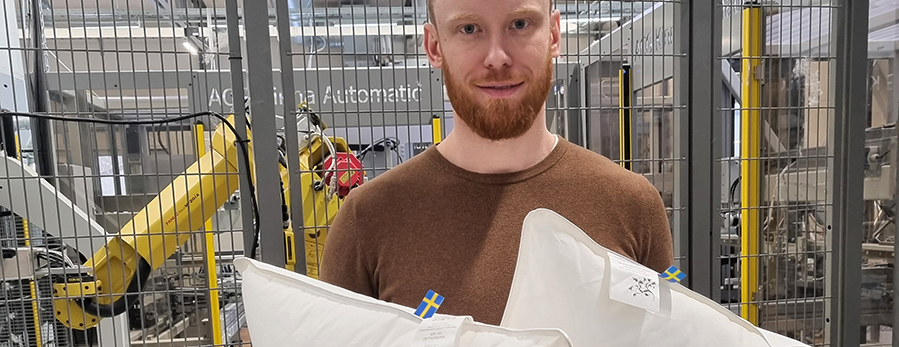
Martin A?hlander - Va?rnamo of Sweden © 2022 TMAS
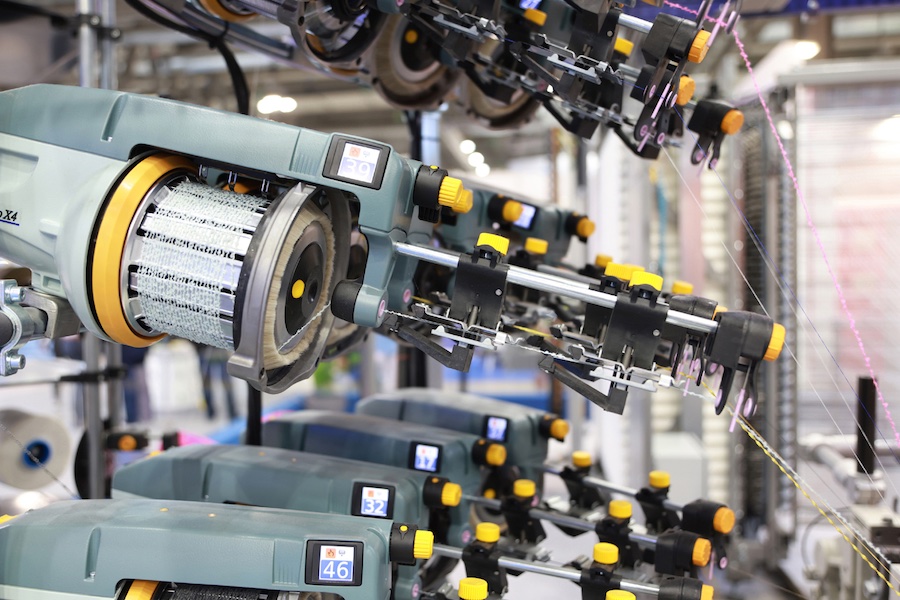
On October 13-14, the new local industry fair Svenska Textilmaskinsmässan (The Swedish Textile Machinery Fair), a new meeting place for sustainable textile production, will run for the first time. The organiser of the fair is the University of Textiles in Borås. The Textile Machinery Association of Sweden (TMAS) and its member companies will showcase innovation and textile machines from Sweden – technology that enables local production.

The interest in local textile production in Sweden is growing as a result of the need for more sustainable production chains which need to be implemented in everything from material selection to production and distribution, providing good conditions for moving all or parts of the production home.

"TMAS members help automate and streamline textile production, reduce waste and emissions and contribute to increased quality and flexibility,” says Therese Premler-Andersson, general secretary of TMAS. “These requirements are crucial to respond to a market undergoing the transition towards circularity and sustainable business models. The initiative for the fair comes at the right time when local production is something more people are considering and it will be exciting to present Swedish solutions in Sweden."

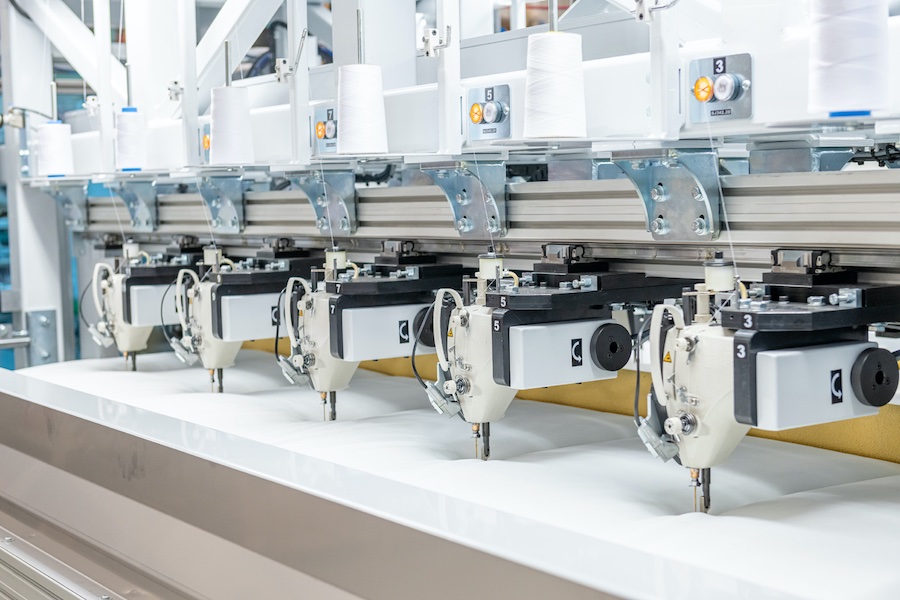
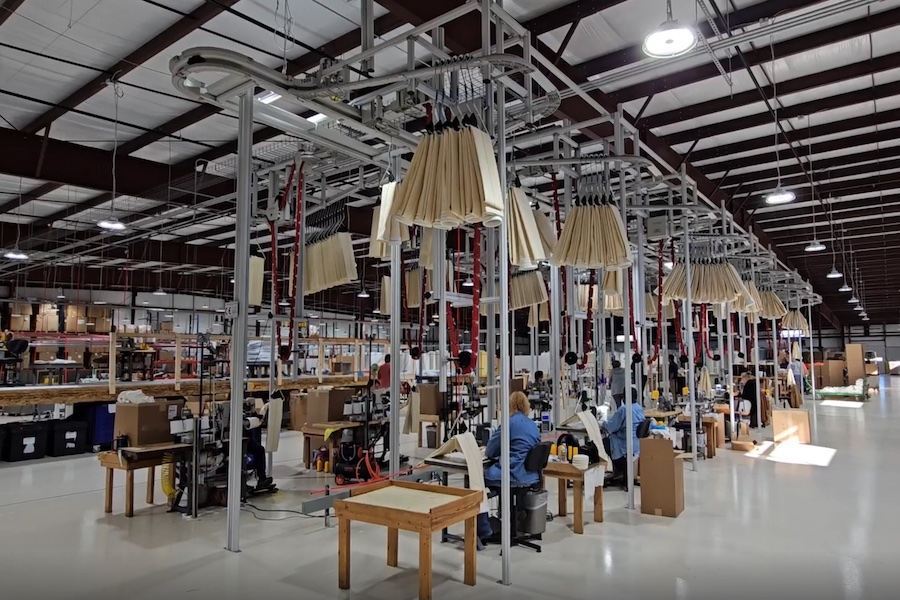
The Swedish company Värnamo of Sweden has manufactured bed and decorative textiles of the highest quality in Sweden since 1951. With the support of the Swedish machine manufacturer ACG Kinna Automatic, it has established a modern facility in Sweden which has enabled it to compete with production in low-cost countries.?

"Following the machine investments we have made in recent years, we can manufacture and sell to major players in both retail and hotel operations,” says Martin Åhlander, CEO of Värnamo of Sweden.

“New investments have meant that we have been able to break new ground and bring in larger players such as Jysk and Mio among others."

ACG Kinna Automatic was founded in Sweden in 1977 and is one of the world's most experienced manufacturers of textile machines. The project together with Värnamo of Sweden is an excellent example of how it helps its customers to increase automation and thereby save costs.


"We are great at helping our customers to increase automation,” says Christian Moore, CEO ACG Kinna Automatic and board member of TMAS. “At Värnamo of Sweden, where the production has been placed in Sweden since the start, this meant that our machines could support the company in gearing up its production, which we are proud of."

Over 40 exhibitors will participate in the Swedish textile machinery fair, of which almost 30% are TMAS members with machines manufactured in Sweden and with Swedish expertise. Between 300-400 visitors are expected. The fair is free of charge for visitors.

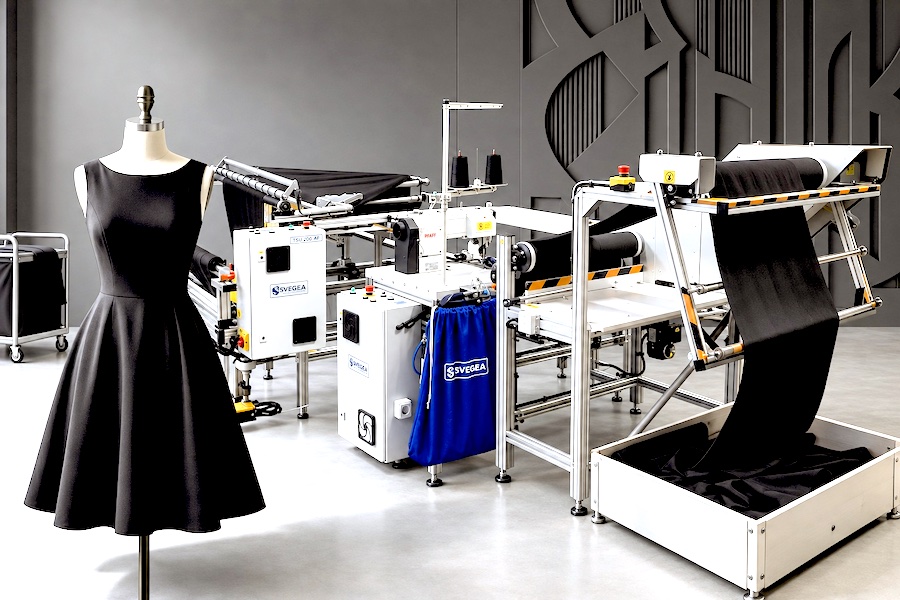
Participating TMAS member companies are ACG Nyström, ACG Kinna Automatic, Baldwin, Coloreel, Eltex of Sweden, ES Automatex Solution, Eton Systems, Imogo, Svegea of ??Sweden, Texo and Vandewiele Sweden.

https://www.hb.se/en/the-swedish-school-of-textiles/collaboration/swedish-textile-machine-expo/for-exhibitors/
More News from Textile Machinery Association of Sweden

More News on Associations

#Raw Materials

Cotton Brazil Dialogues 2026 concludes with 50 international participants immersed in Brazilian cotton production

The Cotton Brazil Dialogues concludes its 2026 edition after a series of technical visits to farms, cotton gins and reference centers, as well as workshops focused on Brazilian cotton production. A total of 50 participants from 14 countries took part in the field trips. The initiative is led by the Brazilian Association of Cotton Growers (Abrapa) and the National Association of Cotton Exporters (Anea), with support from the Brazilian Trade and Investment Promotion Agency (ApexBrasil).

#Europe

European textile industry calls for €10 handling fee on ultra-fast-fashion imports

The introduction of the €3 customs duty on low-value imports marks an important milestone in Europe’s efforts to address the challenges created by the rapid growth of ultra-fast-fashion imports. Together with the abolition of the €150 customs duty exemption, it demonstrates that policymakers are willing to act when market distortions become impossible to ignore. However, the European textile and clothing industry considers this a first step rather than the final destination.

#Associations

Business situation weakens slightly, but the industry stays cautiously optimistic

The International Textile Manufacturers Federation (ITMF) has published the results of its 39th Global Textile Industry Survey (GTIS), conducted from 14 to 22 July 2026 among companies along the entire global textile value chain. Worldwide, 10% of participants rated their business situation as good, 53% as satisfactory and 37% as bad — a balance of -26pp, down from -17pp in May but still well above the 2023 lows. All regions are now in negative territory, from South Asia at -3pp to North & Central America at -58pp.

#Associations

IVGT membership: expertise that pays off

For energy-intensive textile companies, government compensation mechanisms are an important economic factor. The IVGT successfully supports its member companies in applying for state aid and thereby regularly contributes to significant financial relief.

Latest News

#Weaving

Lindauer DORNIER GmbH welcomes new apprentices and dual-study students

For 22 new “DORNIER Talents”, these days mark the beginning of a new chapter at Lindauer DORNIER. For the family-owned company, in-house training is a key pillar in developing skilled professionals and retaining them within the company for the long term.

#Research & Development

Novel flame-retardant and recyclable fiber-reinforced composite

Airplanes and passenger trains must meet strict safety requirements, including fire safety standards. This calls for materials that are flame-retardant, lightweight, robust, and scalable. Empa researchers, in collaboration with their industry partner Elantas, have now succeeded for the first time in making such a material – a composite – fully recyclable.

#Composites

WHILL selects Teijin’s tough, lightweight Carbon Fiber Composite for new last-mile mobility

Teijin Limited announced today that WHILL Inc., a global leader in inclusive mobility technology, has selected Sereebo® P CFP series, a carbon fiber-reinforced thermoplastic (CFRTP) material, for key structural components of the upcoming WHILL Model C Lite. Sereebo® P CFP series provides high strength, light weight, design flexibility and system cost advantages to the Model C Lite, which is a battery powered, single-seat, last-mile device. This new model combines maneuverability with light weight and one-handed folding to ensure ease of handling and operation.

#Textile chemistry

ZymoChem secures $4 million in renewed federal funding to advance U.S. biomanufacturing of critical materials and their supply chains

ZymoChem, the specialty chemicals company dedicated to bringing decarbonization, sustainability, and supply chain resiliency to the chemical industry through innovative biological manufacturing, today announced the resumption and expansion of its federal research portfolio. The company has been notified that previously paused work under a $5 million U.S. Department of Energy (DOE) program is officially back on, to be joined by continuing collaborations with three of the nation's premier national laboratories.

TOP