[pageLogInLogOut]

#Associations

Commission guidelines correctly do not consider viscose as plastic material
© 2021 EURATEX
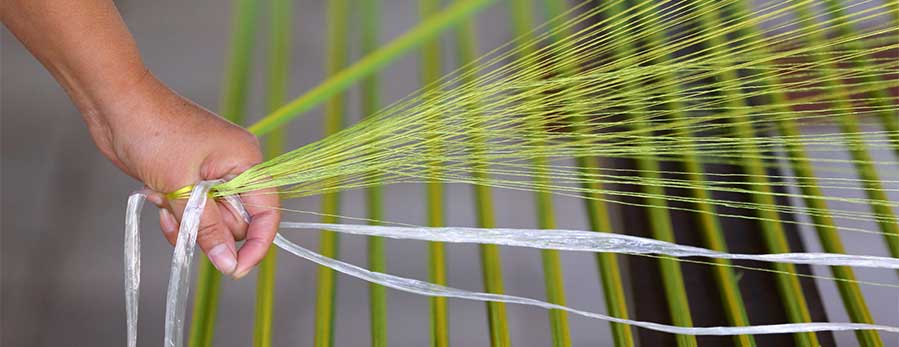
EURATEX welcomes the decision of the European Commission not to include viscose fibers in the guidelines implementing the Single Use Plastic directive.

EURATEX welcomes the decision to keep the original definition of the concept “not been chemically modified” and avoid a new interpretation which would label viscose as plastic.

Plastic objects designed for single use are being banned in the EU under the SUP Directive, legislation considered by many as a significant step forward in tackling plastic pollution.

Common plastic and viscose products present completely different features especially with regards to bio-degradability and the products use made by consumers.


Companies of the textile and clothing sectors have been investing in viscose fibres and regenerated cellulosic films for the past decades, both for consumer goods products but also medical applications. To prevent exploitation of natural resources, a large part of the European industry has also committed to source wood from certified and controlled origins as set by programmes as the FSC® and PEFC®.

The decision on the SUP Directive guidelines not to include viscose will help consumers to make the right choices and it will support industry efforts towards the Green Deal objectives.

More News from European Apparel and Textile Confederation (EURATEX)

#Associations

Europe is losing its textile industry

EURATEX has released its latest Economic Update on the performance of the European textile and apparel industry in 2025. For the third consecutive year, the sector recorded negative results across all key indicators — production, turnover and employment — confirming a continued erosion of competitiveness across Europe.

#Associations

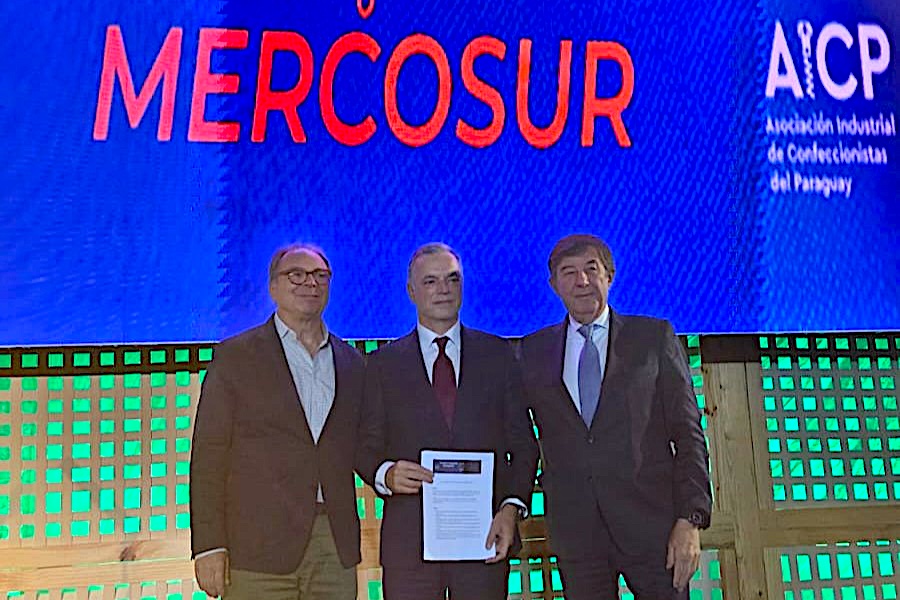
European Business Coalition welcomes provisional application of EU–Mercosur Agreement and calls for Swift and full implementation

With the European Commission’s decision to provisionally apply the EU–Mercosur Interim Trade Agreement, a process spanning more than 25 years now moves decisively into its implementation phase.

#Europe

Antwerp Declaration community urges EU leaders to deliver emergency measures as Europe’s competitiveness crisis deepens

EURATEX, representing the European textile and fashion industry, joins the Antwerp Declaration Community’s call on EU Heads of State and Government to adopt emergency measures that restore industrial competitiveness and deliver tangible results for Europe’s manufacturing base in 2026.

#Europe

FITA, ABIT and EURATEX underline strategic importance of Mercosur – EU Partnership Agreement for the textile and apparel industry

The Argentine Textile Industry Federation (FITA), the Brazilian Textile and Apparel Industry Association (ABIT), and the European Apparel and Textile Confederation (EURATEX) continue to monitor the process of internalizing the Mercosur-European Union Partnership Agreement. This agreement is essential for the competitiveness of our industries, on both sides of the Atlantic.

More News on Associations

#ITM 2026

Sweden targets Türkiye’s textile future at ITM 2026

Following the opening of its new showroom and test centre in Sweden, imogo will be introducing its groundbreaking new Dye-Max spray dyeing technology to Türkiye’s textile manufacturers at ITM 2026 in Istanbul from June 9-13.

#Associations

“Innovation, resilience and international experience remain the great strengths of the Swiss textile machinery industry”

Geopolitical uncertainty, growing competitive pressure from China, new free trade agreements and the shift towards a circular economy are currently reshaping the global textile industry. In this interview, Cornelia Buchwalder discusses the current mood within the Swiss textile machinery sector, the industry’s distinctive innovative strength, new market opportunities in India and Asia, and the technological trends that could shape the upcoming trade fair cycle leading up to ITMA 2027.

#Associations

Turkmenistan: Italian textile machinery focuses on high technology and specialization

The Italian textile machinery industry flies to Ashgabat to participate with a large “Made in Italy” delegation at TURKMEN TEXTILE EXPO 2026, the major international showcase taking place from June 4 to 6, 2026. The Italian presence, coordinated by the Italian Trade Agency (ICE) and ACIMIT (the Association of Italian Textile Machinery Manufacturers), aims to consolidate Italy’s primary technological role in a highly strategic market with interesting prospects.

#Associations

Egypt: Workshop on Italian textile technologies concludes

The workshop dedicated to Italian technologies for the textile industry, held in Cairo on May 5–6, 2026 and focusing on the most advanced innovative solutions for the sector, has come to a close.

Latest News

#ITM 2026

ITM 2026: The new geography of textile production

New production hubs are emerging across North Africa and Central Asia, while Türkiye is accelerating its transformation toward higher-value, technology-driven and more sustainable textile manufacturing.

#Knitting & Hosiery

TM WEFT, 270" – More width, more design freedom for the fashion world

KARL MAYER is expanding its successful TM WEFT series with an innovative model that opens up new possibilities, particularly in the fashion & apparel sectors. With a working width of 270", this new machine with weft-insertion not only offers significantly higher output than its narrower counterparts but is also specifically tailored to the demands of dynamic clothing market – particularly in China and Türkiye. A well-thought-out upgrade also ensures even greater design versatility.

#Research & Development

“Production is a product”

From technical textiles and AI-driven robotics to the limitations of textile circularity: Professor Dr Thomas Gries looks back on more than two decades of development at ITA Aachen. In the interview, he explains why production technology remains a decisive success factor, discusses international collaborations and innovation ecosystems, and shares his views on the transformation of production landscapes and the challenges facing an increasingly regulated industry.

#Knitting & Hosiery

“We need to move away from the price trap and return to a value-driven mindset.”

With its new Textile Innovation Center, KARL MAYER is sending a strong signal for innovation, collaboration, and the future of textile applications. In this interview, Karl Josef Mayer discusses new opportunities in warp knitting, the processing of staple fibres, recycling, the changing role of machinery manufacturers, and why the textile industry must once again focus more strongly on the value of textiles. by Oliver Schmidt

TOP