[pageLogInLogOut]

#Associations

EURATEX statement on the occasion of the EU-US Summit of 15 June 2021

The European textile and apparel industry welcomes the organisation of today’s EU-US Summit in Brussels, and hopes our political leaders will launch a new era of closer cooperation across the Atlantic. Both the Covid19 pandemic and recent geopolitical tensions call for global solutions; the EU and the US should take a leadership role in developing that new global framework.

EU-US trade in textiles and apparel have dropped by nearly 20% in 2020 (just under €6 bln), while imports from other countries, in particular China, have increased spectacularly (+45% into the EU). At the same time, global supply chains came under pressure, and access to certain raw materials for the industry became difficult and costly.
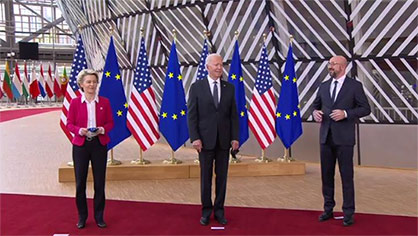
© 2021 EURATEX
© 2021 EURATEX


Against this background, EURATEX does not call for protectionism, but a better functioning of global supply chains, with common rules which are applied by all. The EU and US authorities should put their full influence to establish a level playing field for our industry across the globe, promoting environmental and social standards. Sustainable and circular textiles should become the norm, thus contributing to a greener planet and creating high quality jobs. 


At bilateral level, the EU and US should resume their work on mutual recognition of standards and certification procedures, thus saving considerable costs for our companies while maintaining the highest safety standards. Custom procedures can be simplified on both sides, and joint research, e.g. in smart textiles, should be promoted.

EURATEX welcomes the recent progress in provisionally eliminating additional duties on several American and European products due to the Airbus-Boeing trade dispute. It is a very positive sign that EURATEX would like to highlight in a particularly difficult context for the textile and clothing industry at European, American and even global levels. EURATEX calls on both US and EU institutions to eliminate such duties permanently and build on a common positive agenda for the benefit of EU and US companies and consumers.

EURATEX Director General Dirk Vantyghem commented: Both the EU and US are developing a new business model for their industry. We should make sure these models can complement and reinforce each other. If not, we risk losing global leadership, not just in terms of market share but also in terms of values and standards.”
More News from European Apparel and Textile Confederation (EURATEX)

#Europe

Level playing field at stake: Europe’s textile industry demands decisive action

Yesterday, the European Parliament took a welcomed and necessary step by voting a resolution calling for stronger market surveillance, reinforced customs controls and faster enforcement of the Digital Services Act in case of infringements. For Europe’s textile and clothing manufacturers, this is the first political acknowledgement that the system is broken — and that enforcement must finally match the scale of the problem.

#Recycling / Circular Economy

EURATEX calls for a competitive and harmonised Circular Economy Act For Textiles

EURATEX, representing Europe’s textile and clothing industry with over 200,000 companies and 1.3 million workers, has submitted its official position paper to the European Commission’s consultation on the upcoming Circular Economy Act (CEA). The association welcomes the Commission’s initiative to shape a framework that strengthens Europe’s circular economy while maintaining industrial competitiveness.

#Associations

European textile and clothing federations mobilize against ultra-fast fashion

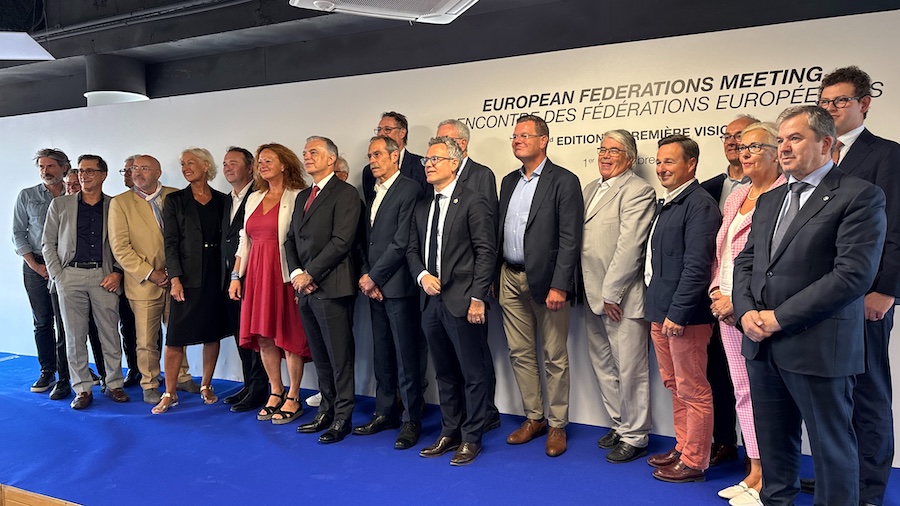
On the occasion of the Première Vision trade fair in Villepinte, the leading European textile and clothing federations issued a solemn call for urgent action against the rapid rise of ultra fast fashion. This model, driven by major non-European e-commerce platforms, already accounted for 4.5 billion imported parcels in the European Union in 2024—representing 5% of clothing sales (20% online)—and continues to grow at a staggering pace.

#Associations

Joint statement by EURATEX and Danish Fashion and Textiles

EURATEX and its Danish member Dansk Mode & Textil are calling upon the Danish Presidency of the EU to bring back stability and transparency to the European agenda. These last few months we have seen major upheavals and turbulence in global markets, as well as uncertainty surrounding a number of regulatory initiatives. All this creates a climate of uncertainty for European industry and anxiety with the consumers. As a result, demand for textile and garments is low, and entrepreneurs are hesitant to make any further investment decisions.

More News on Associations

#Associations

Joint Statement: Urgent clarification needed on scope of Textiles EPR for PPE and Medical Devices

EDANA, the voice of nonwovens, alongside fellow industry associations CIRFS (European Man-Made Fibres Association), EURATEX (The European Apparel and Textile Confederation), ESF (European Safety Federation), and EuroCommerce (Retail & Wholesale), has issued a joint statement raising critical concerns regarding the transposition of Directive (EU) 2025/1892, the targeted revision of the Waste Framework Directive.

#Associations

Young researchers recognised for cutting-edge work in recycling, fibre technology and textile mechanics

At the Aachen-Dresden-Denkendorf International Textile Conference held in Aachen at the end of November, Peter D. Dornier, Chairman of the Walter Reiners Foundation of the VDMA, honoured five successful young engineers. Promotion and sustainability prizes were awarded in the categories bachelor/project theses and diploma/master theses. Academic theses that develop solutions for resource-saving products and technologies, for example, are eligible for the sustainability awards.

#Natural Fibers

Better Cotton Initiative partners with Uzbek government agency to offset certification costs

The Better Cotton Initiative (BCI) has today announced a strategic agreement with Uzbekistan’s Light Industry Agency to increase financial support for cotton farming clusters adopting sustainable agricultural practices.

#India ITME 2026

India ITME Society pushes trade & technology alliances in Singapore

India ITME Society hosted India Networking Program - Fabricating the Future of Textile Industry- From Heritage to High-Tech” on 29th October 2025 at Singapore an exclusive gathering of Ministry of Textile Officials, Embassy Officials, Entrepreneurs, Technocrats, Industry Organizations and Media Personnel's designed to foster collaboration, exchange ideas and explore opportunities in the Indian Textile & Textile Engineering Sector.

Latest News

#Natural Fibers

38th International Cotton Conference Bremen: Let´s Talk about Cotton!

The 38th International Cotton Conference Bremen, to be held on 25-27 March 2026 in Bremen’s parliament building on market square, once again sends a powerful signal for professional excellence and international dialogue. The focus is on the latest market trends and technical innovations throughout the entire value chain – from agriculture and quality assurance to processing and the circular economy. With its high-calibre speakers, the conference remains an indispensable forum for anyone involved in shaping the cotton industry scientifically, technically, or economically.

#Recycled_Fibers

Leading fashion brands step up to unlock the next chapter of Circulose

Since 2024, under new ownership and leadership, Circulose has set a renewed strategic direction focused on securing long-term commitments with partner brands to bring CIRCULOSE® back to market at scale. This strategy has proven successful.

#Research & Development

More safety and comfort for protective clothing thanks to auxetic fabrics

When everyday materials are pulled, they stretch or elongate in the direction of the pull and become narrower in cross-section. We can also observe this property in two-dimensional textiles. Auxetic structures behave differently here. They have the striking property of not changing under tensile stress or even increasing their width or thickness. These properties are advantageous, for example, in protective textiles or textile filter media. The DITF are researching auxetic fabrics for various applications.

#Recycled_Fibers

Recycling mixed-fibre garments becomes a reality: RadiciGroup, The LYCRA Company and Triumph take circular fashion a step forward

The process, which is both economically and environmentally sustainable, has enabled the production of an underwear set made from 100% recycled nylon and LYCRA® fibre in a closed-loop system.

TOP