[pageLogInLogOut]

#Associations

“The new EU Industrial Strategy: how do we get from principles to practice?”
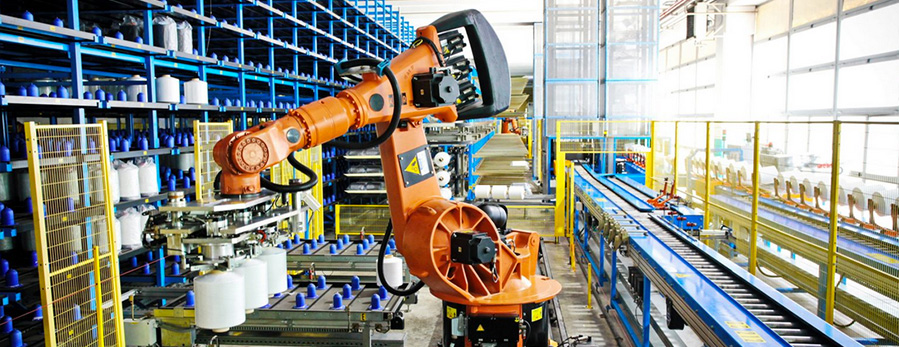
(c) 2020 EURATEX
EURATEX welcomes the proposed new EU industrial strategy but wonders how the proposed principles will be put into practice; reality checks and close monitoring of the implementation of the strategy will be essential to make a positive and sustainable impact.

The European textiles and apparel industry, worth nearly €180 bln and including 171,000 companies, is an essential pillar of the European industry. It is a very globalised industry with extensive value chains across different continents. Over the last 10 years, real changes have been made to innovate and increase sustainability of its products, starting from traditional clothing to smart and medical textiles, industrial applications in the automotive and aerospace industry, to protective wear and high-end fashion.

Against this background, EURATEX welcomes the launch of a new comprehensive EU industrial strategy. It is high time for Europe to embrace its industry again, as a source of welfare, innovation and employment. The proposed strategy is rightfully putting emphasis on economic sovereignty, without falling into the trap of protectionism.

The strategy should include some important elements, essential for its success:

  • Any proposed measure must be assessed in a global context, i.e. European companies cannot be subject to new rules, standards or regulations unless all players do play with the same rules. Measures to ensure a level playing field must be realistic and effective.
  • Innovation into a more sustainable industry has an important cost, and the end consumer is not always willing to pick up that cost. This may jeopardize the financial sustainability of our industry, especially for smaller companies. Accompanying measures should be taken to alleviate the burden of green investments, especially for SMEs.


  • Labour force shortage is an important barrier to the development of our industry. In 2018, 34% of the Textile and Clothing workforce was over the age of 50 (a steep increase from the 22% just 10 years ago). It is therefore urgent to make a common effort to both upskill and reskill the current workforce and to attract young talent.

While the principles mentioned in the strategy are sound, effective implementation of such principles into practical measures will be critical. Too often in the past, the EU has presented ambitious plans, but failed to deliver on their implementation, either by lack of resources or political will from member states. EURATEX therefore calls for a strict “governance” of this new strategy, introducing measurable targets, which can be monitored by relevant stakeholders. “We should be vigilant that proposed measures are realistic and effective, and actually support industrial competitiveness, rather than adding a regulatory or financial burden”, commented Director General Dirk Vantyghem on the proposed strategy.

EURATEX stands ready to contribute to a positive and effective implementation of the strategy, making sure the European economy can regain its competitiveness, create jobs and welfare.

More News from European Apparel and Textile Confederation (EURATEX)

#Europe

Level playing field at stake: Europe’s textile industry demands decisive action

Yesterday, the European Parliament took a welcomed and necessary step by voting a resolution calling for stronger market surveillance, reinforced customs controls and faster enforcement of the Digital Services Act in case of infringements. For Europe’s textile and clothing manufacturers, this is the first political acknowledgement that the system is broken — and that enforcement must finally match the scale of the problem.

#Recycling / Circular Economy

EURATEX calls for a competitive and harmonised Circular Economy Act For Textiles

EURATEX, representing Europe’s textile and clothing industry with over 200,000 companies and 1.3 million workers, has submitted its official position paper to the European Commission’s consultation on the upcoming Circular Economy Act (CEA). The association welcomes the Commission’s initiative to shape a framework that strengthens Europe’s circular economy while maintaining industrial competitiveness.

#Associations

European textile and clothing federations mobilize against ultra-fast fashion

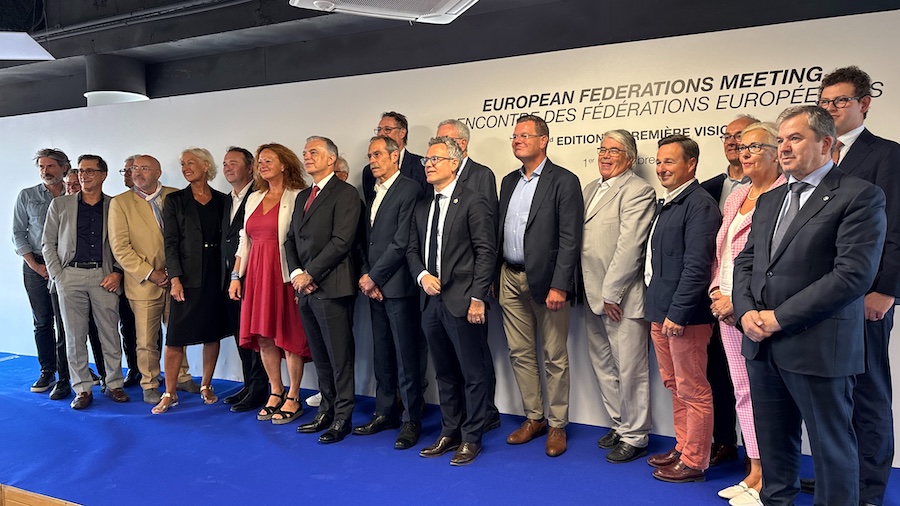
On the occasion of the Première Vision trade fair in Villepinte, the leading European textile and clothing federations issued a solemn call for urgent action against the rapid rise of ultra fast fashion. This model, driven by major non-European e-commerce platforms, already accounted for 4.5 billion imported parcels in the European Union in 2024—representing 5% of clothing sales (20% online)—and continues to grow at a staggering pace.

#Associations

Joint statement by EURATEX and Danish Fashion and Textiles

EURATEX and its Danish member Dansk Mode & Textil are calling upon the Danish Presidency of the EU to bring back stability and transparency to the European agenda. These last few months we have seen major upheavals and turbulence in global markets, as well as uncertainty surrounding a number of regulatory initiatives. All this creates a climate of uncertainty for European industry and anxiety with the consumers. As a result, demand for textile and garments is low, and entrepreneurs are hesitant to make any further investment decisions.

More News on Associations

#Associations

Joint Statement: Urgent clarification needed on scope of Textiles EPR for PPE and Medical Devices

EDANA, the voice of nonwovens, alongside fellow industry associations CIRFS (European Man-Made Fibres Association), EURATEX (The European Apparel and Textile Confederation), ESF (European Safety Federation), and EuroCommerce (Retail & Wholesale), has issued a joint statement raising critical concerns regarding the transposition of Directive (EU) 2025/1892, the targeted revision of the Waste Framework Directive.

#Associations

Young researchers recognised for cutting-edge work in recycling, fibre technology and textile mechanics

At the Aachen-Dresden-Denkendorf International Textile Conference held in Aachen at the end of November, Peter D. Dornier, Chairman of the Walter Reiners Foundation of the VDMA, honoured five successful young engineers. Promotion and sustainability prizes were awarded in the categories bachelor/project theses and diploma/master theses. Academic theses that develop solutions for resource-saving products and technologies, for example, are eligible for the sustainability awards.

#Natural Fibers

Better Cotton Initiative partners with Uzbek government agency to offset certification costs

The Better Cotton Initiative (BCI) has today announced a strategic agreement with Uzbekistan’s Light Industry Agency to increase financial support for cotton farming clusters adopting sustainable agricultural practices.

#India ITME 2026

India ITME Society pushes trade & technology alliances in Singapore

India ITME Society hosted India Networking Program - Fabricating the Future of Textile Industry- From Heritage to High-Tech” on 29th October 2025 at Singapore an exclusive gathering of Ministry of Textile Officials, Embassy Officials, Entrepreneurs, Technocrats, Industry Organizations and Media Personnel's designed to foster collaboration, exchange ideas and explore opportunities in the Indian Textile & Textile Engineering Sector.

Latest News

#Natural Fibers

38th International Cotton Conference Bremen: Let´s Talk about Cotton!

The 38th International Cotton Conference Bremen, to be held on 25-27 March 2026 in Bremen’s parliament building on market square, once again sends a powerful signal for professional excellence and international dialogue. The focus is on the latest market trends and technical innovations throughout the entire value chain – from agriculture and quality assurance to processing and the circular economy. With its high-calibre speakers, the conference remains an indispensable forum for anyone involved in shaping the cotton industry scientifically, technically, or economically.

#Recycled_Fibers

Leading fashion brands step up to unlock the next chapter of Circulose

Since 2024, under new ownership and leadership, Circulose has set a renewed strategic direction focused on securing long-term commitments with partner brands to bring CIRCULOSE® back to market at scale. This strategy has proven successful.

#Research & Development

More safety and comfort for protective clothing thanks to auxetic fabrics

When everyday materials are pulled, they stretch or elongate in the direction of the pull and become narrower in cross-section. We can also observe this property in two-dimensional textiles. Auxetic structures behave differently here. They have the striking property of not changing under tensile stress or even increasing their width or thickness. These properties are advantageous, for example, in protective textiles or textile filter media. The DITF are researching auxetic fabrics for various applications.

#Recycled_Fibers

Recycling mixed-fibre garments becomes a reality: RadiciGroup, The LYCRA Company and Triumph take circular fashion a step forward

The process, which is both economically and environmentally sustainable, has enabled the production of an underwear set made from 100% recycled nylon and LYCRA® fibre in a closed-loop system.

TOP