[pageLogInLogOut]

#Raw Materials

Cotton made in Africa supports the development of West African textile production in Benin
The West African country of Benin is well on its way to establishing itself as a new procurement and production hub for textiles and clothing; these efforts include having locally produced cotton made into textiles for the global market. The Aid by Trade Foundation (AbTF) is supporting this development through Cotton made in Africa (CmiA), one of its sustainability standards, which not only provides a sustainable and local basis for textile production but also facilitates access to international markets. Recently, a delegation of AbTF visited the CmiA project country of Benin for a first-hand look at the progress being made.
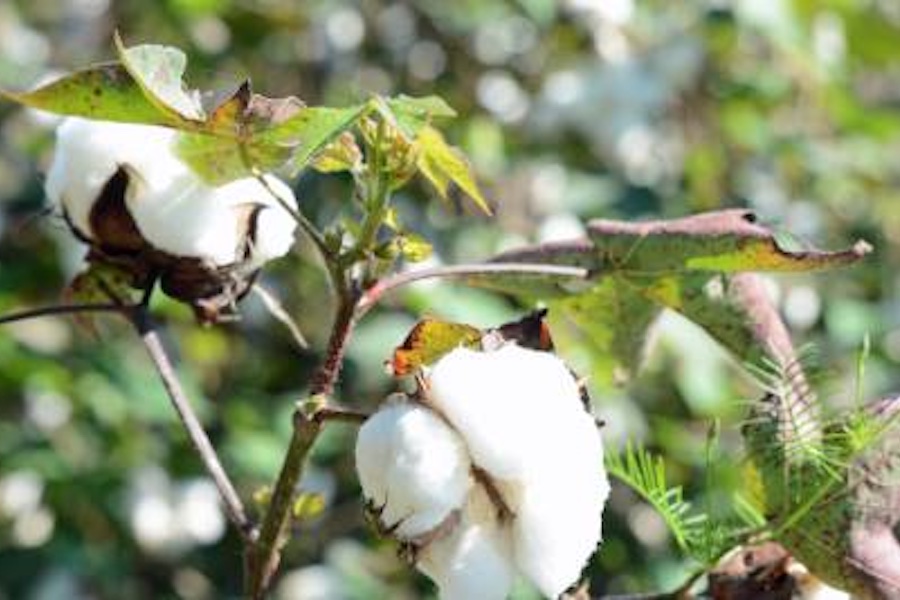
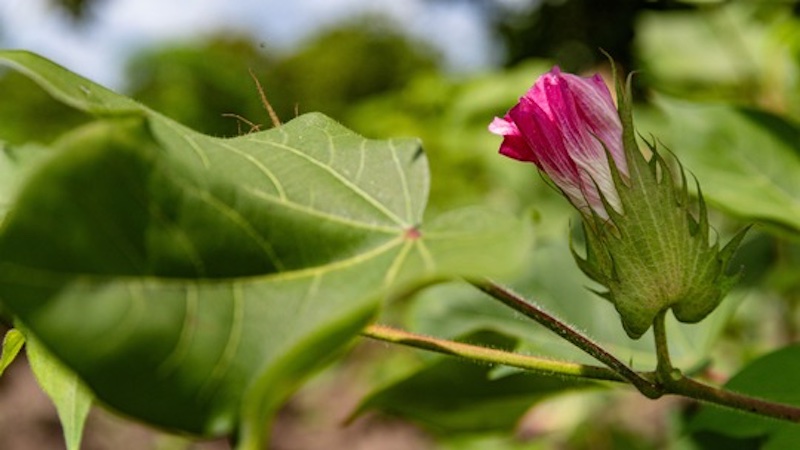
CmiA Organic Cotton flower Credit M. Diarassouba für AbTF © 2024


A major step forwards in the development of an independent and sustainable textile industry in Benin is marked by the recent construction of a textile production centre south of Cotonou. According to the textile park, 100 percent of the cotton used is verified by Cotton made in Africa; this underlines the sustainability standard’s position in the region. “African textile production is gaining momentum, and Cotton made in Africa makes a major contribution to ensuring that sustainability plays a key role,” explains Gerlind Baz, a senior project manager at the Aid by Trade Foundation, during a visit to Benin, adding, “We are very pleased to support the development of a West African textile production sector here in Benin and to thereby further promote market access for sustainably produced cotton from Africa.”

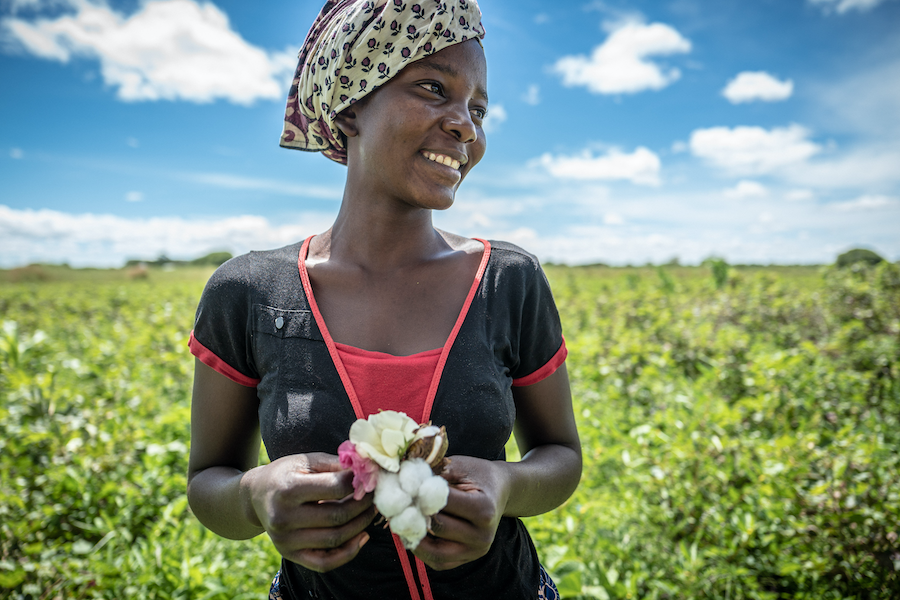
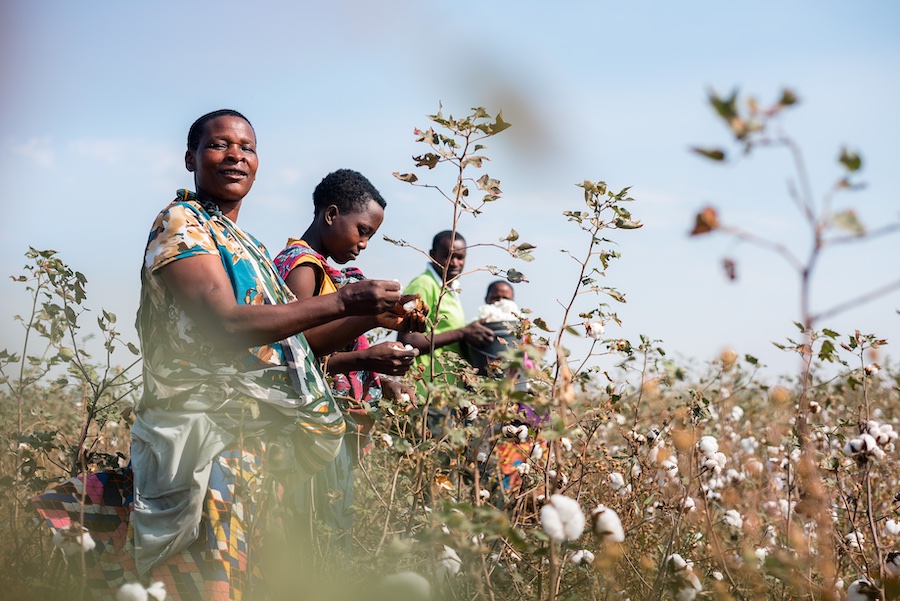
Cotton made in Africa is a key player in sustainable cotton production in the region and an important partner for the global textile trade. Thirty percent of cotton production across Africa is verified under Cotton made in Africa. The standard is active in eleven countries south of the Sahara, working with 20 cotton companies and around 900,000 small-scale farmers. In Benin, cotton has been grown in accordance with the CmiA standard since the initiative was founded in 2005. Together with three cotton companies in Benin, AbTF is working through its CmiA and CmiA Organic standards to improve market access for cotton producers and to make people more resilient to the effects of climate change while protecting the environment and biodiversity. Worldwide, the standard has more than 2,700 partners in the textile chain.

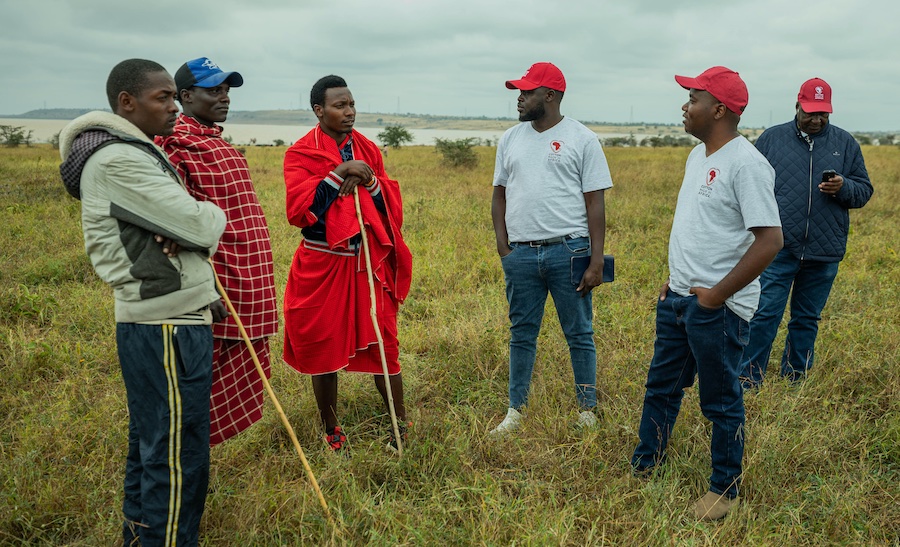
On the occasion of World Cotton Day in early October, a delegation of AbTF representatives visited the CmiA project country of Benin together with partners from GIZ (Deutsche Gesellschaft für Internationale Zusammenarbeit) and PAN UK (Pesticide Action Network, United Kingdom). In addition to World Cotton Day events, the programme included a visit to the textile park and to areas where CmiA Organic cotton is grown. In the Aklampa area, the project group met cotton farmers who grow cotton in accordance with the CmiA Organic standard and who are part of the Growing Benin’s Organic Cotton Sector project. The project’s aim is to improve the living conditions of small-scale farmers by supporting them in the transition to the cultivation of organic cotton in compliance with the CmiA Organic standard. Around 45,500 adults and children are expected to benefit indirectly from the project. By expanding market access through CmiA, the project plans to secure long-term investments in the organic cotton sector in Benin. The project is being co-ordinated by PAN UK, implemented under the leadership of the non-governmental organisation OBEPAB (Organisation Béninoise pour la Promotion de l’Agriculture Biologique), and supported both financially and substantially by AbTF and the cotton trading company Paul Reinhart AG; it is also supported by GIZ as part of its Sub-Saharan Cotton Initiative, with funding from the German Federal Ministry for Economic Cooperation and Development (BMZ).

Read more about the textile parc here:

https://gdiz-benin.com/fr/parc-textile/

More News from Cotton made in Africa (CmiA)

#Natural Fibers

Human Rights Day: Cotton made in Africa reinforces its commitment to ensuring respect for human rights in cotton production

The sustainable cotton standard Cotton made in Africa (CmiA) has always focussed on respect for human rights, including by prohibiting child labour and discrimination. With the new version of the CmiA standard coming into force, AbTF raises requirements for due diligence in the areas of human rights and risk management.

#Natural Fibers

Cotton made in Africa launches public consultation for standard revision

The Aid by Trade Foundation (AbTF) is opening public consultation on its Cotton made in Africa standard today. Interested parties will have 60 days to provide feedback, helping shape the future of one of the world’s largest standards for sustainable cotton. The latest update to the standard, Version 5.0, focusses on increasing Cotton made in Africa’s effectiveness and adapting its criteria and indicators to external factors, which currently include biodiversity loss and a growing set of reporting requirements for companies.

#Raw Materials

EUR 2.8 million project for climate-resilient agriculture in Africa

Healthy soils, responsible water use, and biodiversity conservation are central to the efforts of the Aid by Trade Foundation (AbTF) to make African cotton production more resilient to climate change. AbTF has opened new doors for small-scale farming families in Africa through a EUR 2.8 million project for climate-resilient cotton cultivation. Over the last three years, more than 100,000 farmers in Africa were involved in testing various soil improvement measures, with encouraging results: yields on demonstration sites increased significantly, despite the effects of climate change.

#Raw Materials

Cotton farmers in Benin benefit from organic cotton cultivation

Launched three years ago with EUR 1 million in total volume, a project called “Growing Benin’s Organic Cotton Sector” aimed to support small-scale farmers in transitioning to organic cotton cultivation in accordance with the Cotton made in Africa Organic standard, to avoid the use of synthetic pesticides, and to further develop the organic cotton sector, thereby securing the future of farming communities. The project has proved a success as participating cotton farmers are benefiting from higher incomes.

More News on Raw Materials

#Raw Materials

Esquel Group adds two new extra-long staple cotton varieties approved

Esquel Group’s Xinjiang Research & Development Center has successfully developed two new Sea Island cotton (Extra-Long-Staple cotton, ELS cotton) varieties named “Yuan Loong 37” and “Yuan Loong 42,” which have been officially approved and granted registration numbers. Both varieties have also obtained Plant Variety Rights certificates, marking another significant breakthrough for the Group in cotton breeding and commercial application.

#Raw Materials

Aid by Trade Foundation reaches new milestones in supply chain transparency

The Aid by Trade Foundation (AbTF) is reaching new milestones as it leads the way towards greater physical traceability for Cotton made in Africa® (CmiA) cotton. With around 700 suppliers and producers in a total of 25 countries, the Aid by Trade Foundation has reached a new record number of partners who can trace CmiA cotton from the product back to its origin. This is more than double the previous year’s figure.

#Raw Materials

Modern testing methods for raw cotton

The 38th International Cotton Conference Bremen will take place from 25 to 27 March 2026 at the Bremen Parliament. This conference has traditionally stood for in-depth expertise and international exchange. The program will focus on technical innovations, market trends, and regulatory frameworks across the entire value chain – from agriculture to the circular economy. With high-profile speakers, the conference is regarded as the key meeting point for the global cotton industry. Today’s focus: Cotton quality and testing methods.

#Raw Materials

2026 production plan set for a record 10 metric tons of recombinant spider silk cocoon per month

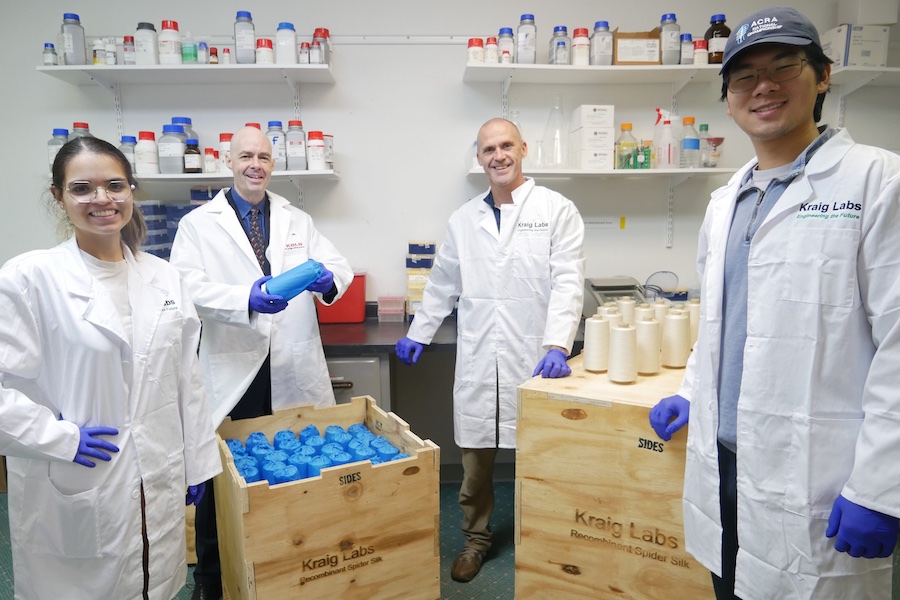
Kraig Biocraft Laboratories, Inc. (OTCQB: KBLB) (“the Company”, “Kraig Labs”, or “Kraig’s”), a world leader in spider silk technology*, today announced its 2026 production plan that will drive explosive growth and establish a new global benchmark for spider silk manufacturing.

Latest News

#Weaving

Itema America acquires Palmetto Loom Reed, strengthening local manufacturing and service in the U.S.

Itema America, the U.S. subsidiary of Italy-based Itema Group, has acquired – through an Assets Purchase Agreement – Palmetto Loom Reed, a Greenville, South Carolina-based manufacturer of weaving reeds and one of the last remaining domestic producers of these precision components in the United States.

#Recycled_Fibers

Reju announces site selection for French Regeneration Hub in Lacq advancing Europe’s circular textile infrastructure

Reju, the textile-to-textile regeneration company based in France, announces the site selection for an industrial sized Regeneration Hub, in Lacq, in the Pyrénées-Atlantiques, on the Induslacq platform. Reju, a Technip Energies owned company, is deepening its roots in France through the development of this new Regeneration Hub.

#Functional Fabrics

lululemon introduces Unrestricted Power™ — A new sensation for strength training

lululemon (NASDAQ: LULU) has unveiled Unrestricted Power™, a new innovation platform engineered for heavy lifts and demanding gym sessions. The assortment, which launches in North America, is backed by thousands of hours of research and development, providing secure support without compromising comfort and mobility, enabling a distraction-free fit built to match every move.

#Natural Fibers

Merino wool moves into China’s high-performance sportswear market

China’s leading sportswear brands are beginning to treat Merino wool not as a lifestyle material, but as a performance input as natural fibres move from the margins of sportswear into elite technical applications. That shift is increasingly evident in the material strategies of major domestic groups such as ANTA.

TOP