[pageLogInLogOut]

#Index 2014

Nonwoven production exceeded 2 million tonnes in 2013 in Greater Europe
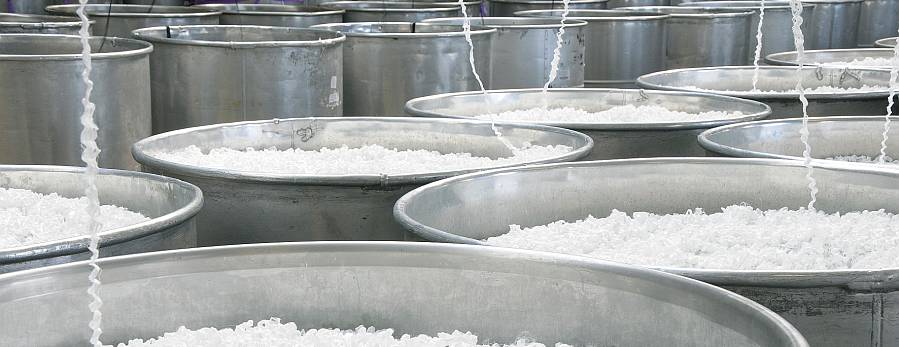
Fibre production at Trevira (c) 2014 Trevira
EDANA disclosed the preliminary European annual statistics for 2013. This release offers a comprehensive picture of the Nonwovens industry in Greater Europe, information which offers significant value a few days before the opening of INDEX™ 14, the world’s largest nonwovens exhibition.

According to figures collected and compiled by the EDANA secretariat, production of nonwovens in Europe grew by around 1.9% in 2013 to reach 2,037,400 tonnes. This compares with 1,998,900 tonnes in 2012 when the annual growth was 1.5%. Despite these two low growth years, the average growth rate since 2009 has been nearly 5.2%.

Obviously, a more in-depth analysis will be necessary to draw any definitive conclusion, as diverging trends have been observed in different European countries, and between the various production processes of nonwovens.

Jacques Prigneaux, EDANA’s Market Analysis and Economic Affairs Director, stated “Growth in the Wetlaid nonwovens has been substantial this year, but it is actually the Hydroentanglement process that has recorded the highest apparent growth of more 5.7%. However, other bonding processes within the Drylaid technologies (thermally, chemically bonded and needled punched), and also Spunmelt nonwovens witnessed low growth rates in 2013. Airlaid production, compared to its performance of 2012, recorded a higher growth, at 3%.”

The main end-use for nonwovens remains the hygiene market with a 32% share of deliveries, amounting to 645,700 tonnes, which has grown by 1.9% in 2013. The most significant growth areas for nonwovens in 2013 were in medical (+14.0%) and all types of filtration applications (+11.5 %), followed by all wipes together (+7.4%), in which the specific evolution of personal care wipes (+12.4%) must be underlined.

On the contrary, major declines were noticed in interlinings, coating substrates and artificial leather markets. Additionally, several important durable sectors in terms of volumes sold, such as in construction markets or agriculture, showed limited (and sometimes negative) growth.

Nevertheless, sales to the Automotive interiors market continued to increase (+4.1% in 2013). This trend confirms the importance of the Automotive sector for the European nonwovens industry, which will be highlighted during INDEX™ 14 (with a special workshop to be held from 1.30pm on Tuesday 8th April).

Only EDANA members receive the full report, as part of one of their most valued membership benefits, and will soon get their complimentary copy of the report “2013 European Nonwovens Production and Deliveries”.  EDANA nonwoven producers member companies will receive detailed data, in recognition of their participation.

"Thanks to a convergence of efforts of the participating companies and of the EDANA staff in the last few years, these statistics are available earlier than ever, making these ever more relevant for planning and benchmarking purposes within member companies" said Jacques.

More News from EDANA

#Associations

Businesses urge European Commission to allow continued sale of products already lawfully placed on the market before the Empowering Consumers Directive’s application to avoid unnecessary waste and costs

EDANA, the voice of nonwovens, alongside a coalition of leading European business associations, has issued a joint statement urging the European Commission to introduce a "grandfathering clause" to the Empowering Consumers for the Green Transition (ECGT) Directive. The coalition warns that without transitional provisions for products already lawfully placed on the market, the new rules could inadvertently lead to massive waste and economic disruption.

#Nonwovens

EDANA wraps up its Sustainability & Policy Forum 2025: Uniting the industry and EU policymakers to navigate the future of nonwovens

Against a backdrop of rapidly evolving environmental legislation, the EDANA Sustainability & Policy Forum 2025 concluded the past week in Brussels, marking a step forward in the dialogue between the nonwovens industry and European policymakers. Held from 9-10 December at the historic Residence Palace, the two-day event successfully brought together business leaders, sustainability experts, and EU officials to address the dual challenges of circularity and industrial competitiveness.

#Associations

Joint Statement: Urgent clarification needed on scope of Textiles EPR for PPE and Medical Devices

EDANA, the voice of nonwovens, alongside fellow industry associations CIRFS (European Man-Made Fibres Association), EURATEX (The European Apparel and Textile Confederation), ESF (European Safety Federation), and EuroCommerce (Retail & Wholesale), has issued a joint statement raising critical concerns regarding the transposition of Directive (EU) 2025/1892, the targeted revision of the Waste Framework Directive.

#Nonwovens

European Commission imposes registration on imports of PET spunbond from China

On 15 September 2025, the European Commission opened an Anti-dumping (AD) investigation into imports of PET spunbond from China following a complaint by the EU industry (AD738). On 2 December 2025, the Commission made imports of PET spunbond from China subject to registration. This is an important milestone in the proceedings.

More News on Index 2014

Latest News

#Functional Fabrics

“Action helps us change what we do!”

DAY 0 takes place deliberately before PERFORMANCE DAYS begins. It is conceived as a space for reflection, dialogue and active engagement — a moment to pause before the fair, rethink established systems and address sustainability not as a trend, but as a fundamental transformation challenge. Under the guiding metaphor “Turn the Tap Off”, DAY 0 focuses on root causes rather than symptoms, systemic change rather than isolated solutions, and collective responsibility rather than individual silos.

#Textiles & Apparel / Garment

Pets in fashion: functional and sustainable textiles find new market at Intertextile Apparel

China’s pet economy is booming, especially amongst younger generations, and pet apparel – from designer outfits to functional garments – was a RMB 3.5 billion (over USD 500 million) market in 2024, growing more than 20% annually¹. To help exhibitors harness this trend, Intertextile Shanghai Apparel Fabrics – Spring Edition 2026 will launch the Pet Boutique, presenting a range of innovative, sustainable materials that prioritise both functionality and comfort for pets.

#Sustainability

VAUDE eliminates PFAS from all products

PFAS (per- and polyfluoroalkyl substances) are now detectable worldwide – in drinking water, soil and the human body. These so-called “forever chemicals” are considered hazardous to health and potentially carcinogenic, as they do not break down and remain in the environment permanently. Despite these risks, PFAS are still used in a wide range of products. More than 15 years ago, VAUDE made a strategic decision to gradually eliminate PFAS from all product categories.

#Man-Made Fibers

Lenzing AG to become majority owner of TreeToTextile AB and accelerates industrialization of new fibers

The Lenzing Group is taking another strategic milestone by acquiring a controlling majority in the Swedish innovation company TreeToTextile AB. This step strengthens Lenzing’s position as a leading provider of sustainable, wood‑based specialty fibers and expands its innovation pipeline with a highly scalable, patent‑protected technology platform. The transaction is executed through the issuance of new shares.

TOP



