#ITMA-Asia + CITME-2016
Market launch in China for Mayer & Cie. Spinit 3.0 E:
“The official market launch of the Spinit 3.0 E in China and neighbouring states is an important milestone for us,” says Mayer & Cie.’s Michael A. Tuschak, in charge of spinitsystems marketing and sales. “Following the general sales start of our new technology at the 2015 ITMA in Milan this is the year of its gradual roll-out. China as our most important single market is in any case especially important, but we also see significant potential for the Spinit 3.0 E in neighbouring countries such as South Korea and Taiwan.”
New spinitsystems approach
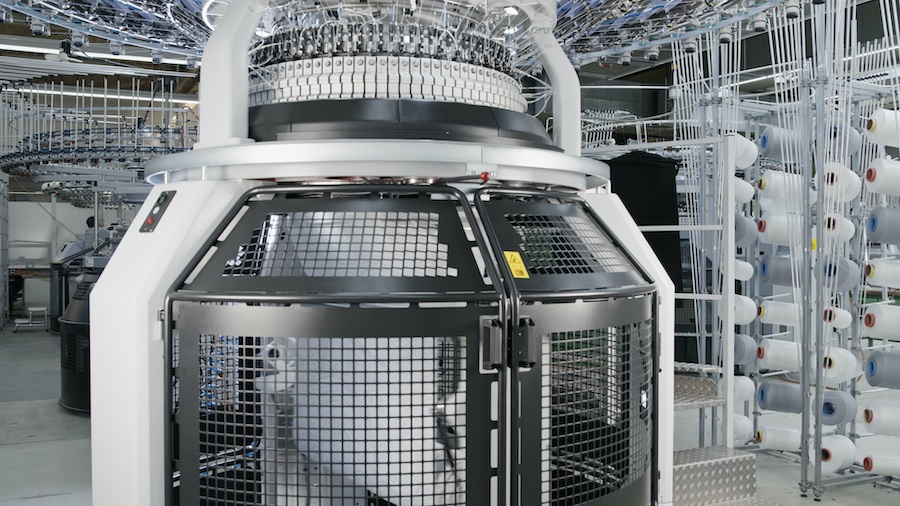
The Spinit 3.0 E is the first machine type to be equipped with Mayer & Cie.’s spinitsystems technology. It combines the three process steps spinning, cleaning and knitting, thereby making rewinding superfluous. This three-in-one concept, presented at the 2015 ITMA in Milan in the shape of the market-ready Spinit 3.0 E, is a completely new approach by Mayer & Cie. Using the so-called false twist spinning process, roving is converted directly into high-quality knitwear. The benefits of the Spinit Jersey can be seen and felt. It is very soft, fluffy and even, with a slight sheen, and the stitches do not twist after washing. And then there are the pattern options that the Fancy module offers. It enables the Spinit to vary the fineness of yarn during the production process and create entirely new patterns that cannot be knitted in any other way.
Along with these self-evident benefits the technology scores points with a significant reduction in process time due to the combination of the three process steps spinning, cleaning and knitting. That also led to a marked saving in cost and space. Where several machines used to be required, one machine – similar in its dimensions to a conventional knitting machine – is now sufficient. The Spinit 3.0 E also represents a step forward in sustainability in that manufacturing knitwear with it requires much less energy than the conventional production process does.
It was clear at the 2015 ITMA that the industry and the specialist world are keenly interested in this new approach. Michael A. Tuschak noted around 600 business contacts, or about 90 interested visitors per day to the machine. Explaining why he sees great opportunities for the Spinit 3.0 E in China and a number of neighbouring countries, he says: “Our Spinit 3.0 E’s potential is mainly in highly developed textile markets. Where wage and manufacturing costs are high, our customers are constantly on the lookout for innovations. We have to offer something special, something that others don’t yet have. With the Spinit 3.0 E and the characteristic fabric that it produces the customer is definitely a step ahead of the rest.”
Overall, Mayer & Cie. considers itself to be well positioned to take knitting – and, soon, spin-knitting – forward in China and neighbouring countries. The circular knitting machine manufacturer has maintained a subsidiary near Shanghai since 2003. The Mayer works near Shanghai has been the Group’s third production site for more than five years. At present, Single Jersey machines for the Chinese market are mainly assembled there. In the future, the site will also serve as a service facility for the Spinit 3.0 E. “Local contacts are always a great advantage,” Michael A. Tuschak says. “That is something we see at ITMA Asia + CITME. The fairs are simply ‘closer’ – both literally and metaphorically – to many textile manufacturers in the region, and that is surely the best reason why our spinitsystems team will be there with detailed information and a wide range of experience to share with visitors.”
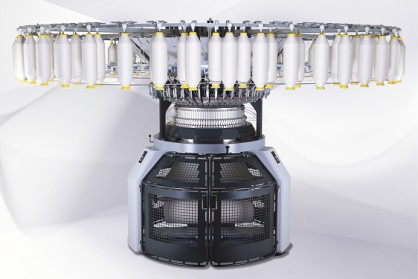
Pic: Mayer & Cie. Spinit 3.0 E