[pageLogInLogOut]

#Companies

Retech AG Switzerland will expand production facilities

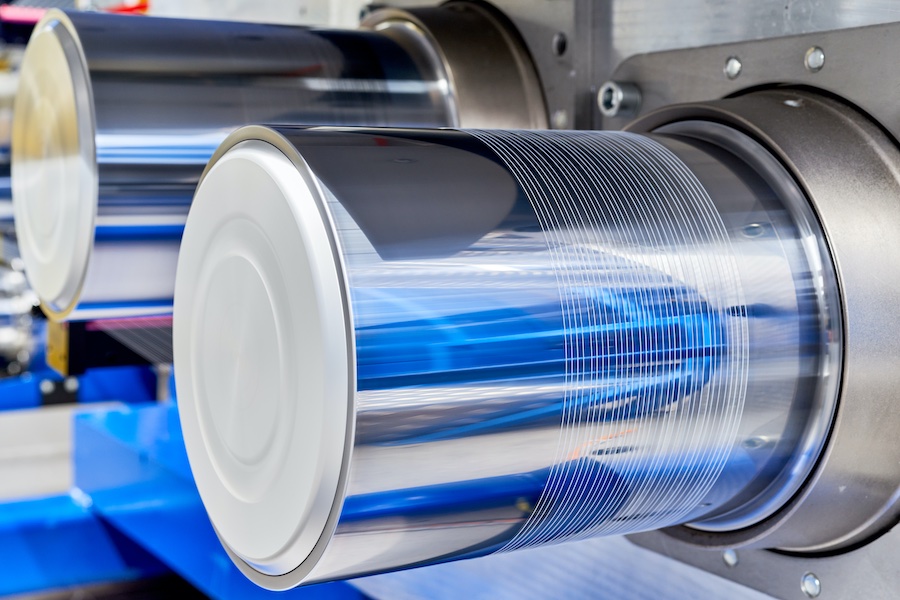
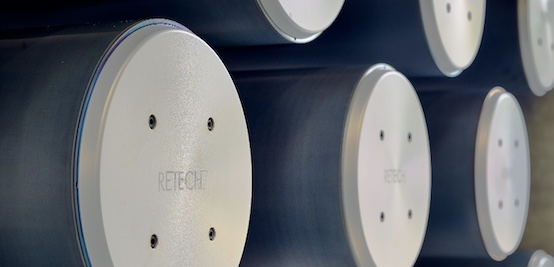
Retech AG Switzerland has very optimistic prospects for the future, therefore the existing production facilities are being expanded, a new workshop will be added which is actually the 4th expansion.
More News from Retech Aktiengesellschaft

#Techtextil 2026

RETECH showcases high-precision godets for high-performance fiber processing at Techtextil 2026

RETECH designs and manufactures godets and draw frames for heated, ambient and cooled processes, enabling precise heat treatment and consistently high yarn quality for a wide range of polymers and applications, with process temperatures of up to 400 °C for high-performance fibers. The company’s key competence lies in exact and stable temperature and speed control, individually adapted to the specific material and process requirements.

#ITMA Asia + CITME Singapore 2025

50 years of Swiss precision - Retech highlights latest technology to produce high-quality synthetic fibers

High-quality synthetic fiber production requires uncompromising precision and process stability. Godet rolls play a key role in ensuring exact temperature control and maximum reliability. As a Swiss pioneer in thermal treatment for filament fibers, Retech has been setting benchmarks for five decades – with technologies that make production processes smarter, more efficient, and more sustainable.

#Techtextil 2024

Retech will present advantages of its leading godet rolls at Techtextil

Godet rolls are essential components in the production of synthetic fibres. These heated, ambient or cooled rolls help achieve the perfect yarn quality for a range of materials and applications when it comes to heat treatment for filament fibre applications. Retech's heated godet rolls are designed to meet critical requirements: delivering precise temperature control tailored to each material and maintaining consistent temperature levels throughout the process.

More News on Companies

Latest News

#Denim

Jeanologia launches Billy

The new AI extracts precise laser designs from a garment image in minutes, transforming how vintage denim is recreated for production. If Jeanologia’s laser changed the way jeans were made at the end of the last century, its AI now takes the next step: moving from reproducing wear to designing it. / archive photo © 2026 Jeanologia

#INDEX 2026

EDANA unveils nominees for INDEX™26 Awards: Highlighting the next generation of nonwoven excellence

EDANA is proud to unveil the highly anticipated nominees for the INDEX™26 Awards, the nonwoven industry’s highest accolade for technical and sustainable excellence. Out of a record-breaking field of entries, these finalists represent the cutting edge of material science—from bio-based hygiene fibers and PFAS-free protective textiles to revolutionary water-filtration machinery. Each nominee has been selected by a jury of industry experts for their ability to solve critical global challenges, including the transition to a circular economy and the pursuit of enhanced consumer performance.

#Raw Materials

Lenzing Group positions bio‑based materials as a strategic asset for Europe’s economic security

The Lenzing Group, a leading supplier of regenerated cellulose fibers for the textile and nonwovens industries, hosted a high‑level roundtable in Brussels to discuss how bio‑based materials can strengthen Europe’s economic security and support the shift toward a fossil‑free future. Organized in cooperation with Euractiv, the event brought together representatives of the European Commission, the UK Mission to the EU, academia, civil society, and industry.

#Natural Fibers

Beyond Cotton: Natural Fibres in the Spotlight at the Bremen Cotton Conference - Branded by DNFI

Climate targets, fragile supply chains, and rising regulatory requirements are fundamentally changing the perspective of the textile industry - the focus is increasingly shifting toward the base material. Not only cotton, but natural fibres are gaining significant importance: they stand out not only because of their outstanding functional properties, but also because they make a valuable contribution to the bioeconomy and responsible product development.

TOP



