[pageLogInLogOut]

#Yarn & Fiber

Global Textile Fiber Market to Reach 93 Million Tons by 2015, According to a New Industry Report by Global Industry Analysts, Inc.

GIA announces the release of a comprehensive global outlook on the Textiles Industry. Global textile industry dynamics are shaped by a wide range of demographic factors such as disposable income levels, degree of consumer confidence and other general economic variables. Future growth would be driven by segments such as geosynthetics, filtration products and medical products that have survived the adverse economic conditions.

Demand for textile and garments declined considerably in 2008 and 2009, particularly in the US, Japan and Europe due to the rising unemployment levels and decline in consumer confidence. While few consumers exhibited preference for low-priced products, several others sought to defer purchases. The recession urged industry participants to resort to cost saving measures such as work furloughs, line closures and staff reductions to survive in the competitive environment. Several countries adopted protectionist policies in order to deal with social and political instability, decline in international trade, and closure of factories. The industry however recovered driven by the economic stimulus packages offered by various Asian countries. Governments of various countries implemented strong policy framework and provided support to intensify the pace of recovery. The global textile industry is also witnessing the sustained migration of manufacturing activity from the developed nations to developing countries.

China dominates the global textile market in terms of annual production capacity for cotton textiles, woolen fabrics and chemical fiber garments. In view of the recession, China adopted a different strategy to focus on domestic market, as against the earlier export-oriented operations. Improving economic conditions, coupled with favorable government support policies as well as industrial upgradations contributed to the increase in industry’s production output. Domestic demand is expected to drive production, sales and exports growth in the Chinese textile industry. Factors such as favorable infrastructure, liberal labor laws, and social security are expected to contribute to the industry growth.

Cotton is a major raw material used in about 40-50% of textiles. In addition, cotton makes up for about 85% of all natural fibers, other than wool, hemp and linen. Cotton consumption is largely driven by population growth, as evident by the fact that consumption has tripled during the period 1950 and 2009. In addition, factors such as rising per capita incomes, stable or falling prices of cotton in comparison to other fibres, and extensive promotional campaigns of market participants have contributed to substantial growth in demand for cotton. India, China, Pakistan and the US dominate the global cotton production.

The global market for technical textiles is set to grow rapidly driven by the expanding use of the material in emerging markets. Asia, in particular, is expected to emerge as a force to reckon with in the technical textiles market due to rapid growth in local markets, and the rising installation of local production capacity. Asian countries such as Japan, China, Taiwan, India, and Korea are expected to drive global consumption of technical textiles. In particular, India is expected to emerge as a major player largely due to the abundance of raw materials, and availability of skilled manpower. The geotextiles segment is expected to register the fastest growth in view of climate changes that are increasing the threat of hurricanes, and floods, among other disasters. Germany, France, Japan, UK, Korea, India, China, and the US are the leading producers of technical textiles, globally.

The research report titled “Textiles: A Global Outlook” announced by Global Industry Analysts Inc., provides a collection of statistical anecdotes, market briefs, and concise summaries of research findings. The report offers an aerial view of the global textiles industry, identifies major short to medium term market challenges, and growth drivers. Regional markets elaborated upon include United States, Canada, Mexico, Japan, Belgium, Czech Republic, France, Germany, UK, Spain, Turkey, Ukraine, China, India, Pakistan, and Brazil, among others. Also included is an indexed, easy-to-refer, fact-finder directory listing the addresses, and contact details of companies worldwide.

For more details about this comprehensive industry report:

http://www.strategyr.com/Textiles_Industry_Market_Report.asp 

More News from TEXDATA International

#ITM 2026

ITM 2026: The new geography of textile production

New production hubs are emerging across North Africa and Central Asia, while Türkiye is accelerating its transformation toward higher-value, technology-driven and more sustainable textile manufacturing.

#Research & Development

“Production is a product”

From technical textiles and AI-driven robotics to the limitations of textile circularity: Professor Dr Thomas Gries looks back on more than two decades of development at ITA Aachen. In the interview, he explains why production technology remains a decisive success factor, discusses international collaborations and innovation ecosystems, and shares his views on the transformation of production landscapes and the challenges facing an increasingly regulated industry.

#Knitting & Hosiery

“We need to move away from the price trap and return to a value-driven mindset.”

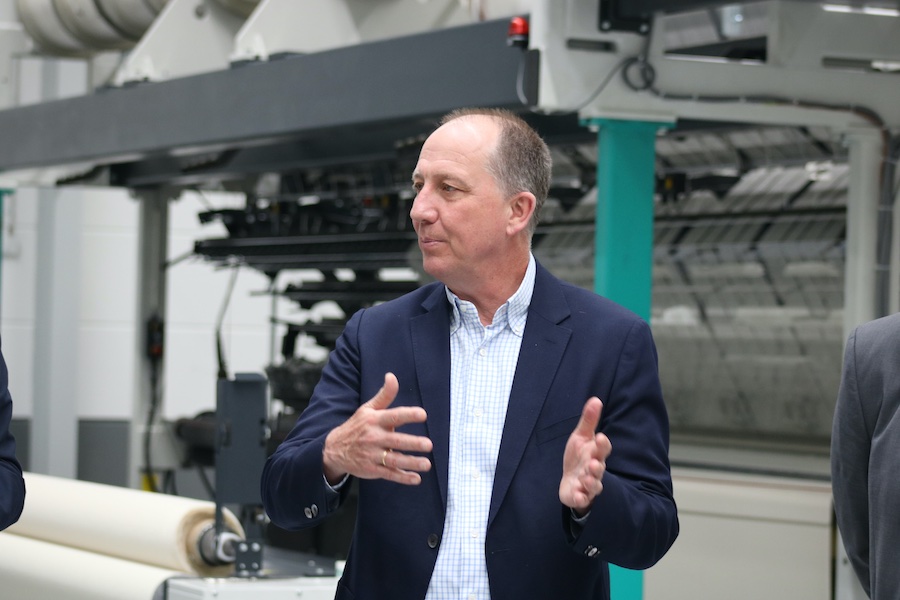
With its new Textile Innovation Center, KARL MAYER is sending a strong signal for innovation, collaboration, and the future of textile applications. In this interview, Karl Josef Mayer discusses new opportunities in warp knitting, the processing of staple fibres, recycling, the changing role of machinery manufacturers, and why the textile industry must once again focus more strongly on the value of textiles. by Oliver Schmidt

#Associations

“Innovation, resilience and international experience remain the great strengths of the Swiss textile machinery industry”

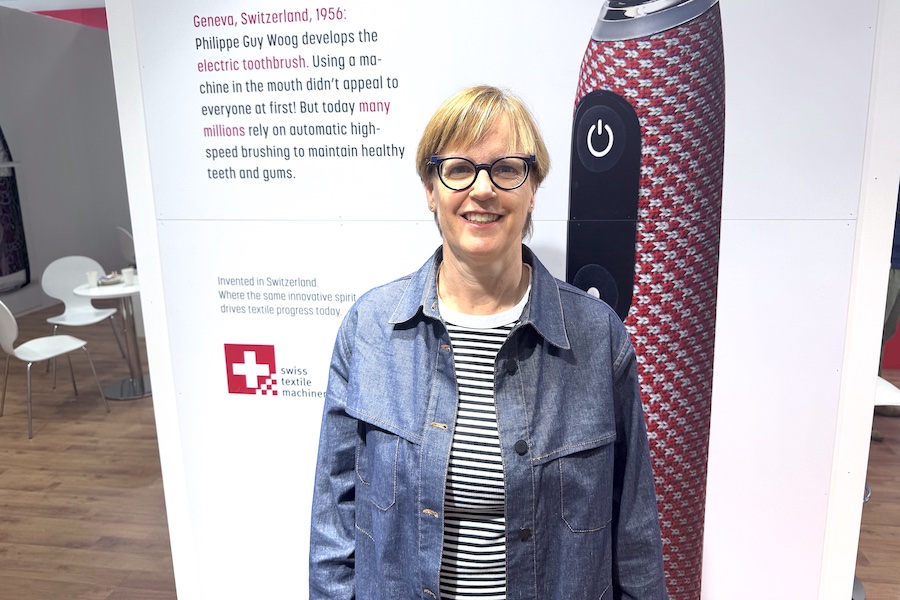
Geopolitical uncertainty, growing competitive pressure from China, new free trade agreements and the shift towards a circular economy are currently reshaping the global textile industry. In this interview, Cornelia Buchwalder discusses the current mood within the Swiss textile machinery sector, the industry’s distinctive innovative strength, new market opportunities in India and Asia, and the technological trends that could shape the upcoming trade fair cycle leading up to ITMA 2027.

More News on Yarn & Fiber

#Man-Made Fibers

DYNEEMA® and NP Aerospace advance personal protection for military servicewomen

Dyneema®, owned by Avient Corporation, an innovator of materials solutions, is supplying its high-performance unidirectional (UD) materials to world-leading armor manufacturer NP Aerospace, enabling the production of armor systems designed specifically to fit the female body. With 2,000 new armor systems, including 4,000 plates, made in the United Kingdom (UK) and delivered in June 2026, this collaboration addresses a long-standing lack of high-quality personal protection specially built for female defense and security personnel.

#Man-Made Fibers

Grasim Industries announces fresh investment of ₹3094 Crore to expand Lyocell capacity

Grasim Industries Limited, the flagship company of the Aditya Birla Group and a global leader in cellulosic fibres, today announced an investment of ₹3,094 crore, for Phase II Lyocell capacity of 110K TPA at Harihar, Karnataka. This expansion will consist of 2 lines of 55K TPA (150 Tons per day) each. The first line is expected to be commissioned by 2028, and the second line is expected to be commissioned by 2030.

#Yarn & Fiber

Lenzing AG appoints Georg Kasperkovitz as Chief Executive Officer

The Supervisory Board of Lenzing AG has appointed Georg Kasperkovitz, Member of the Management Board and Chief Operations Officer, as Chief Executive Officer (CEO) of Lenzing AG with effect from June 1, 2026.

#Yarn & Fiber

Next week’s focus: Intertextile Shenzhen & Yarn Expo Shenzhen fuse textile tradition with sustainable, digital trends

Fashion will not be left behind in one of the world’s undisputed tech and manufacturing capitals. Which is why next week, at Intertextile Shenzhen Apparel Fabrics and Yarn Expo Shenzhen 2026, the organisers have made special efforts to integrate textile topics such as materials innovation, holistic sustainability, digitalisation and AI. Yet, from 9 – 11 June at the Shenzhen Convention and Exhibition Center, the platform also includes timeless tradition and heritage-inspired evolution in equal measure. Across both shows, over 600 exhibitors from 11 countries and regions are set to showcase everything from Peruvian alpaca wool fabrics to tea-derived fibres, while their fringe programmes will explore diverse solutions along the entire value chain.

Latest News

#Raw Materials

Better Cotton Initiative welcomes new and returning Council members

The Better Cotton Initiative (BCI) has confirmed a series of appointments and reappointments to its Council, the multistakeholder board responsible for BCI’s strategic direction.

#Man-Made Fibers

Textile Exchange publishes comprehensive polyester LCA study

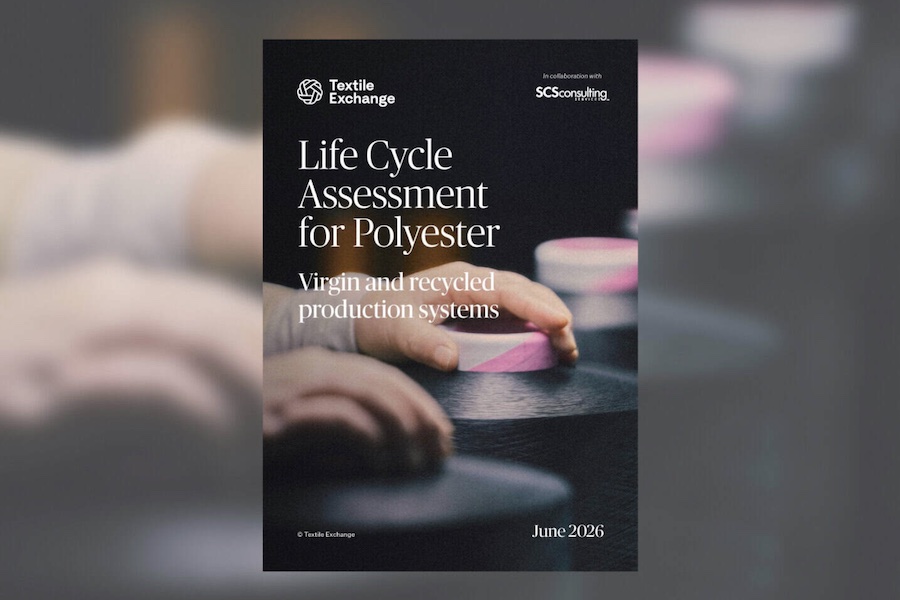
Textile Exchange has released a new Life Cycle Assessment (LCA) study on polyester, providing detailed data on the environmental impacts of both virgin and recycled polyester production. The study aims to strengthen understanding across the fashion, textile and apparel industries and support more informed decision-making regarding polyester sourcing and production.

#Textiles & Apparel / Garment

Autopsy, the new trend book by Texworld Apparel Sourcing Paris, deciphers the fractures of our time through 12 creative signals

Presented during Texworld Apparel Sourcing Paris, from August 31 to September 2, 2026, at the Paris-Le Bourget Exhibition Center, Autopsy offers a reinterpretation of the contours of fashion in a world undergoing profound transformation, balancing radical introspection and sensitive renewal.

#Associations

Keeping products moving with Swedish automation at FILTECH 2026

At FILTECH 2026, taking place in Cologne from June 30th to July 2nd, members of TMAS – the Swedish textile machinery association – will highlight how the country’s engineering expertise is enabling filtration manufacturers to increase productivity, improve traceability and reduce dependence on labour-intensive manual processes.

TOP