[pageLogInLogOut]

#Man-Made Fibers

Grasim Industries announces fresh investment of ₹3094 Crore to expand Lyocell capacity

Post expansion, total cellulosic staple fibre (CSF) capacity would surpass 1 million tonnes annually by 2030

Grasim Industries Limited, the flagship company of the Aditya Birla Group and a global leader in cellulosic fibres, today announced an investment of ₹3,094 crore, for Phase II Lyocell capacity of 110K TPA at Harihar, Karnataka. This expansion will consist of 2 lines of 55K TPA (150 Tons per day) each. The first line is expected to be commissioned by 2028, and the second line is expected to be commissioned by 2030.

This additional capacity will complement the Phase I Lyocell plant of 55K TPA currently under construction at Harihar, which is expected to be commissioned by mid-2027. Upon completion, Grasim’s total Lyocell capacity, will reach nearly 210K TPA, making it one of the largest Lyocell producers globally.

Mr. Kumar Mangalam Birla, Chairman, Aditya Birla Group, said, “The Aditya Birla Group has always demonstrated the willingness to invest ahead of the curve in sectors that will define India’s future competitiveness and economic resilience. This investment carries forward that legacy. It is a vote of confidence in the scale and promise of the Indian market, aligns closely with the aspirations of Make in India, and will help position India as a more competitive and resilient force in the global textile industry.” He added, “This investment also marks another significant step in Grasim’s strategic expansion of advanced fibre capabilities, catering to the growing global demand for sustainable and high-performance textile materials. This fresh expansion will catapult Grasim’s overall Cellulosic Fibres capacity beyond 1 million tonnes per annum, reinforcing its position as a global leader in sustainable Man-Made Cellulosic Fibres (MMCF).”

Mr Vadiraj Kulkarni, Business Head, Grasim Pulp & Fibre added, “This expansion strengthens our position in the evolving MMCF landscape by scaling a high-value, future-ready fibre segment. By expanding Lyocell capacity, we are accelerating the shift towards high performance fibres with a lower environmental impact. Lyocell enhances our product mix, supports premium applications, and aligns with our focus on delivering differentiated, sustainable solutions to global markets.”

Lyocell is a versatile, next-generation fibre widely used across apparel, home textiles, and technical textile applications. Manufactured through a highly efficient closed-loop process, Lyocell offers a compelling combination of durability, breathability, comfort, and lower environmental impact. The expansion would strengthen the Company’s Specialty product portfolio and solidify its position as a key player in the global sustainable fibre industry. Grasim’s Specialty portfolio share (including Lyocell, Modal, Dope-dyed and Recycled fibres) would increase to 35% by 2030.


More News from Aditya Birla Group

More News on Man-Made Fibers

#Research & Development

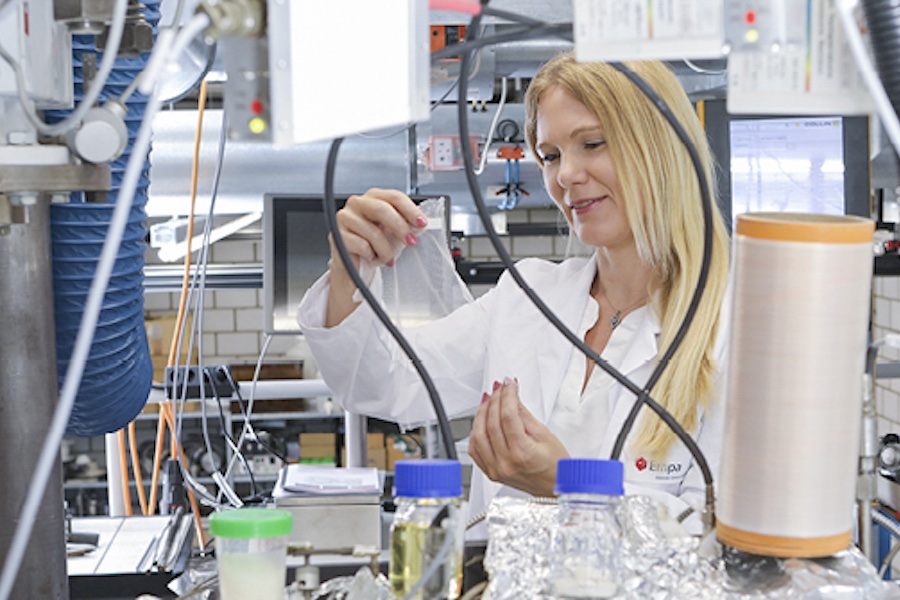
Empa develops liquid-core fibre for insecticide-treated mosquito nets

Empa researchers have developed a liquid-core fibre for mosquito nets that can incorporate insecticides unsuitable for conventional melt spinning. The fibre gradually releases the active ingredient through a polymer sheath. The team developed and tested the yarn over three years in the Innosuisse project MalCoFil with Swiss industry partners Vestergaard and Monosuisse.

#Nonwovens

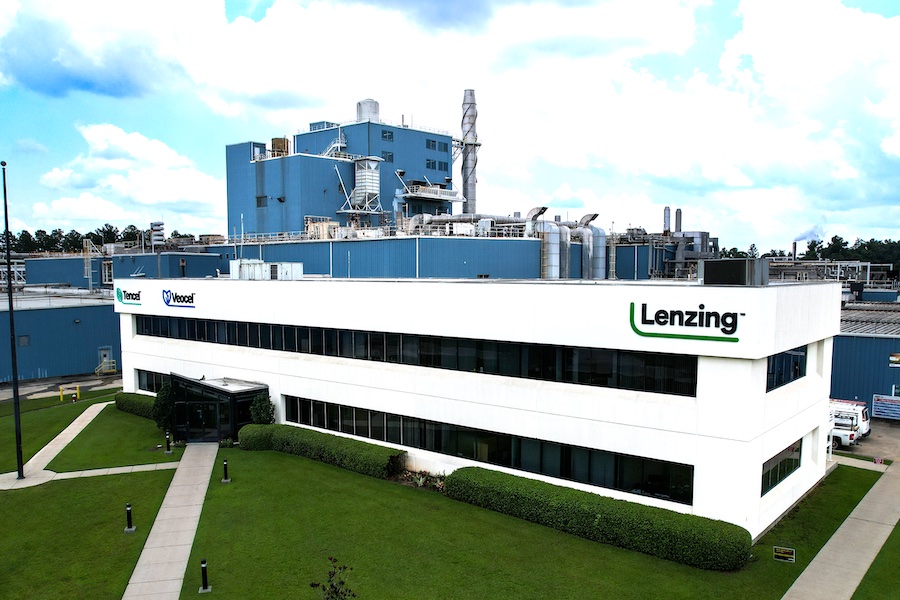
Lenzing invests EUR 27 million in US facility to expand specialty fibers for nonwovens

The Lenzing Group is investing EUR 27 million (USD 31 million) to expand specialty fiber production capabilities at its lyocell fiber site in Mobile, Alabama, USA. The investment forms part of the company’s “Grow NW. Reset TX.” strategy and will strengthen its global Nonwovens business, with a particular focus on short-cut fibers and customized wood-based solutions for specialty applications.

#Man-Made Fibers

Lenzing improves profitability as strategic transformation gains momentum

The Lenzing Group reported improved operating profitability in the first nine months of 2026 despite declining revenue and a challenging market environment. Revenue decreased by 2.3 percent to EUR 1.93 billion, while adjusted EBITDA remained stable at EUR 353 million. The adjusted EBITDA margin increased from 17.9 percent to 18.3 percent, reflecting progress in the company's strategic transformation under its “Grow Nonwovens. Reset Textiles.” strategy.

#Man-Made Fibers

Spinnova and Outlast to develop new textile materials for thermal insulation and temperature regulation

Spinnova Plc, a Finnish materials technology company developing textile fibres from wood pulp and other cellulose-based raw materials, has signed a non-binding Letter of Intent (LOI) with Germany-based Outlast Technologies GmbH, a specialist in temperature regulation and insulation technologies. The collaboration aims to explore the development of high-performance textile materials combining SPINNOVA® fibre with Outlast's functional technologies.

Latest News

#ITMA Asia + CITME 2026

KARL MAYER sets new speed benchmark with RD 7/2-6 MAX for high-performance spacer fabrics

During ITMA ASIA, KARL MAYER is launching a superlative machine for the production of spacer fabrics. The new RD 7/2-6 MAX is the fastest seven-bar double needle bar raschel machine on the market and is currently attracting a great deal of attention at the Product Show accompanying the trade fair at KARL MAYER in Changzhou.

#ITMA Asia Singapore 2029

CEMATEX and Chinese partners explore new forms of cooperation as ITMA ASIA returns to Singapore in 2029

CEMATEX and the Chinese Consortium have jointly announced the conclusion of the first phase of their 20-year collaboration as co-owners and co-organisers of ITMA ASIA + CITME in China. At the same time, CEMATEX has confirmed that ITMA ASIA will return to Singapore in October 2029 as part of a broader strategic realignment. Both parties have reaffirmed their commitment to continued industry cooperation, while pursuing their respective strategic directions.

#Spinning

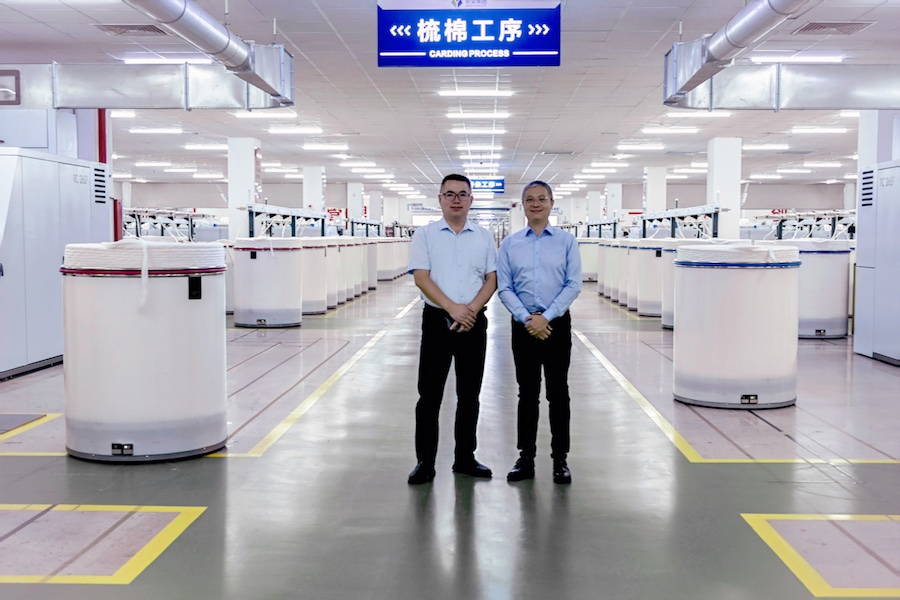
Trützschler's T-CAN reduces labor requirements by over 60% at Chinese spinning mill

Across the textile industry, mills are looking for ways to reduce labor dependency while maintaining full control of their production processes. However, manual can transport between spinning preparation machines often remains labor-intensive and prone to human error. To address this challenge, Trützschler developed T-CAN. The automated can transport system connects carding and drawing processes as well as drawing passages, ensures reliable material flow and reduces the need for manual intervention.

#ITMA Asia + CITME 2026

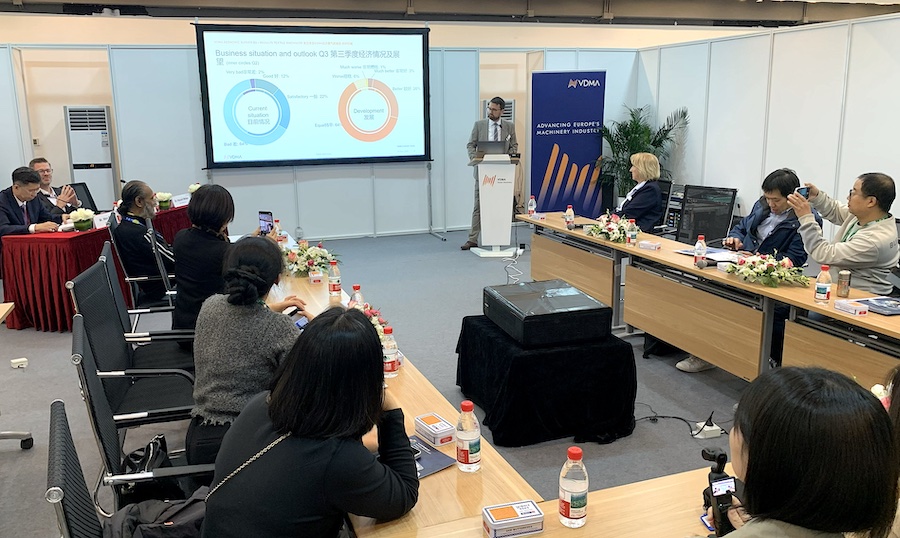
VDMA: German textile machinery manufacturers see signs of recovery as China remains a key market

Strong German participation at ITMA ASIA + CITME 2026 underscores China's importance for the textile machinery industry, while business surveys point to improving prospects for 2027.

TOP