#Associations
Keeping products moving with Swedish automation at FILTECH 2026
Technical woven and nonwoven fabrics are used in a wide variety of products in filtration systems for air, gas and liquid filtration, touching on almost every facet of life in the 21st Century. They are crucial to aerospace and road transportation and a vast range of industrial processes and to be found in every home, hotel and institutional building in air conditioning systems and household appliances such as washing machines and vacuum cleaners.
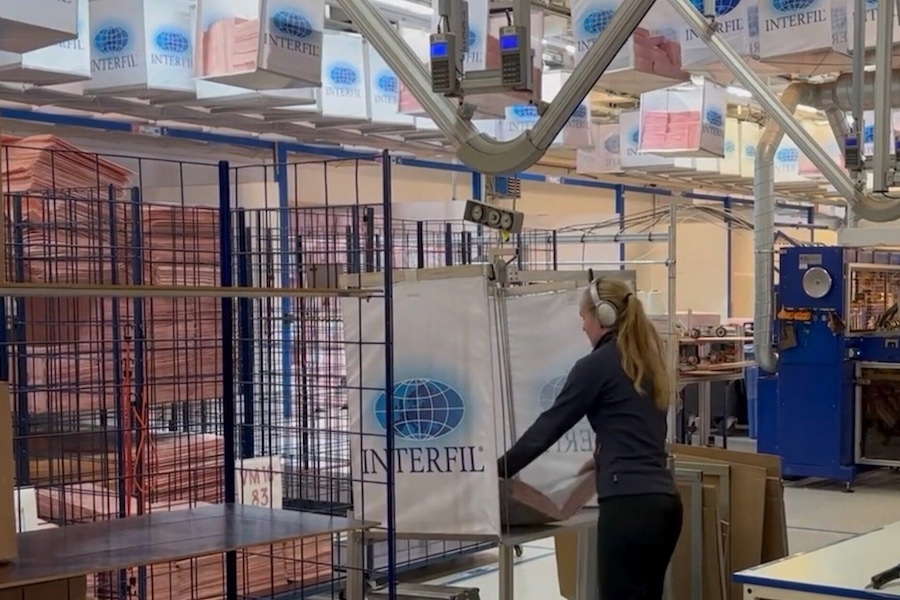
At its Skjåk manufacturing plant in Norway, for example, Interfil manufactures an annual 230,000 air filter units from a staggering range of some 15,000 variants, with 9,000 products moving continuously through the differing stages of the plant at any time each day, and a daily finished output of 1,100 products.
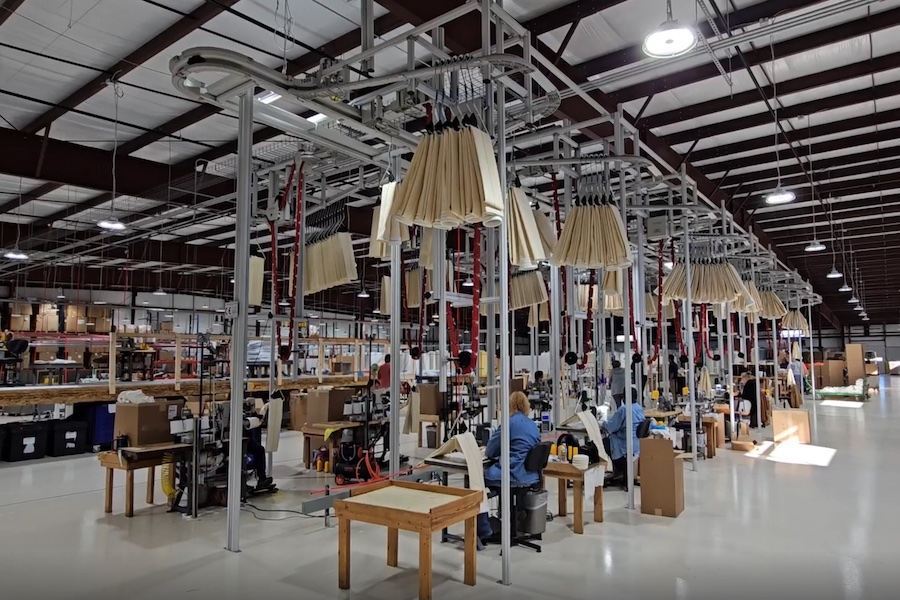
It’s a similar situation at the US plant of Filtration System Products (FSP) in Farmington, St Louis, which now has a daily production of over 2,200 filter hoses and media.
Material handling
Both Interfil and FSP rely on the automated material handling expertise of TMAS member Eton Systems in Sweden.
The individually addressable product carriers of Eton Systems are designed to eliminate manual transportation and minimise handling throughout a manufacturing plant, ensuring each individual product arrives at its correct position precisely when required for each separate process step.
Eton Systems automation at Interfil consists of a 50-metre overhead UPS conveyor system designed and installed to link the company’s two production halls at the Skjåk plant, eliminating the need for manual handling and truck transport between the facilities. This has resolved the challenge of having semi-finished products made far from the final assembly area, not only improving efficiency, quality control and component traceability across all parts of production, but also increasing on-site safety due to the need for fewer trucks.
FSP has meanwhile calculated that since installing an Eton System in 2023, it has increased its production output by 60%, using the same number of operators and the same working hours as with the previous manual system. An inbuilt quality system also ensures that only 100% perfect products are unloaded from the system, allowing for a much more efficient quality control process. In addition, Eton’s compact method of moving single units through the production process has saved floor space and created a safer and more ergonomic work environment.
“FSP wasn’t sure if it was possible to find an automated production system that could handle the varying demands of filtration media production, due to the many style variations, but our system enables all carriers to be tracked in real-time and proved to be the perfect solution,” says Eton Systems CEO Jan Molin.
Filter bag production
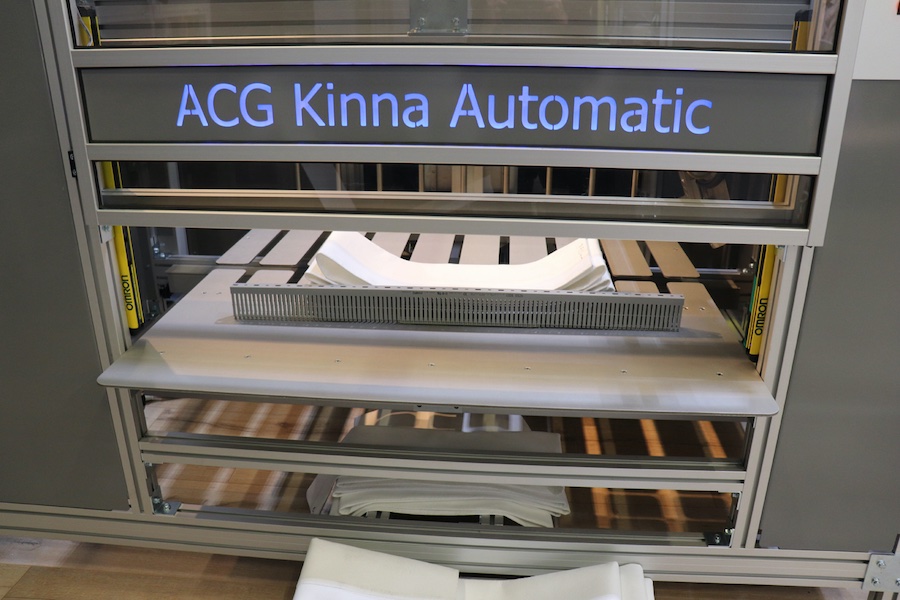
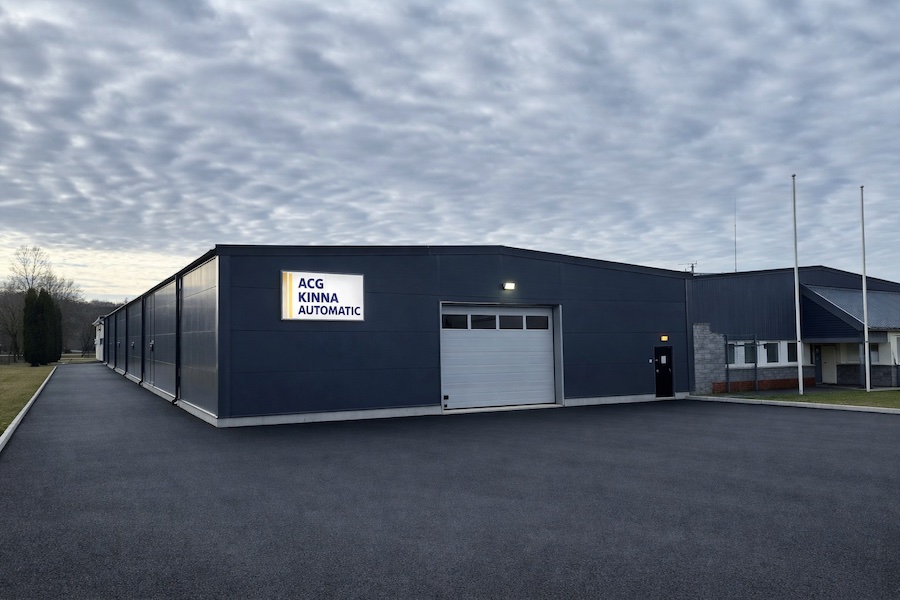
A fully automated micro factory to produce fully finished filter bags has meanwhile been developed by TMAS member ACG Kinna Automatic.
Until now, woven or nonwoven needlefelt filter bags have been assembled and finished in laborious and time-consuming cut and sew operations by third party suppliers.
“The automation of these essential steps eliminates the need for the many hours of labour-intensive manual work that has previously been necessary,” says ACG Kinna Automatic Marketing and Sales Manager Tomas Aspenkog. “The output is 120 finished filter bags per hour, and the entire configuration is guided by precise automatic steering and alignment, with quality control handled by the latest high-definition vision cameras. This type of automation is the way forward, not just for filter bags, but for many industries who heavily rely on such consumables in their operations.”
The ACG microfactory’s configuration is based on two separate interconnecting modules – the Automatic Filter Tube Line (KA-156) and the Automatic Filter Bag Production Line (KA-177).
The Automatic Filter Tube Line handles the fabric feeding from rolls and its folding prior to seam construction, which can either be by automatic sewing, welding or with sewing and taping, depending on specifications. Very rapid changeover of the modular seaming methods can be achieved during product changes. The specific size of the now fully tubular fabric is then precisely cut to size for each individual unit and further folded ready to be fed into the Automatic Filter Bag Production Line.
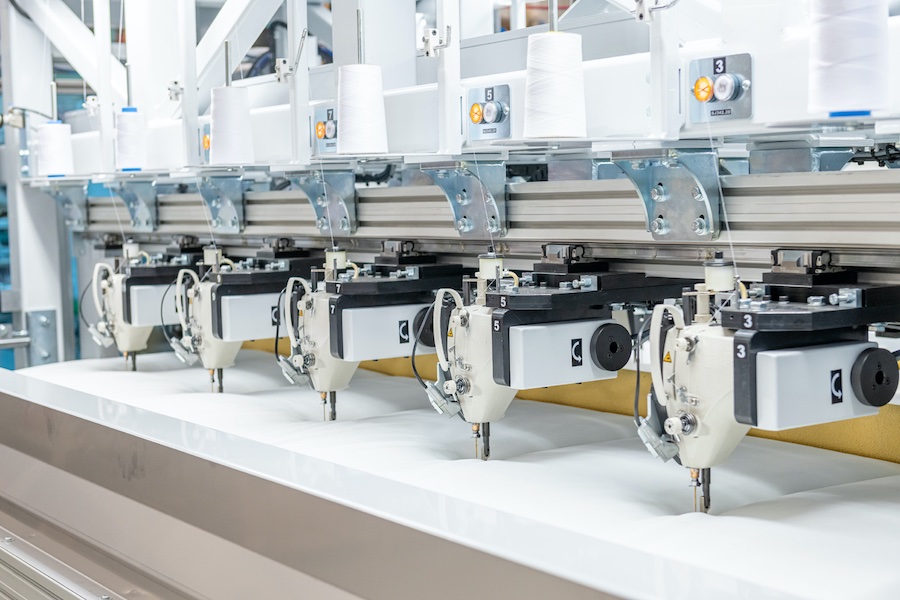
The Automatic Filter Bag Production Line then automatically attaches the reinforcement, bottom and snap rings onto the filter tube with a second Juki sewing head on a robotic arm, to form the fully finished filter bag ready for packaging.
“The innovations coming from our companies are far-ranging and characterised by an advanced grasp of automation techniques and the need for more sustainable processing methods that is being demanded by their customers,” says TMAS Secretary General Therese Premler-Andersson. “At FILTECH 2026 TMAS members will demonstrate why limiting manual transportation and minimising handling is essential for textile manufacturers, especially across Europe and the United States, in providing competitive advantages.”