[pageLogInLogOut]

#Yarn & Fiber

Teijin Aramid proves ability to produce high-performance fibers from green raw materials
© 2020 Teijin
Teijin Aramid, a leading manufacturer of premium aramids and part of the Teijin Group, has announced the results of a sustainability-focused pilot program. Since 2018, the company has been working with its partners to develop high-performance aramid fibers from renewable, bio-based materials.

The pilot proves that this innovative approach can improve the environmental impact of Teijin Aramid’s production processes, without altering the material properties of the resulting Twaron® aramid yarn. The results were revealed at the Chemport Connect – Biobased & Circular Polymers event, which took place on November 17.

Teijin Aramid produces ultra-high-strength para-aramid fibers under the brand name Twaron® from its Dutch facilities, including those in Delfzijl and Emmen. The fibers are used in diverse applications around the world – from car tires to airfreight containers and protective clothing – to make them stronger, lighter, and more durable. The traditional building blocks for Twaron® are finite, fossil-based raw materials, but Teijin Aramid aims to transition to greener, renewable materials as part of its long-term sustainability ambitions. Doing so will reduce the CO2 footprint of the company’s front-end manufacturing processes, while also helping customers and end users along the value chain to become more sustainable.

A unique collaboration

Based in Groningen province, BioBTX has developed technology that transforms renewable resources, such as biomass and residual products, into chemical resources. The company uses bio-based raw materials to create benzene, toluene, and xylene (BTX) – three aromatic compounds that form the initial building blocks of multiple products, including Twaron®.

In 2018, Teijin Aramid joined BioBTX and Syncom, a research organization specialized in organic chemistry, in a pilot program to explore production of  Twaron® yarn from bio-based BTX materials. The aim was two-fold: first, to determine the potential reduction in CO2 emissions, and second, to assess whether the transition alters the unique material properties of Twaron® yarn. The pilot took place on a laboratory scale, with assistance from Chemport Europe, and financial support from the provinces of Drenthe and Groningen. The three companies worked in close alignment for more than two years, finding creative solutions for the technical challenges that arose during the project.


A step forward for sustainability

On November 17, Teijin Aramid and BioBTX presented the results of the pilot at the Chemport Connect – Biobased & Circular Polymers event. The results prove that it is possible to produce Twaron® yarn from green raw materials while maintaining the product’s unique qualities, including its high strength and low weight. They also show how bio-based materials can enable a significant reduction in CO2 emissions during the manufacturing process. The pilot moves Teijin Aramid closer to its goal to utilize low-carbon solutions and increase the use of renewable carbon in its raw materials. The company’s ultimate ambition is a fully circular aramid chain; this will require innovative approaches, such as the development of recycled raw materials from plastic waste, as well as increased collaboration between different partners across the value chain.

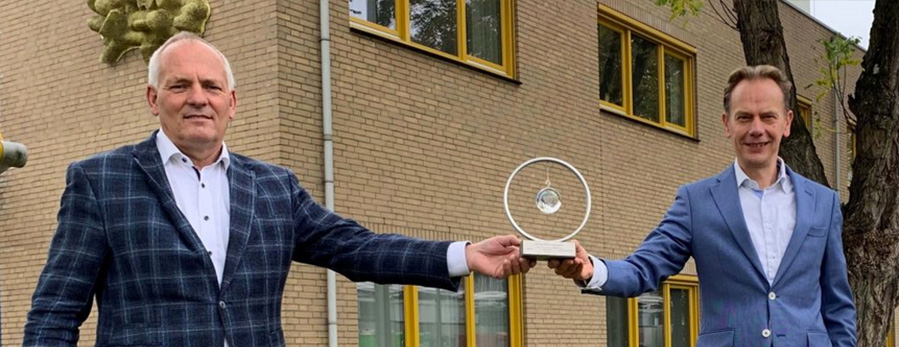
Peter ter Horst, CEO at Teijin Aramid: “We are extremely pleased with the outcome of the pilot, which has delivered useful insights to each of the parties involved. Our work with BioBTX and Syncom represents an important step forward on our sustainability journey and underlines the importance of collaboration as we work toward our goals. Our Twaron® yarn is inherently green due to its sustainable value; this important cooperation with our partners is the next step as we work to create a better world for future generations. I am proud to see us moving together in the right direction, and I also thank the provinces of Drenthe and Groningen, as well as Chemport Europe, for their invaluable support.”

Cor Kamminga, BioBTX: “The use of sustainable raw materials makes a significant contribution to the circular economy, in terms of reducing the use of fossil raw materials and generating fewer CO2 emissions. Our technology produces substances that are identical to oil-based products, but to be commercially successful, we must successfully demonstrate their use in existing high-grade products, such as aramid fibers. Cooperation with a renowned partner like Teijin Aramid further validates this concept: they have the experience needed to rigorously test our products and use them in high-quality applications. This project has not only led to this positive result, but we have also gained valuable knowledge that will help drive our ongoing innovation.”

More News from Teijin Aramid

#Yarn & Fiber

Teijin Aramid: Taiichi Machida to succeed Peter ter Horst as CEO

Peter ter Horst will step down as Chief Executive Officer at the end of 2025, after 19 years of dedicated service. Effective October 1, 2025, Taiichi Machida will take over as CEO.

#Yarn & Fiber

Teijin announces availability of DPP-compliant products aligned with Europe’s ESPR Environmental Regulation

Teijin Limited announced today that it has started rolling out initiatives to enable aramid fibers and carbon fibers to be accompanied by Digital Product Passport (DPP) technology, which enhances supply chain transparency by verifying the origins of materials and supporting sustainability claims. The company is using the supply chain traceability system from Netherlands-based Circularise B.V., in which Teijin has invested since November 2024, to develop DPPs for each product.

#Composites

Teijin Carbon showcases new eco-friendly Tenax Next™ R2S 513 6mm short carbon fiber at JEC World 2025

Teijin Carbon, a leading manufacturer of carbon fiber products, is presenting its latest development in sustainable materials at JEC World 2025 (hall 6, G22). New Tenax Next™ R2S 513 6mm is a short carbon fiber product in rice-shaped form for reinforcing thermoplastic compounds that not only offers exceptional performance characteristics but also reinforces the company’s commitment to environmental responsibility and circularity.

#Recycling / Circular Economy

Teijin to invest in Circularise B.V. and adopt its supply chain traceability platform to promote the Circular Economy

Teijin Limited announced today that it will invest in Circularise B.V., a company based in The Hague, Netherlands, which develops product traceability management systems using blockchain technology. Teijin will also implement Circularise’s software to improve visibility into its global supply chain. Circularise’s proprietary “Smart Questioning”(*) solution, which utilizes Zero-Knowledge Proof (ZKP) technology, provides both anonymity and transparency to ensure a highly reliable product traceability system.

More News on Yarn & Fiber

#Yarns

Yarn Expo Spring 2026 concludes, connecting buyers with innovative selection of sustainable yarns and fibres

Yarn Expo Spring 2026 wrapped up successfully on 13 March, as a record-high of over 600 exhibitors from 12 countries and regions welcomed more than 25,000 visitors from 113 countries and regions. Held across 27,000 sqm in Hall 8.2 of the National Exhibition and Convention Center (Shanghai), the fair highlighted the textile industry’s accelerating shift toward a lower-impact, more functional future. Exhibitors presented eco-friendly organic, regenerated and recycled yarns and fibres, alongside innovative options such as sweat-resistant and high-performance materials. A comprehensive fringe programme further enriched the event, offering practical market insights and new networking opportunities.

#Man-Made Fibers

Lenzing advances its transformation: Higher EBITDA, stronger free cash flow and more than EUR 200 million in cost savings

The business performance of the Lenzing Group in 2025 was affected particularly in the second half of the year by external factors such as international tariff measures, subdued demand and declining market prices. As a result, revenue decreased slightly by 2.3 percent to EUR 2.6 billion, primarily due to lower fiber sales volumes and lower prices for fibers and pulp, which were further negatively impacted by currency developments. Nevertheless, thanks to the comprehensive Performance Program, Lenzing was able to improve its operating performance and key financial indicators compared with the previous year.

#Man-Made Fibers

“Lead Transformation – Generate Impact”: Lenzing presents its 2025 Annual and Sustainability Report

The Lenzing Group has published its 2025 Annual and Sustainability Report, entitled LEAD TRANSFORMATION – GENERATE IMPACT. The report shows how Lenzing is actively shaping change in the industry and making a lasting impact: economically, ecologically, and socially. Lenzing is consistently focused on the future: with targeted investments in premiumization, excellence, innovation, and sustainability, the company is strengthening its position as a leading provider of sustainable, cellulose-based premium fibers. The combined report is available in digital format.

#Raw Materials

Lenzing Group positions bio‑based materials as a strategic asset for Europe’s economic security

The Lenzing Group, a leading supplier of regenerated cellulose fibers for the textile and nonwovens industries, hosted a high‑level roundtable in Brussels to discuss how bio‑based materials can strengthen Europe’s economic security and support the shift toward a fossil‑free future. Organized in cooperation with Euractiv, the event brought together representatives of the European Commission, the UK Mission to the EU, academia, civil society, and industry.

Latest News

#Raw Materials

New study shows low environmental impact by Cotton made in Africa Organic Cotton from Tanzania

Today, the Aid by Trade Foundation (AbTF) is announcing the results of a comprehensive life-cycle analysis (LCA) for cotton produced in Tanzania under the Cotton made in Africa Organic (CmiA Organic) standard. The study emphasises the small ecological footprint of CmiA Organic verified cotton. This can largely be traced back to the absence of synthetic pesticides, artificial fertilisers, and artificial irrigation. Consequently, CmiA Organic cotton can help the textile industry meet regulatory requirements as well as science-based targets. The results also show that the consequences of climate change threaten the livelihoods of these cotton farmers, even though the type of agriculture they practise barely contributes to climate change.

#Raw Materials

Better Cotton Initiative strengthens regenerative focus in standard update

The Better Cotton Initiative (BCI) has strengthened the regenerative focus of its field-level standard with the launch of a new version of its Principles & Criteria (P&C), which marks the next step in the organisation’s journey to becoming a regenerative standards system.

#Man-Made Fibers

Selenis and Kintra Fibers partner to scale 100% bio-based synthetic fiber technology

Selenis, a leading global specialty polyester manufacturer, today announced a strategic manufacturing partnership with materials science company Kintra Fibers to scale Kintra’s patented fiber-grade PBS resin - a 100% bio-based and biodegradable material designed for textile applications.

#Functional Fabrics

PERFORMANCE DAYS proves its relevance as the industry’s key meeting point

Held on March 18–19, 2026, PERFORMANCE DAYS once again confirmed its position as a leading international platform for functional textiles. A total of 3.366 trade visitors and around 560 exhibitors gathered in Munich, with the event already kicking off successfully on DAY 0, which received highly positive feedback for its interactive format. Despite challenging conditions caused by the public transport strike in Munich, the event saw strong attendance and a consistently high level of activity across both exhibition days.

TOP