[pageLogInLogOut]

#Yarn & Fiber

Lenzing’s VEOCEL™ builds awareness in combating plastic pollution highlighted at UN’s SEA of Solutions 2024
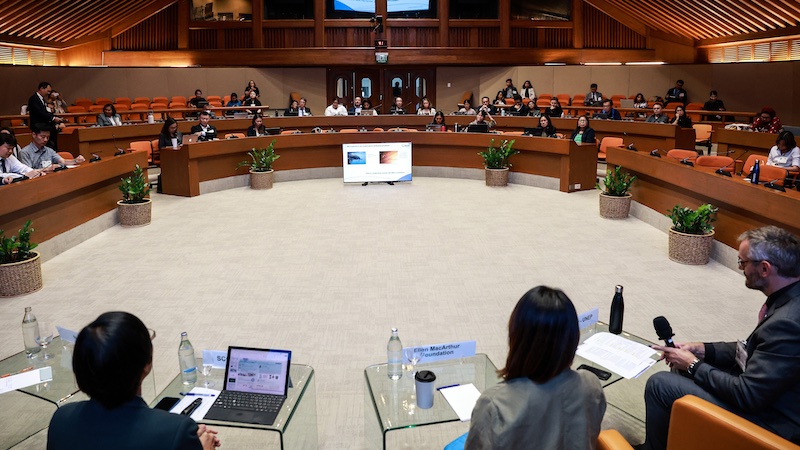
VEOCEL™, the flagship specialty nonwovens brand of Lenzing Group, highlighted its commitment to innovation and providing solutions to help address the global plastic crisis at the “SEA of Solutions 2024” (SoS) event organized by SEA circular – an initiative by the UN Environment Programme (UNEP) and the Coordinating Body on the Seas of East Asia (COBSEA) on 18th September in Bangkok, Thailand.
UN Sea of Solutions Event with Norma Schönherr © 2024 UNEP


Since its launch in 2019, SoS has served as a platform for sharing best practices, fostering collaboration, and exploring solutions to address plastic pollution. Lenzing's participation builds on longstanding efforts to provide cellulosic fibers for the nonwovens industry that are high quality, manufactured with high production standards with low emissions to air and water[1], and minimize the reliance on synthetic materials. Guided by the company’s "Naturally Positive" strategy[2], the VEOCEL™ brand has been pioneering the acceleration of systemic transformation by driving conversations around preventing plastic pollution and advancing effective end-of-life product solutions[3].

On the theme of "Re-designing for a Circular Plastics Economy," Norma Schönherr, Manager of Partnerships for Sustainability at Lenzing AG, Nonwovens, shared VEOCEL™’s best practice examples to “Tackling Microplastics Pollution by Advancing to Cellulosic Fibers.” Schönherr emphasized how Lenzing's VEOCEL™ fibers that are wood-based[4], biodegradable and compostable[5] can serve as a more responsible alternative to synthetic, plastic-based materials, particularly in applications such as personal hygiene and sanitary products.

VEOCEL™ fibers contribute to the circular economy which seeks to minimize resource depletion and maximize sustainability. For example, scientists at the prestigious academic research institute Scripps Institution of Oceanography (SIO) at the University of California, San Diego confirmed back in 2021 that VEOCEL™ Lyocell fibers completely biodegrade in sea-surface conditions in a remarkably short time[6]. The results of their experiments are striking; while the wood-based cellulosic fibers fully biodegraded within 30 days, both in sea-surface and sea-floor conditions, the petroleum-based fibers tested were practically unchanged after more than 200 days.

"At Lenzing, we are deeply committed to working closely with our value chain partners to advance sustainable solutions and help the industry progress on its sustainability roadmap," said Monique Buch, Executive Vice President Nonwovens at Lenzing AG on their attendance at the event. "Our participation in the United Nations' SEA of Solutions event this year underscores our dedication to tackling plastic pollution through collaboration and knowledge sharing among stakeholders around the world."

The VEOCEL™ brand portfolio includes totally chlorine-free lyocell and viscose fibers, as well as high-performance hydrophobic fibers. All VEOCEL™’s fibers originate from wood as a source, and do not fall under the plastic definition of the EU's Single-Use Plastics Directive (SUPD)[7] and thus provide a strong, functional alternative to synthetic fibers. Looking ahead, VEOCEL™ intends to expand its range of cellulosic fibers to cover more applications and industries and will continue to act as a catalyst for change for the nonwovens industry by providing a greater range of low-environmental impact alternatives to synthetic materials.

[1] These results were calculated using the Higg Materials Sustainability Index (Higg MSI) tools provided by the Sustainable Apparel Coalition. The Higg MSI tool sassess impacts of materials from cradle-to-gate for a finished material (e.g. to the point at which the materials are ready to be assembled into a product). However, this figure only shows impacts from cradle to fiber production gate. VEOCEL™ branded fibers’ LCA results are represented by TENCEL™/ECOVERO™ data based on Higg MSI database v3.7 (December, 2023).

[2] To foster a sustainable global textile and nonwovens industry, Lenzing follows three strategic principles within the context of its “Naturally Positive” sustainability strategy, which focuses on greening the value chain, driving systemic change, and advancing the circular economy through partnerships with key industry stakeholders, such as Textile Exchange, Cascale, Canopy, Together for Sustainability, Renewable Carbon Initiative, and UN Global Compact.

[3] With a process in place that factors in rapidly evolving regulatory requirements when developing and updating claims, VEOCEL™ provides QR-coded claims and a Claims webpage that offer value chain partners and conscious consumers more clarity on what its fibers offer.

[4] Adhering to the company’s commitment to environmental protection and resource preservation, Lenzing procures wood and pulp only from certified or controlled sustainable sources. In its Wood and Pulp Policy, Lenzing is committed to procuring wood and pulp exclusively from non-controversial sources.

[5] A range of LENZING™ Lyocell and Viscose fibers for nonwoven applications are certified by TÜV AUSTRIA to be biodegradable in soil, freshwater and marine conditions and compostable under home and industrial conditions.

[6]https://www.sciencedirect.com/science/article/pii/S0048969721031314

[7] Directive (EU) 2019/904 of the European Parliament and of the Council of 5 June 2019 https://eur-lex.europa.eu/eli/dir/2019/904/oj
More News from Lenzing

#Nonwovens

Lenzing Group highlights scalable, bio-based nonwovens solutions at leading global industry fairs

From CIDPEX in China to Techtextil in Frankfurt and INDEX in Geneva, the Lenzing Group showcases ready-for-market, bio-based nonwoven solutions and receives industry recognition for LENZING™ Nonwoven Technology.

#Yarn & Fiber

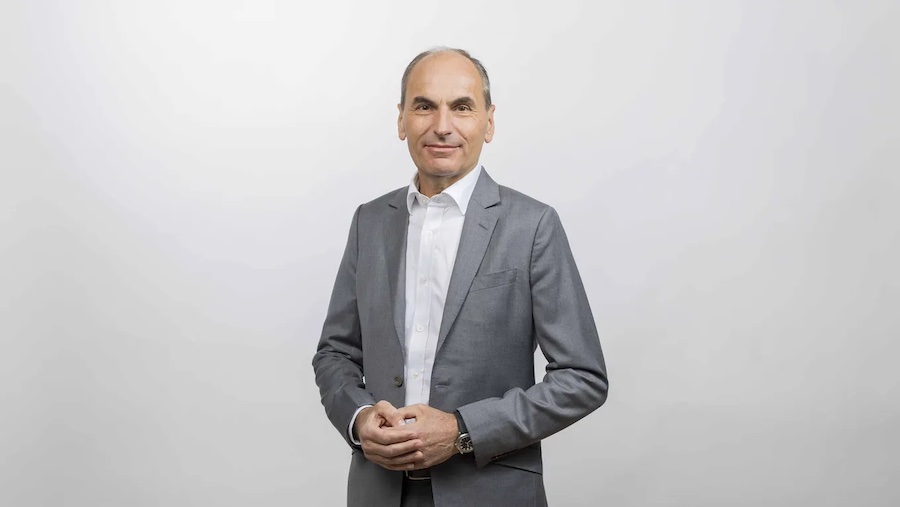
Lenzing AG appoints Georg Kasperkovitz as Chief Executive Officer

The Supervisory Board of Lenzing AG has appointed Georg Kasperkovitz, Member of the Management Board and Chief Operations Officer, as Chief Executive Officer (CEO) of Lenzing AG with effect from June 1, 2026.

#Denim

TENCEL™ Lyocell - HV100 achieves global denim availability in six months; Vol. 2 debuts at Kingpins Amsterdam

When TENCEL™ Lyocell - HV100 debuted at last year’s Kingpins Amsterdam in October, 17 mill partners across five countries presented fabrics featuring the new fiber. Just six months on, participation has more than doubled, evolving into a global network that spans nine countries and four continents, signaling both strong industry momentum and growing demand.

#Techtextil 2026

Lenzing unveils three-tier cellulosic fiber portfolio for next generation protective wear

The Lenzing Group, a leading supplier of regenerated cellulosic fibers for the textile and nonwovens industries, today introduces Lenzing Solutions for Protective Wear. This integrated three-tier portfolio is anchored by LENZING™ FR fibers at the highest protection tier for inherent flame resistance and brings together complementary solutions including TENCEL™ Lyocell fibers, both EU Ecolabel-certified² and derived from certified or controlled wood sources³, within a unified protective wear architecture for the first time. The launch marks the most significant expansion of Lenzing’s protective wear business since the company pioneered inherently flame-resistant cellulosic fiber in 1977, and comes as the global personal protective equipment (PPE) market accelerates toward an estimated USD 130 billion by 2033⁴.

More News on Yarn & Fiber

#Yarns

Yarn Expo Shenzhen 2026 closes doors, advancing sustainable and innovative sourcing in South China

Yarn Expo Shenzhen 2026 served as a strategically positioned mid-year sourcing platform for the Greater Bay Area, highlighting Shenzhen’s role in connecting regional demand, supply and innovation exchange across the textile value chain. During the three-day fair, over 20,000 visits were drawn from 74 countries and regions[1], as exhibitors and buyers engaged with new developments in greener, performance-led, and value-added yarn and fibre solutions. Held in conjunction with Intertextile Shenzhen Apparel Fabrics and PH Value, the fair underscored the benefits of closer synergy and new materials across yarn, fabric and apparel platforms for the South China market.

#Yarns

Yarns and technologies in symbiosis: Biella Yarn presents Fall/Winter 2027/2028 collection “New Romance_”

Biella Yarn, the flat knitting brand of Suedwolle Group, launches new Fall/Winter 2027/2028 collection, inspired by the symbiosis of yarns and technologies – elements that blend, adapt and evolve together, forming something new without losing their origin. The name “Neu Romance_” reflects the emotional and neurological dimension of the yarns: a connection that engages the senses, experienced through material, touch and interaction. The collection is further brought to life through design collaborations, featuring selected yarns used in different design approaches.

#Recycling / Circular Economy

The textile industry in transition

Recycling, traceability, eco-design and digitalisation are among the key future challenges facing the European textile industry. The Erasmus+ project Skills4Circularity, involving 21 partners from twelve countries, is investigating the skills required to address these challenges. As the German industry partner, the Industry Association for Finishing – Yarns – Fabrics – Technical Textiles (IVGT) is bringing the industry’s perspective to the project.

#Research & Development

GenuTrace client advisory: Is your cotton supply chain UFLPA ready?

U.S. Customs and Border Protection has released updated operational guidance (CBP Publication No. 5560-0526) expanding its forced labor enforcement framework. The guidance supersedes the original 2022 UFLPA Operational Guidance and now covers all forced labor enforcement authorities — UFLPA, CAATSA, and WROs/Findings — in a single unified document. For cotton importers, the enforcement posture has not softened. It has become more structured, more documented, and more demanding. Learn more about UFLPA.

Latest News

#Spinning

Ibrahim Fibres and Trützschler: A strong partnership enters its next phase with the TC 30Si

For more than two decades, Ibrahim Fibres and Trützschler have grown side by side, driven by a shared ambition to continuously improve spinning performance, strengthen technology leadership and set new benchmarks in the textile industry. Today, Ibrahim Fibres is a leading yarn and polyester staple fiber manufacturer in Pakistan. The company operates the largest number of Trützschler cards in the country, with more than 200 machines running across its mills in Faisalabad, and plays an important role in one of Asia’s largest textile industries.

#Digital Printing

USColorworks expands digital platform with Kornit Atlas MATRIX and Atlas MAX PLUS solutions

Kornit Digital Ltd. (NASDAQ: KRNT), a global pioneer in sustainable, on-demand digital fashion and textile production, today announced that USColorworks, a North Carolina-based apparel decoration and fulfillment company specializing in custom and on-demand printing for retail and promotional markets, has expanded its Kornit digital production platform with the addition of Atlas MATRIX and Atlas MAX PLUS systems to deliver high-quality, on-demand apparel across cotton, blended fabrics and polyester.

#Functional Fabrics

CovationBio introduces two new bio-based innovations at Functional Fabric Fair New York

Covation Biomaterials LLC (“CovationBio®”) is showcasing its two new bio-based innovations, Xatryx® and Sorona® elasterell-p fiber, at this year’s Functional Fabric Fair in New York City, July 7–9, 2026. Attendees can visit CovationBio at Booth #404 to explore this next generation of bio-based performance materials.

#Research & Development

Geotextiles made from recycled materials: GREEN leads the way into the industry

For the industry, recycled materials are creating new opportunities in geotextile production. In the GREEN project, the Fraunhofer Cluster of Excellence Circular Plastics Economy CCPE demonstrates that recycled polypro-pylene (PP), polyethylene terephthalate (PET), and high-density polyeth-ylene (HDPE) can be processed into nonwovens, fibers, and membranes that meet industrial requirements. This creates opportunities for use in existing production lines and new value chains in the geotextile market.

TOP