[pageLogInLogOut]

#Yarn & Fiber

Toray creates world’s first porous carbon fiber with continuous pore structure

Toray Industries, Inc., announced that it has created the world’s first porous carbon fiber with a nanosized continuous pore structure. Using this fiber as a support layer could lighten advanced membranes used in greenhouse gas separation and hydrogen production and make them more compact, thereby enhancing performance.

New material could benefit environment by enhancing performance of advanced gas separation membranes

The company will keep pushing ahead with R&D for this new material to foster carbon recycling, collaborating with other entities in developing applications to sustainably tap hydrogen energy and shrink environmental footprints.

Absorption- and adsorption-based facilities conventionally separate carbon dioxide, biogas, hydrogen, and other gases. The issue with such setups, however, is that they are large and consume a lot of energy, resulting in heavy carbon dioxide emissions. Gas separation methods employing membranes have thus attracted considerable attention. But despite ongoing research, no membranes have yet combined satisfactory gas separation performance and durability.
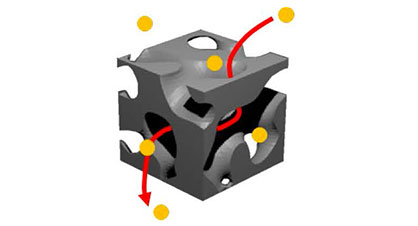
Image of porous Carbon Fiber with Continuous Pore Structure (c) 2019 Toray


Toray’s new material is chemically stable because it comprises carbon, and offers outstanding gas permeability. The material employs thin, flexible fibers, so when it is used to support gas membranes a module can house many of them. Modules can thus be compact and light. Such support makes it possible to combine a range of gas separation layers.

Toray looks to contribute to the swift commercialization of advanced separation membranes that are vital to materializing eco-friendly natural gas and biogas purification and hydrogen production.

Toray innovated its new material by combining its outstanding polymer technology with its market share-leading carbon fiber technologies and water treatment and other separation membrane technologies.


Harnessing its polymer technology enabled the company to create a porous carbon fiber with uniformly continuous pores and carbon. It is possible to set nano- through micro-level pore sizes for porous structures. Another possibility is to create a hollow fiber-shaped porous carbon fiber in the center of a fiber.

Prospective applications leveraging the excellent adsorption of Toray’s new material include electrode materials and catalyst carriers (base substances for fixing other substances) in high-performance batteries.

Toray will open its R&D Innovation Center for the Future in December this year. The new facility will serve as a global headquarters for strategic innovations by engaging with academic institutions and key partners from diverse fields. The company will collaborate with several partners in efforts leveraging its new material in a drive to commercialize more advanced gas separation membranes.

Under the Toray Group Sustainability Vision, the company looks to keep developing technologies that help materialize low-carbon economies by 2050 by contributing to resolutions of environmental, resources, and energy issues.
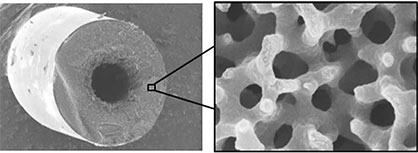
Hollow porous carbon fiber and internal porous structure (c) 2019 Toray


More News from Toray Engineering Co. Ltd.

#Man-Made Fibers

Toray develops AURLIST™ polyester filament fiber with luxurious luster and ultra-fine structure

Toray Industries has developed AURLIST™, a new polyester filament fiber designed to combine luxurious luster, soft loft and a subtle fibrillated surface texture. The company primarily targets applications in women’s apparel such as tops, bottoms and dresses.

#Recycling / Circular Economy

Toray develops recycling technology that retains carbon fiber strength and surface quality

Toray Industries, Inc., announced today that it has developed a recycling technology that can decompose diverse carbon fiber reinforced plastics (CFRP) made from thermosetting resins while retaining the strength and surface quality of those fibers. The company drew on this technology to create a nonwoven fabric employing recycled carbon fibers.

#Composites

HEAD launches more sustainable(1) BOOM RAW racquet on Earth Day by using Toray’s bio-circular carbon fibers

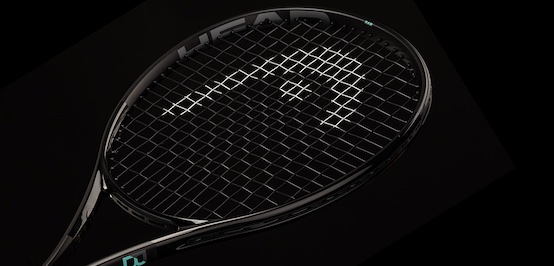
HEAD continues to innovate with the launch of the BOOM RAW tennis racquet, an encouraging development in the search for a more sustainable future for racquet sports. All of the carbon fibers are bio-circular carbon fibers in the limited-edition and highly innovative BOOM RAW racquet, which offers the same explosive power - along with the same fun, feel and easy playability - as the regular, in-line BOOM racquet. The bio-circular carbon fibers are manufactured by Toray and its subsidiary Toray Carbon Fibers Europe.

#Recycling / Circular Economy

Companies in Japan initiate demonstration to expand the automotive recycling process

DENSO CORPORATION and other partners have been chosen by an industry-government-academia collaborative project aiming to expand the recycle content for automobile in the fiscal year 2023 supported by Ministry of the Environment, Japan.

More News on Yarn & Fiber

#Man-Made Fibers

Lenzing advances its transformation: Higher EBITDA, stronger free cash flow and more than EUR 200 million in cost savings

The business performance of the Lenzing Group in 2025 was affected particularly in the second half of the year by external factors such as international tariff measures, subdued demand and declining market prices. As a result, revenue decreased slightly by 2.3 percent to EUR 2.6 billion, primarily due to lower fiber sales volumes and lower prices for fibers and pulp, which were further negatively impacted by currency developments. Nevertheless, thanks to the comprehensive Performance Program, Lenzing was able to improve its operating performance and key financial indicators compared with the previous year.

#Man-Made Fibers

“Lead Transformation – Generate Impact”: Lenzing presents its 2025 Annual and Sustainability Report

The Lenzing Group has published its 2025 Annual and Sustainability Report, entitled LEAD TRANSFORMATION – GENERATE IMPACT. The report shows how Lenzing is actively shaping change in the industry and making a lasting impact: economically, ecologically, and socially. Lenzing is consistently focused on the future: with targeted investments in premiumization, excellence, innovation, and sustainability, the company is strengthening its position as a leading provider of sustainable, cellulose-based premium fibers. The combined report is available in digital format.

#Raw Materials

Lenzing Group positions bio‑based materials as a strategic asset for Europe’s economic security

The Lenzing Group, a leading supplier of regenerated cellulose fibers for the textile and nonwovens industries, hosted a high‑level roundtable in Brussels to discuss how bio‑based materials can strengthen Europe’s economic security and support the shift toward a fossil‑free future. Organized in cooperation with Euractiv, the event brought together representatives of the European Commission, the UK Mission to the EU, academia, civil society, and industry.

#Yarn & Fiber

Teijin Carbon strengthens high‑end sports offering with advanced prepreg and resin technologies for next‑generation bicycle performance

High‑end bicycle manufacturers are entering a new era in which modern frames and components must be lighter, stiffer, tougher and more sustainable – all while enabling fast, repeatable and cost‑efficient production. To support this shift, Teijin Carbon is expanding its portfolio of advanced prepreg systems developed specifically for premium road, gravel and mountain bike applications.

Latest News

#Techtextil 2026

Gebr. Otto highlights versatility at Techtextil with regional supply chains, yarn innovations and new hygiene segment

At this year’s Techtextil, Gebr. Otto places its versatility at the center of its presentation. In addition to spinning, twisting and dyeing – traditionally focused on fine cotton – textile processors will also find a competent development partner for technical specialty solutions. The Dietenheim-based spinning mill has now built up a decade of experience in the production of technical yarns, particularly from aramids. A new hygiene segment has also been established, where yarns for medical and hygiene products are currently being produced. In the future, this department could also develop textile products for the food sector. Gebr. Otto will once again be present at the BW-i joint stand, booth D81, hall 12.1. What is wound onto the spool is determined by the customer: Gebr. Otto develops according to specific customer requirements and transforms its own ideas into yarn innovations.

#Europe

Commission presents proposal for EU Inc. - unlocking the full potential of the Single Market for Europe's entrepreneurs

Today, the European Commission presented its proposal for EU Inc., a new single set of corporate rules, building the cornerstone and starting point for the EU's 28th regime. EU Inc. is an optional, digital-by-default European corporate framework. It will make it easier for businesses to start, operate and grow across the EU – incentivising them to stay in Europe, and encourage those who once looked elsewhere to return.

#Man-Made Fibers

OnceMore® from Södra brings end-to-end traceability for circular Man-made Cellulosic Fibers (MMCF) using TextileGenesis

OnceMore® from Södra, the world’s first large-scale process for recycling blended fabrics into high‐quality dissolving pulp, will begin using TextileGenesis, a Lectra company, to strengthen traceability from raw material to retail across the value chain. OnceMore® produces dissolving pulp made from blended textile waste and wood sourced from responsibly managed Swedish forests. By integrating TextileGenesis, OnceMore® supports the growing need for verified data and secure, transparent tracking throughout increasingly complex supply chain.

#Sustainability

Experts publish APAC policy priorities

Cascale today announced the publication of its APAC Policy Priorities Paper, developed by the Asia-Pacific (APAC) Policy Member Expert Team (MET) to identify key regional sustainability challenges and provide practical, aligned recommendations for policymakers and industry stakeholders across Asia-Pacific.

TOP